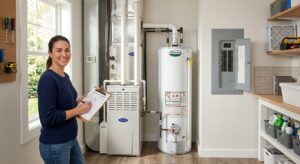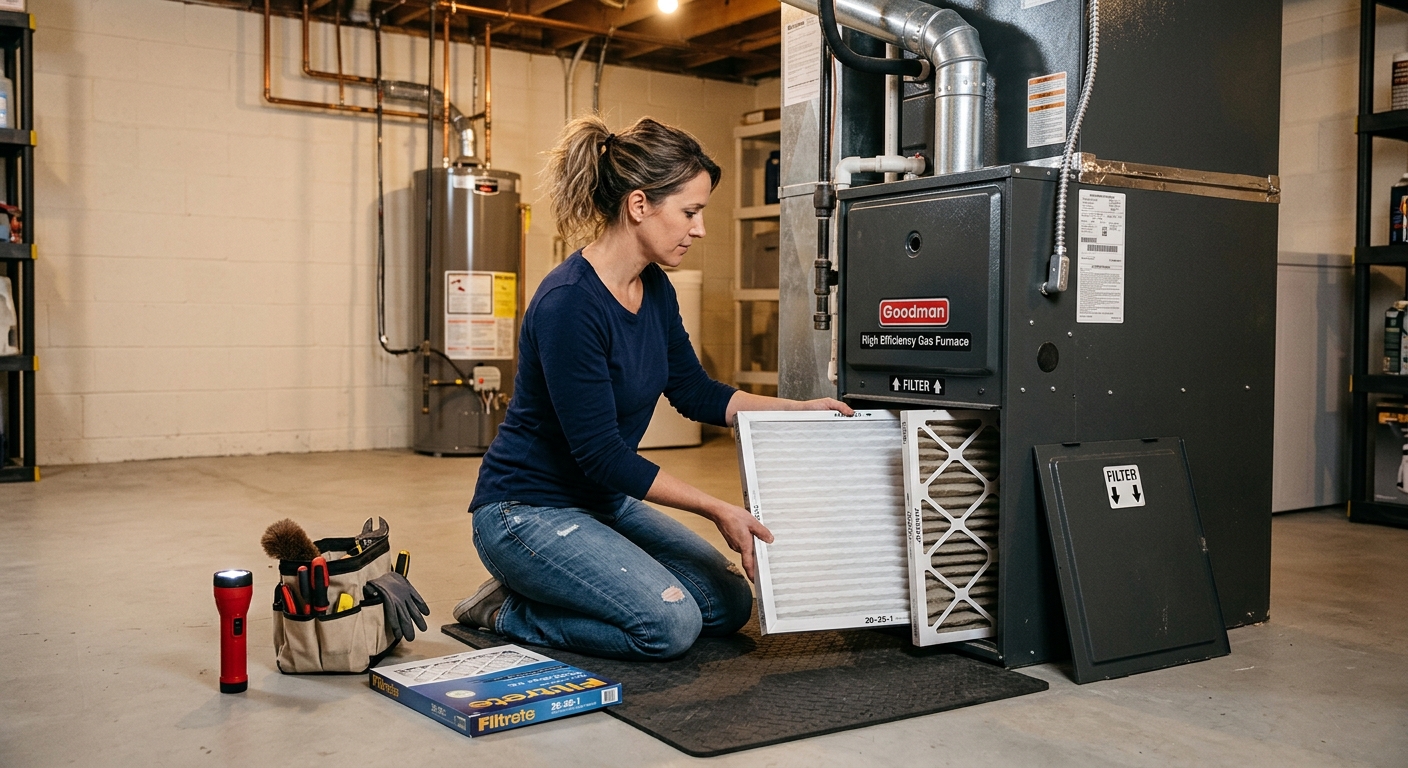
Your gas furnace is the hardest-working appliance in your home, and most homeowners ignore it completely until something goes wrong. A furnace running with a dirty filter, clogged burners, or a blocked flue doesn’t just cost more to operate – it can become a genuine safety hazard. The good news is that a focused seasonal tune-up, done before the first cold snap, addresses all of these issues at once.
According to the U.S. Department of Energy, a well-maintained furnace operates up to 30% more efficiently than a neglected one. That translates to real money: if you spend $1,500 a year on heating, proper maintenance could save you $200 to $450 annually. Pair that with a typical DIY maintenance cost of under $50, and the payback period is measured in weeks, not years.
This guide covers everything a gas furnace owner should do each fall before heating season begins, plus a mid-season checkup in January or February. You’ll find a quick-fix checklist for the basics, a full DIY deep-clean approach, and guidance on when to call a licensed HVAC technician. Whether your furnace is brand new or pushing 20 years old, these steps apply.
What You’ll Need
Click on an item below to shop for the recommended items for this recipe on Amazon.
As an Amazon Associate, we earn from qualifying purchases.
How to Do It
- Replace the air filter with a MERV 8 to 11 pleated filter. Check the size printed on the old filter frame, buy an exact match, and slide the new one in with the airflow arrow pointing toward the blower. Do this every 1 to 3 months during heating season.
- Test your carbon monoxide detector by pressing the test button. If it is more than 5 years old or does not beep clearly, replace it. Install one on every floor of the home within 10 feet of sleeping areas.
- Turn the thermostat to Heat mode and set it 5 degrees above room temperature. Walk to each supply register and confirm warm air is flowing within 2 to 3 minutes. Cold registers indicate blocked ducts or a failing blower.
- Visually inspect the area around the furnace for clutter, stored flammables, or debris within 3 feet of the unit. Clear anything within that radius.
- Check the exhaust flue pipe (the metal duct leading out of the furnace) for visible rust, separation at joints, or bird nests near the exterior termination cap. Any gaps or blockages need immediate attention.
- Write the date on the new filter with a marker so you know exactly when to replace it next.
- Turn off the furnace at the power switch (usually a wall switch near the unit) and set the thermostat to Off. Wait 30 minutes for the heat exchanger to cool completely before opening any panels.
- Remove the blower access panel and use a soft brush attachment on a vacuum to clean the blower wheel blades. Dust buildup on blades reduces airflow efficiency by 10 to 25% and makes the motor run hot.
- Inspect the burner flames by turning the furnace back on briefly and watching through the sight glass or access panel. Healthy flames are steady and blue with a small yellow tip. Floating, yellow, or orange flames indicate dirty burners or airflow problems and warrant a professional cleaning.
- Vacuum the burner compartment carefully with a brush attachment to remove dust and debris. Do not use water or compressed air near gas components.
- Locate the furnace drain line if you have a high-efficiency (90%+ AFUE) condensing furnace. These produce condensate that drains through a plastic tube. Pour a cup of water down the line to confirm it flows freely, and flush with diluted white vinegar if you see any slime buildup.
- Check all accessible duct connections near the furnace for gaps or separation. Seal any leaks with metal-backed foil tape (not standard duct tape, which degrades within a few years). Duct leakage in unconditioned spaces can waste 20 to 30% of heated air.
- Test the thermostat calibration by placing an accurate thermometer near the thermostat and comparing readings. A difference of more than 2 degrees suggests recalibration or replacement is worthwhile.
- Replace the filter as the final step, log the date, and set a phone reminder to check it again in 6 weeks.
- Schedule the appointment in August or September before heating season demand spikes. Prices are typically 10 to 20% lower in late summer than in October or November.
- Before the technician arrives, write down any symptoms you have noticed: unusual smells, short cycling, rooms that stay cold, or higher-than-usual gas bills. Specific details speed up diagnosis and reduce labor time.
- Ask the technician to perform a combustion analysis using a flue gas analyzer. This test measures carbon monoxide output, stack temperature, and combustion efficiency and produces a printable report you can keep for your records.
- Request a heat exchanger inspection specifically. This is the component most likely to cause CO issues. A thorough visual inspection with a mirror and light, or a combustion spillage test, should be included in any professional tune-up.
- Ask about the furnace’s measured AFUE (Annual Fuel Utilization Efficiency) versus its rated efficiency. A 10-year-old furnace rated at 80% AFUE may now be operating at 70% or lower due to wear, which changes the economics of replacement versus continued repair.
- Get a written summary of findings and any recommended repairs with itemized costs before authorizing any additional work beyond the standard tune-up fee.
Why It Works: The Benefits
A clean, properly tuned furnace can reduce fuel consumption by 15 to 30% compared to a neglected unit. On a $1,500 annual heating budget, that is $225 to $450 back in your pocket each year.
Regular maintenance can add 5 to 8 years to a furnace’s usable life. The average furnace replacement costs $3,000 to $7,000 installed, so delaying that purchase by even a few years represents significant savings.
A fresh filter and clean blower reduce the amount of dust, allergens, and combustion byproducts circulating through your home. This matters especially for households with asthma or allergy sufferers.
Annual inspection of the heat exchanger, flue, and CO detector prevents the two most serious furnace hazards: carbon monoxide poisoning and fire. CO poisoning sends over 20,000 Americans to emergency rooms each year.
Most mid-winter furnace breakdowns trace back to neglected maintenance. Emergency HVAC service calls typically cost $150 to $400 above and beyond normal repair costs due to after-hours rates, making prevention far cheaper than the cure.
💰 Savings Impact by Action
Replacing a severely clogged filter restores full airflow and can reduce furnace energy consumption by 10 to 15% immediately.
Sealing leaks in ducts running through unconditioned spaces recovers 20 to 30% of heated air that would otherwise be lost before reaching living areas.
Cleaning dirty burners restores proper combustion efficiency and can improve fuel utilization by 8 to 12% in furnaces with significant buildup.
Programming a setback of 7 to 10 degrees for 8 hours per day while asleep or away saves approximately 10% on annual heating costs according to DOE data.
A full professional combustion tune-up on a neglected furnace restores measured operating efficiency by an average of 16% according to ACEEE research.
🏠 Key Concepts Explained
The Science Behind It
A gas furnace operates by burning natural gas in a sealed combustion chamber and transferring the resulting heat through a metal heat exchanger into the air stream that circulates through your home. The efficiency of that heat transfer depends directly on the cleanliness and integrity of every component in the chain. When a filter clogs, the blower pulls air through a higher-resistance pathway, increasing the electrical load while simultaneously reducing the volume of air that picks up heat from the exchanger. The exchanger then runs hotter than designed, triggering the high-limit safety switch and causing the burner to shut off early, a phenomenon called short-cycling. Each short cycle wastes the energy used to warm up the system from cold.
Combustion efficiency is equally dependent on clean burners and proper airflow. Natural gas requires roughly 10 cubic feet of air per cubic foot of gas for complete combustion. When burners are coated with dust or rust, the air-to-fuel ratio shifts and combustion becomes incomplete, producing carbon monoxide (CO) instead of carbon dioxide. CO is colorless, odorless, and potentially fatal at concentrations above 200 parts per million sustained over 2 to 3 hours. The flue system removes combustion gases through the stack effect: hot gases are less dense than room air and naturally rise through the vent pipe to the exterior. Any blockage or heat loss along that path weakens the draft and increases the chance of backdrafting, where combustion gases reverse direction and enter living spaces.
High-efficiency condensing furnaces (rated 90% AFUE and above) add a second heat exchanger that extracts so much energy from flue gases that they cool below the dew point, producing liquid condensate. This condensate is mildly acidic and must drain freely or it backs up and can corrode internal components or trigger a pressure switch fault that shuts the furnace down entirely. Keeping that drain clear is a maintenance step unique to condensing furnaces that standard tune-up guides often overlook, but it is one of the most common causes of mid-winter no-heat calls for owners of modern high-efficiency units.
Frequently Asked Questions
▼ My furnace turns on but shuts off after just a few minutes. What is wrong?
This is almost always short-cycling caused by one of three things: a clogged air filter restricting airflow and triggering the high-limit switch, a dirty flame sensor that fails to confirm the burner is lit, or an overheating heat exchanger. Start by replacing the filter immediately. If that does not solve it within one or two cycles, the flame sensor rod (a thin metal probe near the burner) likely needs cleaning with fine steel wool – a 10-minute fix. If the problem persists, call a technician to inspect the heat exchanger.
▼ I smell something burning when I first turn on the furnace in the fall. Is that dangerous?
A mild dusty or burning smell during the first 1 to 2 heating cycles of the season is normal. Dust accumulates on the heat exchanger and burners over summer and burns off when the furnace first fires. It should dissipate within 30 to 60 minutes and not return. If the smell persists beyond the first day, smells like melting plastic or electrical burning, or if your CO detector triggers, shut the furnace off immediately and call an HVAC technician.
▼ How do I know if my furnace is old enough that I should replace it rather than maintain it?
The general rule is the 50% rule: if a repair costs more than 50% of the cost of a new furnace AND the unit is over 15 years old, replacement is usually the better investment. A furnace older than 20 years is almost certainly running below 70% AFUE even if it was rated at 80% when new. Modern 96% AFUE models can cut fuel use by 25 to 35% compared to that aging unit, with payback periods of 5 to 8 years depending on your heating load and local gas prices.
▼ Can I do this maintenance if I have a heat pump instead of a gas furnace?
Most of the airflow steps – filter replacement, duct sealing, thermostat calibration, and register inspection – apply equally to heat pumps. However, heat pumps have no burners, flue, or heat exchanger to inspect, so the combustion-related steps do not apply. Heat pump outdoor units need the coil fins cleaned annually with a garden hose, and the refrigerant charge should be checked by a technician every 3 to 5 years.
▼ My gas bill this winter is significantly higher than last year. Could the furnace be the cause?
Yes, a poorly maintained furnace is a common cause of unexplained gas bill increases, but so are air leaks, thermostat drift, and a particularly cold winter. Start by replacing the filter and checking that all supply and return registers are open and unobstructed. Compare heating degree days for this year versus last year using your utility’s website or a free weather data tool – if it was 20% colder, a 20% higher bill is expected. If bills are up more than weather accounts for, schedule a professional tune-up and combustion efficiency test.
Quick Tips
- Sign up for a utility budget billing plan after completing maintenance so you can spread the cost of a more efficient heating season over 12 equal payments rather than facing bill spikes in January.
- Set a recurring calendar reminder for October 1st each year labeled ‘Furnace Checkup’ so maintenance never gets skipped during a busy fall schedule.
- Buy air filters in multi-packs from a home improvement store. You will save 20 to 30% per filter compared to buying individually, and having extras on hand eliminates the excuse to skip a change.
- Keep a simple log on a sticky note inside the furnace door panel recording each filter change date, any unusual symptoms, and the date of the last professional tune-up. This history is genuinely useful when diagnosing problems or evaluating whether to repair or replace.
Variations for Your Situation
- Apartment or Rented Home: Renters with baseboard electric heat or a landlord-controlled central system have limited access but can still replace accessible unit filters, seal window and door drafts with removable rope caulk (under $8, leaves no damage), and install a plug-in smart thermostat plug adapter for window AC units. For gas furnace apartments, request in writing that your landlord provide annual HVAC maintenance. Many states legally require landlords to maintain heating systems in working, safe order, and a written request creates a paper trail.
- Tight Budget (Under $30): Focus entirely on filter replacement ($10 to $15) and a thorough visual inspection. A clean filter alone recovers the majority of efficiency lost to poor maintenance. Check all supply registers are fully open, verify the thermostat is set correctly to Heat mode, and test the CO detector. These four steps cost almost nothing and address the most statistically common causes of efficiency loss.
- Older Home (Pre-1980 Construction): Homes built before 1980 typically have oversized furnaces installed for a less insulated shell, meaning the furnace short-cycles even when healthy. Prioritize duct sealing in unconditioned spaces first since older duct systems commonly leak 25 to 40% of conditioned air. Also have a licensed technician inspect the flue liner inside the chimney if your furnace vents into a masonry chimney – unlined or deteriorated flues are a significant CO risk in older construction and the fix (a stainless steel liner insert) costs $800 to $2,500 but is non-negotiable for safety.