Most older and mid-range homes run on a single thermostat. That means the whole house gets heated to the same temperature, whether you are cooking in the kitchen at 6 p.m. or sound asleep at 2 a.m. You end up paying to keep empty rooms warm while you sleep under a thin blanket and wake up either sweating or shivering.
Here is the good news: your body only needs a warm microclimate right around it while you sleep. The DOE estimates you can save about 1% on heating costs for every degree you lower the thermostat for 8 hours, and a typical 7 to 10 degree setback adds up to as much as 10% a year. The catch is that most people cannot stand a 62 degree bedroom without the right bedding system. That is where layering comes in.
This post walks through how to build a layered bed that stays comfortable across a range of room temperatures, from a no-cost quick fix using what you already own to a more complete DIY setup. You will learn which layers matter most, why the order is important, and how to avoid the common mistakes that cause night sweats or cold spots.
What You’ll Need
Click on an item below to shop for the recommended items for this recipe on Amazon.
As an Amazon Associate, we earn from qualifying purchases.
How to Do It
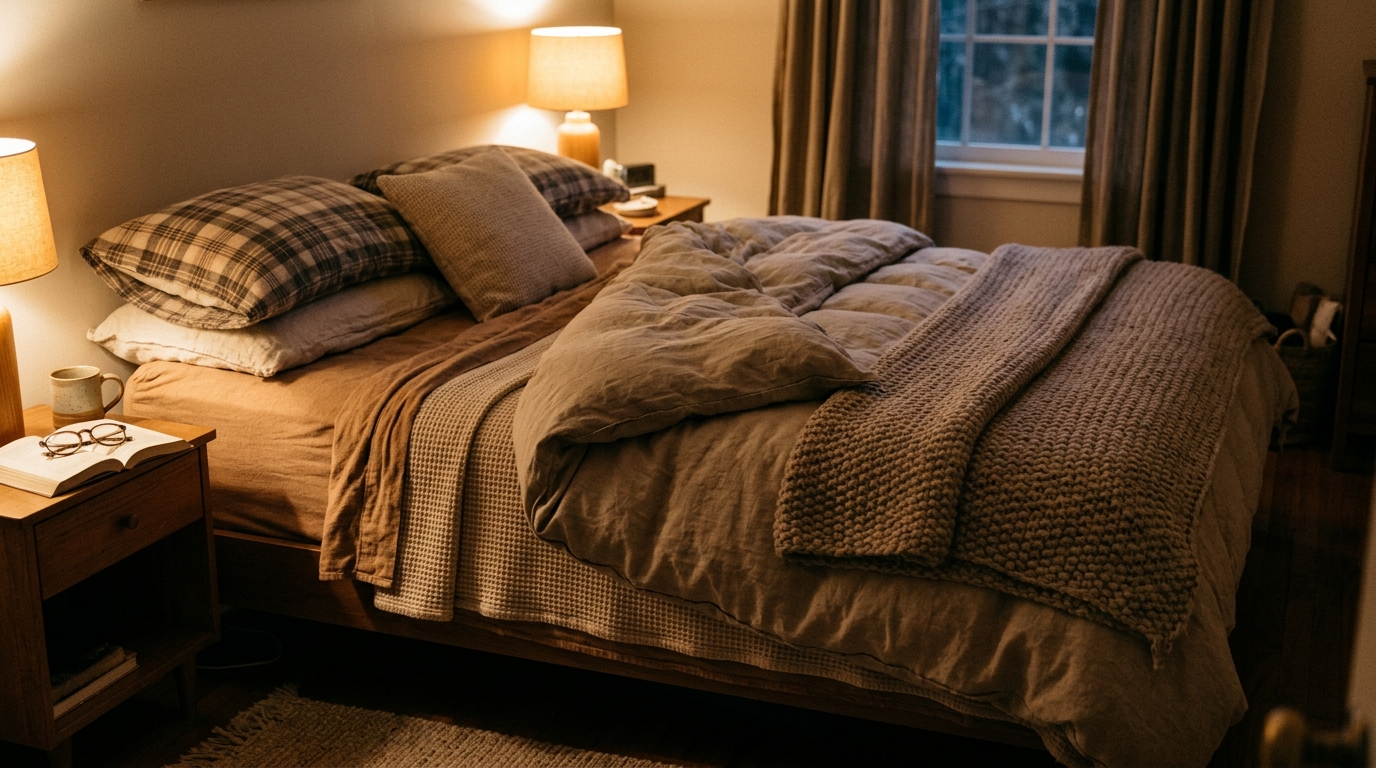
- Start with a fitted sheet, then add a flat sheet on top of it so you have a smooth, snug base layer against the mattress.
- Lay a light blanket or quilt over the flat sheet and tuck the sides and foot of the bed so cold air cannot enter along the edges.
- Place your heaviest comforter or duvet on top, then fold a spare blanket across the bottom third of the bed so your feet stay warm.
- Wear wool or cotton socks and a breathable base layer to bed instead of synthetic fleece, which can trap sweat.
- Lower the thermostat 4 to 5 degrees F at bedtime and test it for a few nights before dropping it further.
- Add a wool or quilted mattress pad directly over the mattress to block heat loss downward, which is typically $30 to $70 for a queen.
- Swap synthetic sheets for cotton flannel or percale sets, which breathe and wick moisture better than microfiber.
- Build the middle layer with a wool or down alternative blanket ($25 to $60), keeping it separate from your top comforter so you can add or remove it.
- Finish with a duvet or comforter in a weight suited to your climate, and use a duvet cover so washing is easy.
- Place a thick rug or foam mat beside the bed and push the bed a few inches away from exterior walls to reduce cold radiation.
- Program your thermostat to drop 7 to 10 degrees F about 30 minutes before bedtime and return to normal 30 minutes before you wake.
Why It Works: The Benefits
A 7 to 10 degree overnight setback can save up to 10% a year on heating, and layered bedding is what makes that setback livable.
Sleep research generally points to a bedroom temperature of about 60 to 67 degrees F for most adults, so a cooler room with warm bedding often improves sleep rather than hurting it.
Partners with different heat preferences can each use their own top layers, which solves the classic hot sleeper versus cold sleeper argument without a second thermostat.
Most households can build a good layered system for under $100, and every layer can be added or removed as seasons change.
Fewer run hours overnight means less wear on the equipment, which can modestly extend furnace life over many seasons.
💰 Savings Impact by Action
Lowering the setpoint 7 to 10 degrees F for 8 hours nightly saves up to 10% a year on heating, per DOE guidance.
Blocking downward heat loss lets you tolerate a lower room temperature, adding a few percent in extra setback savings.
Stopping cold air from reaching the bed area supports a deeper setback without discomfort, worth around 5% in additional comfort-driven savings.
Wicking moisture prevents clammy chill, so you can hold a lower temperature setting more comfortably.
🏠 Key Concepts Explained
The Science Behind It
Bedding works by managing three kinds of heat transfer. Conduction pulls warmth from your body into the mattress where you touch it, convection carries warm air away from you as drafts move across the bed, and radiation sends heat toward cold windows and walls. Layers fight all three at once: a mattress pad slows conduction, tucked edges reduce convection, and a thick top layer reflects and holds radiant heat close to you.
Insulation value in bedding comes almost entirely from trapped air. Fibers like wool, down, and cotton flannel create thousands of tiny air pockets that are poor conductors of heat. This is why two thin blankets often feel warmer than one thick one of equal weight, since the air gap between the layers is itself an insulator. Compressing bedding by tucking it too tight or stuffing it into a small duvet cover squeezes out that air and cuts the warmth you get.
The energy savings come from the building side of the equation. Heat loss from a house is roughly proportional to the temperature difference between inside and outside. Lowering your indoor setpoint overnight shrinks that difference, so the furnace runs less. Layered bedding simply shifts the heating job from the whole house to the small space around your body, which is vastly more efficient.
Frequently Asked Questions
▼ Why do I wake up sweating even though the room is cool?
You are likely using too many insulating layers or synthetic fabrics that trap moisture. Swap polyester or microfiber for cotton, linen, or wool, and use several thinner layers so you can shed one without fully waking up. A top layer that you can kick off easily solves most night sweats.
▼ Can renters do this without landlord permission?
Yes, bedding changes require no permission and nothing is installed in the home. Mattress pads, flannel sheets, wool blankets, and a rug beside the bed all move with you. If you cannot control the thermostat, layered bedding is one of the few comfort upgrades fully in your hands.
▼ How long before I actually notice savings on my bill?
Expect to see a change in your next full billing cycle, though it will be modest because overnight setbacks only affect part of each day. If you drop the setpoint 7 to 10 degrees for 8 hours nightly, savings of about 5 to 10% on heating are realistic over a season. Compare against the same month last year, adjusted for weather, to judge fairly.
▼ What if my home is older than 30 years?
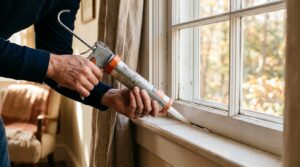
Older homes usually leak more air and have thinner insulation, so the bedroom may drop in temperature faster after setback. Start with a smaller setback of 4 to 5 degrees and add draft sealing around windows and doors. The bedding approach still works, but your comfortable setback may be smaller until you improve the envelope.
▼ Is it safe to lower the thermostat that much at night?
For healthy adults, 60 to 65 degrees F is generally safe and comfortable with proper bedding. Avoid very low setbacks for infants, elderly people, or anyone with health conditions that make them sensitive to cold, and never let the house drop low enough to risk frozen pipes.
Quick Tips
- Wash and fully dry bedding before winter, since compressed, damp, or matted fill loses much of its insulating loft.
- Keep a spare folded blanket at the foot of the bed so a cold night does not require getting up or raising the thermostat.
- Use a draft stopper or rolled towel at the bottom of the bedroom door if cold air leaks in from the hallway.
- Close curtains at night and consider thermal drapes, since a cold window can radiate chill onto the side of the bed nearest to it.
Variations for Your Situation
- Apartment/Rental: Focus on portable layers like a wool mattress topper ($40 to $90), flannel sheets ($30 to $60), and a draft snake for the door ($10). If you cannot set the thermostat, a plug-in oil-filled radiator on a timer is not needed when bedding does the work, and everything moves with you at lease end.
- Tight Budget (under $50): Use what you own first, adding a thrifted wool blanket ($10 to $20) and a folded towel as a bottom layer under your sheet. Tuck edges tight, wear wool socks, and lower the thermostat just 3 to 4 degrees to start. This alone can save a few percent on heating at almost no cost.
- Older Home (pre-1980): Expect colder walls and drafts, so push the bed away from exterior walls and hang thermal curtains ($25 to $60 per window) alongside the layering. Start with a 4 to 5 degree setback and use a rug and mattress pad to fight cold floors, since older homes often lose more heat through the floor and window edges.