Most of us set the thermostat for the whole house and then crawl into bed expecting it to feel right. But your body is the real thing being heated, not the air. Sleeping at 68 to 70 degrees in winter or 74 to 76 in summer costs real money over eight hours a night, and the energy used to hold those temperatures adds up across a season. The U.S. Department of Energy estimates you can save roughly 1% on heating costs for every degree you lower the thermostat for an 8-hour stretch, which is why nighttime setbacks are one of the easiest wins in home efficiency.
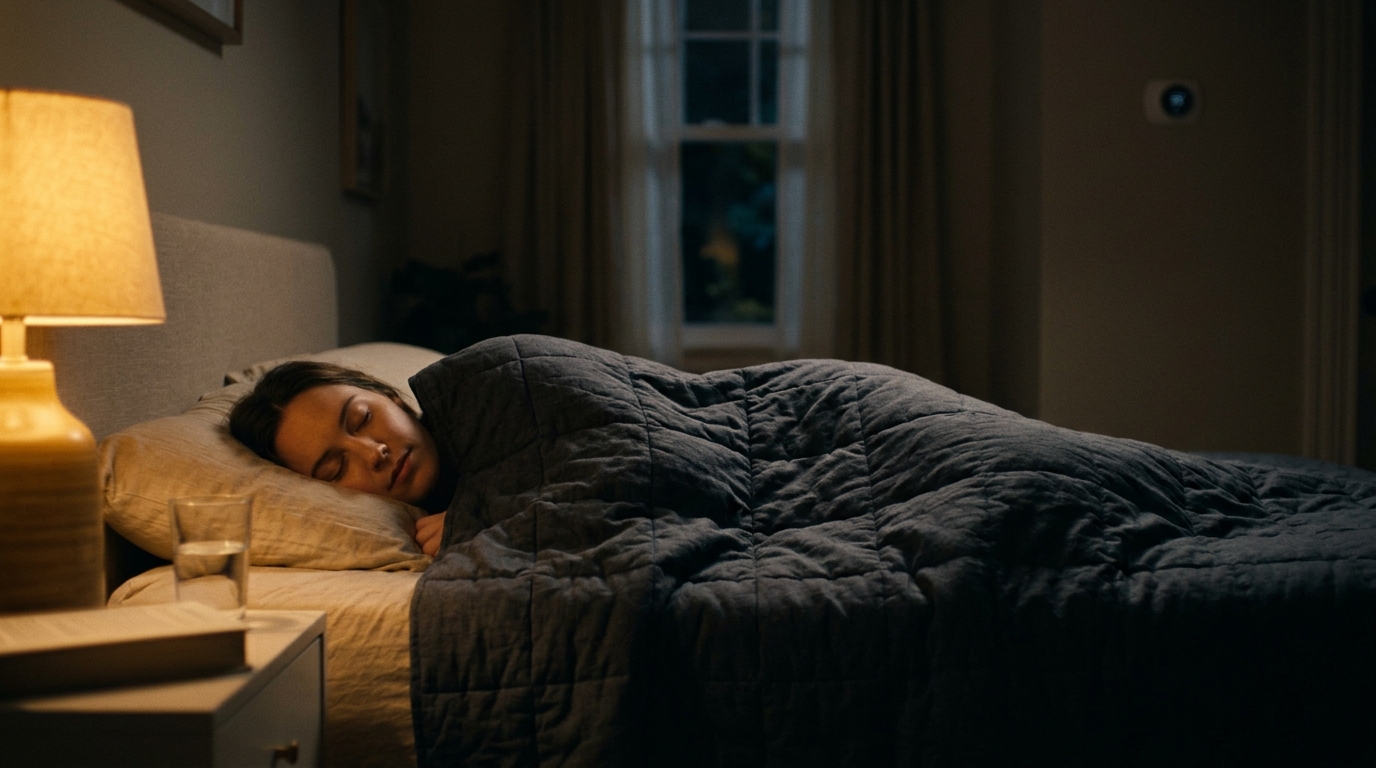
The problem is comfort. Drop the temperature too far and you wake up chilly, restless, or reaching for the thermostat at 2 a.m. That is where a weighted blanket enters the picture. Because it presses evenly against the body and traps a stable layer of warm air close to the skin, it changes how warm you feel at a given room temperature. It also tends to reduce tossing and turning, which means fewer cold spots exposed by shifting covers.
This post explains how weighted blankets interact with your body’s temperature regulation, how to use that effect to justify a lower nighttime thermostat setting, and how to avoid the common trap of overheating in summer. You will get a quick, no-cost approach and a more committed DIY upgrade, plus realistic savings numbers so you know what to expect.
What You’ll Need
Click on an item below to shop for the recommended items for this recipe on Amazon.
As an Amazon Associate, we earn from qualifying purchases.
How to Do It
- Pick a weighted blanket around 10% of your body weight. For example, a 150 pound adult would choose about a 15 pound blanket. Do not exceed this guideline.
- Lower your nighttime thermostat by just 2 degrees for the first week, for example from 68 to 66 degrees in winter.
- Sleep with your usual sheets and the weighted blanket as the top layer, tucking the edges loosely so warm air stays near your body.
- After a week, drop the setpoint another 1 to 2 degrees if you stay comfortable. Stop when you feel chilly at any point in the night.
- Raise the thermostat back to your daytime setting about 30 minutes before you wake so the house is comfortable when you get up.
- Install or program a thermostat with a sleep schedule. Set winter nights to 62 to 66 degrees, starting about an hour after you go to bed so you fall asleep comfortably first.
- Choose bedding for your climate. In cold regions, pair the weighted blanket with flannel or wool-blend sheets. In mild regions, use cotton or bamboo sheets to stay breathable.
- Check bedroom airflow. Close vents in unused rooms only slightly, and keep the bedroom door open or closed consistently so temperature does not swing.
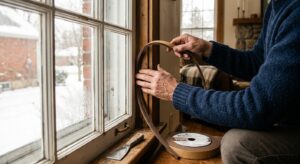
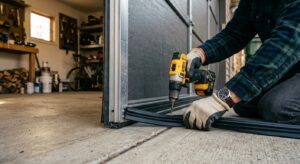
- Seal obvious drafts near the bed by adding weather stripping to the door and a foam gasket behind outlet plates on exterior walls. Cold drafts defeat the warmth you are building.
- Track your comfort and your bill for two billing cycles. Adjust the setback depth in 1 degree steps until you find the lowest comfortable setting.
- In summer, switch to a lighter weighted blanket with breathable fill or use it only in air-conditioned rooms set 1 to 2 degrees warmer than usual.
Why It Works: The Benefits
A 3 to 4 degree overnight setback made comfortable by a weighted blanket can cut heating costs by roughly 3 to 5%, depending on your climate and insulation.
Even warmth around the body means less waking up cold and fewer trips to bump up the thermostat, which keeps your setback schedule intact.
A cooler bedroom paired with deep-pressure comfort supports a natural overnight temperature drop. Many people report falling asleep faster and moving less.
A quality weighted blanket costs about $60 to $150, far less than most HVAC upgrades, and it works year after year.
It stacks with a programmable thermostat, sealed windows, and better insulation, so savings compound rather than compete.
💰 Savings Impact by Action
Lowering the thermostat 4 degrees for 8 hours overnight saves about 4% on heating costs per DOE guidance.
Sealing bedroom door and window gaps cuts air leakage and can lower heating costs by up to 10% in leaky rooms.
Staying comfortable at a cooler setpoint lets you avoid late-night thermostat bumps that erase part of your savings.
A programmable thermostat can lock in setback habits and save roughly 8% versus manual adjustment.
🏠 Key Concepts Explained
The Science Behind It
Your body loses heat in four main ways: conduction, convection, radiation, and evaporation. Bedding mostly fights conduction and convection by trapping still air around the skin. Still air is a decent insulator, and a snug, evenly distributed blanket reduces the small air currents that carry heat away. A weighted blanket helps hold that layer in place so it does not shift or open up gaps as you move.
Sleep also changes how your body manages temperature. Core temperature falls by about 1 to 2 degrees Fahrenheit as you fall asleep, and the body sheds heat through the hands and feet to make that happen. A bedroom that is too warm interferes with that cooling, while one that is too cold forces your body to spend energy staying warm. Most sleep research points to a sweet spot of roughly 65 to 68 degrees for adults, which happens to line up well with energy-saving setback targets.
From the building side, heat loss from a home is driven by the temperature difference between inside and outside. A smaller difference means a slower flow of heat through walls, windows, and air leaks, so the furnace runs less. That is why each degree of setback saves roughly 1% over an 8-hour period. The blanket does not change your home’s physics, but it changes your comfort threshold, which is what lets you use a lower setpoint without feeling it.
Frequently Asked Questions
▼ Why do I still feel cold even with a weighted blanket and a lower thermostat?
Your setback may be too deep, or cold air is leaking in near the bed. Raise the nighttime setpoint by 2 degrees and check for drafts around windows and exterior walls. Also confirm your sheets are not thin and that the blanket covers your shoulders.
▼ Can renters do this without landlord permission?
Yes. A weighted blanket, new sheets, and a plug-in room thermometer need no modifications. If you control your own thermostat, you can adjust the setpoint freely, and removable draft stoppers under doors work without altering the unit.
▼ How long before I actually notice savings on my bill?
You will usually see a small difference within one billing cycle, but 2 to 3 cycles give a clearer picture because weather varies. Expect roughly 3 to 6% lower heating costs from a consistent 3 to 4 degree overnight setback.
▼ What if my home is older than 30 years?
Older homes often leak more air, so the bedroom may feel colder at the same setpoint. Seal obvious drafts first, then try a smaller setback of 2 degrees. Savings may be smaller in percentage terms but the comfort gain from the blanket is still real.
▼ Will a weighted blanket make me too hot in summer?
It can if the fill is dense and not breathable. Use a lighter blanket with cotton or bamboo, or skip it on very warm nights. Pair it with a ceiling fan and a 1 to 2 degree higher AC setpoint to avoid giving back your savings.
Quick Tips
- Choose a blanket weighing about 10% of your body weight, and never go heavier than that.
- Pick breathable fills like cotton or bamboo for warm climates, and denser fills for cold regions.
- Start with a 2 degree setback and step down gradually instead of dropping 6 degrees overnight.
- Wash the blanket according to the label so the fill stays evenly distributed and insulating.
Variations for Your Situation
- Apartment/Rental: Since you cannot modify central HVAC, focus on the blanket, flannel or wool-blend sheets, and a removable draft stopper for the door. Together these cost about $90 to $200 and let you tolerate a 2 to 3 degree cooler setting wherever you control the thermostat.
- Tight Budget (under $50): Skip buying a weighted blanket at first. Layer a heavy quilt over a comforter, tuck the edges, and lower the setpoint by 2 degrees. A $10 to $15 roll of weather stripping for the bedroom door adds meaningful warmth retention.
- Older Home (pre-1980): Expect more drafts and uneven temperatures, so seal bedroom windows and exterior-wall outlets before lowering the setpoint. Use a smaller 2 degree setback at first, and consider a thick bedroom rug to reduce cold floor radiation.