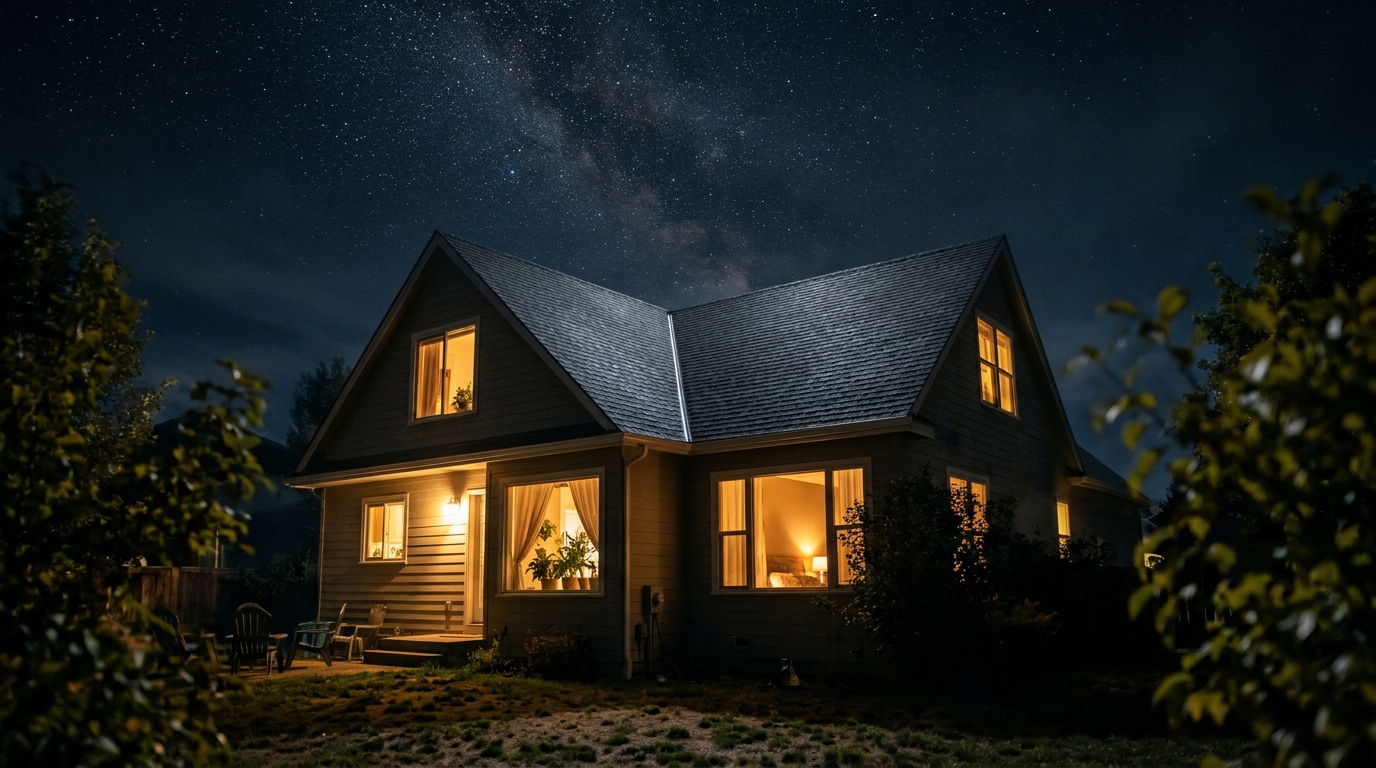
Step outside on a clear, dry night and you may notice the air feels cooler than you expected, and your car windshield might even be wet with dew. That is radiative cooling at work. Every warm surface constantly emits infrared radiation, and on a clear night a big chunk of that energy escapes through the atmosphere’s “infrared window” (roughly 8 to 13 micrometers) into the cold of deep space. Your roof, your walls, and the ground are all losing heat this way right now.
Scientists at universities like Stanford, Purdue, and the University of Colorado have been developing special coatings and films that make this effect strong enough to cool a surface below the surrounding air temperature, even in direct afternoon sun. Purdue’s ultra-white paint, for example, has been measured reflecting about 98 percent of sunlight and cooling surfaces up to 8 to 10 degrees F below ambient in testing. That research is promising, but you do not need a lab coat to benefit from the same physics.
This post breaks down how night sky cooling works, what you can do tonight for free to harness it, and how to upgrade to a cool roof or radiative coating for lasting savings. We will cover realistic numbers, not lab hype, so you know what to expect on a real house with real bills.
What You’ll Need
Click on an item below to shop for the recommended items for this recipe on Amazon.
As an Amazon Associate, we earn from qualifying purchases.
How to Do It
- Check the forecast for clear skies and an overnight low at least 10 degrees F below your indoor temperature. Clear, dry nights give the strongest radiative effect.
- After sunset, once outdoor air is cooler than indoor air, open windows on opposite sides of the house to create cross-ventilation. Open upper-floor windows too so hot air can rise out.
- Place a box fan in a window facing outward on the upper floor to exhaust warm air, while opening a lower window on the shaded side to draw in cool air. A $30 to $40 fan works fine.
- Run this night flush until the indoor temperature matches the outdoor temperature, usually 2 to 4 hours, then close everything before sunrise.
- Keep blinds and curtains closed on sun-facing windows during the day to lock in the cool air you stored overnight.
- Confirm your roof type and condition. Reflective elastomeric coatings suit flat roofs, metal roofs, and many low-slope roofs. Check the manufacturer’s rating and make sure the product is Cool Roof Rating Council (CRRC) or ENERGY STAR listed.
- Clean the roof thoroughly with a pressure washer and a mild detergent. Dirt, mildew, and chalking prevent the coating from bonding properly. Let it dry fully.
- Repair cracks, loose flashing, and failed seams with a compatible roofing sealant, and prime bare metal or rusted spots as the coating instructions specify.
- Apply the coating in two thin coats with a roller or sprayer, working in the cool morning hours. Allow the full cure time between coats, and avoid applying if rain is expected within 24 hours.
- Check the product’s solar reflectance and thermal emittance numbers. Look for reflectance of 0.65 or higher and emittance of 0.80 or higher for strong overall performance.
- Re-inspect the roof every spring and clean off dust and debris, since dirt can reduce reflectance by 10 to 15 percent over a few years.
- Get three quotes from licensed roofers who are familiar with cool roofing and can provide CRRC-rated products. Ask for the product’s initial and aged solar reflectance values.
- Choose the right system for your roof: cool-colored asphalt shingles, light-colored metal roofing with a high-emittance finish, or a white membrane for flat roofs.
- Ask your installer to evaluate attic ventilation and insulation at the same time. Pairing a cool roof with R-38 to R-49 attic insulation multiplies the savings.
- Check for rebates. Many utilities and states offer incentives for cool roofs, and some federal tax credits may apply to qualifying roofing materials.
- If you are curious about emerging radiative cooling films or panels, ask your contractor whether any local pilot programs or certified products are available. Treat performance claims cautiously until independent testing is available.
Why It Works: The Benefits
The DOE and Lawrence Berkeley National Laboratory report that cool roofs can cut air conditioning use by 10 to 30 percent, with the biggest gains in single-story homes in hot climates.
Reflective roof surfaces can run 50 to 60 degrees F cooler than dark roofs at peak sun, which keeps top-floor rooms noticeably more comfortable.
Lower surface temperatures reduce thermal expansion stress and UV breakdown, and some coatings extend roof service life by several years.
Reducing peak afternoon heat gain means shorter run cycles and fewer hours at full load, which lowers wear on the compressor.
Simple night-flush habits use the cool night air and sky for zero cost, often cutting afternoon AC runtime by 1 to 3 hours on mild summer days.
💰 Savings Impact by Action
A high-reflectance, high-emittance roof can cut AC energy use by 10 to 30 percent, with an average near 20 percent in hot climates.
Venting warm air at night and sealing the house by dawn can reduce daytime AC runtime by about 10 percent on mild summer days.
Pairing a reflective roof with attic insulation at R-38 or higher can add another 10 to 20 percent reduction in cooling load.
Closing blinds and using reflective film on sun-facing windows can block 10 to 15 percent of solar heat gain.
🏠 Key Concepts Explained
The Science Behind It
Every object above absolute zero emits thermal radiation. On a clear night, the ground and your roof are exchanging infrared energy with the sky. Because the atmosphere is largely transparent between 8 and 13 micrometers, a surface that emits strongly in that band loses heat directly to the cold of outer space, which sits near minus 270 degrees C. Humid air, clouds, and pollution absorb and re-emit that radiation, which is why dry, clear nights produce the biggest drop.
During the day, the challenge is the sun. Sunlight delivers roughly 1,000 watts per square meter at peak, far more than a surface can radiate away. Traditional roofs absorb most of it. The breakthrough in recent research is materials that do two things at once: reflect more than 95 percent of incoming sunlight while also emitting strongly in the infrared window. With that combination, a surface can stay cooler than the surrounding air even under direct sun, which is called sub-ambient daytime radiative cooling.
For homes, most of the real-world payoff comes from the simpler version of the same idea. A roof with high solar reflectance and high thermal emittance absorbs far less heat in the first place and sheds what it does absorb more quickly after sunset. Lowering roof surface temperature by 40 to 60 degrees F cuts the heat flowing into the attic, which reduces the load on your air conditioner and shortens its run time.
Frequently Asked Questions
▼ Why is my AC still running all day even after I tried a night flush?
A night flush only helps if the outdoor air is meaningfully cooler than your indoor air. If overnight lows stay above 75 degrees F or humidity is high, there is not enough temperature difference to bank real cooling. In that case, focus on reducing daytime heat gain with window shades, attic insulation, and a reflective roof instead.
▼ Can renters do this without landlord permission?
Yes, the night flush and shading habits need no permission and cost almost nothing. Roof coatings are a landlord decision, but you can still use box fans, reflective window film, and blackout curtains to get a portion of the benefit. Ask your landlord whether they have plans for roof maintenance, since a cool roof upgrade can lower tenant complaints and maintenance costs.
▼ How long before I actually notice savings on my bill?
Night flush habits can show up on your very next bill if your climate allows overnight cooling, typically 5 to 15 percent less AC runtime. A reflective roof coating or cool roof takes a full cooling season to evaluate, since you need to compare against the same weather period from the year before. Look at kWh usage rather than dollars to avoid being thrown off by rate changes.
▼ What if my home is older than 30 years?
Older homes often have poor attic insulation and leaky ducts, which can swallow the gains from a cool roof. Add insulation to R-38 or better and seal obvious air leaks first, then consider a cool roof. Also have the roof inspected, since old shingles may not hold a coating well and may be better replaced with cool-rated shingles.
▼ Will a white roof make my heating bills go up in winter?
A small winter heating penalty can occur, but in most climates it is much smaller than the summer cooling savings. Studies from Lawrence Berkeley National Laboratory show net energy savings across most US climate zones. In very cold regions with long heating seasons, a cool roof may not pay off, so weigh your local degree days before committing.
Quick Tips
- Choose cool roof products with both high solar reflectance (0.65 or more) and high thermal emittance (0.80 or more) for the best real-world results.
- Clear, dry nights beat humid ones, so schedule your night flush for low-humidity evenings when the dew point is under 60 degrees F.
- Trim tree branches that shade your roof only if you are not relying on that shade for cooling, since a shaded roof does not need reflectivity as much.
- Combine reflective roofing with attic insulation upgrades and sealed ductwork for the biggest total drop in cooling bills.
Variations for Your Situation
- Apartment/Rental: You cannot change the roof, so focus on a window box fan for night flushing ($30 to $40), reflective window film on sun-facing glass ($20 to $60 for a few windows), and blackout curtains. Together these can trim cooling use by 5 to 10 percent.
- Tight Budget (under $50): Skip roof work and use a single box fan for night flushing, close blinds by 9 a.m., and seal obvious window gaps with removable weatherstripping or rope caulk. This costs under $50 and can still cut afternoon AC runtime noticeably on mild days.
- Older Home (pre-1980): Start with air sealing and attic insulation to R-38 or higher, since older homes lose cool air quickly through leaks. Then consider a cool roof or cool-rated shingles at your next roof replacement, and check that attic vents are not blocked by insulation.