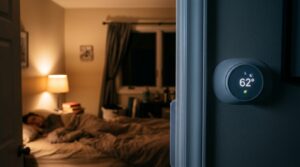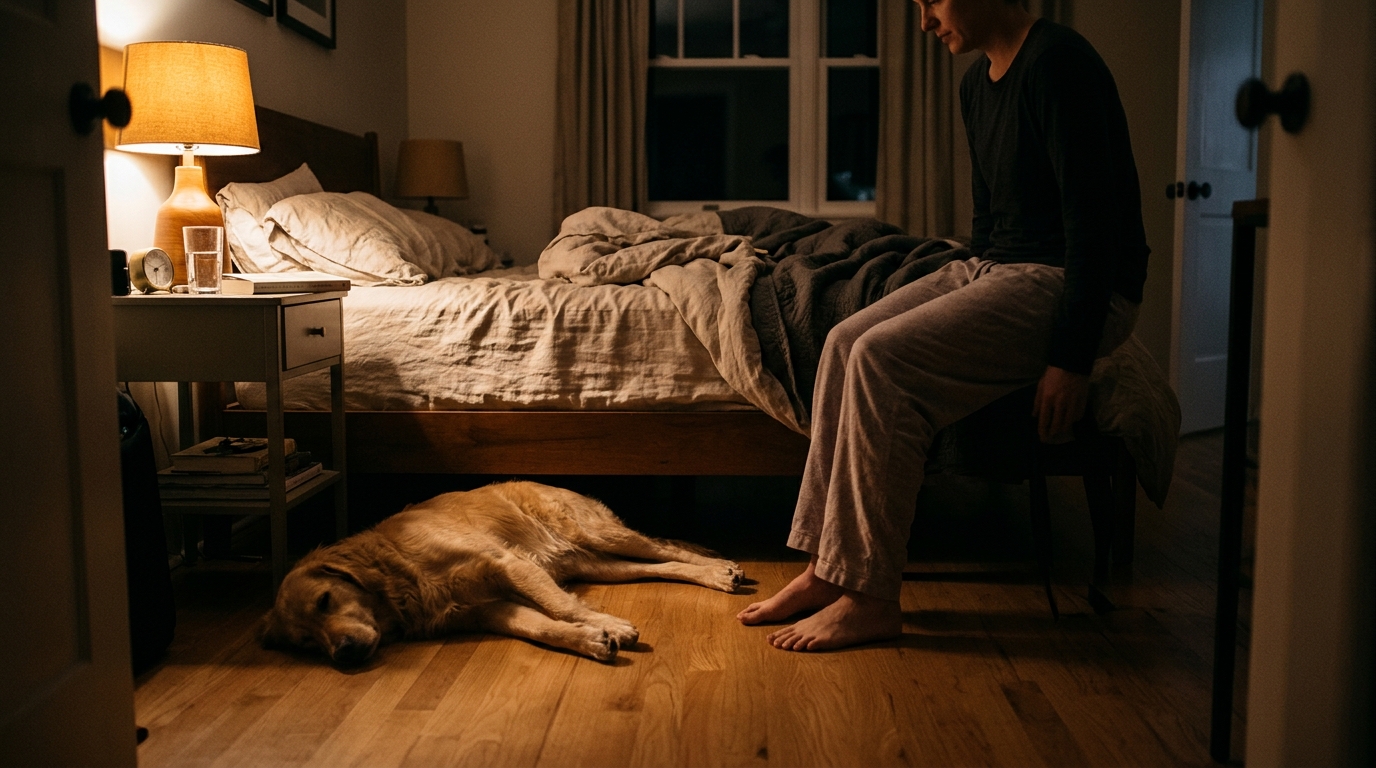
Forced air and radiant floor heat can both hold a bedroom at 68 degrees, yet they feel completely different at 3 a.m. Forced air tends to cycle on with a rush of warm, dry air, then shut off and let the room drift cooler. Radiant floors warm you from below and keep surfaces, walls, and furniture gently warm all night, so the air temperature on the thermostat tells only part of the comfort story.
This matters because most homeowners treat both systems the same way, dropping the thermostat 8 to 10 degrees at bedtime and raising it again at dawn. That habit works reasonably well with a furnace, but it can backfire with radiant heat, especially hydronic systems embedded in concrete, where the slab can take hours to respond. The result is a cold morning, a heating system running flat out at 6 a.m., and savings that never show up on the bill.
In this post we will explain why the two systems feel so different overnight, how to tune each one for comfort and efficiency, and what to do if your radiant floors seem sluggish or your forced air feels drafty. You will get a no-cost quick fix you can do tonight and a more thorough upgrade path if you want to dial in your system for good.
What You’ll Need
Click on an item below to shop for the recommended items for this recipe on Amazon.
As an Amazon Associate, we earn from qualifying purchases.
How to Do It
- Identify your system type. Forced air has vents and a blower. Hydronic radiant has a boiler or heat pump and manifolds. Electric radiant uses heating cables or mats under the floor.
- For forced air, set a nighttime setback of 6 to 8 degrees (for example, 70 days and 63 to 64 nights), which saves roughly 5 to 10 percent annually.
- For hydronic radiant in a concrete slab, limit the setback to 2 to 3 degrees, or hold a constant temperature, since the slab takes hours to recover.
- For electric radiant under a lightweight floor, use a 4 to 5 degree setback and program the warm-up to start 60 to 90 minutes before you wake.
- Give any new schedule 3 to 5 nights before judging it, since slab systems adjust slowly.
- Keep a simple log of the temperature when you wake up and adjust the warm-up start time by 30 minutes until mornings feel right.
- Replace a basic thermostat with a programmable or smart model designed for your system. Radiant systems benefit from units with floor-temperature sensors and adaptive recovery.
- Install or confirm a floor sensor so the thermostat can limit floor surface temperature to about 80 to 85 degrees F for comfort and to protect flooring materials.
- Enable adaptive or predictive recovery so the control learns how long your floor takes to warm and starts the cycle early.
- On hydronic systems, ask a technician to set outdoor reset on the boiler so supply water temperature automatically drops in milder weather. This can improve efficiency by 5 to 10 percent.
- Add area rugs only where needed. Thick, high-pile rugs can insulate the floor and cut heat output by 10 to 30 percent in those zones.
- Review your utility bill after one full billing cycle and compare it with the same month last year, adjusting for weather.
- Schedule a heating contractor familiar with radiant systems, not just forced air.
- Ask for a full inspection: flow rates on each loop, manifold balancing, pump operation, and purging air from the lines.
- Request an outdoor reset curve and a proper supply water temperature for your floor type and insulation level.
- For forced air, ask for a duct leakage test. Typical homes lose 20 to 30 percent of heated air through leaky ducts, and sealing can cut that significantly.
- Keep the service report so you have baseline settings to reference later.
Why It Works: The Benefits
Because warm floors raise mean radiant temperature, many people are comfortable at 66 to 68 degrees with radiant heat. Each degree of reduction saves roughly 1 to 3 percent on heating costs.
Thermal mass in a slab keeps room temperature swings to 1 to 2 degrees overnight, versus the 3 to 5 degree swings common with a cycling furnace.
No blower means no fan noise and far less air movement carrying dust and allergens. That can mean better sleep quality and fewer morning sniffles.
Low-temperature radiant systems pair well with condensing boilers and heat pumps, which can run 10 to 25 percent more efficiently at lower supply temperatures.
Heat comes from the whole floor surface rather than a few supply registers, so rooms far from the furnace or over garages feel more even.
💰 Savings Impact by Action
Matching setback depth to system type avoids recovery waste and typically saves around 5 to 10 percent on heating.
Radiant comfort at 66 to 68 degrees instead of 70 can save 1 to 3 percent per degree lowered.
Letting the boiler lower supply water temperature in mild weather improves efficiency by roughly 5 to 10 percent.
Sealing leaky ducts in a forced air home can recover 10 to 20 percent of lost heated air, per DOE estimates.
Sealing envelope leaks can cut heating and cooling costs by about 15 percent according to ENERGY STAR.
🏠 Key Concepts Explained
The Science Behind It
Your sense of warmth depends on how fast your body loses heat. You lose heat three ways: convection to surrounding air, conduction to surfaces you touch, and radiation to cooler surfaces in the room. Forced air mainly changes the air temperature, so you can feel cool near cold walls or windows even when the thermostat reads 70. Radiant floors warm the surfaces themselves, which reduces radiative heat loss from your body and makes the same air temperature feel warmer.
Thermal mass explains the overnight behavior. A 4-inch concrete slab can store several thousand BTUs per degree of temperature change, so it releases heat slowly when the room cools and absorbs heat slowly when the system turns on. That is why radiant homes feel stable overnight but resist quick changes. A furnace, with almost no thermal mass in its delivery system, heats the air quickly and then lets it cool just as quickly once the blower stops.
The efficiency picture follows from temperature too. Condensing boilers and heat pumps work best when they supply lower temperature water, and radiant floors need only around 85 to 120 degrees F because they spread heat over a large surface area. Forced air needs hotter air to move enough heat through ducts, which usually means lower equipment efficiency and more heat lost through duct leaks and conduction.
Frequently Asked Questions
▼ Why is my radiant floor still cold in the morning even though I set the thermostat higher?
Slab systems can take 4 to 8 hours to respond, so raising the setpoint at wake-up is too late. Move the warm-up earlier by 1 to 2 hours and use a smaller overnight setback of 2 to 3 degrees. If the floor is still cold, have a technician check for trapped air or an unbalanced loop.
▼ Is it cheaper to leave radiant heat on all night or turn it way down?
For concrete slab hydronic systems, a modest setback or steady setpoint is usually the better choice because deep setbacks force the boiler to run hard to recover. For lightweight electric or thin-over-subfloor systems, a 4 to 5 degree setback generally saves money. Test for a week and compare comfort and your meter or bill.
▼ Why does my forced air home feel colder than my friend’s radiant home at the same temperature?
Your friend’s warm floors raise the mean radiant temperature, so their body loses less heat even at the same air temperature. Your furnace also cycles, creating swings, and air movement adds a cooling effect. Sealing ducts, adding insulation, and using a humidifier in winter can close much of the comfort gap.
▼ Can I add radiant floor heat to a home that has forced air now?
Yes, but the cost varies widely. Electric mats in a bathroom or kitchen run about $5 to $12 per square foot installed, while whole-home hydronic retrofits can run $10 to $20 or more per square foot. Many homeowners start with one or two rooms and keep the furnace for the rest.
▼ How long before I notice savings on my bill?
Behavior changes like a better setback schedule show up in your next billing cycle, though you need to compare against similar weather. Equipment upgrades like outdoor reset or duct sealing take a full season of data. Expect noticeable results within 30 to 60 days.
Quick Tips
- Use a floor-sensing thermostat in bathrooms and kitchens to keep tile warm without overheating the room.
- Keep furniture, thick rugs, and bedding from blocking large areas of the floor in rooms you want to heat quickly.
- Seal air leaks and add attic insulation before upgrading heating controls, since a leaky envelope wastes the benefit of steady radiant heat.
- Bleed air from hydronic loops annually or have it done during a boiler tune-up, since trapped air causes cold spots and noisy pipes.
Variations for Your Situation
- Apartment/Rental: You usually cannot change the heating system, so focus on what you control. Use area rugs strategically, seal drafts around windows and doors with removable caulk or weatherstripping ($10 to $25), and ask your landlord about programmable thermostat access. A plug-in oil-filled radiator on a timer ($40 to $80) can warm a bedroom without heating the whole unit.
- Tight Budget (under $50): Pick a modest 2 to 3 degree setback for radiant or a 6 to 8 degree setback for forced air, and shift your warm-up earlier. Add door sweeps and weatherstripping ($15 to $30), and wear socks and use a warmer duvet so you can lower the setpoint by 1 to 2 degrees. These steps can still trim heating costs 5 to 10 percent.
- Older Home (pre-1980): Expect higher air leakage and less insulation, which makes any heating system work harder. Start with air sealing and attic insulation, since heating savings of 15 to 25 percent are common. If you have an older hydronic system, ask a technician to check for sludge, trapped air, and outdated controls before assuming the system needs replacement.