You know the feeling. It is 10 p.m., the sun went down hours ago, and your bedroom still feels like a toaster oven. Heat has been soaking into the walls, ceiling, and furniture all day, and now it is slowly radiating back out while you try to sleep. Research on sleep consistently shows that the ideal bedroom temperature is between 60 and 67 degrees F, and anything above about 75 degrees F measurably increases restlessness and nighttime waking.
The usual fix is to run the central AC all night, which can cost $1 to $3 per night in a typical home, or to cool the whole house just to make one room comfortable. But there is a much cheaper option that most people either do not know about or set up backward: using a fan as an exhaust, not just a breeze-maker. A simple box fan costs roughly 3 to 5 cents per night to run, uses about 60 to 90 watts, and can move 1,500 to 2,500 cubic feet of air per minute.
This post covers the exact placement trick that makes the difference, a no-cost version you can try tonight, a more permanent DIY setup for hot climates, and the building science behind why it works. If your room is stuffy even with the AC on, you will also find the most common reasons why and how to fix them.
What You’ll Need
Click on an item below to shop for the recommended items for this recipe on Amazon.
As an Amazon Associate, we earn from qualifying purchases.
How to Do It
- Wait until outdoor temperatures drop below your indoor temperature, typically after sunset. Check a thermometer or weather app to confirm.
- Open the window in your bedroom that faces away from the prevailing wind or the hot side of the house, and place a box fan in it blowing OUT. Seal the gaps around the fan with a towel or cardboard if the window is wider than the fan.
- Open a second window in the bedroom, ideally on the opposite wall or lower than the fan window, by 2 to 4 inches. This is where cooler air will be drawn in.
- Close the bedroom door if the rest of the house is warmer, or leave it open and open a window in a cooler part of the home to create a longer airflow path.
- Run the fan on medium or high for 30 to 60 minutes before bed, then drop to low while you sleep if the noise is a concern.
- Buy a window fan with reversible airflow or two box fans (look for ENERGY STAR rated models, which use up to 20% less power than standard fans).
- Install one fan blowing out of the highest window in the room (warm air collects near the top) and a second fan blowing in through a low window on the opposite or shadier side of the house.
- Cut a piece of foam board, cardboard, or plywood to fill the gaps around each fan in the window frame. This prevents hot air from leaking back in around the fan and can improve airflow efficiency by 20 to 30%.
- Plug the fans into a programmable outlet timer ($10 to $15) so they run from sunset until 1 or 2 a.m. when outdoor temperatures are lowest, then shut off automatically.
- Add a cheap indoor/outdoor thermometer ($10 to $20) to confirm outdoor air is cooler before you start the fans. If it is not, skip ventilation and rely on AC or a ceiling fan instead.
- During the day, close the windows, draw blinds or blackout curtains on sun-facing windows, and keep the fans off. This locks in the cool air you pulled in overnight.
- Have an HVAC or insulation contractor evaluate whether a whole-house fan is a good fit. It needs adequate attic venting, typically 1 square foot of vent area per 750 CFM of fan capacity.
- A professional installs the fan in the ceiling of a central hallway, with a sealed insulated cover to prevent winter heat loss.
- Operate it in the evening with several windows open, pulling cool outdoor air through the house and pushing hot air out through the attic vents.
- Used correctly, a whole-house fan can cut summer AC use by 50 to 90% in suitable climates, and the unit costs about 10% as much to run as central air.
Why It Works: The Benefits
A box fan costs about 3 to 5 cents per night to run versus $1 to $3 for central AC, a savings of roughly 95% on those hours.
Properly placed exhaust fans can drop bedroom temperatures 5 to 10 degrees F within 30 to 60 minutes when outdoor air is cooler than indoor air.
Keeping bedroom temperatures in the 60 to 67 degree F range is associated with fewer nighttime awakenings and more time in deep sleep stages.
Cutting even 2 to 3 hours of nightly compressor runtime over a cooling season extends equipment life and reduces peak-load stress.
Bringing in outdoor air flushes out stale air, trapped humidity, and indoor pollutants like VOCs from furniture and cleaning products.
💰 Savings Impact by Action
A box fan uses about 60 to 90 watts versus 3,000 or more watts for central AC, cutting nighttime cooling cost by roughly 95%.
Ventilating with cool night air and closing up by day can reduce cooling energy use by 30% or more in climates with large day-night temperature swings.
Closing blinds or using reflective film on sun-facing windows can cut solar heat gain by up to 45%.
Raising your summer thermostat setting by 3 to 4 degrees as fans do the work can save roughly 10% on annual cooling costs.
🏠 Key Concepts Explained
The Science Behind It
The fan trick works because of two principles: the stack effect and pressure-driven cross-ventilation. When you run a fan pointed outward, it lowers the air pressure inside the room slightly. Nature then tries to equalize that pressure by pulling replacement air in through any available opening, which is your second window. If that incoming air is cooler than the air being pushed out, the room’s average temperature drops steadily.
The reason this beats just pointing a fan at yourself is heat transfer. A fan blowing inward only circulates the same warm air, increasing evaporative cooling on your skin but doing nothing to lower the actual room temperature. An exhaust setup removes warm air from the space entirely. Because warm air naturally accumulates near the ceiling and upper parts of windows, placing the exhaust fan high maximizes how much heat you remove with each cubic foot of air moved.
There is also the matter of thermal mass. Drywall, flooring, and furniture absorb heat all day and release it slowly after dark, a process that can keep a bedroom 5 to 8 degrees warmer than the outdoor air for hours. Continuous ventilation overnight flushes that stored heat, a technique architects call night flush cooling. The Department of Energy notes that homes in climates with large day-night temperature swings can cut cooling energy use by 30% or more using this strategy, and the effect is strongest when daytime shading and window management keep the cool air locked in.
Frequently Asked Questions
▼ Why is my bedroom still hot even with the fan running all night?
Check whether the outdoor air is actually cooler than your indoor air. If it is 80 degrees outside and 78 inside, ventilation will not help. In that case, close the windows, run the AC, and use a regular fan to move air across your body instead. Also verify the fan is pointed outward and that there is a second window open to let replacement air in.
▼ Can renters do this without landlord permission?
Yes. Box fans and window fans are fully removable and require no modifications. Use a window fan with adjustable side panels to fit your window snugly, and avoid drilling or taping anything permanent to the frame. If you are worried about gaps, use removable foam board or a towel to fill them.
▼ How long before I notice a difference in my electric bill?
You will notice the room feeling cooler in 30 to 60 minutes. On your bill, the savings show up in the next billing cycle if you are able to raise your AC thermostat by 3 to 5 degrees or skip nighttime AC runtime on mild evenings. Each degree you raise your thermostat in summer saves roughly 3 to 5% on cooling costs.
▼ What if my home is older than 30 years?
Older homes often leak more air and have less insulation, which makes night ventilation even more effective since the structure sheds heat faster. The downside is that you may also be losing conditioned air through gaps during AC hours. Consider pairing the fan trick with weatherstripping and attic insulation upgrades to get the best of both.
▼ Is it safe to leave a fan running in the window overnight?
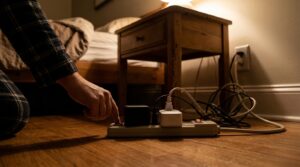
Yes, as long as the fan is rated for continuous use, the cord is undamaged, and it is plugged directly into a wall outlet (not a power strip or extension cord). Look for fans with an auto shutoff feature and avoid placing them near curtains. If you will be away from home or sleeping with ground-floor windows open, use a window lock or security bar.
Quick Tips
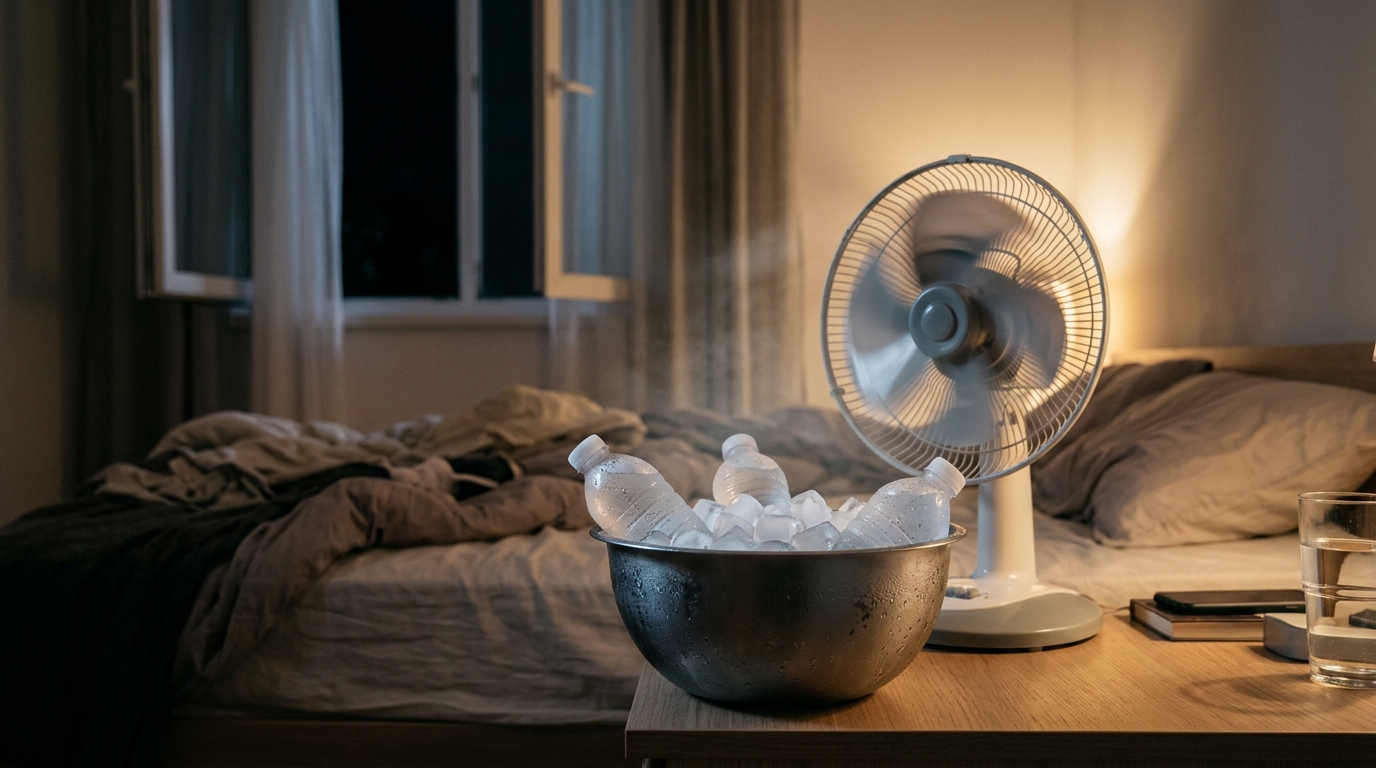
- Freeze a shallow pan or bowl of ice and place it in front of a fan on a very hot night. The fan blows air over the ice, giving you a temporary evaporative boost of roughly 3 to 5 degrees of perceived cooling.
- Run the fan before bed, not just while sleeping. Pre-cooling the room for an hour while you wind down gets the temperature down before you are trying to fall asleep.
- Close blinds and curtains on east and west-facing windows during the day. Blocking direct sunlight can reduce room heat gain by up to 45%, according to the Department of Energy.
- Swap your bedroom light bulbs and electronics for LEDs and unplug chargers when not in use. Incandescent bulbs and always-on electronics add several hundred BTUs of waste heat to a small room.
- If you have a ceiling fan, set it to run counterclockwise in summer so it pushes air downward and creates a cooling breeze. Turn it off when you leave the room since it cools people, not space.
Variations for Your Situation
- Apartment/Rental: Use a tension-mounted window fan ($25 to $50) that fits standard sash windows and removes without tools or damage. If your windows only open on one side, run one fan blowing out and open your front door or a window in another room to create the intake path. Reflective window film (removable, $15 to $25 per window) blocks daytime solar heat without affecting your security deposit.
- Tight Budget (under $50): Use the box fan you already own, towels to seal window gaps, and a free weather app to time your ventilation. Close blinds during the day and open windows only after sunset. The only cost is about 3 to 5 cents a night in electricity, and these steps alone can drop bedroom temperatures 5 to 8 degrees.
- Older Home (pre-1980): Older homes often have single-pane windows, uninsulated attics, and leaky ductwork, so bedrooms on upper floors can run 10 or more degrees hotter than the rest of the house. Prioritize night flush ventilation and daytime window shading, then add attic insulation (target R-38 to R-49) to slow heat from the roof. A $200 to $500 attic upgrade often pays for itself in 2 to 4 years through lower cooling costs.