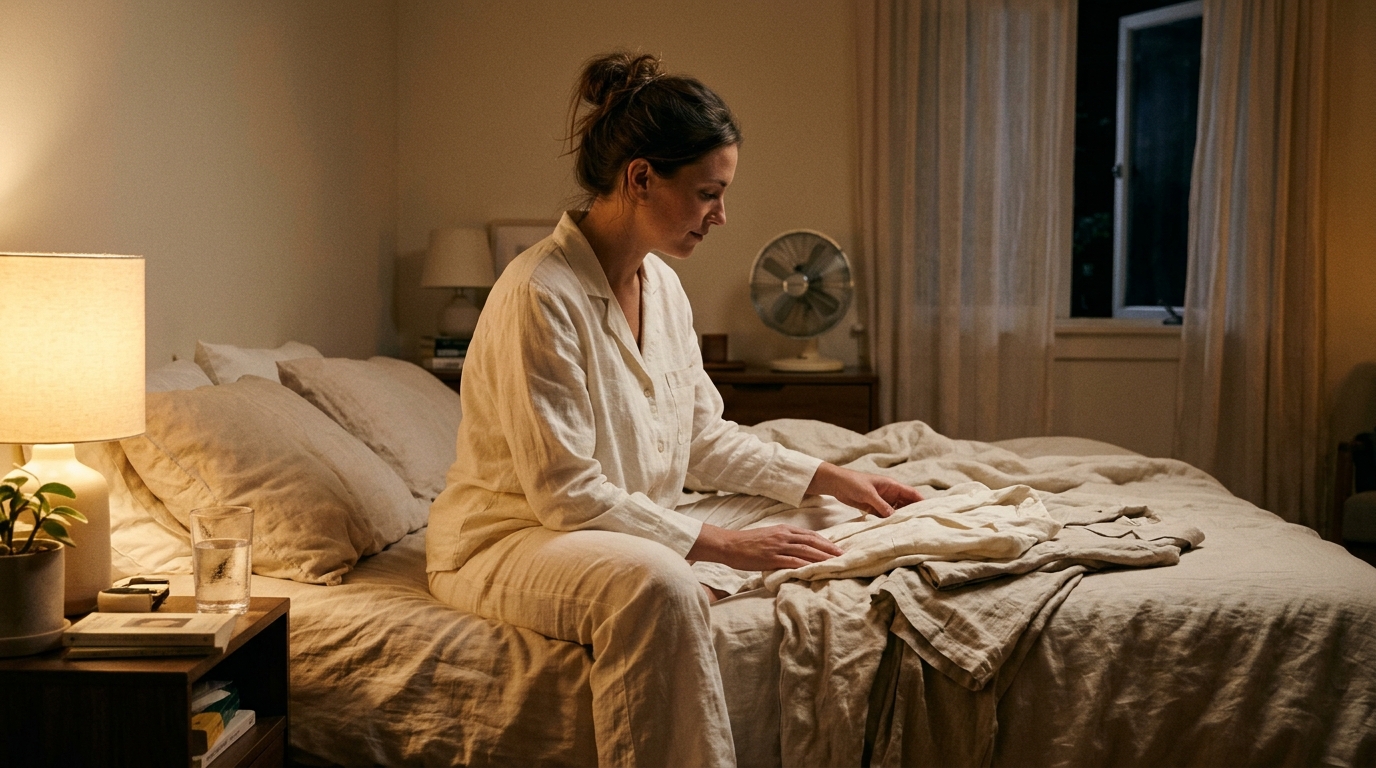
Most hot sleepers blame the bedroom, the mattress, or the weather. But the layer closest to your skin often does the most damage. Polyester fleece, heavy cotton flannel, and tightly woven synthetics trap body heat and moisture against your skin, forcing your body to work harder to cool itself. The usual response is to drop the thermostat to 68 or even 65 degrees overnight, which pushes your AC to run longer when outdoor temperatures are still warm.
Here is the energy math. The U.S. Department of Energy estimates you save roughly 1 to 3 percent on cooling costs for every degree you raise the thermostat setting for eight hours. If better sleepwear lets you raise the setting from 68 to 72 degrees overnight, that can trim your nightly cooling energy by about 6 to 12 percent. Over a cooling season, that adds up to real dollars, and you get better sleep in the process.
This guide breaks down which pajama fabrics actually breathe, which ones just claim to, and how to pair them with simple bedroom adjustments. Whether you only have ten minutes and a few dollars or you want to rebuild your whole nighttime setup, you will find a practical path below.
What You’ll Need
Click on an item below to shop for the recommended items for this recipe on Amazon.
As an Amazon Associate, we earn from qualifying purchases.
How to Do It
- Check the fabric tags on your current sleepwear and set aside anything that is mostly polyester fleece, flannel, or thick synthetic blends.
- Pull out thin, loosely woven items you already own, such as a lightweight cotton t-shirt, a linen shirt, or a worn-in jersey knit tee, and wear those to bed for a week.
- Switch to shorts or a lightweight sleep short set instead of long pants, since exposed legs release heat faster.
- Wash new or old sleepwear in cool water with no fabric softener, which coats fibers and reduces breathability and wicking.
- After a few nights, nudge your thermostat up by 1 degree and see if you still sleep comfortably. Repeat until you hit your limit.
- Choose your primary fabric. Best bets for hot sleepers are Tencel (lyocell), linen, lightweight bamboo viscose, and open-weave cotton such as percale, gauze, or waffle knit.
- Look for a fabric weight of roughly 120 to 160 grams per square meter and a relaxed, loose fit that allows air to move around your body.
- Avoid anything labeled fleece, microfiber, brushed, or flannel, and treat blanket-like polyester blends with suspicion even if marketed as cooling.
- Buy two sets so you can rotate them. Aim for moisture-wicking blends only if they list real fiber content, such as Tencel or merino, rather than a vague proprietary name.
- Pair the new pajamas with breathable bedding of the same family, such as percale cotton or linen sheets, since sheets contribute as much heat as sleepwear.
- Once you sleep well for a week, raise your overnight thermostat by 2 to 4 degrees, ideally landing around 72 to 75 degrees with a ceiling fan on.
- Start with the breathable pajama set from the DIY approach, and add a lightweight linen or percale sheet set and a thin cotton or Tencel duvet cover.
- Replace a heavy comforter with a layered system you can adjust, such as a light blanket plus a sheet, so you can kick layers off without changing the thermostat.
- Add a quiet ceiling fan or oscillating fan aimed to move air across the bed, which can make a room feel about 4 degrees cooler through evaporative cooling on skin.
- Swap a memory foam pillow for a latex, shredded fiber, or cooling-gel option if heat retention at the head is part of the problem.
- Program a smart or basic programmable thermostat to hold 72 to 75 degrees overnight and start a gentle pre-cool before bedtime instead of running cold all night.
Why It Works: The Benefits
Raising your overnight thermostat from 68 to 72 degrees can cut nighttime cooling energy by roughly 6 to 12 percent, based on DOE rule-of-thumb savings per degree.
Staying dry and avoiding heat buildup helps your body hold the temperature drop it needs for deeper sleep, so you wake up less often.
Fabrics that dry quickly and do not hold sweat odor can often be worn two to three nights between washes, cutting wash cycles and water heating costs.
A single set of quality breathable pajamas runs about $25 to $70, far less than any HVAC upgrade, and works the same night you put them on.
It helps whether you use central air, window units, mini-splits, or fans, and does not require any changes to your home or landlord approval.
💰 Savings Impact by Action
Raising your overnight setting about 4 degrees with cooler-feeling sleepwear can trim nighttime cooling energy by roughly 6 to 12 percent.
A bedroom fan lets you feel about 4 degrees cooler, supporting a higher setpoint at about 10 to 50 watts of power.
Matching sheets to your pajamas reduces trapped heat and helps you tolerate warmer room temperatures.
Quick-drying, odor-resistant fabrics can stretch time between washes, saving a small amount of water and heating energy.
🏠 Key Concepts Explained
The Science Behind It
Your body sheds heat in four main ways while you sleep: conduction (touching surfaces), convection (air moving past you), radiation (infrared heat leaving your skin), and evaporation (sweat turning to vapor). Sleepwear mostly affects convection and evaporation. A loose, open-weave fabric lets air circulate and carry heat away, while a dense knit or fleece creates a still pocket of warm air that acts like insulation.
Evaporation is the strongest cooling tool you have, because turning liquid sweat into vapor absorbs a large amount of heat from your skin. But it only works if moisture can move through the fabric and escape. Fibers like Tencel, linen, and merino pull moisture away from skin and release it quickly. Polyester can move moisture along its surface but does not absorb it, so heavy sweat can pool, and tightly woven versions block airflow entirely.
This matters for your energy use because comfort is not just about air temperature. Your perceived warmth depends on skin temperature, humidity at the skin surface, and airflow. When sleepwear improves all three, your body tolerates a warmer room. A thermostat set at 73 degrees with breathable fabrics and a fan can feel as comfortable as 69 degrees in heavy synthetics, and that gap is where the savings come from.
Frequently Asked Questions
▼ I bought cooling pajamas and I still sleep hot. What went wrong?
Check the tag for actual fiber content, since many cooling products are polyester with a surface treatment that fades. Also look at your sheets and comforter, because bedding often traps more heat than sleepwear. Try Tencel or linen pajamas paired with percale sheets and a fan before giving up.
▼ Is sleeping with no pajamas better for hot sleepers?
Not always. Bare skin against sheets can leave sweat sitting on the surface with nowhere to go, and the sheets end up holding the moisture. A thin, loose, wicking layer often keeps you drier and cooler than nothing at all, especially in humid climates.
▼ How long before I notice savings on my electric bill?
You will feel the comfort difference the first night, but the bill impact shows up over a full billing cycle once you have raised your thermostat setting. Expect to see a noticeable change within one to two months of consistent use during cooling season, assuming you actually raise the setpoint.
▼ Are bamboo pajamas actually cool or is it just marketing?
Bamboo viscose can be soft, absorbent, and breathable, but it is chemically processed rayon, and quality varies widely. Look for lightweight, open knits and check that the tag lists real fiber content. Tencel and linen are usually more reliable choices if you are unsure.
▼ Will this work if my bedroom is just always too hot?
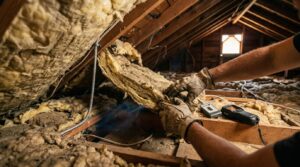
Fabric helps, but it will not fix a room that is hot because of solar gain, poor airflow, or an attic overhead. Pair it with blackout curtains, a fan, and checking your attic insulation. If the bedroom is 5 or more degrees warmer than the rest of the house, the room itself needs attention.
Quick Tips
- Choose Tencel, linen, or open-weave cotton over polyester blends, and always verify the fiber percentages on the tag.
- Skip fabric softener on sleepwear and sheets, since it clogs fibers and reduces breathability and wicking.
- Wash new breathable fabrics once before wearing, which removes finishing chemicals that can reduce airflow.
- Raise your thermostat just 1 degree at a time over a week so your body adjusts without disrupting sleep.
Variations for Your Situation
- Apartment/Rental: You cannot change the HVAC, so focus on the full sleep setup. A $40 to $70 Tencel pajama set, a $60 to $120 percale sheet set, and a $25 to $50 box or tower fan give you most of the benefit with zero changes to the unit or landlord approval.
- Tight Budget (under $50): Start with a thin cotton or linen thrift-store shirt and a pair of lightweight shorts, which often cost $5 to $15. Skip fabric softener, run a fan you already own, and raise the thermostat 1 degree per week. This alone can deliver most of the savings.
- Older Home (pre-1980): Upstairs bedrooms in older homes often run hot because of weaker attic insulation and leaky ductwork. Use breathable fabrics and a fan, but also check attic insulation depth, since reaching R-38 can lower bedroom temperatures noticeably and make the pajama upgrade work even better.