Open your utility bill and you may find something strange: the electricity you used while cooking dinner cost far more per kilowatt-hour than the electricity your dishwasher used at 11 AM. This is time-of-use (TOU) pricing, and it is spreading fast. In California, where TOU plans are now the default for most residential customers, peak rates from 4 to 9 PM can run 40 to 60 cents per kWh while off-peak rates sit closer to 15 to 25 cents. That is roughly triple for the same electricity.
The reason is not greed, it is physics and grid economics. Electricity has to be generated at the exact moment it is used, so utilities must build and maintain enough capacity to handle the single busiest hours of the year. Between 4 and 9 PM, solar output is fading, but people are arriving home, cooking, running AC, doing laundry, and charging EVs. Utilities fire up expensive peaker plants or buy costly power on the open market to cover that gap, and they pass those costs along through higher peak rates.
The good news is that you can control when you use power far more easily than you can control how much you use. This post explains why the peak window exists, then walks through a zero-cost quick fix and a DIY upgrade using smart controls that can trim your bill meaningfully. Check your own rate schedule first, since peak hours, seasons, and price ratios vary by utility.
What You’ll Need
Click on an item below to shop for the recommended items for this recipe on Amazon.
As an Amazon Associate, we earn from qualifying purchases.
How to Do It
- Log into your utility account or check your latest bill to find your TOU rate schedule, noting the exact peak hours, the peak and off-peak prices, and whether weekends are included.
- Move your dishwasher, washing machine, and dryer runs to before 4 PM or after 9 PM. Use the delay-start feature on newer machines so you can load them in the evening and let them run late.
- Pre-cool your home between 1 and 3 PM by lowering your thermostat 2 to 3 degrees below your normal setting, then raise it to 78 degrees or so when the peak window begins.
- Cook with a microwave, slow cooker, or air fryer during peak hours instead of the electric oven, since small appliances use a fraction of the energy for the same meal.
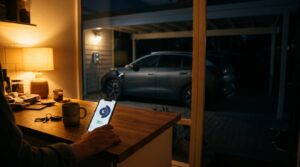
- Start EV charging after 9 PM, or set the car’s built-in charging schedule so it begins at the start of your off-peak window.
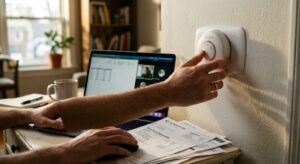
- Install a smart or programmable thermostat that supports multiple daily schedules, and set a pre-cool program that drops the temperature before peak and lets it drift up during the 4 to 9 PM window.
- Add smart plugs ($10 to $25 each) to flexible loads like a spare freezer, window AC, or space heater, and schedule them to run only during off-peak hours.
- Set your water heater to heat during off-peak hours using a timer or smart controller. Heating water in advance and relying on a well-insulated tank can shift 3 to 4 kWh out of the peak window daily.
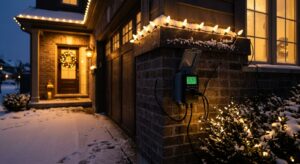
- Program your EV or a Level 2 charger with a schedule so charging starts automatically after peak ends, which removes the need to remember each night.
- Check your first full billing cycle against the previous one and adjust your pre-cool temperatures and schedules in small steps until you find the sweet spot between comfort and savings.
Why It Works: The Benefits
Households that shift major loads out of the 4 to 9 PM window commonly cut 10 to 30 percent from their electric bills, with the biggest savings in summer.
Charging an EV overnight at 15 to 25 cents per kWh instead of 45 to 60 cents during peak saves roughly $400 to $900 per year for a typical 12,000-mile driver.
Cutting peak demand lowers the need for dirty peaker plants and helps prevent the rolling blackouts and flex alerts that occur during heat waves.
Pre-cooling leverages your home’s thermal mass so indoor temperatures stay within 2 to 3 degrees of your target all evening, with little noticeable difference.
If you have solar panels, pairing them with load shifting and time-aware settings maximizes the value of the power you produce and avoids buying back expensive evening electricity.
💰 Savings Impact by Action
Moving laundry, dishwasher, and water heating out of the 4 to 9 PM window can reduce your total bill by roughly 10 percent.
Cooling your home before peak and coasting through the window can cut peak-hour cooling costs by 15 percent or more.
Charging overnight instead of during peak can cut EV charging costs by up to 60 percent, which reduces the overall bill by around 30 percent for EV households.
Automated TOU scheduling typically trims heating and cooling costs by around 10 to 12 percent compared with manual control.
Sealing leaks and improving insulation keeps your pre-cooled air inside longer, reducing cooling loads by 15 percent or more.
🏠 Key Concepts Explained
The Science Behind It
Electricity cannot be stored cheaply at grid scale, so supply and demand must match every second. When demand spikes, utilities dispatch the most expensive generators last, typically natural gas peaker plants that may only run a few hundred hours a year. Those plants cost a lot to build and operate relative to how little they run, and TOU rates are designed to send that price signal directly to customers so they have a reason to ease demand during those hours.
Pre-cooling works because of thermal mass and heat transfer. Air holds very little heat, but your drywall, flooring, furniture, and even the contents of your home absorb and release a lot of it slowly. When you cool a house to 72 degrees before peak, those materials act like a cold battery. As the day goes on, heat leaks in through the envelope at a rate proportional to the temperature difference, so a well-insulated and air-sealed home can coast for several hours before the interior drifts back toward your comfort limit.
This is also why improving your insulation and air sealing amplifies every strategy here. A home with an R-38 attic and tight windows might drift only 2 to 3 degrees over a five-hour peak window, while a leaky older home could climb 6 to 8 degrees. The better your envelope, the more of your cooling you can safely shift into cheap hours.
Frequently Asked Questions
▼ Why is my AC still running all day even after I tried these fixes?
If your system cycles constantly, your pre-cool setpoint may be too low or your home may be losing coolness too fast through leaks and poor insulation. Raise the pre-cool target by 1 to 2 degrees and check for air leaks around windows, doors, and attic hatches. If the unit still runs nonstop, have a technician check refrigerant charge and airflow, since an undersized or struggling system cannot hold a setback.
▼ Can renters do this without landlord permission?
Yes, most of it. Habit shifting, delay-start appliances, smart plugs, and plug-in EV charging require no permanent changes. Many renters also use a smart thermostat swap if the landlord allows it, or a portable plug-in thermostat controller for window and portable units.
▼ How long before I actually notice savings on my bill?
You will usually see the difference on your very next full billing cycle, since TOU savings apply to each kWh you shift. Compare the hourly or time-period breakdown on your bill against the prior month, and expect the biggest gains in summer when cooling loads are highest.
▼ What if my home is older than 30 years?
Older homes lose coolness faster, so pre-cooling gains are smaller and you should limit your peak setback to 3 or 4 degrees. Prioritize attic insulation (aim for R-38 to R-49) and air sealing first, which can cut cooling loads by 15 to 25 percent and make every other strategy more effective.
▼ Is it worth switching to a different rate plan?
It depends on how much you can shift. If most of your usage already falls outside 4 to 9 PM, a TOU plan can save money, but if you are home and running appliances all evening and cannot shift, a flat-rate or tiered plan may be cheaper. Ask your utility for a rate comparison tool, and test it against 12 months of your actual usage data.
Quick Tips
- Check whether your utility offers an EV-specific or whole-home overnight rate, since some plans drop to 10 to 12 cents per kWh after midnight.
- Run ceiling fans during peak instead of the AC when the temperature allows, since a fan uses roughly 15 to 75 watts compared with 3,000 or more for central cooling.
- Close blinds and curtains on sun-facing windows by early afternoon so your pre-cooled house gains heat more slowly during peak.
- Review your hourly usage data (many utilities provide it free online or through a smart meter) to find your actual biggest peak-hour loads before spending money on equipment.
Variations for Your Situation
- Apartment/Rental: Focus on plug-in options since you cannot modify central HVAC. Use delay-start on laundry and dishwasher, buy smart plugs ($10 to $25 each) for window AC units and space heaters, and use a portable fan during peak. Total cost is usually under $75 and no permission is needed.
- Tight Budget (under $50): Skip the gear and change your schedule. Run laundry and dishes before 4 PM or after 9 PM, pre-cool by 2 to 3 degrees in the early afternoon, use fans and small cooking appliances during peak, and close curtains on sunny windows. This costs nothing and can still trim peak usage by 15 to 25 percent.
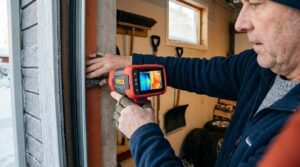
- Older Home (pre-1980): Leaky ducts, thin attic insulation, and drafty windows mean pre-cooling fades fast. Limit setbacks to 3 to 4 degrees, seal obvious gaps with caulk and weatherstripping ($30 to $80), and add attic insulation toward R-38 when budget allows, since these upgrades often return 15 to 25 percent on cooling costs and boost every other strategy.