Windows are the weakest thermal link in most bedrooms. According to the U.S. Department of Energy, about 76% of sunlight that falls on standard double-pane windows enters as heat. In summer, that heat turns a west-facing bedroom into an oven by late afternoon. In winter, the same glass leaks warmth outward, creating a cold zone and a draft you can feel from the bed.
Blackout curtains are usually sold as a sleep product, but their dense, multi-layer construction makes them a surprisingly effective thermal barrier. The DOE reports that medium-colored draperies with white-plastic backing can reduce heat gain by 33% when closed on a sunny window. In winter, tightly fitted insulating drapes can reduce heat loss through a window by up to 10%, and properly sealed thermal-lined versions can do better in drafty rooms.
In this post we cover how blackout curtains actually change bedroom temperature, which features matter (lining, color, hanging method), and two practical ways to get the benefit: a no-cost quick fix using what you already own, and a DIY upgrade that treats the curtain as a proper window insulation system. We also cover mistakes that make curtains nearly useless and when a different solution makes more sense.
What You’ll Need
Click on an item below to shop for the recommended items for this recipe on Amazon.
As an Amazon Associate, we earn from qualifying purchases.
How to Do It
- Identify which bedroom windows get direct sun. West and south windows matter most in summer; north-facing windows matter most for winter drafts.
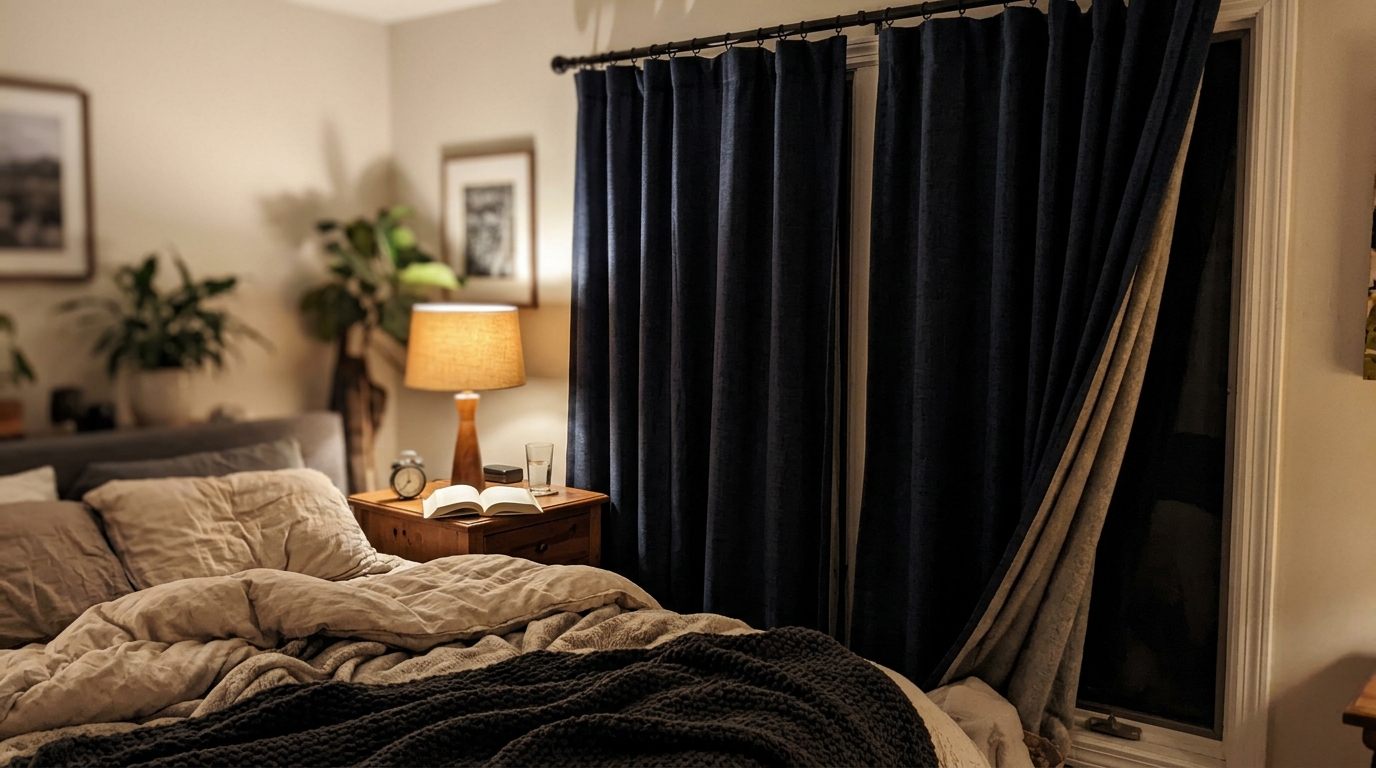
- Hang or install existing blackout or heavy lined curtains so the fabric covers the full window plus at least 3 to 4 inches on each side and extends past the sill, ideally to the floor.
- Close the curtains in the morning before the sun reaches the window, not after the room has already heated up. Heat that gets in is hard to push back out.
- If your curtains have a light-colored or white liner, make sure that side faces the window glass so it reflects heat outward.
- In winter, reverse the routine: open curtains on sunny south-facing windows during the day to collect free solar heat, then close them at dusk to hold warmth in.
- Choose a thermal blackout curtain with a triple-weave or foam-backed construction and a white or reflective window-side coating. Buy panels wide enough to be 1.5 to 2 times the window width so they hang with gentle folds instead of stretched flat.
- Install a curtain rod that extends 6 to 8 inches beyond each side of the window frame and mounts 4 to 6 inches above the top of the frame. A wider, higher rod lets the curtain cover more wall around the glass.
- Add a cornice, valance, or tightly fitted pelmet across the top, or tuck the top of the curtain behind a wooden board. This stops warm air from escaping over the top and setting up a convective loop behind the fabric.
- Seal the sides using adhesive hook-and-loop tape, magnetic strips, or a return rod that pulls the curtain edge against the wall. This closes the side gaps that otherwise bleed air around the fabric.
- Let the curtain end within half an inch of the floor, or rest slightly on it in winter, to block the bottom gap. Skip this on floors with heat registers directly below the window.
- Check for remaining light leaks in a dark room during the day. Any visible light gap is also an air and heat gap, so patch it with extra tape or an overlap panel.
Why It Works: The Benefits
Closing reflective-backed blackout curtains on sun-facing windows can cut solar heat gain by up to 33%, often keeping a bedroom 3 to 8 degrees F cooler during peak afternoon hours.
Reducing heat gain lowers air conditioner run time. Sunny rooms with well-used curtains commonly see 5 to 15% lower cooling energy for that space, which adds up to roughly $15 to $60 per summer for a typical bedroom.
Floor-length curtains sealed at the sides and top can cut heat loss at single-pane or older double-pane windows by 10% or more, and noticeably reduce the cold-air dump you feel near the bed.
Sleep research generally points to a bedroom temperature around 60 to 67 degrees F as ideal. A room that stays stable overnight instead of swinging with window conditions makes that range easier to hold.
Blocking direct sun protects floors, furniture, and bedding from fading, extending the life of materials that would otherwise absorb hours of UV daily.
💰 Savings Impact by Action
Closed medium-colored drapes with white backing can reduce summer heat gain through windows by up to 33% according to the DOE.
Tightly fitted insulating drapes can cut heat loss through a window by roughly 10%, and more with sealed edges.
Consistent curtain use in sun-facing rooms typically trims cooling energy for that space by 5 to 15%.
Floor-length curtains sealed at the sides interrupt cold-air convection and reduce perceived drafts near windows.
🏠 Key Concepts Explained
The Science Behind It
Heat moves three ways: conduction, convection, and radiation. A bare window is a poor barrier against all three. Glass conducts heat quickly, air near the glass moves in convective loops, and sunlight carries radiant energy straight through into your room. A blackout curtain interferes with each pathway. The fabric and any foam or coating add resistance to conduction, the air gap between curtain and glass slows convection, and the opaque, reflective surface stops incoming solar radiation before it converts to heat inside.
The effect of the air gap is often misunderstood. A thin curtain hung several inches from the glass with open sides works poorly because air circulates freely behind it. A curtain hung close to the window and sealed at the edges traps still air, which has an R-value of roughly 1 per inch of thickness in enclosed layers. That is not large compared with wall insulation, but windows typically have an R-value around 1 to 2, so even a modest added layer can improve overall performance by a meaningful percentage.
Solar heat gain is where curtains shine in summer. The DOE notes that windows account for a large share of unwanted heat in cooling season, and that interior shading is less effective than exterior shading because the heat has already entered the building envelope. This is why reflective backing and early-day closing matter: the goal is to reflect energy back through the glass rather than absorb it in dark fabric. For the best results, pair curtains with exterior measures like awnings, solar screens, or window film when budget allows.
Frequently Asked Questions
▼ Why is my bedroom still hot even with blackout curtains closed?
Check whether the curtains were closed before the sun hit the window, since heat that already entered the room stays trapped. Also look for gaps at the sides and top, and confirm the white liner faces the glass. If it is still hot, the heat may be coming from the attic, walls, or a west-facing wall rather than the window, so consider checking attic insulation next.
▼ Can renters do this without landlord permission?
Yes. Tension rods, over-the-door hooks, and removable adhesive strips let you hang thermal curtains without drilling. Choose wide panels and use magnetic or hook-and-loop tape that peels off cleanly. These setups typically cost $30 to $80 per window and leave no marks.
▼ How long before I actually notice savings on my bill?
You will feel the temperature difference in the room the same day. Bill savings show up over the next billing cycle, typically a 5 to 15% reduction in cooling for the space if you close curtains consistently. Savings are most visible in summer for west-facing rooms and in winter for drafty single-pane windows.
▼ What if my home is older than 30 years?
Older homes often have leakier windows and less insulation, so curtains deliver a larger relative benefit. Seal the sides and bottom tightly, and consider adding window insulation film or weatherstripping first for the best combined effect. If windows are single-pane or rotting, thermal curtains help but will not replace proper window repair.
▼ Will blackout curtains cause mold or condensation?
They can in cold, humid bedrooms if the curtain traps cold glass against moist air. Open the curtain for an hour or two daily, run a bathroom or bedroom fan if needed, and keep indoor humidity between 30 and 50%. If you see water droplets on the glass each morning, address the humidity source rather than removing the curtain.
Quick Tips
- Hang curtains as close to the glass as possible without touching it, and make them wider and longer than the window so they overlap the wall.
- Pick a white or light-colored liner for the window side; dark liners absorb heat and reradiate it into the room.
- Use a smart plug or cheap timer-controlled opener if you tend to forget to close curtains before the sun hits.
- Layer a sheer curtain with a blackout panel to keep flexibility: open the blackout for daylight, keep the sheer for privacy.
- Open south-facing curtains on sunny winter days to collect solar heat, then close them as soon as the sun drops.
Variations for Your Situation
- Apartment/Rental: Use a tension rod or no-drill adhesive rod set, plus ready-made thermal blackout panels in the $25 to $60 range. Add peel-off magnetic strips or removable hook-and-loop tape at the sides to seal edges, and everything comes down cleanly at move-out.
- Tight Budget (under $50): Use curtains you already own, hang a second layer like an old blanket or flat sheet behind them on a tension rod, and close them before sunrise on sun-facing windows. Add a rolled towel or draft stopper at the sill for roughly $5 to $15 total.
- Older Home (pre-1980): Seal window frames first with caulk and weatherstripping (about $20 to $40 per window), then hang floor-length thermal curtains with a top cornice. Older single-pane windows lose more heat, so a well-sealed curtain can reduce winter drafts noticeably and lift comfort near the bed.