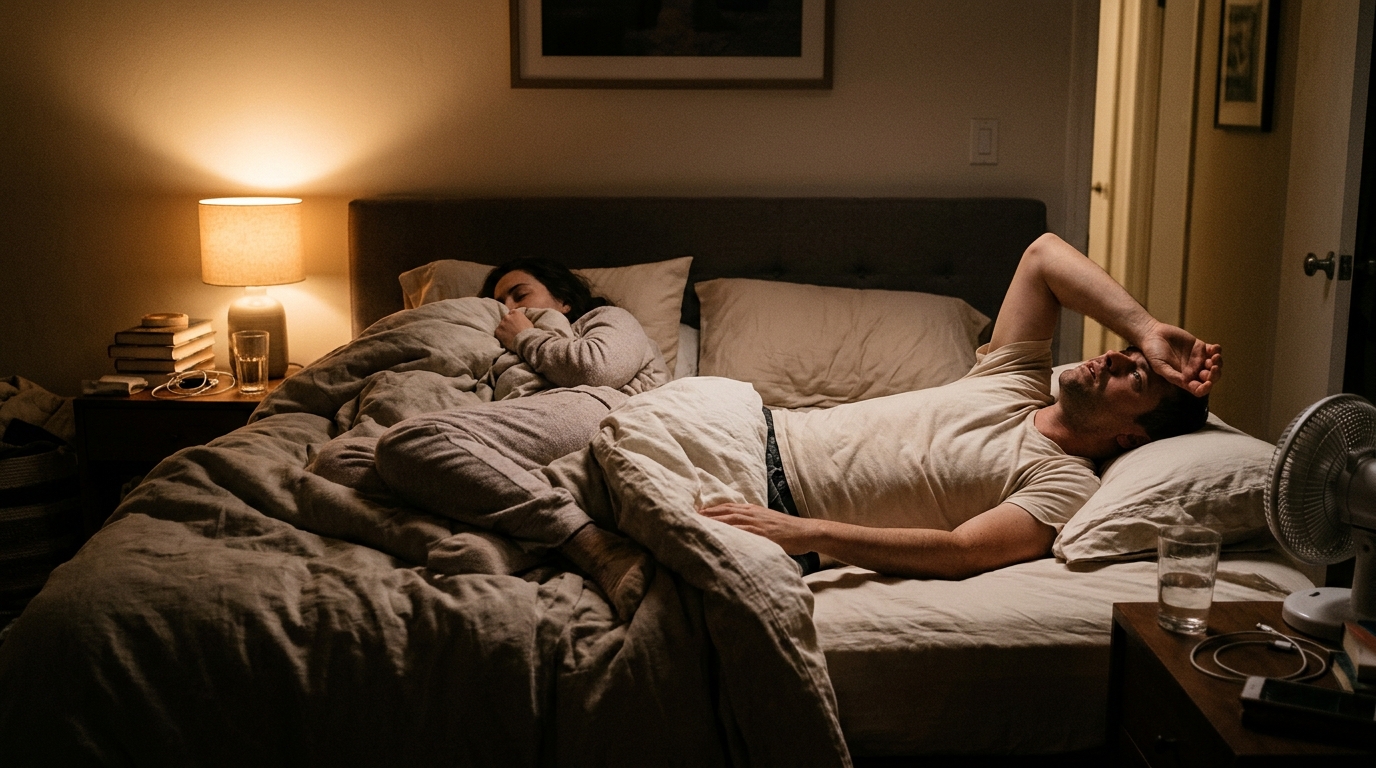
It is 2 a.m. and one of you is kicking off the covers while the other is pulling them up to their chin. The thermostat sits untouched on the wall, but both of you are quietly (or not so quietly) annoyed. This is one of the most common comfort complaints in American homes, and it is not a sign that one of you is being difficult. Your bodies are genuinely running at different temperatures.
Research on sleep and thermoregulation shows that core body temperature drops by about 1 to 2 degrees Fahrenheit during the night, and that the ideal bedroom air temperature for most adults falls between 60 and 67 degrees F. But averages hide big individual differences. Body size, muscle mass, age, hormones, and even what you ate for dinner shift where each person’s comfort zone lands. A difference of 4 to 6 degrees in preferred sleeping temperature between partners is completely normal.
Cranking the thermostat up and down all night wastes energy and rarely satisfies anyone. In this post, you will learn why the disagreement happens, how to fix it at the bed level instead of the whole-house level, and when it is worth upgrading to a zoned or bed-based cooling system. Most couples can solve this for under $100.
What You’ll Need
Click on an item below to shop for the recommended items for this recipe on Amazon.
As an Amazon Associate, we earn from qualifying purchases.
How to Do It
- Set the bedroom thermostat to a middle baseline of 65 to 68 degrees F for the whole night. Resist the urge to adjust it once you are in bed.
- Replace the single shared comforter with two separate blankets or duvets, one in a lighter weight for the warm sleeper and a heavier one for the cool sleeper. A lightweight cotton or bamboo duvet pairs well with a wool or down-alternative one.
- Switch the hot sleeper to breathable sheets such as percale cotton, linen, or bamboo. Avoid flannel and microfiber on that side, since they trap heat.
- Add a fan on the warm sleeper’s side, aimed at the foot of the bed rather than the face. A quiet 20 to 40 dollar tower fan works well and uses about 30 to 50 watts.
- Give the cooler sleeper a thin throw blanket or heated mattress pad on their side, so the room does not have to be warmer for both of you.
- Buy a dual-zone mattress pad that heats or cools each half of the bed independently. Water-based and thermoelectric models let each person set their own temperature, often from about 55 to 110 degrees F.
- Remove existing bedding and install the pad directly over the mattress, then cover it with a fitted sheet. Follow the manufacturer’s instructions for the control unit, which usually sits on the floor or nightstand.
- Set the warm sleeper to roughly 60 to 65 degrees F and the cool sleeper to about 72 to 78 degrees F, then adjust over the first week.
- Swap a memory foam mattress topper for a cooling gel or latex one on the hot sleeper’s side, if you are not using a pad. Open-cell and latex foams release heat much better than dense memory foam.
- Set the bedroom thermostat to a steady 66 to 68 degrees F and let the bed do the fine-tuning. Track how comfortable you are for 7 to 10 nights before changing anything else.
- Install smart room sensors and a smart thermostat so the system reads the temperature in the bedroom itself rather than the hallway. Many models cost $150 to $250 and are DIY friendly.
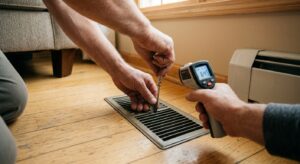
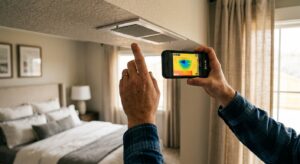
- If your bedroom is consistently hotter or colder than the rest of the house, have an HVAC professional evaluate the ductwork and consider adding a motorized smart vent or damper for that room.
- For a permanent solution, consider a ductless mini-split sized for the bedroom, which lets you set a precise temperature without affecting the rest of the home. Expect $1,500 to $4,000 installed, but also lower operating costs for the zone.
- Schedule overnight setpoints that follow your body’s natural cycle, slightly cooler from 10 p.m. to 3 a.m. and slightly warmer toward morning.
Why It Works: The Benefits
Studies link a cool, comfortable sleeping environment to more slow-wave and REM sleep. Fewer temperature-related wake-ups can mean 20 to 30 more minutes of quality rest per night.
Setting your bedroom thermostat back just 7 to 10 degrees for 8 hours can save up to 10% a year on heating and cooling, according to the Department of Energy. Heating or cooling the bed instead of the room extends that saving.
Giving each sleeper control over their own side removes the daily negotiation. You stop treating the thermostat as a battleground and start treating it as a shared baseline.
Constant overnight adjustments make your system short-cycle. Setting one steady, efficient temperature lets equipment run longer, more efficient cycles.
💰 Savings Impact by Action
Setting back the bedroom or whole-home thermostat 7 to 10 degrees for 8 hours saves up to 10% a year on heating and cooling.
Heating or cooling the bed instead of the room can let you hold the house 3 to 4 degrees closer to outdoor temperature overnight.
A fan raises the comfortable air temperature by roughly 4 degrees, so you can set the AC higher and cut cooling costs about 5%.
Sealing leaks around windows, doors, and penetrations can reduce heating and cooling costs by 10 to 20% while stabilizing bedroom temperature.
🏠 Key Concepts Explained
The Science Behind It
Your body is constantly trading heat with its surroundings through four routes: conduction (contact with the mattress and sheets), convection (air moving across your skin), radiation (heat flowing from you to cooler surfaces), and evaporation (sweat). When you sleep, your hypothalamus lowers your core temperature by about 1 to 2 degrees F to help you fall asleep and stay asleep. That drop depends on being able to shed heat easily, which is why a room that is too warm or bedding that traps heat can interrupt your sleep.
The disagreement between partners starts because the two bodies have different heat production and different heat-shedding ability. A person with a higher basal metabolic rate generates more heat, while a person with lower body fat or poorer circulation may feel cold at the same room temperature. Add the shared comforter, and you have a problem: the same insulating layer is trapping very different amounts of heat on each side.
The mattress adds another layer. Dense foams have low thermal conductivity and high heat capacity, so they absorb your body heat and release it slowly back to you. Because heat flows from warmer to cooler objects, a hot sleeper is also warming the cooler sleeper beside them through radiation and contact. Separating the bedding, improving airflow, and controlling the temperature of the sleep surface interrupt each of these pathways without the cost of heating or cooling the entire house.
Frequently Asked Questions
▼ Why is my AC still running all day even after I tried these fixes?
Bedroom comfort fixes only change how the bed feels, not how well your house holds its temperature. If the AC runs nonstop, check for a dirty air filter, blocked vents, air leaks around windows and doors, and thin attic insulation (below R-38 in most climates). If the system is more than 12 to 15 years old, have an HVAC technician test its capacity and refrigerant charge.
▼ Can renters do this without landlord permission?
Yes. Dual blankets, breathable sheets, a plug-in tower fan, a cooling mattress topper, and a dual-zone mattress pad all require no installation and travel with you. Avoid permanent changes like mini-splits or ductwork modifications unless your landlord approves them in writing.
▼ How long before I actually notice savings on my bill?
Comfort improvements show up the first night, but energy savings appear in your next bill cycle. If you stop adjusting the thermostat overnight and set a steady 66 to 68 degrees F baseline, expect 5 to 10% lower heating and cooling costs, depending on climate. Track your usage with a smart thermostat report or utility app for 30 days.
▼ What if my home is older than 30 years?
Older homes often have uneven temperatures between rooms because of leaky ducts, little insulation, and single-pane windows. Start by sealing gaps around windows and baseboards with caulk and weatherstripping, then check attic insulation depth. A bedroom that swings by 5 or more degrees overnight will make partner disagreements worse, so fix the envelope before buying expensive bedding technology.
▼ My partner and I disagree even with separate blankets. What now?
If separate bedding does not settle it, the issue is probably the sleep surface or the room itself. Try a dual-zone mattress pad and a cooling topper on the hot side, and measure the room temperature at bed height with a thermometer. If the numbers swing more than 3 degrees overnight, look at airflow and insulation rather than bedding.
Quick Tips
- Set one steady bedroom baseline of 65 to 68 degrees F and use bedding to fine-tune each side, rather than adjusting the thermostat overnight.
- Keep a quiet fan on the warm sleeper’s side, aimed at the foot of the bed, to boost convection without chilling your partner.
- Wear breathable natural fabrics like cotton, linen, or bamboo to bed, and avoid synthetic fleece or flannel on the hot side.
- Take a warm shower 60 to 90 minutes before bed, which helps your body shed heat faster once you lie down.
- Close bedroom curtains during the day in summer to keep solar heat from loading up the room and the mattress.
Variations for Your Situation
- Apartment/Rental: Stick to plug-in solutions, such as a dual-zone mattress pad ($150 to $300), a tower fan ($30 to $50), and two separate duvets ($40 to $100 each). Use removable window insulation film or blackout curtains ($20 to $40) to stabilize bedroom temperature without touching the walls.
- Tight Budget (under $50): Set the thermostat to 66 to 68 degrees F and leave it alone, split into two blankets you already own, and run a box fan on the warm side. Wash sheets in cooler water and switch the hot sleeper to a thin cotton sheet. Closing curtains during the day costs nothing and helps in summer.
- Older Home (pre-1980): Seal air leaks around windows, baseboards, and outlets first, since drafty rooms swing in temperature and amplify the disagreement. Consider thermal curtains and a door sweep for the bedroom, and add a small oil-filled radiator or a ceiling fan for room-level adjustments where the central system cannot reach.