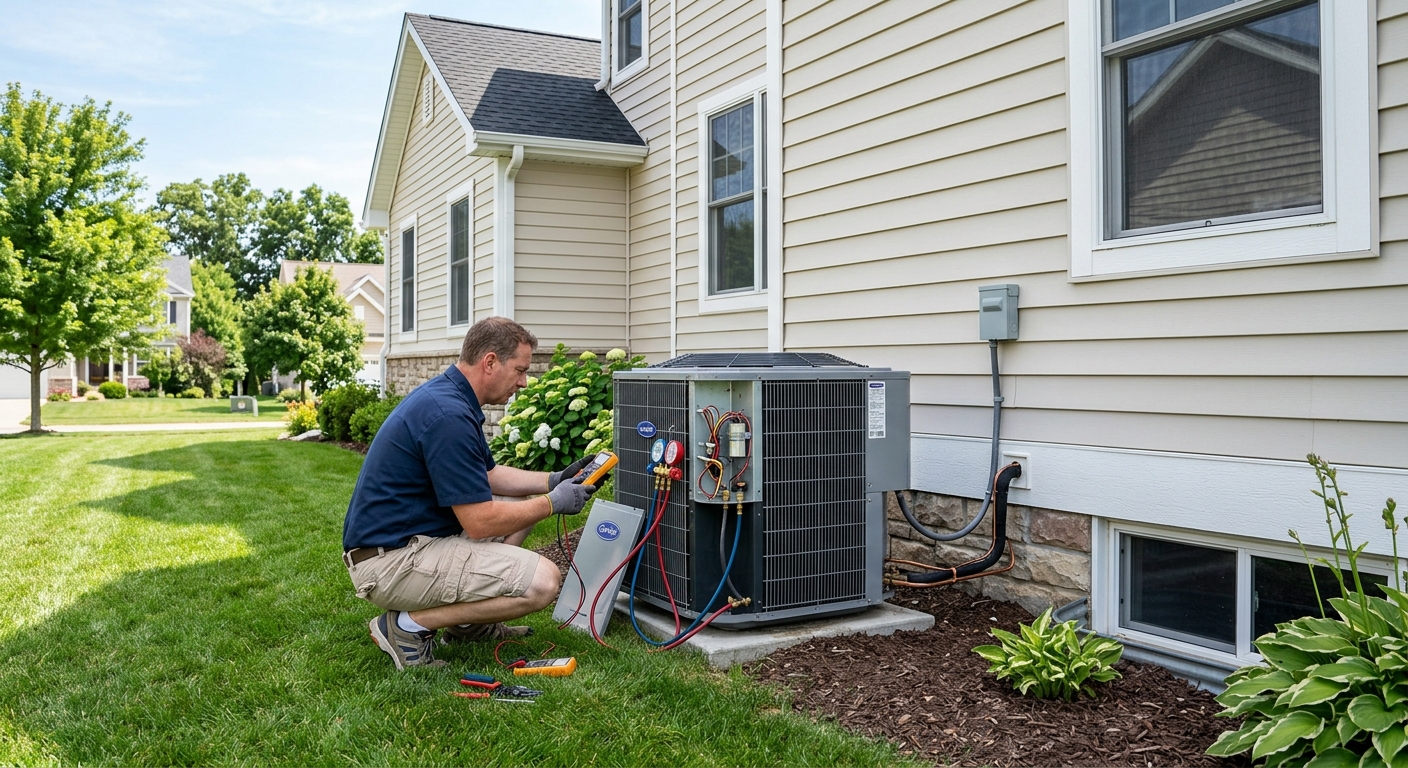
If your air conditioner seems to run from the moment you wake up until you go to bed without ever clicking off, you are not imagining things. An AC compressor that cycles continuously is one of the most common complaints homeowners have during summer, and it almost always means something is wrong. Whether it is a simple thermostat setting, a clogged filter, or a refrigerant leak, the system is telling you it cannot keep up with the load being placed on it.
The real problem with a constantly running compressor is not just comfort. It is money. Every extra hour the compressor runs adds to your electricity bill, and the wear accumulates fast. Compressors are the most expensive component in your AC system, often costing $1,200 to $2,800 to replace. Catching and fixing the underlying cause early can save you from that repair and reduce your monthly cooling bills by 20 to 40 percent in some cases.
This post walks through the six building-science reasons a compressor runs nonstop, three fixes ranked from free to professional, and a troubleshooting guide to help you diagnose your specific situation. You do not need an HVAC license to handle most of these, but we will tell you exactly when to call one.
What You’ll Need
Click on an item below to shop for the recommended items for this recipe on Amazon.
As an Amazon Associate, we earn from qualifying purchases.
How to Do It
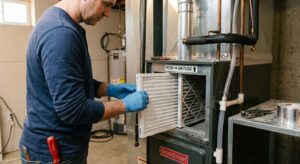
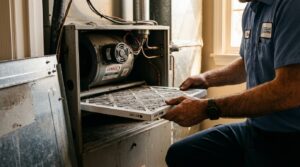
- Check your air filter. Pull it out and hold it up to light. If you cannot see light through it, replace it immediately with a MERV 8 to 11 filter. A clogged filter is the single most common cause of a compressor that never shuts off.
- Verify thermostat settings. Make sure the fan is set to AUTO, not ON. The ON setting runs the blower continuously regardless of compressor status, which homeowners frequently mistake for a compressor problem. Set the cooling setpoint to 78 degrees F when home and confirm the mode is COOL not FAN ONLY.
- Check for thermostat location issues. If the thermostat is in direct sunlight, within two feet of a lamp, or near a drafty exterior door, it is reading a false temperature. Block the heat source or move a portable fan away from it temporarily to confirm if the system cycles normally.
- Inspect and clean the outdoor condenser. Turn off power at the disconnect box near the unit. Use a garden hose on low pressure to rinse the fins from the inside out, removing grass clippings, cottonwood seeds, and debris. Restore at least 24 inches of clearance on all sides.
- Close blinds and curtains on south and west facing windows during peak afternoon hours between 2 PM and 6 PM. Solar gain through unshaded windows can add 1,000 to 1,500 BTUs per hour per window, a meaningful chunk of your system capacity.
- Perform a DIY blower door test substitute. On a windy day, close all windows and doors, turn off the HVAC, and walk the perimeter of the home with a stick of incense or a candle. Visible smoke movement near outlets, window frames, attic hatches, and baseboards reveals air leaks contributing to heat gain.
- Seal attic bypasses first. Access your attic and seal gaps around recessed lights, top plates, plumbing penetrations, and the attic hatch using fire-rated caulk or expanding foam. The attic is responsible for 25 to 35 percent of total home heat gain in summer.
- Add weatherstripping to exterior doors that show visible daylight gaps or fail the paper test (slide a piece of paper under the door and pull. If it slides freely, the seal is inadequate). Use compression foam or V-strip weatherstripping rated for 5 to 10 year durability.
- Seal window frames with paintable caulk at the interior trim joint. This is separate from weatherstripping and addresses the static gap between the rough opening and the window unit, which is a major air infiltration point in homes older than 20 years.
- Check attic insulation depth. Use a ruler to measure existing insulation. The Department of Energy recommends R-38 (about 12 inches of blown fiberglass or 10 inches of cellulose) for most US climate zones. If you are below R-19, inadequate insulation is likely contributing to the constant-run problem.
- If insulation is thin, add blown cellulose or fiberglass using a blower rental from a home improvement store (often free with a minimum bag purchase of around $150 to $200 in material). Bringing a 1,500 square foot attic from R-11 to R-38 can cut cooling load by 15 to 20 percent.
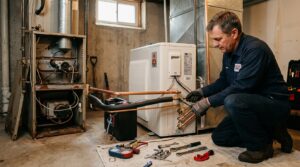
- Schedule a diagnostic service call with a licensed HVAC contractor. Request that they check operating refrigerant pressures (suction and discharge), superheat, and subcooling rather than just adding refrigerant. Low refrigerant is a symptom of a leak, not a maintenance item.
- Ask the technician to inspect the evaporator coil for ice buildup and dirt accumulation. A dirty evaporator coil reduces heat transfer efficiency by up to 30 percent and can cause the system to run continuously even with adequate refrigerant.
- Request a load calculation review if the technician suspects the system is undersized. An ACCA Manual J calculation costs $150 to $300 and tells you definitively whether the equipment capacity matches your home. Undersized equipment will always run continuously on design temperature days.
- If a refrigerant leak is found, insist on leak repair before recharging. Simply topping off refrigerant without fixing the leak is a short-term fix that costs money and harms the environment. Leak repair typically costs $200 to $450 additional but is necessary for a lasting solution.
- Ask about a capacitor and contactor inspection while the technician is on site. These inexpensive components ($15 to $60 in parts) are common failure points that cause erratic compressor behavior. Replacing a weak capacitor proactively during the same visit costs far less than a separate service call.
Why It Works: The Benefits
Fixing the root cause can reduce compressor run time by 30 to 50 percent on a hot day, translating to 20 to 40 percent savings on your cooling portion of the electric bill, which averages $95 per month in the US during summer.
Compressors rated for 15 to 20 years wear out in 8 to 10 years when they run continuously. Reducing run time proportionally extends the lifespan and postpones a $1,200 to $2,800 replacement.
When the system cycles properly, it also runs the second stage of its job: dehumidification. A continuously running system often fails to remove adequate moisture, leaving the home feeling clammy even at 74 degrees F.
Continuous operation accelerates failure of capacitors, contactors, and fan motors. Addressing airflow or refrigerant issues proactively avoids the $250 to $600 weekend emergency service call.
An AC running 30 percent longer than necessary produces roughly 0.5 to 1.2 extra tons of CO2 per cooling season depending on your local grid, equivalent to driving 1,200 to 3,000 additional miles.
💰 Savings Impact by Action
Replacing a clogged filter restores proper airflow and can recover up to 15% of lost system efficiency immediately.
A clean condenser coil reduces condensing temperature by 5 to 10 degrees F, improving efficiency by up to 10% on hot days.
Sealing attic bypasses and envelope penetrations reduces infiltration heat gain by up to 20%, directly cutting compressor run time.
Upgrading attic insulation to R-38 reduces summer heat gain through the ceiling by 15 to 20% in climate zones 2 through 5.
Correcting a refrigerant undercharge to manufacturer specifications can restore up to 25% of lost cooling capacity and cut run time significantly.
🏠 Key Concepts Explained
The Science Behind It
Your AC works on a vapor compression cycle. The compressor pressurizes refrigerant gas, which then flows to the outdoor condenser coil where it releases heat and condenses into a liquid. That liquid travels indoors to the evaporator coil, expands through a metering device, evaporates at a low temperature, and absorbs heat from your indoor air. The compressor is supposed to run until the thermostat reads the setpoint temperature, then shut off and let the home coast.
When the compressor never shuts off, it means the rate of heat removal is less than or equal to the rate of heat entering the home. Heat enters through three pathways: conduction through walls and ceilings, solar radiation through windows and roofs, and infiltration through air leaks. If any of these pathways delivers heat faster than the refrigeration cycle can remove it, the compressor stays on indefinitely. Reducing heat gain by even 15 to 20 percent through air sealing and shading is often enough to restore normal cycling behavior.
Refrigerant undercharge disrupts the cycle differently. With less refrigerant mass circulating, the evaporator operates at a lower-than-design pressure. This drops the evaporator temperature, causes the coil to ice over, and paradoxically reduces heat transfer even as the compressor strains to run. The result is a compressor that runs constantly while delivering almost no cooling to the living space. This is why low refrigerant often feels identical to an oversized cooling load from the homeowner’s perspective, but requires a completely different fix.
Frequently Asked Questions
▼ Why is my AC still running all day even after I replaced the filter and cleaned the condenser?
If basic maintenance did not resolve it, the next most likely causes are low refrigerant charge, a dirty evaporator coil, or excessive heat gain through the building envelope. Check whether the air coming from your vents is actually cold (below 55 to 58 degrees F measured at the register). If it is, your equipment is working but cannot keep up with the load, pointing to an envelope problem. If the air is barely cool, call an HVAC technician to check refrigerant pressures and the evaporator coil.
▼ My AC runs constantly only on the hottest days but cycles normally otherwise. Is that normal?
Yes, this is often normal and expected behavior. AC systems are sized to handle the 99th percentile outdoor design temperature for your region, which means on the rare days that exceed that threshold, continuous operation is the intended response. If your home still reaches setpoint by evening, the system is performing correctly. If it never reaches setpoint even after sunset, the equipment may be slightly undersized for your specific home.
▼ Can renters do anything to fix a constantly running AC without landlord permission?
Renters can safely replace air filters, ensure vents are unobstructed, set the thermostat fan to AUTO instead of ON, and close blinds on hot afternoons, all without landlord approval. If the problem persists, document it in writing to your landlord since HVAC maintenance is typically a landlord responsibility under most lease agreements and local habitability codes. Avoid tampering with refrigerant lines, electrical components, or the outdoor unit.
▼ How long before I actually see savings on my bill after fixing this?
Savings appear on your very next billing cycle if the fix reduces daily compressor run time. A filter replacement or condenser cleaning that cuts run time by 30 percent will show up as a proportional reduction in the cooling portion of your bill within 30 days. Air sealing improvements take one full cooling season to fully evaluate since outdoor temperatures vary month to month.
▼ What if my home is older than 30 years and nothing seems to fix the constant running?
Homes built before 1990 typically have R-11 or less in the attic, single-pane windows, and significant air leakage rates two to three times higher than modern construction. In this case, the system may be correctly functioning but fighting a losing battle against the envelope. Prioritize attic insulation to R-38, then air sealing, before investing in HVAC repairs. The DOE estimates envelope improvements alone can reduce cooling loads by 20 to 30 percent in older homes, often making the constant-run problem disappear without touching the HVAC system.
Quick Tips
- Set your thermostat to 78 degrees F when home and 85 degrees F when away. Every degree below 78 increases cooling energy use by roughly 3 percent.
- Run ceiling fans counterclockwise in summer to create a wind-chill effect. This allows you to raise the thermostat 4 degrees without any comfort loss, reducing compressor run time significantly.
- Keep the return air vents clear of furniture, rugs, and curtains. Blocking even one large return can drop system airflow enough to cause continuous running and coil icing.
- Plant deciduous trees or install exterior awnings on south and west facing windows. Shade reduces solar heat gain by 50 to 70 percent on those exposures and requires zero electricity.
- Schedule AC tune-ups in April before peak demand. Technicians are less busy, pricing is lower, and you catch problems before a 95-degree day reveals them.
Variations for Your Situation
- Apartment/Rental: Renters cannot modify central HVAC but can address several causes independently. Replace the filter if accessible (landlord should supply them), use blackout curtains rated R-3 or higher on west-facing windows ($25 to $60 per panel), add a portable smart thermostat cover to block a poorly placed wall thermostat from direct sunlight, and run ceiling fans to reduce perceived temperature by 4 degrees. Report persistent issues in writing to create a maintenance record.
- Tight Budget (under $50): Focus on zero-cost and minimal-cost steps first. Set the fan to AUTO on the thermostat ($0), close window coverings during peak afternoon hours ($0), clear all return air vents of obstructions ($0), replace the air filter with a MERV 8 option ($8 to $15), and rinse the outdoor condenser with a garden hose ($0). These five steps alone resolve constant-run issues in approximately one-third of cases without any further investment.
- Older Home (pre-1980): Treat the building envelope as the primary suspect before spending money on HVAC diagnostics. These homes average 0.5 to 1.0 air changes per hour, compared to 0.1 to 0.3 for a well-sealed modern home. Start with attic hatch weatherstripping (one of the worst offenders), then top-plate air sealing with expanding foam, then attic insulation to R-38. Budget $200 to $600 for materials and expect a 20 to 35 percent reduction in cooling load before touching the mechanical system.