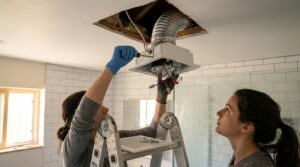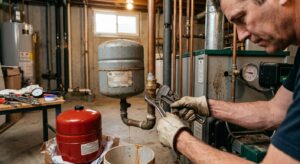
Your home’s plumbing system quietly does its job every day, but when it starts making noise, it’s trying to tell you something. A banging pipe, a hissing toilet, or a rumbling water heater are not just annoyances. Each sound is a symptom of a specific problem, and ignoring it often turns a $50 fix into a $500 repair or worse, a water damage claim averaging $11,000 according to the Insurance Information Institute.
The good news is that most plumbing noises have straightforward causes rooted in pressure, temperature, or worn components. You don’t need to be a plumber to diagnose what you’re hearing. You just need to know what to listen for and what each sound signals about your system’s health.
This post walks through the 7 most common plumbing noises homeowners encounter, explains the building science behind each one, and gives you clear steps for whether you can fix it yourself in 15 minutes or need to call a licensed plumber before the day is out.
What You’ll Need
Click on an item below to shop for the recommended items for this recipe on Amazon.
As an Amazon Associate, we earn from qualifying purchases.
How to Do It
- Banging pipes (water hammer): Turn off the water supply, open the highest faucet in your home, then open the lowest faucet to drain the system and recharge the air chambers in your pipes. This takes 5 minutes and resolves water hammer in older homes with air-charged pipes.
- Hissing toilet: Remove the tank lid and listen. If the hiss is from the fill valve, jiggle the float arm. If it doesn’t stop, replace the fill valve assembly yourself for $10 to $15 and about 20 minutes. A constantly running toilet wastes up to 200 gallons per day.
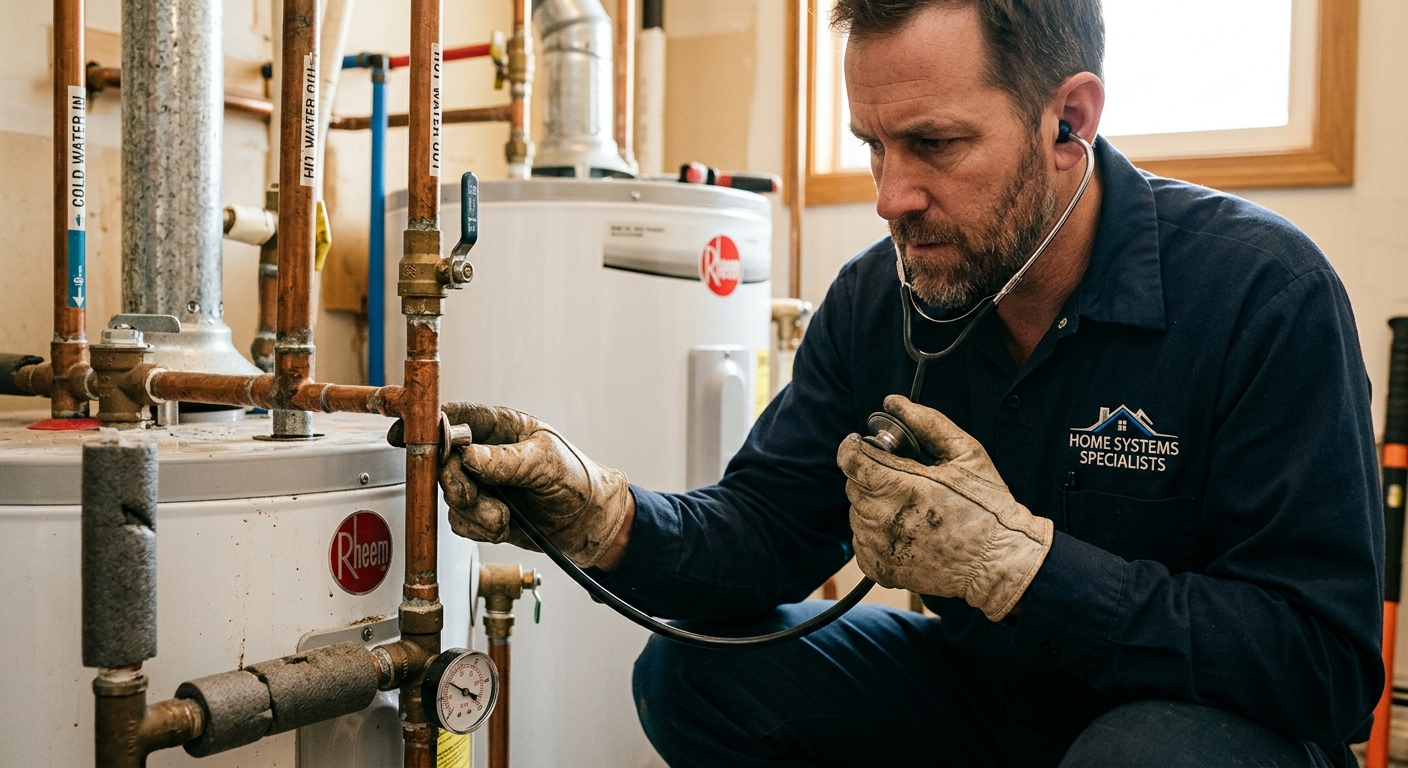
- Rumbling water heater: Check the age of your unit. If it is under 8 years old, drain 2 to 3 gallons from the drain valve at the base to flush loose sediment. Turn off the cold water supply first, attach a hose to the drain valve, and run it to a floor drain or outside.
- Gurgling drains: Pour a full kettle of boiling water slowly down the affected drain, followed by a cup of baking soda and a cup of white vinegar. Wait 15 minutes then flush with hot water. If gurgling continues, the issue is likely a venting problem requiring a plumber.
- Ticking or creaking pipes: This is almost always thermal expansion and is harmless. Confirm by noting whether the sound occurs right after hot water runs. If pipes run through tight notches or straps, pad them with pipe insulation foam to stop contact noise.
- Whistling faucet: Turn the shutoff valve under the sink fully open if it was partially closed. If the whistle persists, the faucet seat washer is worn and needs replacing. Replacement washers cost under $2 at any hardware store.
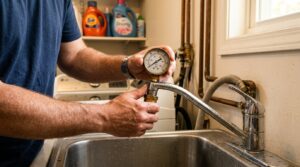
- Test your water pressure with a gauge attached to an outdoor hose bib or laundry bib. Pressure above 80 psi stresses every pipe and fixture in the house and is often the root cause of banging, whistling, and hissing noises.
- If pressure exceeds 80 psi, locate the pressure reducing valve (PRV) near where the main line enters your home. Use an adjustable wrench to turn the adjustment screw counterclockwise in small increments, retesting until pressure reads 60 to 70 psi.
- Install a water hammer arrestor at washing machine bib connections and near fast-closing dishwasher valves. These screw directly onto the supply line stub-outs and cost $10 to $20 each. They absorb hydraulic shock without requiring wall access.
- For a rumbling water heater with significant sediment, perform a full tank flush: turn the unit to pilot or off, shut the cold inlet valve, connect a garden hose to the drain valve, and drain completely. Refill and repeat once more until the water runs clear.
- Inspect exposed pipe straps and hangers in the basement or crawl space. Any strap holding a copper pipe tightly against wood framing without a foam cushion will tick as the pipe expands. Loosen the strap, slide a loop of pipe insulation foam around the pipe at contact points, and retighten.
- If a running toilet still hisses after float adjustment, replace the entire fill valve and flapper as a set. Shut the supply valve under the tank, flush to empty, and swap the components following the package instructions. A complete kit costs $12 to $20 and takes about 30 minutes.
- Loud banging that continues after air chamber recharging and after a hammer arrestor is installed: Your main PRV may be failing or you may have significant pipe movement requiring re-strapping or rerouting. A plumber can assess and replace a PRV for $200 to $350 installed.
- Continuous gurgling in multiple drains simultaneously: This points to a blocked or damaged main vent stack, not a simple drain clog. A plumber with a snake camera can locate the obstruction. Ignoring this allows sewer gas into living areas.
- Popping or rumbling from a water heater that is 10 or more years old: At this age, sediment is likely fused to the tank floor and flushing will not fully resolve it. Have a plumber evaluate whether repair or replacement is more cost-effective. A new 50-gallon unit runs $600 to $1,200 installed.
- Hissing or dripping sounds inside walls with no visible leak source: This may indicate a pinhole leak in a copper line caused by pressure stress or corrosion. Do not ignore this. Shut the main water supply and call immediately to prevent structural damage.
- Squealing from main shutoff or PRV: These components are under continuous pressure. Attempting to disassemble them without proper training risks a sudden full-flow water release. A plumber can replace a PRV in about an hour.
Why It Works: The Benefits
Emergency plumber call-out fees alone average $150 to $300 before any work begins. Catching a failing pressure relief valve or corroded pipe joint early turns a scheduled $80 repair into a non-event rather than a midnight flood.
Water damage is the second most common homeowner insurance claim. A slow leak behind a wall, signaled by intermittent dripping sounds, can cause $5,000 to $20,000 in structural and mold remediation costs if left unaddressed for months.
A running toilet wastes 200 gallons per day on average, adding $70 or more per month to your water bill. A hissing water heater with heavy sediment buildup can reduce efficiency by 10 to 15%, costing an extra $50 to $100 per year in gas or electricity.
High water pressure above 80 psi is a leading cause of premature water heater, dishwasher, and washing machine failure. Installing a pressure reducing valve typically extends appliance life by 3 to 5 years and costs about $200 installed.
A gurgling drain that signals a compromised P-trap can allow hydrogen sulfide and methane from sewer lines into living spaces. These gases are both unpleasant and, at elevated concentrations, potentially hazardous.
💰 Savings Impact by Action
Repairing a hissing or running toilet that wastes 200 gallons per day can cut household water use by 10 to 15% and save $50 to $100 per month on combined water and sewer bills.
Flushing water heater sediment restores heating efficiency by 10 to 15%, reducing annual water heating costs by $40 to $100 depending on fuel type and usage.
Reducing incoming water pressure from 100 psi to 65 psi lowers water volume through all fixtures by 6 to 10% and extends appliance life by 3 to 5 years, avoiding premature replacement costs.
Homeowners who address early warning sounds before failure avoid water damage claims averaging $11,000, which would otherwise raise insurance premiums by 15 to 20% after a claim.
🏠 Key Concepts Explained
The Science Behind It
Most plumbing noises come down to one of three physical forces: kinetic energy in moving water, thermal expansion in solid materials, or turbulent versus laminar flow at restrictions. Water hammer is the clearest example of kinetic energy at work. Water moving through a half-inch pipe at typical household flow rates carries surprising momentum. When a solenoid valve in a dishwasher or washing machine closes in milliseconds, that momentum converts instantly into a pressure spike that can exceed 10 times the normal line pressure for a fraction of a second. Multiply that over thousands of cycles and you have loosened joints and cracked solder points.
Sediment noise in water heaters is a thermal and chemical phenomenon. Hard water with high mineral content deposits calcium carbonate on the tank floor and around the lower heating element over years of use. The tank’s thermostat still calls for heat, but now the element must heat the water through an insulating mineral crust. Water trapped in pockets beneath that crust reaches its boiling point and flashes to steam before escaping, creating the popping and rumbling sounds you hear. Beyond the noise, this sediment layer reduces the heater’s efficiency by 10 to 15% and accelerates corrosion of the tank lining.
Drain gurgling is explained by basic fluid dynamics and pneumatics. A properly designed drain system maintains atmospheric pressure throughout using a network of vent pipes that exit through the roof. When a vent is blocked by debris or a main stack has a partial clog, water flowing through the drain creates a low-pressure zone, essentially a partial vacuum, behind it. The path of least resistance for air to equalize that pressure is through the nearest water-filled trap. As air bubbles through the trap water, you hear the gurgling. The practical consequence is that the water seal in the trap gets partially evacuated, and with it goes the barrier that blocks sewer gases from entering the home.
Frequently Asked Questions
▼ Why do my pipes bang only when I flush the toilet or run the dishwasher, not when I use the faucet?
This points directly to water hammer caused by fast-closing solenoid valves, which are the electric valves used in toilets with fill valves and in appliances. Unlike a hand-operated faucet that closes gradually, solenoid valves snap shut in milliseconds and create the most severe hydraulic shocks. Install a water hammer arrestor on the supply lines feeding the toilet or appliance. These cost $10 to $20 each and screw on without soldering.
▼ My water heater is only 4 years old but it is already rumbling. Is something wrong?
If you have hard water, sediment can accumulate enough to cause noise within 2 to 4 years, especially with water hardness above 10 grains per gallon. Perform a full tank flush now to remove loose sediment before it hardens into a fused layer. Going forward, flush every 6 months and consider a whole-house sediment filter or water softener if hardness is above 7 to 10 grains per gallon.
▼ I hear a faint dripping inside my wall at night but my water bill hasn’t gone up. Should I still be worried?
Yes, act on this immediately. A pinhole leak in a copper pipe can drip just a few ounces per hour, which is too small to register meaningfully on a monthly water bill but enough to saturate wall insulation and framing over weeks. Shut the main water supply, confirm the sound stops, and call a plumber within 24 hours. The cost of opening a small section of drywall for a pipe repair is far less than full mold remediation.
▼ My drain gurgles but only when I run the washing machine. Every other drain seems fine.
A washing machine drains very rapidly, often 15 to 20 gallons in a few minutes, which is enough to temporarily overwhelm a partially clogged drain line or create a siphoning effect at nearby traps. First, check that the washing machine drain hose is inserted no more than 8 inches into the standpipe and has an air gap. If the gurgling continues, have a plumber snake the branch drain line and inspect the vent connection for that section of pipe.
▼ Can old galvanized pipes cause more plumbing noise than copper or PEX?
Yes. Galvanized steel pipes corrode from the inside out over decades, and the resulting rust buildup narrows the internal diameter, increases flow velocity, and creates turbulence that causes humming, whistling, and reduced pressure. If your home has galvanized supply pipes and is over 40 years old, the noise is often a sign that the pipes are approaching end of life. A plumber can assess flow rate and wall thickness and advise whether spot repairs or full repiping is the better investment.
Quick Tips
- Walk through your home once a month and listen near the water heater, under sinks, and at the main shutoff. Catching a new noise early is far cheaper than discovering it through water damage.
- If you have hard water (above 7 grains per gallon), flush your water heater every 6 months instead of annually to prevent sediment from bonding to the tank floor permanently.
- Write your home’s normal water pressure reading on a piece of tape on the PRV or near the main shutoff so any plumber or future owner has a baseline reference.
- Use the water meter test for hidden leaks: turn off every fixture and appliance, note the meter reading, wait 30 minutes without using any water, and check again. Any movement indicates a leak even if you cannot hear or see one.
Variations for Your Situation
- Apartment/Rental: Renters cannot modify main supply pressure or replace water heaters, but you can and should document every noise with a dated video, report it in writing to your landlord, and request repairs. Under most state habitability codes, functioning plumbing is a landlord obligation. For a hissing toilet in your unit, a fill valve replacement costs under $15 and is considered minor maintenance many leases allow tenants to perform. For wall sounds or water heater rumbling, submit a formal written maintenance request immediately so liability for resulting damage is clearly documented.
- Tight Budget (under $50): Start with the water pressure gauge test at $10, since high pressure is the root cause of more than half of common plumbing noises and fixing it with a PRV adjustment costs nothing once you own the gauge. A fill valve and flapper kit runs $12 to $20 and fixes a running toilet that wastes 200 gallons per day. A basic water hammer arrestor is $10 to $20 per connection. These three steps address the most common noise sources for under $50 total.
- Older Home (pre-1980): Homes built before 1980 often have galvanized steel supply pipes, cast iron drain lines, and original PRVs that are undersized or seized. In these homes, plumbing noises carry more urgency because the baseline condition of pipes and fittings is closer to failure. Prioritize getting a licensed plumber to inspect the supply pipe material and measure flow rate at multiple fixtures. If you have galvanized pipes with visible orange tint in tap water or dramatically reduced pressure at upper-floor fixtures, budget for repiping with copper or PEX, which typically runs $4,000 to $15,000 for a full house depending on size and accessibility.