Every fall, heating and cooling contractors fill up their schedules with furnace tune-ups, and every fall, millions of homeowners decide to skip it. After all, the furnace worked fine last winter, and $80 to $150 feels like a lot to pay for something that is not broken. But a furnace is not like a light switch that either works or it does not. It degrades quietly, burning more gas or electricity with every passing season while delivering less heat to your living space.
The Department of Energy estimates that a poorly maintained furnace can lose 10 to 25% of its efficiency over time. On a $1,200 annual heating bill, that is $120 to $300 in wasted fuel per year. Stretch that across three or four skipped tune-ups and you have easily spent the cost of a brand-new furnace in wasted energy alone, before counting the repair bills that accumulate when small problems go undetected. Cracked heat exchangers, failing igniters, and clogged flue passages are all problems a tech catches in a $100 visit and fixes for another $50 to $200. Left alone, each one can become a $500 to $1,500 emergency repair or, in the case of a cracked heat exchanger, a carbon monoxide hazard.
This post explains exactly what happens inside your furnace when maintenance is skipped, what a professional tune-up covers versus what you can do yourself, and how to build a simple maintenance routine that keeps your heating bills predictable and your home safe all winter long.
What You’ll Need
Click on an item below to shop for the recommended items for this recipe on Amazon.
As an Amazon Associate, we earn from qualifying purchases.
How to Do It
- Replace the air filter with a MERV 8 to 11 pleated filter. Check the filter monthly during heating season and replace it every 60 to 90 days. A clogged filter is the single most common cause of reduced furnace efficiency and short-cycling.
- Vacuum all supply and return registers with a brush attachment, then make sure every register in the house is fully open. Closing registers in unused rooms does not save energy and creates pressure imbalances that strain the blower.
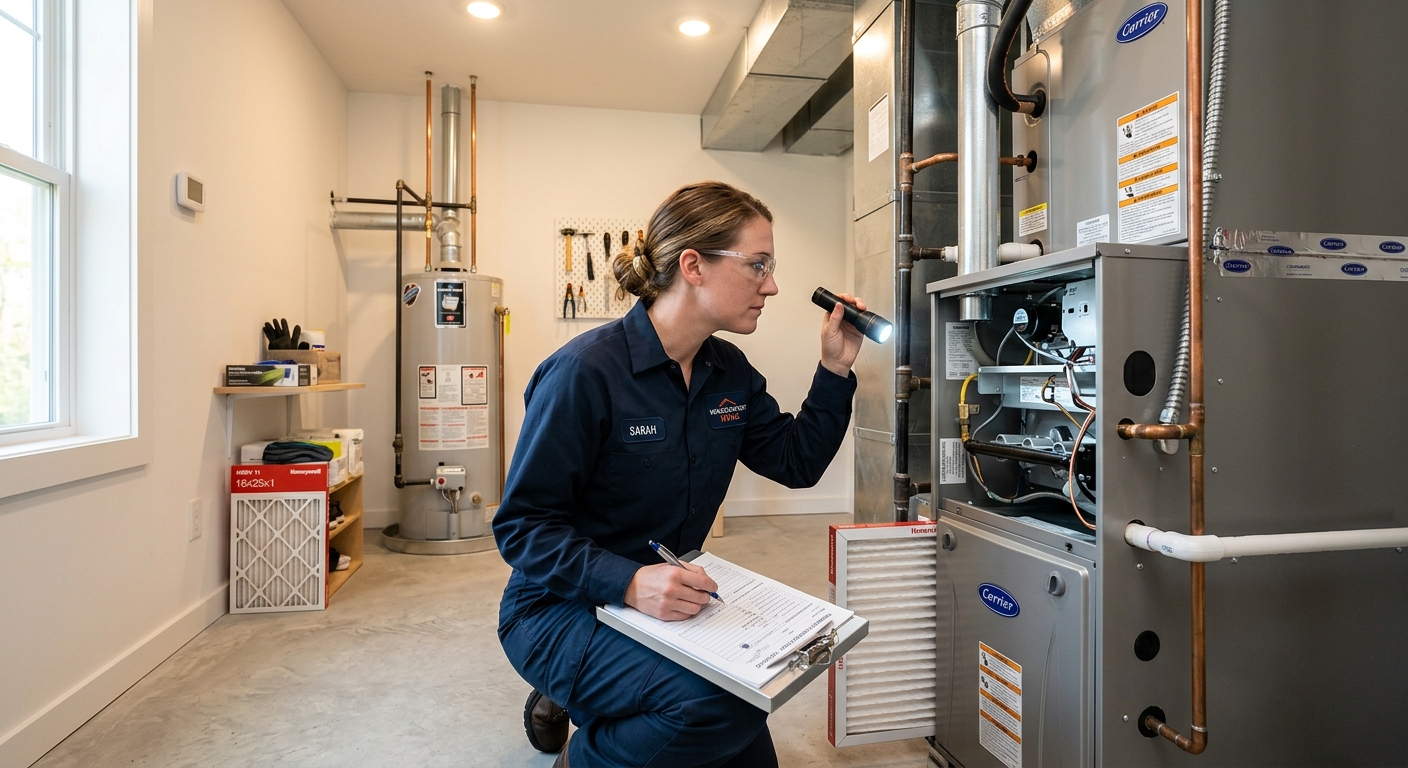
- Inspect the area around the furnace for stored items, boxes, or debris within 3 feet of the unit. Clear the space completely to ensure proper combustion air intake.
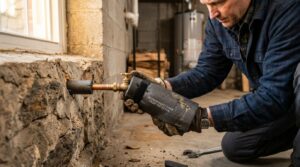
- Locate the flue pipe exiting the furnace and trace it to where it exits the home. Look for disconnected sections, rust holes, or visible blockages. Do not attempt to repair a damaged flue yourself. Call a professional if you spot damage.
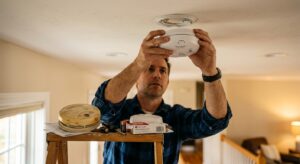
- Test your carbon monoxide detector and replace batteries if needed. If your home does not have a CO detector within 10 feet of the furnace or sleeping areas, install one before the heating season begins.
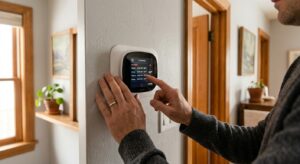
- Turn the thermostat to Heat mode and raise the set point 5 degrees above room temperature. Confirm the furnace starts within 60 seconds, the burner flame is steady and blue with no orange or yellow streaking, and warm air reaches registers within 3 to 5 minutes.
- Call 2 to 3 HVAC contractors in early September and ask specifically for an annual furnace tune-up. Request a written list of what the inspection includes. A legitimate tune-up covers combustion analysis, heat exchanger inspection, flue check, blower cleaning, and controls testing.
- Before the technician arrives, clear the area around your furnace, know the age and model number of the unit, and write down any issues you noticed last season, including unusual smells, sounds, or uneven heating by room.
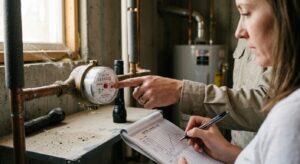
- Ask the technician to show you the combustion analysis readings. A properly tuned gas furnace should show carbon monoxide in the flue gases below 100 parts per million and CO2 between 8 and 10 percent. If a tech cannot show you these numbers, they are not doing a real tune-up.
- Request a written summary of findings with any recommended repairs ranked by urgency. A reputable contractor will separate safety-critical items from performance items and give you cost estimates before starting any additional work.
- If the technician recommends a new part, ask for the old part when the job is done. This is standard practice and confirms the repair was actually made.
- Schedule your next appointment before the tech leaves. Many companies offer maintenance agreements at $10 to $15 per month that include priority emergency service, which pays for itself on the first off-hours call.
- Shut off the furnace at the power switch mounted near the unit, then turn the gas valve to the off position. Wait 10 minutes before opening any panels to allow components to cool.
- Remove the burner access panel and use a soft brush or vacuum with a crevice tool to clean dust and debris from the burners. Burner ports should be clear and uniform. Blocked ports cause uneven flames and incomplete combustion.
- Remove the blower assembly if accessible (usually 4 to 6 screws on a slide-out drawer). Use a stiff brush and vacuum to clean each blade of the blower wheel. A heavily coated blower can lose 15 to 20% of its airflow capacity.
- Inspect the flame sensor rod, a small metal rod positioned in the burner flame path. Lightly sand the rod with fine steel wool or an emery cloth to remove oxidation. A dirty flame sensor is the leading cause of furnaces that ignite and then shut off after a few seconds.
- Check all accessible wiring connections for signs of scorching, corrosion, or loose terminals. Do not disconnect anything unless you have documented the original connection. Loose low-voltage wiring to the thermostat or control board is a common source of erratic furnace behavior.
- Reassemble all panels, restore gas and power, and run the furnace through a full heating cycle while observing the burner flame through the inspection window. A healthy gas flame is predominantly blue with small stable orange tips. Large yellow or orange flames indicate a combustion problem that requires professional adjustment.
Why It Works: The Benefits
A properly tuned furnace operating at its rated AFUE recovers 10 to 25% of efficiency lost to dirty components and improper combustion settings. On a $1,200 heating season, that is $120 to $300 returned to your pocket annually.
Studies by HVAC industry groups consistently find that 80% of no-heat calls in winter are tied to components that showed early failure signs during the prior season. A tune-up catches these parts before they fail, not during a blizzard when service rates double.
A well-maintained furnace lasts 18 to 25 years. A neglected one often needs replacement at 12 to 15 years. Avoiding one premature replacement saves $3,000 to $6,000 in equipment and installation costs.
The CDC reports roughly 400 deaths annually from non-fire-related CO poisoning in the US, with faulty heating equipment among the leading causes. Annual inspection of the heat exchanger and flue is the single most effective way to catch CO risks before they become tragedies.
Most furnace manufacturers require documented annual maintenance to keep the heat exchanger warranty, which often runs 20 years, valid. Skipping tune-ups can void warranty claims worth thousands of dollars on a component replacement.
💰 Savings Impact by Action
Cleaning burners and optimizing air-to-fuel ratio restores combustion efficiency and can recover up to 15% of fuel wasted by a neglected burner assembly.
A clean blower wheel restores design airflow, reducing short-cycling and recovering up to 10% of heating capacity lost to restricted air movement.
Replacing a clogged filter reduces static pressure on the blower, lowering blower motor electricity consumption by 5 to 8% per heating season.
Identifying a failing igniter, sensor, or control board during a tune-up avoids emergency repair premiums that average 20 to 40% more than standard service rates.
🏠 Key Concepts Explained
The Science Behind It
A gas furnace converts chemical energy in natural gas into heat through combustion, then transfers that heat to your home’s air through the heat exchanger. The efficiency rating you see on the yellow EnergyGuide label, expressed as AFUE (Annual Fuel Utilization Efficiency), represents how much of the fuel’s energy content actually ends up as useful heat in your living space. A furnace rated at 80% AFUE loses 20 cents of every dollar of gas to exhaust gases. That rating assumes clean burners, correct gas pressure, proper airflow, and an intact heat exchanger. When any of those conditions degrade, the real-world AFUE drops below the nameplate rating.
Combustion is particularly sensitive to the air-to-fuel ratio. Natural gas requires roughly 10 parts of air for every 1 part of gas by volume for complete combustion. When a dirty air filter restricts supply air, or when a partially blocked flue causes exhaust pressure to back up, the burner runs rich, producing excess carbon monoxide and soot while extracting less energy per cubic foot of gas burned. A professional combustion analyzer measures the actual CO and CO2 levels in the flue gases and can quantify efficiency losses in real time. Even a 5-point drop in AFUE on an 80% furnace represents a 6.25% increase in fuel consumption.
The blower and heat exchanger side of the equation is equally important. The blower wheel moves air across the outside surface of the heat exchanger, picking up heat before distributing it through the ducts. A blower wheel with even a light coating of dust reduces airflow velocity. Less airflow means air spends more time in contact with the heat exchanger surface, which sounds like it would transfer more heat but actually causes the exchanger surface temperature to rise above design limits. This triggers the high-limit safety switch, which shuts the burner off prematurely and causes short-cycling. Each short cycle wastes the startup energy used to bring the burner up to temperature without completing a full, efficient heating run.
Frequently Asked Questions
▼ My furnace was just serviced but my heating bill is still high. What gives?
A tune-up improves combustion and mechanical efficiency but cannot compensate for a leaky building envelope. Check your attic insulation, window weatherstripping, and duct sealing, which are often bigger energy losers than the furnace itself. Also confirm your thermostat schedule is not set to maintain high temperatures during unoccupied hours.
▼ How do I know if an HVAC company is doing a real tune-up versus just showing up and collecting a check?
A legitimate tune-up takes 60 to 90 minutes and includes at minimum a combustion analysis with printed or digital readings, a heat exchanger inspection with a mirror or camera, blower cleaning, and a controls test. If the technician is done in 20 minutes and hands you a checklist without any actual measurements, you did not get a real tune-up. Ask for combustion analysis numbers specifically: CO in flue gases and measured temperature rise.
▼ My furnace is only 4 years old. Do I really need an annual tune-up already?
Yes, and especially to protect your warranty. Many manufacturers require documented annual maintenance to honor the 20-year heat exchanger warranty. Beyond warranty protection, a 4-year-old furnace can still develop dirty burners, degraded flame sensors, and filter-related airflow issues that reduce efficiency. The good news is the tune-up on a newer system is often faster and the tech rarely finds major problems.
▼ Can I do the whole tune-up myself and skip hiring a professional?
Homeowners can handle filter replacement, register cleaning, basic visual inspections, and blower cleaning. However, combustion analysis, heat exchanger inspection, gas pressure adjustment, and flue integrity testing require specialized tools and training. Doing only the DIY tasks is far better than doing nothing, but it does not replace the safety-critical checks a certified technician performs.
▼ What if my furnace smells like burning dust when it first runs in the fall?
A brief burning dust smell lasting 10 to 30 minutes at the very first startup of the season is normal. Dust settles on the heat exchanger over summer and burns off quickly. If the smell persists beyond the first run, smells like burning plastic or rubber, or returns repeatedly during the season, shut the furnace off and call a technician. Persistent odors indicate an electrical issue or foreign material in contact with hot components.
Quick Tips
- Set a recurring calendar reminder for the first week of September every year to schedule your furnace tune-up. Fall booking windows fill up fast in cold-climate cities.
- Buy air filters in multipacks for the season. A 3-pack of quality MERV 8 filters costs $18 to $25 and makes it easy to replace on schedule rather than when you happen to be at the hardware store.
- Write the installation date on each new air filter with a permanent marker so you always know exactly how long it has been in service.
- If your furnace is more than 15 years old, ask the technician to give you an honest assessment of remaining lifespan. Knowing that a major repair on an aging unit may not be cost-effective helps you plan a replacement on your timeline rather than during an emergency.
Variations for Your Situation
- Apartment or Condo: Residents in multi-unit buildings typically do not own the furnace or central heating system. Focus on what you can control: replacing the in-unit filter if there is one, keeping registers open and unobstructed, and notifying building management in writing each fall requesting documentation of annual HVAC service. In all-electric buildings with individual heat pumps or fan coil units, filter replacement and coil cleaning are often renter-accessible tasks that meaningfully affect performance.
- Tight Budget (under $50): Skip the professional visit this year but commit fully to the DIY tasks. A new MERV 8 filter costs $8 to $12, a CO detector runs $20 to $30, and the rest is time. At minimum, replace the filter, clear the area around the furnace, test your CO detector, and watch the burner flame on first startup. These steps address the most common efficiency and safety issues at near-zero cost. Budget for the professional visit next season.
- Older Home (pre-1990 furnace): Furnaces from this era are atmospheric draft units with efficiencies of 55 to 70% AFUE, and they are far more prone to heat exchanger cracking and flue back-drafting than modern sealed combustion units. If your furnace is over 20 years old, the professional visit is not optional. A cracked heat exchanger on an older unit is often a replacement trigger, not a repair situation, and the sooner you know, the more time you have to plan the upgrade rather than facing an emergency decision in January.