Windows are the weakest thermal link in most homes. A single-pane window has an R-value of roughly R-1, while a typical wall is R-13 or higher. That means a few square feet of glass can leak as much heat as a much larger area of wall. On a 20 degree night, you can feel it: cold air sinking off the glass, a chilly zone around the window, and a furnace that keeps cycling to compensate.
Bubble wrap is a surprisingly clever fix. The tiny sealed air pockets act like a thin layer of insulation, and when you stick the flat side to the glass with nothing but water, it adds an extra barrier that slows heat transfer. The Department of Energy notes that windows account for roughly 25 to 30 percent of residential heating and cooling energy use, so even a modest improvement on your worst windows is worth the effort.
This post walks through the fastest version you can do tonight with materials you may already have, a sturdier seasonal DIY version that lasts all winter, and the science behind why it works. It is not a replacement for energy-efficient windows, but for one cold night or a budget-friendly winter, it is one of the best returns per dollar you will find.
What You’ll Need
Click on an item below to shop for the recommended items for this recipe on Amazon.
As an Amazon Associate, we earn from qualifying purchases.
How to Do It
- Measure the glass area (just the glass, not the frame) and cut a piece of bubble wrap about 1/2 inch smaller on each side so it does not overlap the frame.
- Wipe the inside of the glass with a damp cloth and dry it so no dust or grime blocks adhesion.
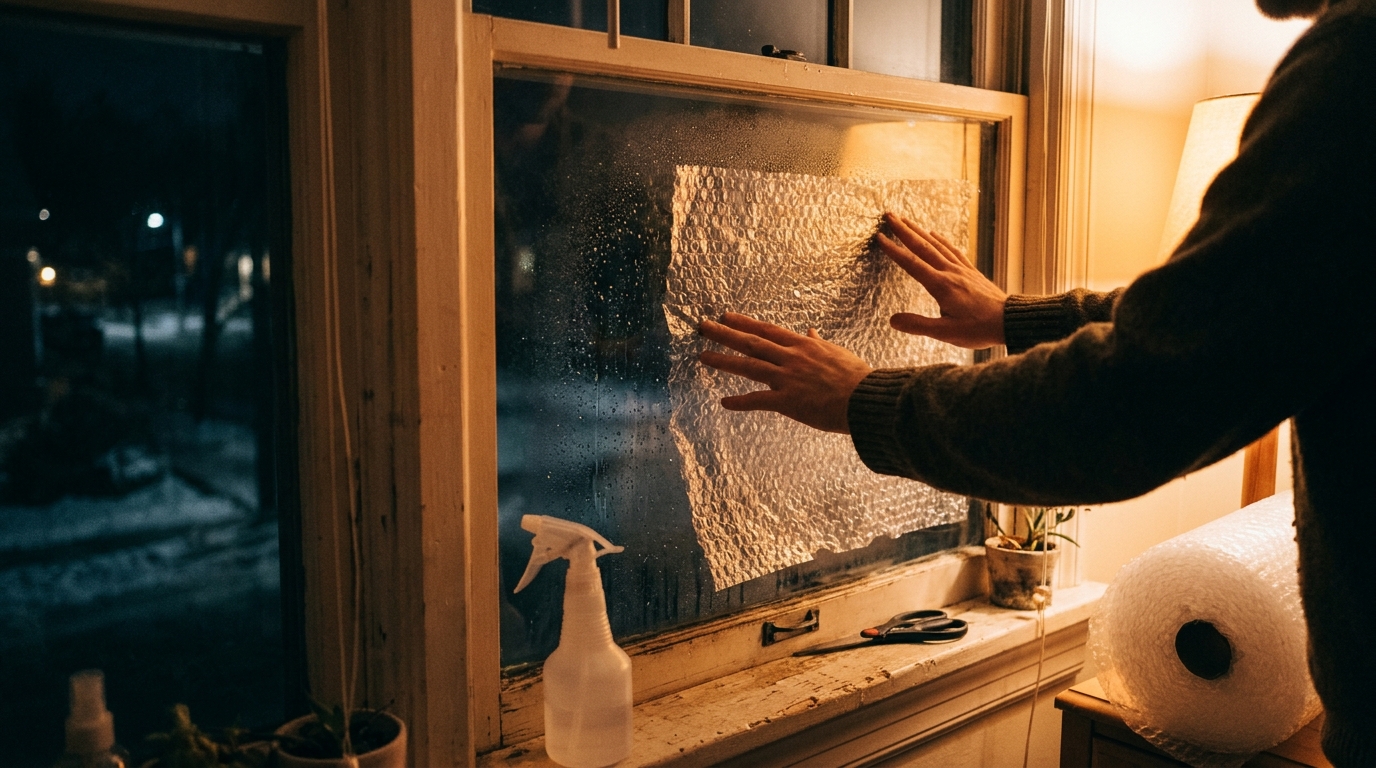
- Lightly mist the glass with water from a spray bottle until it is wet but not dripping.
- Press the bubble wrap onto the glass with the bubbles facing the glass and the flat side facing into the room, smoothing from the center outward to remove wrinkles.
- Check the edges after a few minutes and re-mist any lifting corners, then close curtains over it for extra insulation.
- Clean the glass and frame thoroughly, then check for gaps around the sash and trim where air is leaking in.
- Seal visible cracks with removable rope caulk or foam weatherstripping, which helps address air leaks before you insulate.
- Cut the bubble wrap to fit each pane, leaving about 1/4 inch gap from the frame so you can still see the edges.
- Mist the glass lightly and apply the wrap with bubbles toward the glass, smoothing it flat. For two layers on very cold windows, add a second piece with the bubbles facing outward against the first for extra thickness.
- Frame the edge of each piece with a thin strip of painter’s tape if it begins to peel, or use a few small pieces of double-sided removable mounting tape on the corners for a more secure hold.
- Hang thermal or insulated curtains over the treated window and close them at night to add another layer, then peel everything off in spring and store the wrap if you want to reuse it.
Why It Works: The Benefits
Treating a handful of leaky windows can trim roughly 2 to 5 percent from a winter heating bill, which can mean $20 to $60 per season for many homes.
Raising the interior glass surface temperature by several degrees reduces the cold-zone effect, so you can often lower the thermostat 1 to 2 degrees without feeling it.
A warmer inner surface means less moisture condenses on the glass, helping prevent water streaks, mold on sills, and damp frames.
A roll of bubble wrap costs $8 to $15, and it peels away cleanly with no adhesive, which makes it ideal for renters and short-term fixes.
At a typical cost under $15, even $20 of savings over a winter pays for itself in the first month or two of cold weather.
💰 Savings Impact by Action
One layer of large-bubble wrap adds roughly R-0.5 to R-1 and can cut conductive heat loss through single-pane glass by about 15 percent.
Sealing sash and frame gaps with rope caulk or weatherstripping can reduce air infiltration losses around a window by up to 10 percent.
Closing thermal curtains at night over a treated window can reduce remaining heat loss by roughly 10 percent.
Treating your worst windows can lower total winter heating use by about 2 to 5 percent in a typical older home.
🏠 Key Concepts Explained
The Science Behind It
Heat always moves from warm to cold, and through a window it travels by three paths at once: conduction through the glass and frame, convection as air circulates against the cold surface, and radiation from your warm body and room surfaces toward the cold pane. A single pane of glass offers almost no resistance to any of these, with an R-value near R-1. That is why a 20 degree night can make the glass itself feel like a block of ice.
Bubble wrap works because each bubble is a sealed pocket of nearly still air. Air in a confined, tiny cell cannot circulate, so the main way heat crosses it is slow conduction, and air conducts heat very poorly compared to glass. Layering that against the pane adds resistance in series with the glass, and the flat film on the room side also reduces air movement at the surface. The effect is modest per layer, roughly adding R-0.5 to R-1, but on a baseline of R-1 that is a large percentage improvement.
Water is the quiet hero of the technique. A thin film fills the microscopic gaps between the plastic and glass, and surface tension plus atmospheric pressure hold the wrap in place without tape. This keeps the layer tight against the pane, which prevents air from circulating behind it and undoing the benefit. Larger bubbles (1/2 inch) generally outperform smaller ones because they hold a thicker still air layer.
Frequently Asked Questions
▼ Why does my bubble wrap keep falling off the window?
Usually the glass is dusty, too dry, or the bubbles are facing the room instead of the glass. Wipe the pane clean, mist it until it is evenly wet, and press the bubble side to the glass from the center outward. If it still peels in humid or very cold conditions, add a few small pieces of removable double-sided mounting tape at the corners.
▼ Can renters do this without landlord permission?
Yes, in most cases. The water-cling method leaves no adhesive, residue, or damage, and it peels off in seconds in spring. Avoid permanent tape or caulk on frames, and use removable rope caulk if you need to seal gaps, since it lifts off without marks.
▼ How long before I actually notice savings on my bill?
You will usually feel the warmer glass and reduced chill the same night. On your bill, expect a small but visible drop within the first full billing cycle, typically 2 to 5 percent if you treat your leakiest windows. The effect is larger in older homes with single-pane glass.
▼ Will bubble wrap block my view or all the daylight?
It will blur the view and diffuse the light, so it is best for windows where you want privacy or do not need a clear look outside, like bathrooms, basements, and bedrooms. You can still get plenty of daylight through it, and you can remove it from a favorite view window during the day if you want.
▼ What if my home is older than 30 years?
Older homes tend to have single-pane or early double-pane windows and more air leakage around frames, so this trick delivers even more benefit. Pair it with rope caulk or weatherstripping around the sashes, and consider storm windows or window insulation film as a longer-term step.
Quick Tips
- Use large-bubble wrap (about 1/2 inch) rather than small-bubble packing wrap for the best insulation value.
- Treat north-facing and single-pane windows first, since they lose the most heat and gain the least sun.
- Pull insulated curtains closed at dusk and open them on sunny days so south-facing windows can still collect free solar heat.
- Re-mist and press any corner that lifts rather than adding tape, since the water bond is cleaner and easier to remove later.
Variations for Your Situation
- Apartment/Rental: Use the water-cling method only, with no tape or caulk on the frame. Buy a $10 roll of large-bubble wrap and a $3 spray bottle, treat only the glass, and pair with removable rope caulk if you need to stop a draft. Everything peels off cleanly when you move out.
- Tight Budget (under $50): Save bubble wrap from shipping packages and use it free. Add a $5 spray bottle and, if you want, a $4 pack of rope caulk to seal the worst frame gaps. Focus only on your two or three coldest windows to maximize the return for pennies.
- Older Home (pre-1980): Expect single-pane glass and leaky wood frames. Use the sealed DIY approach with rope caulk and weatherstripping, add a second layer of wrap on the coldest windows, and hang heavy thermal curtains. This combination can cut heat loss meaningfully until you can invest in storm windows or replacements.