Most homeowners flip off the AC when fall arrives and don’t think about it again until the first hot day of spring. That approach might seem harmless, but it leaves your system vulnerable to months of moisture buildup, pest intrusion, debris accumulation, and refrigerant line degradation. By the time you need cooling again, you may be looking at a repair bill that easily runs $300 to $800 or a system that struggles to cool efficiently from day one of the season.
Proper AC shutdown prep is not about being overly cautious. It’s about protecting a major appliance that works hard for five to six months a year and deserves a clean, protected rest period. A well-maintained system lasts 15 to 20 years, while a neglected one may need replacement in 10 to 12. The difference often comes down to consistent end-of-season habits that take less than two hours total.
This guide walks you through exactly what to do before you power down for the season, from the quick no-cost steps anyone can do in 20 minutes to a more thorough DIY tune-up that protects your investment for years. You’ll also find tips specific to window units, renters, and older systems.
What You’ll Need
Click on an item below to shop for the recommended items for this recipe on Amazon.
As an Amazon Associate, we earn from qualifying purchases.
How to Do It
- Turn the thermostat to OFF and set the system mode to OFF, not just Fan Only. This ensures the compressor does not accidentally cycle on during an unseasonably warm fall day.
- Go to your outdoor disconnect box, usually a gray metal box mounted on the wall near the condenser, and pull out the disconnect block or flip the breaker to the OFF position. This removes live voltage from outdoor components all winter.
- Using a garden hose, gently rinse the condenser coil fins from the outside in, working top to bottom. Do not use a pressure washer. This removes summer debris buildup before it hardens over winter.
- Check the condensate drain line at the indoor air handler. Pour one cup of distilled white vinegar into the drain pan access opening to kill any algae or mold before the unit sits idle.
- Place a breathable condenser cover (available at home improvement stores for $15 to $20) over the outdoor unit, or cover just the top with a piece of plywood weighted down with a brick to block falling debris while allowing airflow at the sides.
- Switch the thermostat to OFF and cut power at the outdoor disconnect box. Additionally, go to your main electrical panel and switch the AC circuit breaker to OFF. Do not skip this before working near the condenser.
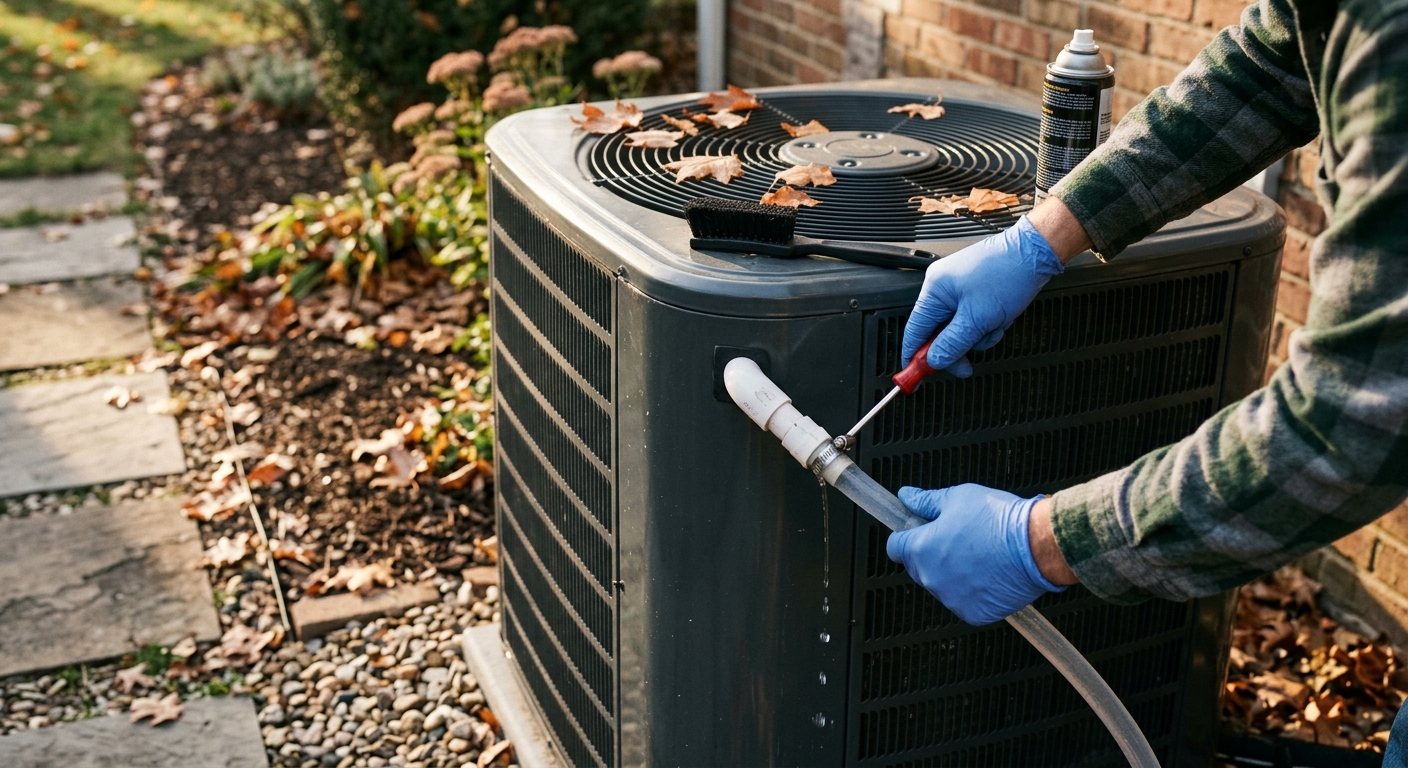
- Remove the condenser fan cover (usually 4 to 6 screws) and lift the fan assembly out carefully without straining the wiring. Remove any large debris from inside the unit by hand, then vacuum out remaining dirt with a shop vacuum.
- Apply a commercial no-rinse coil cleaner spray to the condenser coil fins inside and out. Let it foam for 5 minutes, then rinse thoroughly from the inside out with a garden hose. Straighten any bent fins using a fin comb ($10 to $15 at hardware stores).
- Inspect the refrigerant line insulation running from the outdoor unit to your home. If the foam is cracked, brittle, or missing sections, wrap those areas with foam pipe insulation (sold in 6-foot lengths for under $5 each) secured with UV-resistant tape.
- Flush the indoor condensate drain line by pouring a 50/50 mix of water and distilled white vinegar through the access port and confirming it drains freely outside. If drainage is slow, use a wet/dry vacuum to suction the exterior drain end for 30 seconds.
- Replace the air filter at the indoor air handler with a fresh MERV 8 to 11 filter so the system starts spring with clean airflow. Note the installation date on the filter frame with a marker.
- Reassemble the condenser fan cover, restore power at the panel, and install a breathable mesh condenser cover over the full unit. Avoid solid plastic covers that trap moisture inside.
Why It Works: The Benefits
A properly maintained central AC system lasts 15 to 20 years. Neglected systems commonly require replacement at 10 to 12 years, meaning a $500 annual maintenance habit can defer a $6,000 to $12,000 replacement by nearly a decade.
The most common spring HVAC service calls, clogged drain lines, failed capacitors from moisture, and seized fan motors, are directly linked to poor shutdown prep. Avoiding even one capacitor replacement saves $150 to $400.
A clean condenser coil transfers heat up to 30% more efficiently than a dirty one. Starting spring with a clean system means lower energy use from the first hot day, which can reduce early-season cooling bills by 10 to 15%.
A clogged condensate drain line discovered in spring after a heavy cooling day can overflow and cause ceiling or drywall water damage. Flushing the drain at shutdown costs nothing and prevents repairs that easily exceed $500.
Knowing your system is clean, covered, and disconnected means no stress about discovering surprise damage in spring. A 90-minute investment in fall translates to a worry-free winter and a reliable system ready to go.
💰 Savings Impact by Action
Removing a full season of dirt from condenser coils restores heat transfer efficiency and can reduce cooling energy use by 10 to 30% the following season.
Preventing a drain clog avoids emergency service calls averaging $200 to $400 and potential water damage repairs exceeding $500.
Replacing cracked refrigerant line insulation prevents heat gain on suction lines and maintains system efficiency by up to 5% during peak cooling months.
Consistent annual shutdown prep extends system lifespan by 3 to 5 years, deferring a $6,000 to $12,000 replacement, which equates to roughly 25% of system replacement cost saved over time.
Starting spring with a clean MERV 8 to 11 filter ensures unrestricted airflow and can reduce energy consumption by up to 10% compared to a clogged filter.
🏠 Key Concepts Explained
The Science Behind It
Your air conditioner’s condenser works by rejecting heat from your home into the outdoor air through a refrigerant cycle. During operation, that refrigerant flows continuously between the indoor evaporator coil and the outdoor condenser coil, absorbing heat inside and releasing it outside. When the system shuts down for winter, refrigerant settles under pressure in the lines and components. Any moisture that enters through gaps or condensation has no active airflow to evaporate it, creating ideal conditions for microbial growth and metal oxidation over months of inactivity.
The condenser coil itself is made of aluminum fins bonded to copper tubes, a combination that is highly efficient at heat exchange but also susceptible to galvanic corrosion when exposed to trapped moisture, road salt, and organic debris. A layer of dirt on those fins acts as an insulating blanket that forces the system to run longer to reject the same amount of heat, directly increasing electricity consumption. DOE data shows that a heavily fouled condenser coil can reduce system efficiency by 10 to 30%, which is entirely recoverable with a simple cleaning before storage.
The condensate drain system is equally important to address at shutdown. During cooling season, your indoor evaporator coil removes both heat and humidity from your air, producing up to 20 gallons of condensate water per day in humid climates. Algae and mold that colonize a dormant drain pan over winter create a clog that can cause the drain pan to overflow the following season. Since drain pans are typically located above finished ceilings or inside closets, even a modest overflow can cause hundreds of dollars in water damage before it’s noticed. A vinegar flush at shutdown keeps the drain clear for free.
Frequently Asked Questions
▼ Do I really need to cover my outdoor AC unit for winter?
Covering the unit is optional and depends on your climate. In regions with heavy tree canopy or frequent hail, a breathable mesh cover protects fins from physical debris and impact. In mild or dry climates, the unit is designed to sit outdoors uncovered. If you do cover it, always use a breathable cover rather than plastic sheeting, which traps moisture and causes more harm than going uncovered.
▼ My AC was making a rattling noise at the end of the season. Should I fix it before shutdown or wait until spring?
Address it before shutdown if possible. A rattling noise usually indicates a loose fan blade, failing capacitor, or debris caught in the fan housing, all of which worsen over time. Leaving a mechanical issue unresolved through winter means it will greet you as an emergency repair on the first hot day of spring. Call an HVAC technician for a pre-shutdown inspection, which typically costs $75 to $150 and is worth every dollar.
▼ Can I do this for a window AC unit too?
Yes, and window units actually require more attention at shutdown. Remove the unit from the window if possible, clean the filter and coil with compressed air or a soft brush, let it dry completely, and store it indoors in a dry location. If leaving it installed through winter, seal the gaps around it with foam weather stripping and cover the exterior face with an insulated window AC cover ($15 to $25) to prevent cold air infiltration, which can add noticeably to your heating bill.
▼ I forgot to do the shutdown prep last fall. What should I do in spring before turning it on?
Before your first startup, do the full coil cleaning described in the DIY approach above, flush the condensate drain, replace the air filter, and restore power at the disconnect. Give the system power 24 hours before first use so the crankcase heater (a small heater that protects the compressor) can warm the refrigerant oil. Then run the system on a mild day and listen for any unusual sounds or check for ice forming on the lines, which would indicate a problem to have a technician inspect.
▼ How do I know if my condensate drain is actually clogged versus just draining slowly?
Pour about two cups of water directly into the drain pan. You should see it begin draining within 30 to 60 seconds and empty the pan within a few minutes. If water sits for more than two minutes, the drain is restricted and needs flushing or manual clearing. A shop vacuum held firmly to the outdoor drain outlet end for 30 seconds is often enough to clear a partial clog. If the pan still doesn’t drain after that, use a drain snake or call an HVAC technician before spring.
Quick Tips
- Run the AC one final time on a cool day before shutdown to pull any remaining moisture from the evaporator coil, then let the fan-only mode run for 30 minutes to dry the coil before you power down.
- Photograph the refrigerant line connections and electrical disconnect area before winter so you have a baseline reference for comparing the condition at spring startup.
- If you have a heat pump rather than a traditional AC, do not cover the outdoor unit at all since heat pumps run in heating mode through winter and need full airflow year-round.
- Write the filter size in permanent marker inside the air handler access door so you or anyone helping you always buys the correct size in spring without measuring.
Variations for Your Situation
- Apartment or Renter: If you have a window AC unit, focus on removing or covering the unit, cleaning the foam filter with warm soapy water, letting it dry fully, and storing it in a closet or covered in your unit. Ask your landlord or building manager about central system shutdown since you likely do not have access to the disconnect box or air handler. You can always request that management schedule end-of-season maintenance, framing it as protecting their equipment.
- Tight Budget (Under $20): Skip the commercial coil cleaner and cover. Rinse the condenser coil with a garden hose, pour vinegar down the condensate drain, pull the disconnect block to cut outdoor power, and lay a piece of scrap plywood over the top of the unit weighted with a brick. These zero to minimal cost steps address the three biggest winter risks: debris, drain clogs, and live voltage on idle components.
- Older Home with a System Over 15 Years Old: Systems in this age range are more vulnerable to shutdown stress and harder to restart after a rough winter. Add a professional pre-shutdown inspection ($75 to $150) to the DIY checklist to catch capacitors, contactors, or refrigerant issues before they fail. Also pay extra attention to refrigerant line insulation, which is often original and crumbling on older installs, and replace any degraded sections to maintain efficiency through the system’s final seasons.