If you live in a home with radiators, you already know the frustration: the living room is stifling by mid-afternoon while the back bedroom never quite warms up, no matter how high you crank the thermostat. You end up overheating one part of the house just to get another part barely comfortable, and your heating bill reflects every wasted BTU. This is called hydronic or steam system imbalance, and it affects the majority of homes with boiler-based heat.
The root cause is not a failing boiler or undersized radiators. In most cases, the problem comes down to air trapped in the lines, a poorly balanced distribution system, faulty valves, or radiators that have never been properly sized and bled for the current layout of the home. These are all fixable problems, and many of them cost nothing or next to nothing to address.
This post walks you through exactly why radiator imbalance happens, the building science behind how heat moves through these systems, and a tiered set of solutions from a free 15-minute fix to a professional balancing job that can cut your heating bills by 15 to 25 percent while making every room in the house actually comfortable.
What You’ll Need
Click on an item below to shop for the recommended items for this recipe on Amazon.
As an Amazon Associate, we earn from qualifying purchases.
How to Do It
- Turn the boiler on and let the system fully heat up for 20 to 30 minutes so any air is circulating and easier to locate.
- Turn the boiler off and let pressure drop slightly. Starting with the radiator farthest from the boiler and working your way back toward it, locate the bleed valve (a small square or slotted nipple on one end of the radiator, near the top).
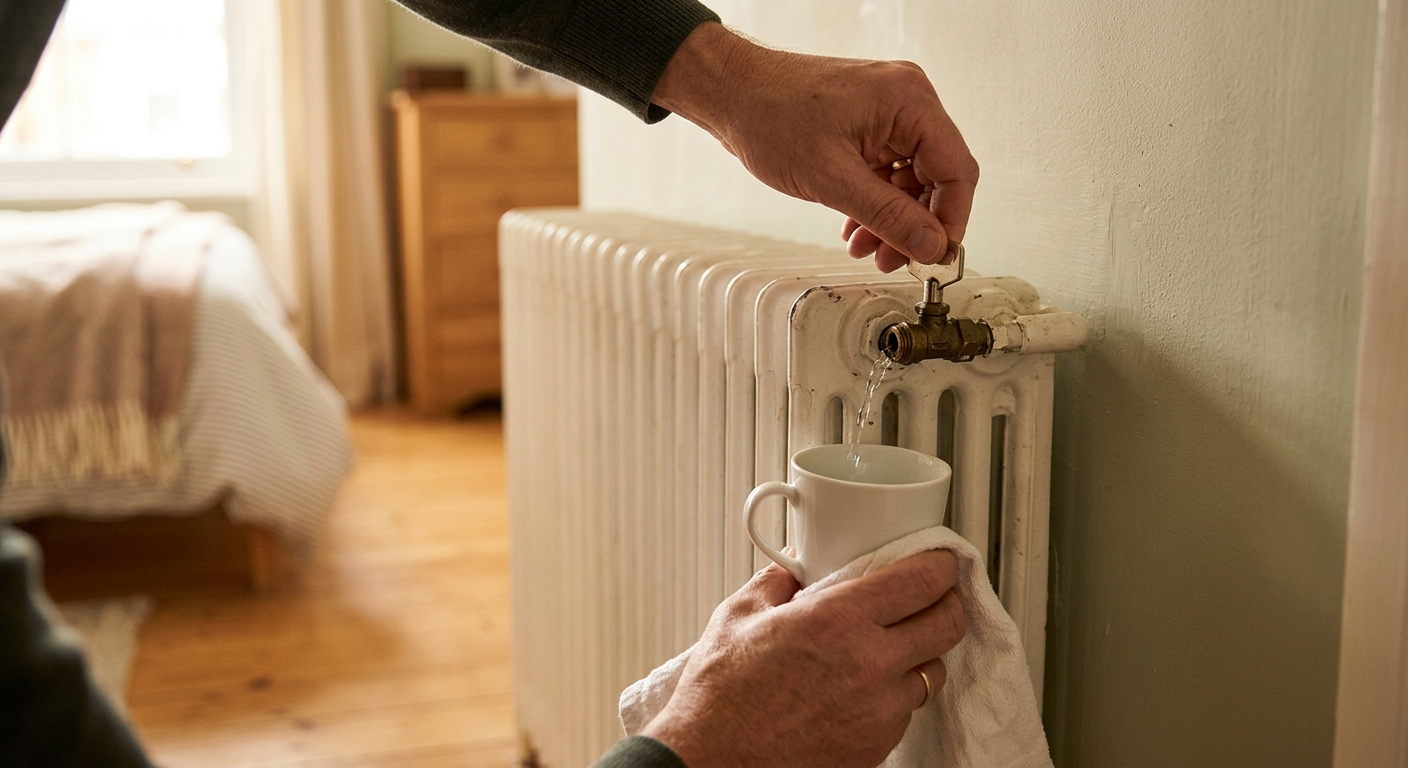
- Place a towel and a small container under the bleed valve. Using a radiator bleed key or a flat-head screwdriver, turn the valve counterclockwise one quarter to one half turn.
- Listen for a hiss of escaping air. Hold the valve open until water begins to trickle out steadily with no air bubbles. That radiator is fully purged. Close the valve snugly but do not overtighten.
- Repeat for every radiator in the home, moving from farthest to closest relative to the boiler.
- After bleeding all radiators, check the boiler pressure gauge. Bleeding releases water, so you may need to add water via the fill valve to restore pressure to the normal range, typically 12 to 15 PSI cold. Restart the boiler and verify all radiators heat evenly within one heat cycle.
- Bleed all radiators first using the quick fix steps above. Balancing only works accurately on an air-free system.
- Identify the lockshield valve on each radiator. It is the capped valve on the opposite end from the hand wheel control valve. Remove the plastic cap to expose the adjuster underneath.
- Fully open every lockshield valve in the system by turning counterclockwise until it stops. Record how many turns it took to open each one so you can return to original positions if needed.
- Run the boiler at full heat for 30 minutes. Using your infrared thermometer, measure the flow pipe temperature (the pipe entering the radiator) and the return pipe temperature (the pipe leaving the radiator) on each unit. Write these down.
- A properly balanced radiator should show a temperature difference between flow and return of 10 to 20 degrees Fahrenheit (referred to as delta-T). Radiators showing less than 10 degree difference are getting too much flow. Restrict their lockshield valve by turning it clockwise in small quarter-turn increments until the delta-T rises to the target range.
- Repeat measurements after 20 minutes to allow temps to stabilize. Adjust any radiators still outside the 10 to 20 degree delta-T range. Prioritize getting cold far-end radiators into range before restricting near radiators further.
- For one-pipe steam systems, replace malfunctioning steam vents (the small threaded fittings that hiss briefly then go quiet when working properly). Vents that continuously hiss or are completely silent and cold indicate failure. Replacements cost $10 to $25 each at plumbing supply stores.
- Hire a licensed hydronic heating technician, not a general HVAC technician, for this work. Ask specifically about experience with hot water or steam balancing in residential systems.
- Request that the technician perform a full system assessment including boiler efficiency test, zone valve inspection, pump head pressure measurement, and pipe condition check.
- Ask about installing thermostatic radiator valves (TRVs) on individual radiators. TRVs cost $20 to $60 each and allow each radiator to self-regulate based on room temperature, delivering the most precise room-by-room comfort control available without a full system replacement.
- If you have a one-pipe steam system, ask the technician to assess all steam traps and vents and replace any that are failing. A full set of new vents on a 10-radiator system typically costs $150 to $400 in parts plus labor.
- Request a written report of findings and any recommended pipe insulation improvements for basement supply lines, which can recover 10 to 15 percent of heat currently lost before it reaches living spaces.
Why It Works: The Benefits
A properly balanced radiator system can cut heating bills by 15 to 25 percent by eliminating the need to overheat near rooms just to get heat to far rooms. The DOE estimates that thermostat setback alone saves 10 percent annually, and balancing amplifies that by making setpoints actually achievable.
Balancing distributes heat proportionally to each room’s size and heat loss, so you no longer have a 10 to 15 degree Fahrenheit temperature swing between rooms on the same thermostat call.
When a system is badly imbalanced, the boiler cycles more frequently to satisfy a thermostat located in an easy-to-heat room. Reducing short-cycling extends boiler heat exchanger life and lowers maintenance costs over time.
Banging, hammering, and gurgling noises in radiators are almost always caused by trapped air, failed steam traps, or condensate getting caught in steam lines. Fixing these issues eliminates the noise entirely in most cases.
Once all radiators are delivering heat efficiently, your thermostat reading actually reflects the average comfort level of the home rather than just the temperature near one over-served radiator, making smart thermostat scheduling 10 to 15 percent more effective.
💰 Savings Impact by Action
Removing trapped air from a partially blocked radiator can restore up to 15 percent of its lost heat output immediately at no cost.
Proper lockshield valve balancing reduces the need to overheat near rooms, cutting overall heating energy use by 15 to 20 percent.
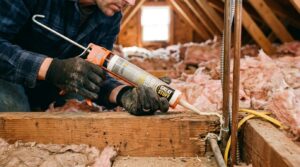
Insulating uninsulated basement supply pipes prevents 10 to 15 percent of heat from being lost to unconditioned space before it reaches living areas.
Thermostatic radiator valves reduce energy use by 15 to 20 percent by preventing overheating in rooms that reach setpoint before the thermostat zone shuts off.
Replacing all failed steam vents on a one-pipe system can cut fuel consumption by 15 to 25 percent by eliminating continuous steam loss through failed-open vents.
🏠 Key Concepts Explained
The Science Behind It
Radiator systems move heat through a home by circulating either hot water or steam through a network of pipes and cast iron or steel radiators. The radiators work through a combination of convection (warm air rising from the hot surface and drawing cooler air in from below) and radiant heat (infrared energy emitted directly from the hot metal surface). A typical cast iron radiator operating at 160 to 180 degrees Fahrenheit delivers roughly 150 to 200 BTUs per hour per section, making room-level output very sensitive to how much hot water is actually flowing through it.
In a hot water system, flow follows pressure gradients. The circulator pump creates a pressure differential across the system, and water flows most easily through the shortest, widest path. Radiators near the boiler receive disproportionately high flow while those at the end of long runs are starved. This is why lockshield valve balancing works: by partially closing the valves on near radiators, you deliberately increase their hydraulic resistance, forcing more pressure and flow to travel further down the system to previously cold radiators. The delta-T measurement (the temperature drop across each radiator from inlet to outlet) is a direct indicator of how much heat energy is being extracted, giving you a quantitative target instead of guesswork.
In one-pipe steam systems, the physics are different but equally logical. Steam rises from the boiler under its own pressure, fills the radiator, condenses back into water as it gives up heat, and drains back down the same pipe as condensate. The steam vent on each radiator plays a critical role: it opens to let air escape as steam fills the radiator, then closes when hot steam reaches it. Vents closer to the boiler are deliberately slower-acting so that steam reaches distant radiators before the nearby ones fully fill and block flow. When a vent fails open, that radiator steals all available steam. When it fails closed, steam cannot enter and the radiator stays cold. Replacing failed vents with correctly sized ones is often the single most impactful repair in a steam system.
Frequently Asked Questions
▼ I bled all the radiators but one room is still cold. What else could it be?
If bleeding did not help, the next most likely cause is a stuck or closed lockshield valve on that radiator, a failed thermostatic radiator valve, or a zone valve that is not opening fully. Feel the inlet and outlet pipes on the cold radiator while the system is calling for heat. If the inlet pipe is warm but the radiator body is cold, the valve is blocked. If both pipes are cold, check whether that radiator is on its own zone with a separate valve that may have failed.
▼ My radiators bang and clang at night. Is that related to uneven heat?
Yes, almost always. Banging in steam systems is caused by condensate water getting caught in the steam line and being hit by incoming steam, a phenomenon called water hammer. It usually means the steam vents or traps are failing, or the pipes have sagged and no longer drain properly back to the boiler. In hot water systems, ticking and clicking is typically just thermal expansion of metal pipes and is harmless, but loud banging suggests trapped air or a failing circulator pump.
▼ How long does it take to notice a difference in my heating bill after balancing?
You should feel the comfort improvement within one or two heat cycles after balancing. The bill savings show up on the next full billing period, typically 30 days. Because balancing lets you lower your thermostat setpoint by 2 to 4 degrees while maintaining the same comfort, and every degree of setback saves roughly 3 percent on heating costs, a successful balance can reflect a 6 to 12 percent reduction on your next bill.
▼ Can I add thermostatic radiator valves myself or does that require a plumber?
Installing TRVs is a moderate DIY job on a hot water system if you are comfortable draining a section of pipe and working with compression or sweat fittings. You must drain that section of the system before removing the existing valve. If you are not experienced with pipe work, hiring a plumber for TRV installation costs $50 to $100 per radiator in labor and is worth it for the long-term control and savings they provide.
▼ My building is a rental. Can I fix uneven heat without touching the boiler or pipes?
You can bleed hot water radiators yourself in most rentals since it requires no tools beyond a bleed key and does not modify any permanent systems. Notify your landlord before doing so and document the improvement. For anything beyond bleeding, including valve adjustment or steam vent replacement, contact your landlord or building super in writing. In most jurisdictions, landlords are legally required to maintain adequate heat distribution, so a written complaint with temperature readings is often more effective than any DIY fix.
Quick Tips
- Bleed radiators every fall before heating season starts, even if you do not notice a problem. It takes 15 minutes and prevents efficiency loss before it starts.
- Keep furniture and drapes at least 12 inches away from radiators. Blocking the convection current around a radiator can reduce its effective output by up to 25 percent.
- If one radiator is always cold and bleeding did not fix it, feel the inlet pipe while the system is running. If the pipe is warm but the radiator is cold, the valve itself is likely stuck or failed and needs replacement.
- Insulate basement supply pipes with foam pipe insulation. Uninsulated pipes in a 50-degree basement lose heat to a space you are not trying to heat, and a 20-foot run of uninsulated 1-inch pipe can waste 10 to 15 percent of the heat intended for upstairs rooms.
- Do not paint radiators with standard latex paint. It acts as insulation. If you need to repaint, use a metallic or radiator-specific paint that maintains thermal emissivity.
Variations for Your Situation
- Apartment or Rental: Start by bleeding any accessible hot water radiators and document room temperatures before and after with a simple thermometer. If your building has steam heat, do not touch any valves or vents without permission. Instead, submit a written maintenance request to your landlord with specific room temperatures and dates. In many states, landlords must maintain a minimum of 68 degrees Fahrenheit during heating hours, and documented complaints carry legal weight.
- Tight Budget (under $50): Focus first on bleeding all radiators (free, requires only a $5 bleed key) and then on removing furniture and objects blocking radiator airflow (free). Add pipe insulation to any exposed basement supply lines for $10 to $20 in materials. These three steps alone can improve heating distribution noticeably and often recover 10 to 15 percent of heat that was being lost or blocked.
- Older Home (pre-1970): Homes with original gravity-fed hot water systems or one-pipe steam systems installed before 1970 often have corroded valves that cannot be adjusted without breaking. Do not force stuck lockshield valves. Have a technician assess the valve condition before DIY balancing attempts. Original steam vents from this era are almost certainly failed and replacing the full set of vents is usually the single highest-impact repair available, often costing $200 to $500 in parts for a full home.