Hot water is one of those invisible expenses that quietly inflates your energy bill every single month. According to the U.S. Department of Energy, water heating makes up about 18% of a typical home’s energy use, trailing only space heating and cooling. Yet most homeowners never touch their water heater after installation, leaving years of savings on the table with every shower, load of laundry, and dishwasher cycle.
The good news is that your water heater is one of the most responsive systems in your home to simple, low-cost improvements. Wrapping the tank, insulating the pipes, dialing back the thermostat, and installing low-flow fixtures are all weekend-friendly tasks that collectively add up to real, measurable savings. No HVAC license, no plumber, and no major tools required for most of the work.
This guide walks you through two levels of improvement: a quick-fix session you can complete in under an hour for near-zero cost, and a focused DIY afternoon that unlocks the full 20% or more in savings. You will find real payback numbers, building science explanations, and honest answers to the questions homeowners actually ask.
What You’ll Need
Click on an item below to shop for the recommended items for this recipe on Amazon.
As an Amazon Associate, we earn from qualifying purchases.
How to Do It
- Locate your water heater thermostat. On a gas unit, it is typically a dial on the gas valve near the bottom of the tank. On an electric unit, there are usually two thermostats behind access panels on the tank body. Turn the dial or adjust the setting to 120 degrees Fahrenheit if it is currently higher.
- Run a hot tap for 2 minutes, then use an inexpensive cooking or digital thermometer to verify the water temperature at the faucet. It should read 115 to 120 degrees. If it reads above 125, reduce the thermostat slightly and recheck after an hour.
- Unscrew the aerator from your kitchen faucet (twist counterclockwise by hand or with pliers wrapped in cloth). Check the flow rating stamped on the side. Replace any aerator rated above 1.5 GPM with a WaterSense model rated at 1.0 to 1.5 GPM, available for $5 to $10 each.
- Check your shower flow rate by holding a bucket under the showerhead for 10 seconds at full flow, then multiply the collected gallons by 6. If it exceeds 2.0 gallons per minute, a low-flow WaterSense showerhead ($15 to $25) will pay for itself within 2 to 3 months.
- Check the pressure relief valve discharge pipe and the first 6 feet of cold and hot water supply pipes for any existing insulation. Make a note of pipe diameter so you are ready for the DIY step if you choose to continue.
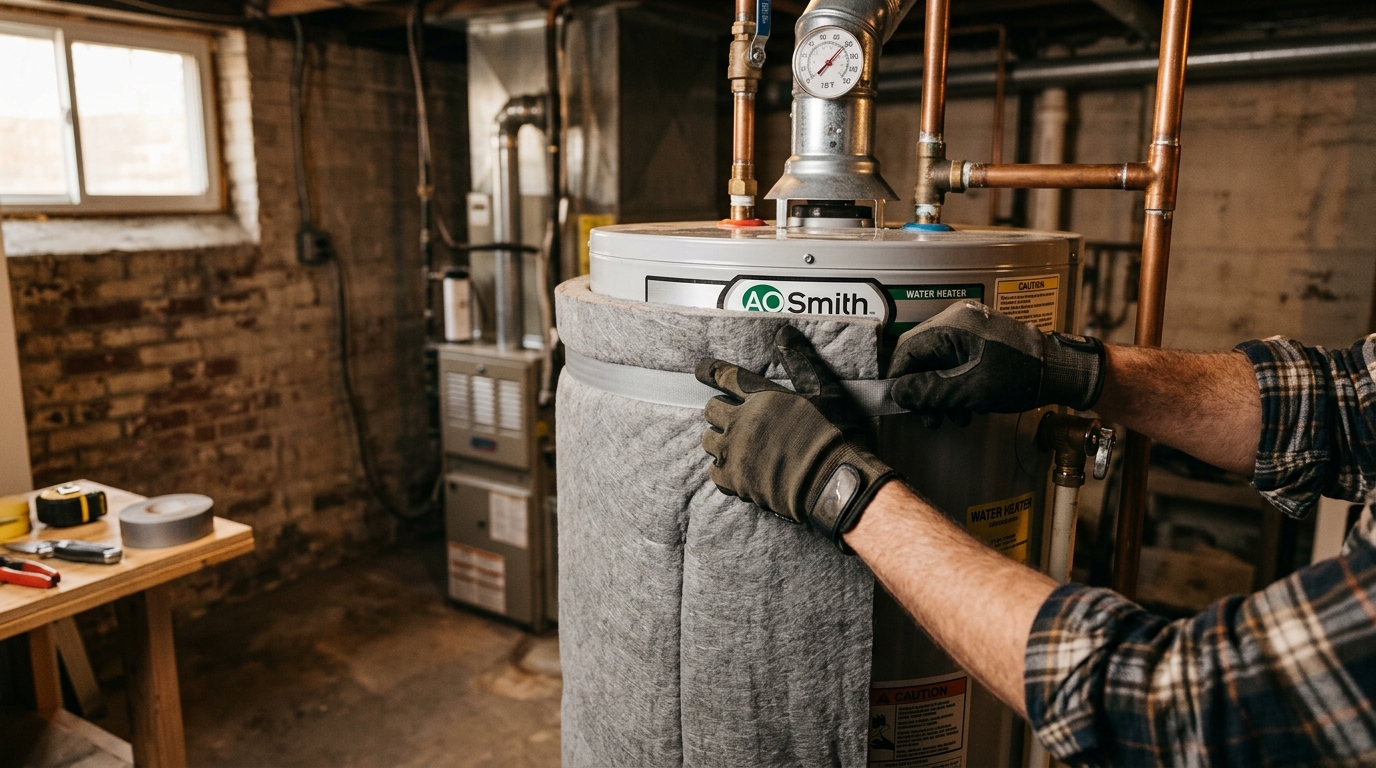
- Purchase a water heater insulating blanket kit sized for your tank (available for $20 to $35 at home improvement stores). For electric heaters, cut the blanket so it does not cover the access panels or the top of the unit. For gas heaters, leave the top, burner, and thermostat areas completely uncovered to maintain safe combustion airflow.
- Wrap the blanket snugly around the tank body and secure it with the provided tape or straps. Do not compress the insulation, as this reduces its R-value. The blanket should feel secure but not pinched.
- Measure the exposed hot water supply pipe runs in your basement, utility room, or crawl space. Cut pre-slit foam pipe insulation sleeves (about $0.50 per linear foot) to length and snap them around each pipe. Seal the seams with foil tape. Prioritize the first 10 feet leaving the water heater, as this section loses the most heat.
- Replace the showerhead in your primary shower with a WaterSense-certified low-flow model rated at 1.5 to 1.8 GPM. Use plumber’s tape on the threads, hand-tighten, then snug with a wrench wrapped in cloth. A quality low-flow showerhead costs $20 to $45 and pays back in 3 to 6 months through combined water and energy savings.
- Install a simple timer on an electric water heater or set a programmable schedule if your unit supports it. Programming the heater to drop to a lower setpoint during overnight hours (midnight to 5 a.m.) and when the household is typically away can reduce standby losses by an additional 5 to 10%.
- After completing all steps, check all pipe connections and the relief valve area for any drips, especially if you moved or disturbed any fittings during the insulation work. Run hot water at several fixtures and confirm consistent temperature and pressure.
Why It Works: The Benefits
Combining thermostat reduction, tank insulation, and low-flow fixtures can cut water heating costs by 15 to 25%, saving the average household $60 to $100 per year on a typical $400 annual water heating bill.
Insulating hot water pipes keeps water in the line warmer between uses, so you wait less time for hot water to arrive at faucets and showers, reducing wasted water down the drain by up to 1,000 gallons per year in some households.
Lowering the tank thermostat from 140 to 120 degrees Fahrenheit eliminates the scalding hazard at the tap, which is especially important for homes with young children or elderly occupants.
Running the heater at a lower setpoint and with better tank insulation means the heating element or burner cycles less frequently, reducing wear and potentially adding years of service life to a unit that costs $500 to $1,500 to replace.
Low-flow showerheads and faucet aerators reduce total water consumption by 20 to 30%, cutting both water and sewer charges in addition to the energy savings from heating less water.
💰 Savings Impact by Action
Reducing the tank setpoint from 140 to 120 degrees Fahrenheit saves 3 to 5% per 10-degree reduction, totaling up to 10% annually according to DOE estimates.
An insulating blanket can reduce standby heat loss by 25 to 45% on older tanks, translating to 7 to 9% savings on total water heating costs.
Insulating the first 10 feet of hot water supply pipe reduces heat loss between uses and can save up to 5% on water heating while also delivering faster hot water at the tap.
Replacing standard 2.5 GPM showerheads with 1.8 GPM WaterSense models reduces hot water volume demand by roughly 28%, saving up to 15% on water heating for shower-heavy households.
Annual tank flushing removes insulating sediment from the tank floor, restoring heat transfer efficiency by 4 to 8% on heaters more than 5 years old.
🏠 Key Concepts Explained
The Science Behind It
A conventional tank water heater works by maintaining a reservoir of hot water at a set temperature around the clock, regardless of whether anyone in the house needs it. The tank loses heat continuously through its walls by conduction, driven by the temperature difference between the water inside and the cooler air outside. This is governed by Fourier’s Law of Heat Conduction: the greater the temperature difference and the lower the wall’s thermal resistance (R-value), the faster heat escapes. Adding an insulating blanket increases R-value and directly reduces that rate of heat loss, meaning the burner or element fires less often to maintain temperature.
Pipe insulation works on the same principle but addresses a different loss mechanism. When hot water sits in an uninsulated copper pipe running through a cool basement, it loses heat to the surrounding air within minutes. The next time you open the tap, you must flush that cooled water out before warm water arrives, wasting both water and the energy that heated it. Foam pipe insulation with an R-value of R-3 to R-4 dramatically slows this process, keeping pipe water warmer longer and reducing the volume of cold water you purge before each use.
Low-flow fixtures address the demand side of the equation. The energy cost of hot water is directly proportional to the volume of water heated. The DOE estimates that shower use alone accounts for nearly 17% of indoor water use in a typical home. A WaterSense showerhead rated at 1.8 GPM uses 28% less water than a standard 2.5 GPM head, and since roughly two-thirds of shower water is hot, that translates to a significant and immediate reduction in the load placed on your water heater every single day.
Frequently Asked Questions
▼ I turned down my water heater thermostat but my showers feel cold now. What did I do wrong?
The most common cause is an electric water heater with two thermostats where only the upper one was adjusted. Access both panels and set both thermostats to 120 degrees. If the water still feels cool, wait at least 2 hours after adjusting for the tank to fully recover, then test again at the tap with a thermometer before adjusting further.
▼ My water heater is less than 5 years old. Does a tank blanket still make sense?
Probably not for a newer unit. Heaters manufactured since roughly 2015 typically ship with foam insulation rated at R-16 or higher, and the tank should feel cool to the touch on the outside. If it feels warm, a blanket still helps. If it feels cool, skip the blanket and put your money into pipe insulation and low-flow fixtures, which deliver savings regardless of tank age.
▼ Can I do this in an apartment where I do not control the water heater?
Yes, partially. Renters can install low-flow showerheads and faucet aerators without landlord permission in most cases, since these are reversible changes that restore easily at move-out. These two steps alone can cut the hot water portion of your energy and water costs by 15 to 20%. Contact your landlord or building manager about adjusting the thermostat, as many are set high as a default and managers are often willing to lower them.
▼ How long until I actually see savings on my bill?
Thermostat reduction and low-flow fixtures show up in the very next billing cycle because they affect daily usage immediately. Tank blanket savings are real but smaller per month, typically $3 to $8, so they are more visible over a quarterly comparison than a single month. Compare the same month year-over-year or use your utility’s online usage dashboard to filter out weather-related variation.
▼ There is a rumbling or popping sound from my water heater. Should I still insulate it?
No, not yet. Those sounds indicate significant sediment buildup on the tank floor, which overheats the tank bottom and can shorten the heater’s life. Flush the tank by connecting a garden hose to the drain valve and draining 5 to 10 gallons into a bucket until the water runs clear. If the noise persists after flushing, have a plumber inspect the unit before adding insulation to a potentially failing tank.
Quick Tips
- Set a calendar reminder to flush 2 gallons of sediment from the tank drain valve every 12 months to maintain peak efficiency.
- If you have a dishwasher, most modern units have their own internal heater and work fine with water entering at 120 degrees, so do not keep your tank at 140 just for the dishwasher.
- Check faucet aerators in bathrooms too, not just the kitchen. A bathroom faucet running at 2.2 GPM instead of 1.0 GPM wastes a surprising amount of heated water over thousands of daily uses per year.
- Consider wrapping the first 6 feet of the cold water inlet pipe as well as the hot supply pipes. Cold water entering a warm tank picks up ambient heat and can cause the heater to cycle more often in warm mechanical rooms.
Variations for Your Situation
- Apartment/Rental: Focus entirely on renter-safe measures since you cannot access or modify the central water heater. Install a WaterSense showerhead ($20 to $40) and replace faucet aerators with 1.0 GPM models ($5 to $10 each), keeping the original parts in a bag for move-out reinstallation. These two steps alone can cut your personal hot water demand by 20 to 30% and pay back within 2 to 4 months.
- Tight Budget (under $50): Start with the thermostat adjustment (free) and a single low-flow showerhead ($20 to $25) on your most-used shower. Add foam pipe insulation sleeves on the first 6 feet of pipe leaving the heater ($8 to $12 in materials). These three steps together can deliver 12 to 18% savings for under $40 total with a payback period under 3 months.
- Older Home (pre-1990): Older water heaters in this era typically have R-4 to R-8 factory insulation and are strong candidates for tank blankets. Also check for galvanized or uninsulated iron pipes, which are common in older construction and lose heat very quickly. Prioritize pipe insulation throughout the basement or crawl space, and budget for a full tank flush before adding any insulation since older units almost always have heavy sediment buildup.