Here is a home comfort mystery that stumps a lot of homeowners: you seal up your windows, upgrade your insulation, and your HVAC system checks out fine, but one bedroom is always too cold in winter, the hallway feels drafty, or you cannot seem to get the living room to hold temperature. The answer is often hiding in your bathroom ceiling. Your exhaust fan is pulling air out of the house and forcing your home to compensate by sucking replacement air in from wherever it can find a gap.
Bathroom exhaust fans are designed to remove moisture and odors, but they also depressurize whatever space they are venting from. When that happens, your home’s pressure balance shifts. Air rushes in through exterior cracks, under doors, through electrical outlets, and even from attached garages to equalize the pressure. That replacement air is unconditioned, meaning it is cold in winter and hot and humid in summer, which makes distant rooms feel uncomfortable even when your thermostat is set correctly.
This post breaks down exactly how exhaust fans disrupt whole-house comfort, which rooms are most likely to feel the effects, and what you can do about it ranging from a free fix you can try right now to a professional upgrade that pays for itself in under two years.
What You’ll Need
Click on an item below to shop for the recommended items for this recipe on Amazon.
As an Amazon Associate, we earn from qualifying purchases.
How to Do It
- Time how long your household typically runs the exhaust fan after showers. If fans regularly run 30 minutes or more, that is your first problem to solve.
- Set a simple reminder on your phone to turn off the fan 15 to 20 minutes after a shower ends. This single habit change can reduce the fan’s pressure impact by 50% or more in a typical household.
- Go to each room that feels uncomfortable and check for drafts during and after a bathroom fan is running. Hold a lit incense stick or a tissue near electrical outlets, baseboards, and the bottoms of exterior doors. Watch for movement that indicates infiltration air is being pulled in.
- Check your exhaust fan’s exterior vent cap from outside the house. It should open freely when the fan runs and close completely when it stops. A stuck-open damper wastes energy 24 hours a day by allowing uncontrolled air exchange even when the fan is off.
- If the damper is stuck open, purchase a replacement exterior vent cap for $10 to $25 at any hardware store. Most caps attach with four screws and can be swapped in under 10 minutes with a screwdriver.
- Purchase a humidity-sensing exhaust fan rated for your bathroom’s square footage. The standard rule is 1 CFM per square foot for bathrooms under 100 square feet. For a 55-square-foot bathroom, a 50 to 60 CFM fan is correct, not the 110 CFM fan many stores recommend as a default.
- Turn off the circuit breaker controlling the bathroom. Use a non-contact voltage tester to confirm the power is off before touching any wires.
- Remove the old fan housing and inspect the duct connection. Look for disconnected sections, crushed flexible duct, or duct that terminates in the attic instead of through the roof or soffit. Reconnect or replace any compromised duct sections using rigid metal duct where possible, which reduces airflow resistance by up to 40% compared to flexible duct.
- Seal all duct joints with foil-backed HVAC tape, not standard gray duct tape which fails within a few years. Pay special attention to the connection at the fan housing and at the exterior vent cap.
- Wire the new humidity-sensing fan according to the manufacturer’s instructions. Most humidity-sensing fans connect the same way as a standard fan but include a second wire or an adjustable humidity dial. Set the shutoff humidity target to 50 to 60% relative humidity.
- Restore power and test the fan. Run a hot shower and confirm the fan activates automatically and shuts off within 15 to 20 minutes after the bathroom humidity drops. A properly sized and ducted fan running on a humidity sensor will move only the air it needs to, eliminating over-ventilation and the pressure imbalances it causes.
- Hire a BPI-certified energy auditor or HVAC contractor to perform a blower door test. This test quantifies exactly how leaky your home is and identifies where infiltration air is entering. The test typically costs $200 to $400 and is sometimes subsidized by utility companies.
- Ask the contractor to conduct a zone pressure diagnostic while running each exhaust fan in the home. This reveals which fans are creating the largest pressure imbalances and which rooms are most affected by depressurization.
- Have the contractor assess all exhaust fan ducts for proper termination, adequate sizing, and airtight connections. Improperly terminated ducts venting into attic spaces are a code violation in most jurisdictions and a common source of both moisture damage and pressure problems.
- Based on the blower door results, have a contractor air-seal the top five infiltration pathways identified in your home, which typically include attic hatch perimeters, top plates in exterior walls, and around plumbing penetrations. This alone often reduces air leakage by 20 to 35%.
- Request a post-remediation blower door test to confirm improvements and document the reduction in air changes per hour for your records, which is useful when selling the home.
Why It Works: The Benefits
Correcting pressure imbalances eliminates the uncontrolled infiltration air that makes distant rooms feel cold or stuffy. Homeowners typically report temperature swings in problem rooms dropping from 5 to 8 degrees Fahrenheit to 1 to 2 degrees after addressing exhaust fan issues.
The EPA estimates that air infiltration accounts for 25 to 40% of heating and cooling energy loss in a typical home. Exhaust fans that run too long or vent improperly contribute significantly to that number. Fixing them can reduce HVAC runtime by 10 to 30%.
A properly ducted and sized exhaust fan removes moisture efficiently without creating the pressure imbalance that pulls in humid outdoor air through walls and floors. This can lower whole-house relative humidity by 5 to 10 percentage points in summer, reducing the load on your AC and improving comfort.
When a home runs at negative pressure, it pulls in air from crawl spaces, garages, and wall cavities, bringing radon, pesticides, and exhaust fumes with it. Restoring pressure balance reduces this unfiltered infiltration, directly improving the air you breathe in every room.
Eliminating the deep negative pressure that triggers backdrafting in gas appliances removes a serious safety hazard. This benefit alone makes addressing exhaust fan problems worth doing immediately in any home with a gas furnace, boiler, or water heater.
💰 Savings Impact by Action
Switching from continuous or long-duration fan use to a humidity-sensing control reduces total fan runtime by 40 to 60%, directly cutting the volume of conditioned air exhausted per day.
Sealing a disconnected or leaky exhaust duct prevents conditioned attic air from being drawn into the duct stream, reducing effective heat loss through the bathroom ventilation system by up to 40%.
Sealing the infiltration pathways that a depressurized home exploits, such as outlet gaps and door perimeters, can reduce whole-house air leakage by 20 to 35% without professional equipment.
Replacing an oversized 110 CFM fan with a correctly sized 50 to 60 CFM fan in a standard bathroom reduces the pressure imbalance created per shower by up to 30%, cutting infiltration-driven heat loss proportionally.
🏠 Key Concepts Explained
The Science Behind It
Every exhaust fan is a one-way air mover. It pushes air from inside the house to outside, and because air cannot simply disappear, something has to replace what leaves. In a well-designed home, that makeup air comes through a controlled fresh air intake. In the vast majority of existing homes, it comes from wherever the building envelope is weakest: gaps around pipes, electrical outlets, attic hatches, and the bottom of exterior doors. The pressure difference driving this infiltration can be significant. Even a modest 50 CFM fan running in a relatively tight 1,500-square-foot home can depressurize the interior by 3 to 5 pascals, enough to noticeably affect comfort and HVAC performance.
The rooms that feel the effects are not always the ones closest to the bathroom. Pressure equalization follows the path of least resistance through a home’s air barrier. An interior hallway might depressurize first, pulling cold air from a bedroom at the far end of the house that has a gap around its window frame. The bedroom feels cold, the homeowner turns up the heat, the furnace runs longer, and the bill goes up, all because of a fan in a different room. This chain reaction is well documented in building science literature and is one of the primary reasons why comfort problems and high energy bills often persist even after insulation and window upgrades.
Humidity sensing controls address the problem from a completely different angle. Instead of running on a timer or staying on until someone remembers to turn it off, these fans measure the actual relative humidity in the bathroom and shut off once moisture levels return to the baseline, typically within 15 to 20 minutes of a shower ending. This reduces total fan runtime by 40 to 60% in most households according to field studies, which directly reduces the total volume of air displaced, the pressure imbalance created, and the infiltration that results. A right-sized fan running only as long as needed is one of the highest-leverage, lowest-cost comfort improvements available in residential buildings.
Frequently Asked Questions
▼ My exhaust fan is new but rooms still feel drafty when it runs. What am I missing?
A new fan does not fix a disconnected or undersized duct, which is the most common cause of persistent pressure problems. Go into your attic and physically trace the duct from the fan housing to the exterior termination point, checking for separated joints, crushed sections, or a duct that ends inside the attic space instead of venting outside. Also confirm the CFM rating of your new fan matches the room size, as an oversized fan in a small bathroom creates larger pressure swings than necessary.
▼ Can my bathroom exhaust fan really cause a carbon monoxide problem?
Yes, this is a real and documented hazard in homes with gas appliances. When a powerful exhaust fan depressurizes the home enough, it can reverse the flow in a gas appliance flue, pulling combustion gases including carbon monoxide back into the living space rather than letting them rise and exit. This is called backdrafting and is most likely to occur in tighter homes with older, natural-draft appliances. If you have gas appliances, install a carbon monoxide detector within 10 feet of each appliance and test it monthly.
▼ Why is my upstairs bedroom always colder in winter than the rest of the house?
If the cold bedroom is near a bathroom, run the exhaust fan and immediately check the bedroom for drafts around window frames, electrical outlets, and the bottom of exterior doors using a stick of incense. The fan is likely depressurizing the hallway and pulling cold outdoor air directly into the bedroom through its leakiest points. Sealing those specific gaps with weatherstripping or acoustical sealant and reducing fan runtime will usually resolve the problem within days.
▼ How do I know if my exhaust fan is the right size for my bathroom?
The Home Ventilating Institute recommends 1 CFM per square foot for bathrooms up to 100 square feet. Measure your bathroom, multiply the length by the width, and that number is your target CFM. Most bathrooms need a 50 to 80 CFM fan, but big-box stores often stock 110 CFM fans as a default because they are less likely to get complaints about inadequate ventilation. An oversized fan removes moisture faster but also displaces significantly more house air per shower, creating larger pressure imbalances.
▼ Can I just leave the bathroom door open to reduce the pressure problem?
Leaving the bathroom door open while the fan runs does help by allowing makeup air to enter from the rest of the house more easily rather than from outdoor infiltration. It is a free and immediate improvement for pressure balance. However, it also means bathroom odors and humidity spread to adjacent rooms before being exhausted, so it is a trade-off rather than a complete solution. Combining an open door with a properly sized, well-ducted fan and a humidity sensor gives you the best of both approaches.
Quick Tips
- Test your exhaust fan’s actual airflow with a simple tissue test: hold a single-ply tissue near the grille when the fan runs. If it barely flutters or falls, your duct is likely blocked, crushed, or too long, and the fan is providing almost no real ventilation despite running constantly.
- In winter, run your exhaust fan as little as effective moisture control requires. In a well-insulated home, 10 to 15 minutes after a shower is typically sufficient to reduce humidity below the level where condensation and mold become a concern.
- If your bathroom has no exhaust fan and you rely on opening a window, you are creating a large uncontrolled infiltration point every time you shower in cold weather. Even a basic 50 CFM fan installed by an electrician for $150 to $300 will reduce this heat loss while better controlling where makeup air enters the home.
- Combine exhaust fan improvements with targeted air sealing in the rooms that feel drafty. A tube of acoustical sealant around electrical outlets on exterior walls, priced at about $8, addresses one of the top five infiltration pathways that depressurized homes exploit.
Variations for Your Situation
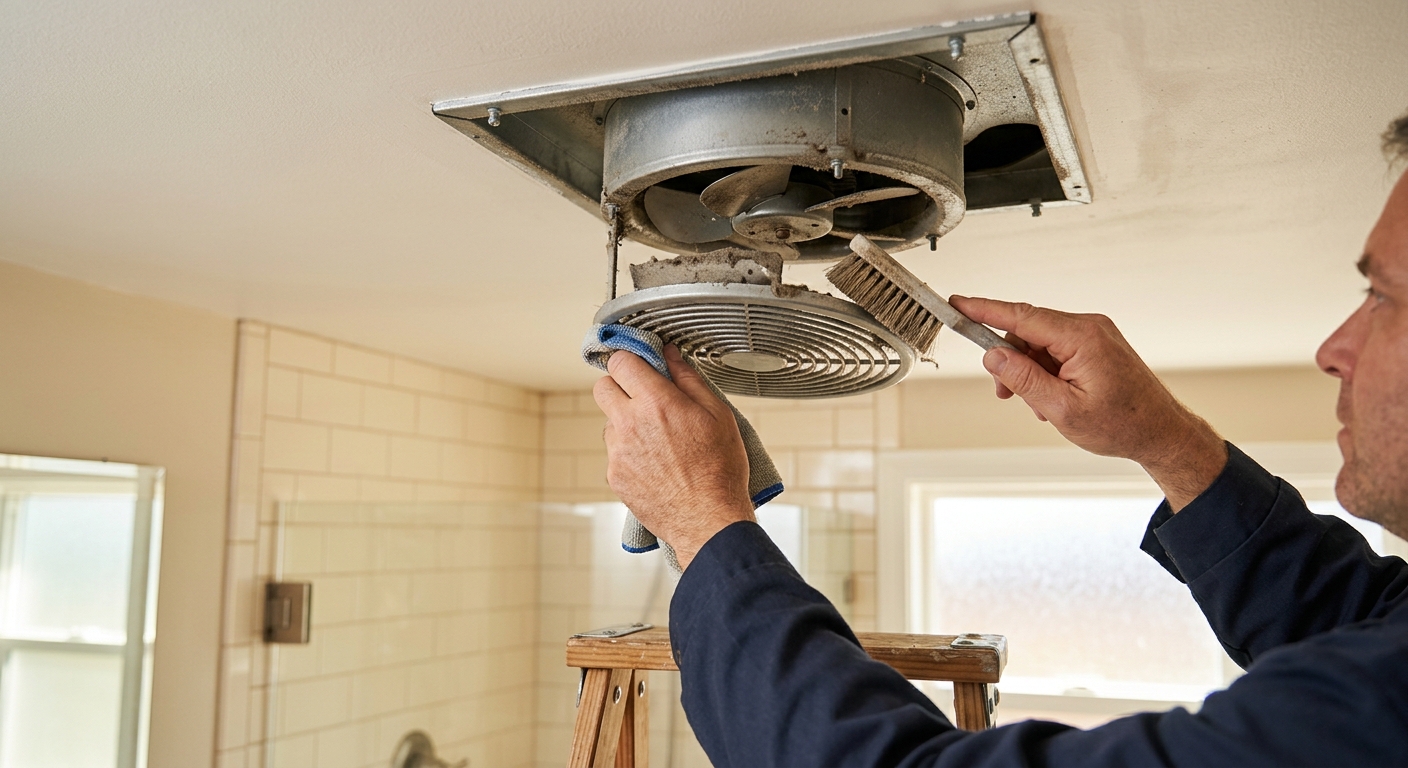
- Apartment or Rental: Renters typically cannot replace the exhaust fan or modify ductwork, but you can still make meaningful improvements. First, request that the landlord repair or replace a non-functioning or undersized fan in writing, as building codes in most jurisdictions require working bathroom ventilation. In the meantime, limit fan runtime to 15 minutes using a phone timer, check and clean the grille cover of dust buildup which can reduce airflow by 30 to 50%, and seal drafty electrical outlets in affected rooms with foam outlet gaskets available for under $5 at hardware stores. These steps alone can reduce noticeable drafts in adjacent rooms.
- Tight Budget Under $50: Start with the exterior vent cap replacement at $10 to $25 if the damper is stuck open, because a stuck damper is a 24-hour-a-day air leak that costs money even when the fan is off. Next, purchase a simple plug-in outlet timer for $12 to $18 and plug a lamp into it as a reminder to turn off the fan at the 15-minute mark. Finally, spend the remaining budget on a tube of acoustical sealant and seal the three or four worst draft points identified with the incense test in the rooms most affected. These three steps together typically address 60 to 70% of the pressure problem for under $50 total.
- Older Home Pre-1980: Homes built before 1980 often have significantly higher baseline air leakage, with air change rates two to three times higher than newer construction. This means exhaust fans cause less relative pressure change, but it also means the home is already losing 35 to 45% of heating and cooling energy to uncontrolled infiltration. In these homes, do not aggressively air-seal without also ensuring adequate fresh air ventilation, as older homes often depend on natural leakage for air quality. Focus first on duct integrity, confirming the fan actually vents outside rather than into wall cavities, and consider having a BPI auditor assess the home before committing to significant air sealing to avoid creating indoor air quality problems.