Your water bill crept up again, but nothing obvious changed. No new appliances, no extra laundry, no long showers. What you probably have is a silent toilet leak, one of the most common and most overlooked sources of water waste in American homes. Unlike a dripping faucet, a leaking toilet makes no sound and leaves no puddle. It just quietly drains money down the drain, month after month.
The culprit in roughly 90% of cases is a worn or warped flapper, the rubber seal at the bottom of your toilet tank. When it no longer seats properly, water seeps continuously from the tank into the bowl, forcing your fill valve to run every few minutes to compensate. The EPA estimates that a single leaking toilet can waste anywhere from 20 to 200 gallons of water per day, adding $100 to $300 or more to your annual water bill depending on your local rates.
This post walks you through how to confirm you have a leak in under two minutes, then gives you two clear paths to fix it: a quick DIY flapper swap you can do for under $15, and a more thorough upgrade that replaces the entire flush valve assembly for long-term reliability. Either way, most homeowners see the savings show up on their very next billing cycle.
What You’ll Need
Click on an item below to shop for the recommended items for this recipe on Amazon.
As an Amazon Associate, we earn from qualifying purchases.
How to Do It
- Perform the dye test: drop 5 to 10 drops of food coloring or a dye tablet into the toilet tank without flushing. Wait 15 minutes. If color appears in the bowl, you have a confirmed flapper leak.
- Turn off the water supply by rotating the shut-off valve clockwise behind or below the toilet until it stops. Flush once to drain the tank.
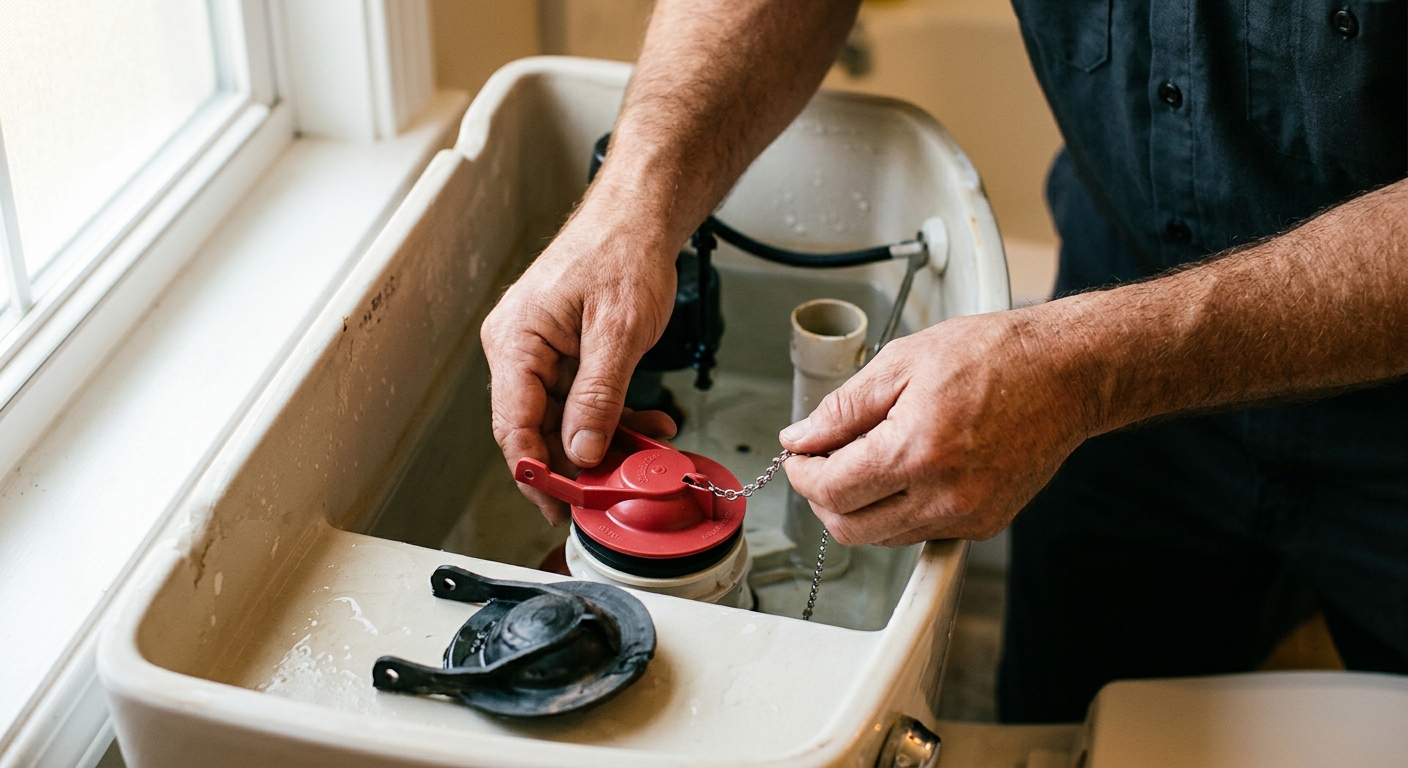
- Lift the tank lid and unhook the old flapper from the two ears on the overflow tube. Note the flapper style before removing it, or take it to the hardware store to match.
- Snap the new flapper onto the overflow tube ears and hook the chain to the flush handle arm. Leave about half an inch of slack in the chain, enough so it pulls taut when you flush but does not get caught under the flapper.
- Turn the water supply back on and let the tank fill completely. Repeat the dye test to confirm the leak is resolved. Flush once to clear the dye.
- Purchase a complete toilet repair kit that includes a new fill valve, flapper, and flush valve seat. Brands like Fluidmaster 400A or Korky are widely available at hardware stores for $25 to $40.
- Turn off the supply valve and flush to drain the tank. Use a sponge or towel to absorb remaining water from the tank bottom.
- Disconnect the water supply line from the bottom of the tank. Place a bucket underneath to catch residual water.
- Remove the fill valve by unscrewing the locknut on the underside of the tank, then lift out the old fill valve. Install the new fill valve according to its instructions, adjusting the height to match your tank depth.
- Replace the flush valve seat if the kit includes a seat repair sleeve. Clean the old seat surface, then press the repair sleeve firmly over it to create a fresh sealing surface for the new flapper.
- Reconnect the supply line, turn on the water, and adjust the fill valve float so the water level sits about one inch below the top of the overflow tube. Perform the dye test and check all connections for drips before replacing the tank lid.
- Call a licensed plumber and specifically mention a suspected silent toilet leak. Ask for a flat-rate diagnostic fee upfront, typically $50 to $75, credited toward any repair work.
- Have the plumber inspect not just the flappers but also the fill valves, supply lines, and shut-off valves. A corroded or stuck shut-off valve is a hazard that should be replaced at the same visit for $30 to $60 in parts.
- Request that the plumber check water pressure at the toilet supply line. Pressure above 80 PSI accelerates flapper wear and may indicate a need for a pressure-reducing valve on the main line.
- Ask for a written summary of what was replaced and any other issues found. This documentation is useful if you apply for a water utility leak credit, which many municipalities offer for confirmed repairs.
Why It Works: The Benefits
Fixing one leaking toilet can reduce household water consumption by 20 to 60 gallons per day for a minor leak, or up to 200 gallons per day for a severe one, translating to $100 to $300 in annual savings at average U.S. water rates.
Constant phantom fill cycles wear out your fill valve prematurely. Stopping the leak reduces fill valve cycling by 80 to 90%, extending its lifespan from 5 years to 10 or more years and avoiding a $20 to $50 replacement.
Most municipalities charge sewer fees based on water consumption. Cutting 50 gallons per day of waste reduces both your water and sewer line items, often doubling the effective savings on your bill.
A deteriorating flapper that leaks today can fail completely tomorrow, causing the bowl to fill slowly or overflow if the fill valve also malfunctions. Fixing it now prevents a more costly plumbing emergency.
The EPA estimates that fixing household leaks nationwide could save 1 trillion gallons of water annually. Fixing just one leaking toilet in your home saves enough water in a year to supply a person’s drinking needs for over a decade.
💰 Savings Impact by Action
Replacing a worn flapper can eliminate 20 to 200 gallons of daily waste, reducing household water consumption by up to 30% depending on household size.
Lowering the tank water level to one inch below the overflow tube stops continuous overflow leakage, saving up to 10% on water bills with no parts cost.
Replacing both the flapper and fill valve in an older toilet can cut per-toilet water consumption by up to 40% by eliminating all internal leak pathways simultaneously.
Inspecting and repairing all toilets in a two-bathroom home at once can reduce total household water waste by over 50% if both units have been leaking undetected.
🏠 Key Concepts Explained
The Science Behind It
A toilet tank operates on a simple pressure and buoyancy system. Water fills the tank after each flush until a float rises high enough to shut off the fill valve. The flapper, seated at the bottom of the tank, acts as a pressure seal. The weight of the water above it and the slight vacuum created by the trap below keep it pressed firmly closed between flushes. When the rubber degrades, even a tiny imperfection in the seal surface allows the pressure differential to push water through continuously.
Chlorine is the primary enemy of rubber flappers. Municipal water systems use chlorine to kill bacteria, but the same chemistry attacks the rubber polymers in flappers over time. The rubber absorbs chlorine molecules, causing it to swell, warp, and eventually harden into a shape that no longer conforms perfectly to the valve seat. This process typically takes three to five years, though harder water and higher chlorine concentrations can accelerate it. Once the seal is imperfect, water flow follows the path of least resistance, seeping around the flapper edge into the bowl below.
The fill valve responds to the dropping water level by cycling on to refill the tank. In a toilet with a slow flapper leak, this cycle can repeat every 5 to 15 minutes around the clock, including while you sleep. At 1.6 gallons per phantom fill cycle and a cycle every 10 minutes, a single toilet can consume over 230 gallons in a 24-hour period without anyone ever pressing the flush handle. Multiplied across a year, that is more than 84,000 gallons, enough water to fill a standard backyard swimming pool nearly twice.
Frequently Asked Questions
▼ I replaced the flapper but the dye test still shows a leak. What now?
The most common cause is a worn or pitted flush valve seat, the plastic ring the flapper presses against. Run your finger around the rim of the valve seat and feel for roughness, grooves, or mineral deposits. You can try cleaning it with fine steel wool or a toilet-safe descaler, or install a flush valve seat repair kit (about $5 to $10) that fits over the old seat. If that does not resolve it, the entire flush valve assembly needs replacement.
▼ My toilet makes a hissing or running sound but the dye test shows no leak. What is wrong?
This usually means water is spilling into the overflow tube because the float is set too high, not a flapper problem. Look into the tank while it fills and watch whether water reaches the top of the overflow tube before the fill valve shuts off. If it does, adjust the float downward using the adjustment screw or clip on the fill valve until the water level stops at least one inch below the tube top. This fix takes about two minutes and costs nothing.
▼ Can renters fix a leaking toilet without landlord permission?
In most cases, you should notify your landlord or property manager first because the toilet is their property and the leak may be their repair responsibility. That said, a flapper replacement is non-destructive and reversible, and many landlords are happy for tenants to handle it. Document the leak with the dye test and photos before contacting your landlord. If your landlord is slow to respond and you are paying your own water bill, fixing it yourself with a $7 flapper is a reasonable and low-risk decision.
▼ How long before I see the savings on my water bill?
Most water utilities bill monthly or every two months. If you fix the leak in the first half of a billing cycle, you should see a measurable reduction on your very next bill. The savings will be most dramatic in the second full billing cycle after the repair, once the leak is eliminated for the entire period. If your utility offers leak credits, apply as soon as possible because most have a 30 to 60 day window after the repair date.
▼ What if my shut-off valve behind the toilet will not turn?
Do not force it. A corroded angle stop valve that is forced can snap at the stem, causing an uncontrolled water leak that requires shutting off the main supply to the whole house. Instead, locate your main water shut-off, confirm it works, and call a plumber to replace the angle stop valve before doing the toilet repair. Valve replacement typically costs $75 to $150 and is well worth it for the safety and future convenience.
Quick Tips
- Check every toilet in your home with the dye test on the same day. Multi-bathroom homes frequently have more than one leaking toilet.
- Set a calendar reminder to replace flappers every four to five years proactively, even without a confirmed leak. A $7 flapper every five years is far cheaper than a year of phantom water bills.
- If your water utility offers leak credits, take photos of the old flapper and save the receipt for the replacement parts. Many utilities will credit 50 to 100% of the excess water charges for one billing cycle after a confirmed repair.
- Listen for a faint hissing sound from the tank between flushes. Hissing usually means the fill valve is not shutting off completely, a separate issue from the flapper that also wastes water and should be addressed at the same time.
- When buying a replacement flapper, choose one specifically rated for your toilet brand if possible. Universal flappers work in most cases, but brand-specific flappers (such as Korky for American Standard or Toto-brand flappers for Toto toilets) tend to seat more reliably and last longer.
Variations for Your Situation
- Apartment/Rental: Renters should start by notifying the landlord in writing and requesting repair, especially if the landlord pays the water bill or if the building has a master meter. If you pay your own water bill and the landlord is unresponsive, a $7 flapper swap is a renter-safe repair that requires no permits and leaves no permanent changes. Document everything with photos before and after.
- Tight Budget (under $15): The dye test costs nothing if you use food coloring you already own. A replacement flapper runs $5 to $10 at any hardware or big-box store. Skip the full flush valve kit for now and just replace the flapper. If the leak persists, a $5 flush valve seat repair sleeve is the next step before committing to the full $30 to $60 kit.
- Older Home (pre-1980): Homes built before 1980 may have toilets with non-standard flapper sizes or older ballcock fill valves rather than modern float-cup valves. Bring the old flapper to the hardware store to match it physically. If the toilet still uses a large rubber ball float on an arm rather than a float cup, consider replacing the entire fill valve mechanism with a modern Fluidmaster or Korky unit for $15 to $20. The upgrade improves reliability and makes future maintenance much simpler.