Most homeowners think about ventilation only when something smells bad or a window fogs up. But inadequate ventilation is quietly responsible for a long list of problems: mold growth, elevated humidity, poor indoor air quality, and HVAC systems that work harder than they need to. According to the EPA, Americans spend about 90% of their time indoors, where air pollutant concentrations can be 2 to 5 times higher than outdoors. Ventilation is the primary mechanism that keeps those concentrations in check.
The tricky part is that ventilation problems are often invisible until they become expensive. A home that is too tightly sealed traps moisture, CO2, cooking fumes, and off-gassing from furniture and building materials. A home that is too leaky wastes conditioned air and drives up heating and cooling costs. The goal is a balanced middle ground, and the good news is that diagnosing your situation requires no special equipment and only about 30 to 60 minutes of your time.
This post walks you through the warning signs of poor ventilation, the simple tests you can do yourself, and a tiered set of fixes ranging from free adjustments to professional upgrades. Whether you live in a newer airtight home or a drafty older house, there is a ventilation strategy that fits your situation and your budget.
What You’ll Need
Click on an item below to shop for the recommended items for this recipe on Amazon.
As an Amazon Associate, we earn from qualifying purchases.
How to Do It
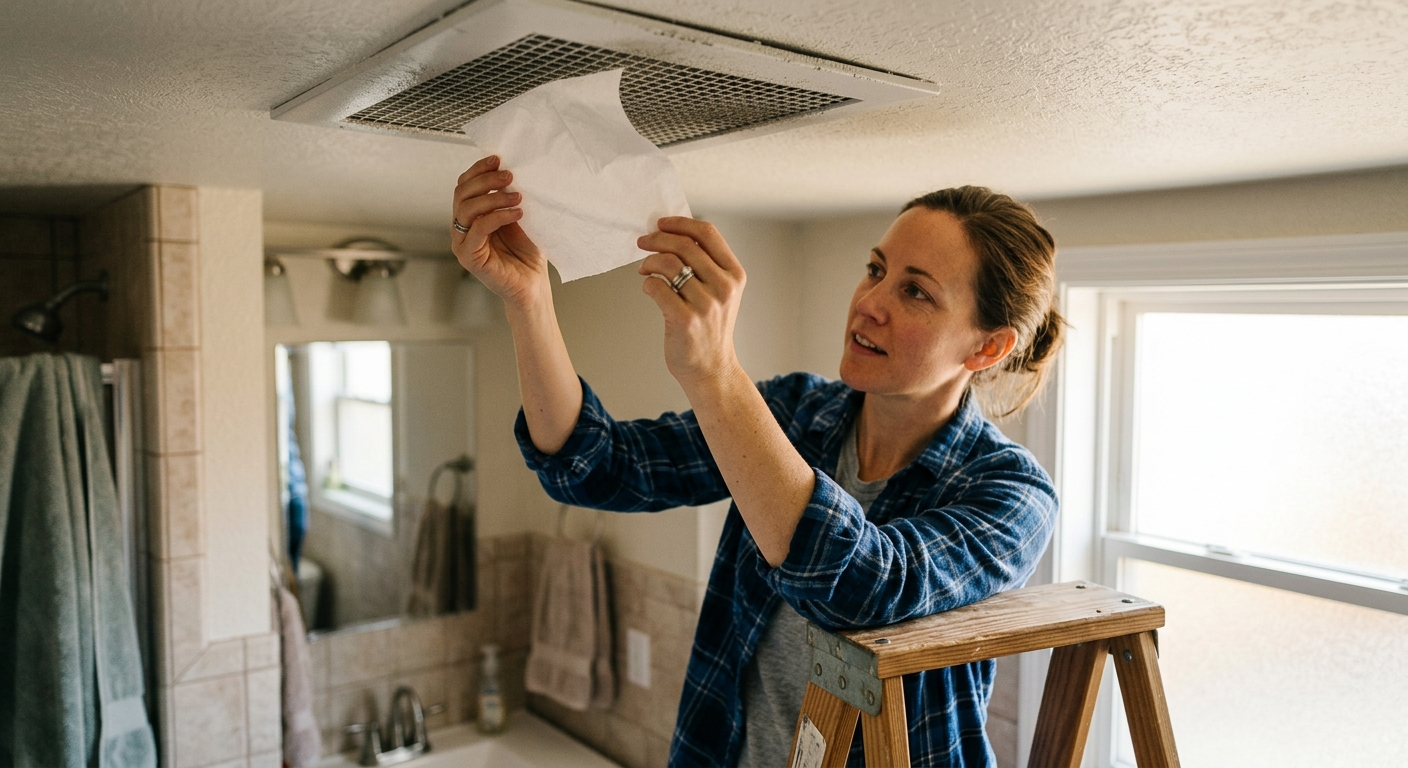
- Walk through every bathroom and run each exhaust fan. Hold a single sheet of toilet paper up to the grille. If the fan holds the paper firmly against the grille, it is moving adequate air. If the paper barely lifts or falls, the fan is clogged or failing.
- Check your kitchen range hood by turning it on and holding your hand near the grille to feel suction. Then check that the exterior damper flap opens and closes freely. A stuck-closed damper means zero ventilation even when the fan runs.
- Inspect bathroom fan covers by removing them and cleaning accumulated lint and dust with a vacuum and damp cloth. A clogged grille can reduce airflow by 50% or more, and cleaning takes under 10 minutes per fan.
- Test for moisture problems by taping a 12-inch square of plastic wrap over a basement or crawl space wall for 24 hours. If condensation forms on the wall side of the plastic, you have moisture migrating through the foundation and need dehumidification or better drainage. Condensation on the room side means high indoor humidity.
- Check your HVAC filter. A severely clogged filter restricts airflow through the entire system and reduces the system’s ability to circulate and condition air. Replace it if it appears gray or visibly clogged.
- Open windows on opposite sides of your home for 10 minutes each morning during mild weather to flush overnight CO2 and humidity buildup. This costs nothing and immediately improves indoor air quality.
- Replace undersized or failing bathroom exhaust fans with properly sized models. The rule of thumb is 1 CFM per square foot of bathroom area, with a minimum of 50 CFM for rooms under 50 square feet. Look for ENERGY STAR models that run quieter and use 70% less energy. Cost is $25 to $75 per fan.
- Install a programmable or humidity-sensing bathroom fan controller (around $20 to $40) that automatically runs the fan for 20 minutes after the bathroom is used. This is the single most effective way to remove shower moisture without remembering to run the fan manually.
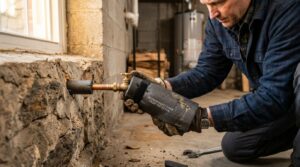
- Seal the most common air leakage points to reduce uncontrolled infiltration: use caulk around window and door frames, foam backer rod plus caulk around penetrations in the basement ceiling, and foam gaskets behind outlet and switch plates on exterior walls. A tube of caulk costs $5 to $8 and one tube covers 30 to 50 linear feet.
- Install trickle vents or window ventilators if your home has no mechanical ventilation system. These small passive vents installed in window frames allow controlled fresh air intake without drafts. They cost $15 to $40 per window and work best when installed on the windward side of the house.
- Add a plug-in CO2 monitor (around $70 to $120) in your main living area and bedroom. If levels regularly exceed 1,000 ppm during the day or 1,200 ppm while sleeping, your home needs more fresh air exchange and this gives you objective data to act on.
- Check and clean your dryer vent from exterior to interior using a dryer vent cleaning kit ($20 to $30). A clogged dryer vent not only blocks moisture-laden air from escaping but is the leading cause of dryer fires, with about 2,900 reported each year according to the U.S. Fire Administration.
- Schedule a professional blower door test through a certified energy auditor (cost: $200 to $400, often subsidized by utility companies). This test quantifies your home’s actual air leakage rate in ACH50 and identifies the specific locations of major leaks using a thermal camera or smoke pencil.
- Request an ASHRAE 62.2 ventilation calculation from the auditor. This standard specifies the minimum mechanical ventilation rate based on your home’s square footage and number of bedrooms. Many homes, especially those air sealed after 2005, fall short of this requirement.
- Install a Heat Recovery Ventilator (HRV) or Energy Recovery Ventilator (ERV) if your home is tightly sealed (below 3 ACH50 on a blower door test). HRVs recover 70 to 80% of the heat from outgoing stale air and transfer it to incoming fresh air, so you get controlled ventilation without the energy penalty. Cost is $700 to $2,000 installed.
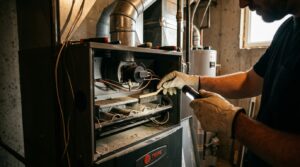
- Have a qualified HVAC technician inspect combustion appliances for backdrafting risk if your home has been significantly air sealed. A combustion safety test (also called a worst-case depressurization test) costs $100 to $200 and confirms whether gas appliances are venting safely.
- Install bathroom fans that duct directly to the exterior if any of your fans currently duct into the attic. Attic-ducted fans are a code violation in most jurisdictions and directly cause attic mold. A professional installation with proper rigid or semi-rigid duct runs $150 to $300 per fan.
Why It Works: The Benefits
Properly balanced ventilation reduces the HVAC load by 10 to 30% by eliminating uncontrolled air leakage while still meeting fresh air requirements, rather than conditioning large volumes of random infiltration air.
Controlled ventilation dilutes indoor pollutants including VOCs, CO2, cooking byproducts, and dust mite allergens. Studies show CO2 levels in poorly ventilated bedrooms can exceed 2,000 ppm by morning, reducing sleep quality and cognitive function the next day.
Adequate exhaust ventilation in bathrooms and kitchens removes moisture at the source, preventing the 1,000 to 8,000 square feet of mold remediation costs that average $2,000 to $6,000 when moisture damage goes unchecked.
When ventilation is balanced, your HVAC system cycles less frequently and runs closer to its design specifications, reducing wear. Oversized runtimes caused by humidity load can shorten a system’s lifespan by 3 to 5 years.
Controlled ventilation eliminates drafts from uncontrolled infiltration and helps equalize temperature across rooms, reducing the 5 to 8 degree swings that make some rooms uncomfortable even when the thermostat is set correctly.
💰 Savings Impact by Action
Sealing major air leakage paths in the building envelope reduces uncontrolled infiltration and cuts heating and cooling costs by up to 20% according to DOE data.
Heat and energy recovery ventilators recapture 70 to 80% of the energy in exhaust air, reducing the heating or cooling load from ventilation by up to 75% compared to simple exhaust fans.
Replacing old inefficient bath fans with ENERGY STAR models reduces fan energy consumption by up to 70% while improving airflow and moisture removal.
Proper bathroom and kitchen ventilation reduces indoor humidity, lowering the latent cooling load on central air conditioning by 10 to 15% in humid climates.
A clean HVAC filter maintains design airflow and can improve system efficiency by 5 to 15% compared to a severely restricted filter.
🏠 Key Concepts Explained
The Science Behind It
Ventilation works through two mechanisms: dilution and removal. Dilution ventilation mixes fresh outdoor air with indoor air to reduce the concentration of pollutants, CO2, and humidity. Removal ventilation captures contaminants at the source, like a range hood pulling grease and combustion gases directly out of a kitchen, before they disperse into the living space. Source removal is far more efficient, requiring 10 to 50 times less airflow to achieve the same air quality result compared to dilution alone.
The physics of air movement in a home is governed by pressure differences. Air always flows from high pressure to low pressure, and those differences are created by three forces: the stack effect (temperature-driven buoyancy), wind pressure on the building envelope, and mechanical systems like fans and HVAC equipment. In a house without intentional ventilation strategy, these forces pull air in and push it out through whatever gaps exist in the structure. The problem is that uncontrolled infiltration paths often run through wall cavities, attic bypasses, and crawl spaces, where air picks up mold spores, insulation fibers, and soil gases like radon before entering the living space.
Heat Recovery Ventilators work by passing outgoing stale air and incoming fresh air through adjacent channels in a heat exchanger core, transferring 70 to 80% of the thermal energy without mixing the two airstreams. In winter, this means cold fresh air is warmed to near room temperature before it enters the living space, reducing the heating load from ventilation to just 20 to 30% of what it would cost without recovery. In climates with hot humid summers, an ERV also transfers moisture between the airstreams, preventing incoming humid air from overwhelming air conditioning systems. This is why balanced mechanical ventilation with heat recovery is considered best practice in both very cold and very humid climates.
Frequently Asked Questions
▼ My bathroom always stays humid and foggy after showers. What is wrong?
The most likely causes are a clogged fan grille, a fan that is too small for the room, or a fan that ducts into the attic instead of outside. Start by cleaning the grille and doing the toilet paper test described above. If the fan passes, measure the room and calculate whether your fan’s CFM rating matches the room size at 1 CFM per square foot. If the fan is ducted into the attic, replacing it with proper exterior ducting is a priority.
▼ I see condensation on my windows every morning. Is this a ventilation problem?
Morning window condensation almost always points to high indoor humidity, typically above 50% relative humidity during cold weather. The glass surface chills overnight and moisture in the air condenses on it. The fix is a combination of more exhaust ventilation, especially in bathrooms and kitchens, and possibly running a dehumidifier. If you have a newer tight home, an HRV may be the right long-term solution.
▼ Can I just crack a window instead of installing mechanical ventilation?
Opening windows works well in mild weather, but it is not a reliable strategy in extreme cold, heat, or high outdoor humidity because you lose conditioned air and bring in unconditioned air at full energy cost. It also provides no control over where air enters or what it carries. For a home that genuinely lacks mechanical ventilation, window cracking is a reasonable short-term measure while you plan a permanent solution.
▼ My house smells musty but I cannot find any mold. What should I check?
Musty odors without visible mold usually point to three places: the crawl space or basement, the HVAC air handler and evaporator coil, or wall cavities with hidden moisture. Start by checking your air filter and having your evaporator coil inspected if it has not been cleaned in two or more years. Then look for standing water or high humidity in the crawl space. If both check out, a professional with a moisture meter can probe walls without opening them.
▼ My energy auditor says my home is too tight. How tight is too tight?
ASHRAE 62.2 recommends mechanical ventilation for any home that tests below 5 ACH50 on a blower door test, and most energy codes now require it below 3 ACH50. If your home tests below 3 ACH50 without a dedicated fresh air system, you are almost certainly underventilated regardless of how comfortable it feels. The solution is not to loosen the envelope but to add controlled mechanical ventilation, ideally an HRV or ERV.
Quick Tips
- Keep bathroom fan runtime to at least 20 minutes after a shower. A simple $20 countdown timer switch automates this without any ongoing habit change.
- Check your home’s CO2 level on a cold winter morning before anyone opens a window. Levels above 1,000 ppm in a closed house confirm you need more fresh air exchange.
- Never block or tape over trickle vents or bathroom fan grilles in winter to stop drafts. These are designed airflow paths, and blocking them forces uncontrolled air in through worse locations.
- Set your HVAC system’s fan to run 15 to 20 minutes per hour even when heating or cooling is not active. This circulates air through the filter, reducing indoor pollutant concentrations without the energy cost of full-time fan operation.
Variations for Your Situation
- Apartment or Rental: Renters cannot modify ductwork or install HRVs, but several impactful steps require no landlord permission. A plug-in CO2 and humidity monitor ($70 to $120) gives you real data to bring to your landlord if levels are problematic. A portable HEPA air purifier with a carbon filter ($100 to $200) handles indoor pollutants. Report non-functional bathroom fans to your landlord in writing, since in most jurisdictions functional exhaust ventilation is a code requirement and a landlord’s legal responsibility. Trickle vents in windows ($15 to $40 each) are reversible and leave no damage.
- Tight Budget Under $50: Focus on the free and near-free steps first. Clean all bathroom fan grilles and check exterior dampers for free. Caulk the most obvious leakage points around window frames and outlets on exterior walls for under $15 total. A $15 to $20 manual timer switch for your bathroom fan may be the single highest-impact low-cost purchase. Cross-ventilate with windows on opposite sides of the home during morning hours when outdoor humidity is lower. These steps cost almost nothing and meaningfully improve air change rates.
- Older Home Pre-1980: Homes built before 1980 almost always have higher natural infiltration rates due to less airtight construction, which paradoxically provides more fresh air exchange but at a high energy cost. The priority here is not adding more ventilation but improving the quality of air movement. Focus on sealing the worst bypasses (attic hatches, top plates, basement rim joists) while leaving some background leakage. Adding bath fans if they are absent or inadequate, and checking that all fans actually exhaust outside, will prevent the moisture damage that is extremely common in older homes with uncontrolled infiltration bringing in humid air during summer months.