There is nothing quite like stepping out of bed on a January morning and feeling the shock of an ice-cold floor. If your floors feel frigid even when your thermostat is set to 70°F, you are not imagining it. Cold floors are a direct symptom of heat loss through your home’s foundation, crawl space, or slab, and that lost heat shows up on your monthly energy bill. According to the U.S. Department of Energy, floors above unconditioned spaces can account for 15 to 20% of a home’s total heat loss.
The frustrating part is that your heating system may be working perfectly, yet your home never quite feels warm because radiant heat is being pulled from your feet into the cold surface below you. This is a physics problem as much as an insulation problem, and it has practical, affordable solutions that most homeowners can tackle in a weekend or less. Whether you own a home with a crawl space, a slab-on-grade foundation, or a finished basement, there are steps matched to your situation.
In this post, we cover the building science behind why floors get cold, walk you through solutions ranging from zero-cost fixes to a focused $50 DIY upgrade, and give you the numbers to know whether a bigger insulation project makes financial sense. You will leave with a clear action plan to make your floors comfortable again without guessing.
What You’ll Need
Click on an item below to shop for the recommended items for this recipe on Amazon.
As an Amazon Associate, we earn from qualifying purchases.
How to Do It
- Place thick area rugs with a felt or rubber pad underneath in the coldest floor zones, particularly bedrooms, living areas, and anywhere you stand for extended periods. A rug with a dense pad can add R-1 to R-2 of insulation underfoot and raise perceived surface temperature by several degrees immediately.
- Walk through your home and identify floor-level draft sources: gaps around floor vents, the gap under exterior doors, spaces around pipes coming through the floor, and the joint where the wall meets the floor along exterior walls. Use your hand or a lit stick of incense to detect incoming cold air.
- Seal any gaps around floor-level pipe penetrations and the gap between the baseboard and floor using paintable caulk. This costs under $5 and can stop surprising amounts of cold air infiltration from the crawl space or basement below.
- Install foam draft stoppers or door sweeps at the base of exterior doors where cold air enters at floor level. A door sweep costs $8 to $15 and provides immediate relief on the coldest nights.
- Raise your thermostat setpoint by 1 to 2 degrees only in the evenings if cold floors are causing discomfort, but pair this with one of the above steps so you are addressing the cause rather than just compensating for heat loss.
- Access your crawl space or unfinished basement and inspect the floor cavity above. Look for missing, fallen, or compressed insulation batts. Insulation that has sagged away from the subfloor loses most of its effectiveness because the air gap eliminates contact and allows convection.
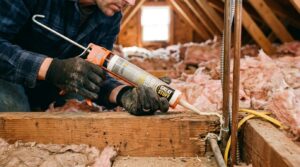
- Seal all air bypasses before adding or replacing insulation. Use a can of expanding spray foam ($6 to $10) to seal gaps around pipes, wires, and ducts passing through the floor framing. Pay special attention to the rim joist (the board running along the top of your foundation wall) as this is often the single largest source of cold air infiltration in the floor assembly.
- Cut and fit R-19 (for 2×6 floor joists) or R-13 (for 2×4 joists) unfaced fiberglass batts snugly into each floor joist bay. The insulation should be pressed firmly against the subfloor above with no gaps or compression. One bag of R-19 batts covering 40 square feet costs roughly $20 to $30.
- Secure the insulation in place using wire insulation supports (also called tiger claws or tension wires), which cost about $8 for a pack of 25. Space them every 18 inches along each joist bay to hold the insulation firmly against the subfloor.
- After insulating, lay a 6-mil polyethylene vapor barrier across the crawl space ground if one is not already present. This reduces moisture that can otherwise degrade insulation and contribute to a cold, damp feel in floors above. Overlap seams by 12 inches and tape them.
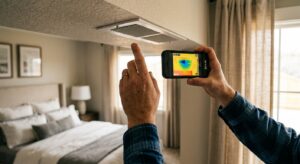
- After completing the work, check your floor surface temperature with an inexpensive infrared thermometer on the next cold day to confirm the improvement. A well-insulated floor above a crawl space should read within 5°F of room air temperature.
- Measure the room and calculate square footage. Purchase 1-inch or 2-inch XPS (extruded polystyrene) rigid foam insulation panels, which provide R-5 per inch and are moisture resistant. For most slab homes, 1-inch foam under a new subfloor layer is the minimum effective upgrade.
- Remove all furniture and existing flooring down to the bare concrete. Clean the slab and check for moisture intrusion by taping plastic sheeting to the floor for 24 hours. If condensation forms on the underside, address the moisture source before proceeding.
- Lay the rigid foam panels directly on the slab in a staggered brick pattern, taping all seams with foam board tape to eliminate air pathways. This foam layer is the thermal break that stops conduction from the cold concrete to your living surface.
- Install a layer of 3/4-inch tongue-and-groove plywood or OSB on top of the foam, fastened with concrete screws driven through both layers into the slab. This creates a stable subfloor that can accept any finished flooring product.
- Install your chosen finished flooring. Engineered hardwood, luxury vinyl plank, or cork all work well on this assembly. Avoid solid hardwood, which can warp with slab moisture fluctuations.
- Reattach baseboards and door trim as needed. The total floor height will increase by roughly 1.75 to 2.5 inches depending on foam and subfloor thickness, so plan for door clearances in advance.
Why It Works: The Benefits
Properly insulating floors above crawl spaces or unheated basements can reduce total home heat loss by 15 to 20%, translating to roughly $100 to $250 in annual savings for an average-sized home in a cold climate.
Adding insulation and area rugs can raise floor surface temperature by 8 to 12°F, eliminating the radiant chill that makes rooms feel uncomfortable regardless of air temperature.
Reducing cold floors helps eliminate the temperature stratification that forces many homeowners to overheat the air just to feel comfortable at floor level, improving whole-room consistency.
When your home retains heat more effectively, your furnace or heat pump cycles less often, extending equipment lifespan and reducing wear on components.
Sealing gaps and penetrations near the foundation that cause cold floors also reduces the entry of moisture, radon, and outdoor pollutants that travel through the same pathways.
💰 Savings Impact by Action
Sealing and insulating the rim joist reduces foundation-level air infiltration and can cut whole-home heating energy use by up to 10%.
Adding R-19 insulation to an uninsulated floor above a crawl space or unheated basement reduces floor heat loss by up to 95%, contributing 15 to 20% savings on total heating bills.
Dense area rugs with felt underlayment pads add R-1 to R-2 underfoot and reduce radiant heat loss from occupants, lowering perceived heating demand by 3 to 5%.
Installing a ground vapor barrier in crawl spaces reduces moisture-related insulation degradation, preserving full R-value and preventing a 30 to 40% efficiency loss over time.
🏠 Key Concepts Explained
The Science Behind It
Cold floors are fundamentally a heat transfer problem operating through two simultaneous mechanisms. The first is conduction: heat moves through solid materials from warm to cold at a rate determined by the material’s thermal conductivity. Concrete has a thermal conductivity roughly 50 times higher than fiberglass insulation, which is why a slab floor at 55°F relentlessly pulls heat away from your 98.6°F feet. The second mechanism is radiation: your body emits infrared energy toward every cooler surface in its line of sight, including the floor. Even if the air around you is 70°F, a floor surface at 55°F can make the room feel closer to 65°F due to this radiant heat drain. This is quantified by a metric called Mean Radiant Temperature, which averages the temperature of all surrounding surfaces and is equally weighted with air temperature in determining human thermal comfort.
Air infiltration amplifies both problems significantly. The floor assembly sits directly above the foundation, which is one of the leakiest boundaries in most homes. Cold outdoor air enters through gaps around pipes, rim joists, and foundation cracks, and then rises through the floor structure by the stack effect (warm air rises and escapes at the top of the house, pulling cold air in at the bottom). This continuous cold air washing over the underside of your subfloor prevents even good insulation from performing at its rated R-value, since R-values are measured under still air conditions. Sealing air gaps before or alongside insulation is therefore not optional; it is what makes the insulation work.
Adding insulation under the floor works by introducing a material with very high thermal resistance between the cold exterior and your living surface. R-19 insulation in a floor cavity slows heat flow by a factor of roughly 20 compared to an uninsulated wood floor. This keeps the subfloor surface temperature much closer to room air temperature. Pair that with a dense area rug, which adds its own R-1 to R-2 at the point of body contact, and you have addressed both the conductive pathway through the structure and the final radiant exchange between your feet and the floor surface.
Frequently Asked Questions
▼ I added insulation under the floor but it still feels cold. What did I miss?
The most common cause is air bypasses that were not sealed before insulating. Check the rim joist area along the top of your foundation wall, gaps around any pipes or wires penetrating the floor, and any open cavities where interior walls meet the exterior wall framing. Use a can of spray foam to seal these first, then verify with an infrared thermometer whether specific cold zones remain. A secondary cause is insulation that has fallen or sagged away from the subfloor, leaving an air gap that eliminates most of the thermal benefit.
▼ My house has a concrete slab foundation with no crawl space. What can I do?
For slab homes, the practical options are adding rigid foam insulation under new flooring (the Slab Floor Upgrade approach in this post), installing thick area rugs with dense underlayment pads over the coldest zones, or adding electric radiant heat mats under tile in bathrooms or kitchens. The rug approach costs under $50 and works immediately. The rigid foam subfloor approach costs $200 to $600 per room but permanently eliminates the cold-slab problem and raises floor surface temperatures by 10 to 15°F on cold days.
▼ Can renters fix cold floors without doing any permanent work?
Yes. Area rugs with felt underlayment pads are the most effective no-permission-needed solution and can raise perceived floor warmth significantly. Draft stopper door sweeps that attach with adhesive (not screws) are also renter-safe and help at exterior doors. Renters should also notify landlords in writing about cold floors, since floor insulation issues can relate to building code compliance and habitability standards in many states.
▼ How long before I see the savings on my energy bill?
Comfort improvements are immediate once rugs are placed or insulation is installed. Energy bill savings typically show up within the first full heating month after completing crawl space air sealing and insulation work. Because utility bills vary with weather, the clearest way to measure savings is to compare heating degree days-adjusted bills from the same month in consecutive years. Most homeowners report noticeable bill reductions of 10 to 20% in the first full heating season after completing floor insulation.
▼ My floors are cold only in one room. Does that mean something specific?
Cold floors concentrated in a single room usually indicate a localized problem: a missing or fallen insulation batt directly below that room, a large gap or penetration in the subfloor nearby, or a crawl space vent directly below that space letting in outside air. Use an infrared thermometer from above to map the cold zones precisely, then inspect from below if accessible. A single missing batt in a joist bay can drop floor surface temperature by 15°F or more compared to adjacent insulated areas.
Quick Tips
- Seal the rim joist in your basement or crawl space with cut-and-cobble rigid foam and spray foam before doing anything else. It is the single highest-impact air sealing target in most homes and takes only an hour.
- Use an inexpensive infrared thermometer to identify which specific floor zones are coldest before buying materials, so you spend your $50 where it has the most impact.
- When choosing area rugs for warmth, look for rugs with a pile height over 0.5 inches paired with a felt-and-rubber underlayment pad. The pad adds as much insulation as the rug itself and prevents slipping.
- If your crawl space has no vapor barrier on the ground, install one before adding floor insulation. Moisture from bare soil evaporates upward and degrades fiberglass insulation, often dropping its effective R-value by 30 to 40% within a few years.
Variations for Your Situation
- Apartment or Rental: Since renters cannot access crawl spaces or modify floor assemblies, focus entirely on surface solutions. A high-pile area rug (at least 1/2 inch thick) with a dual-layer felt-and-rubber pad costs $30 to $80 for a bedroom or small living area and can raise perceived floor warmth by 5 to 10°F immediately. Adhesive-backed foam weatherstripping around the base of exterior doors and window frames is also renter-safe and costs under $10. Document cold floor complaints in writing to your landlord, as building codes in many states require habitable temperature conditions.
- Tight Budget (under $20): Start with a tube of paintable caulk ($4) and seal every gap you can reach where the baseboard meets the floor along exterior walls, around floor register vents, and around any pipe penetrations. Then place folded moving blankets or doubled-up bath mats in the highest-traffic cold zones as a temporary thermal barrier. These two steps combined cost under $20 and can make a measurable difference in comfort while you save up for rugs or insulation materials.
- Older Home (pre-1980): Homes built before 1980 commonly have little or no floor insulation and significant air leakage through deteriorated caulk and settling-related gaps. Before adding new insulation, inspect the existing floor cavity carefully for vermiculite, asbestos pipe wrap, or crumbling materials that require professional handling. Prioritize air sealing the rim joist first, as older homes often have completely open rim joist cavities that dump cold outside air directly under the floor. Budget R-19 batts plus rim joist rigid foam for a 500 square foot area will cost $80 to $150 and typically delivers the largest single comfort and efficiency improvement available in an older home.