Fiberglass batts are in roughly 90% of American homes, and for good reason: they’re affordable, widely available, and effective when installed correctly. But here’s the problem most homeowners never hear about: a batt that’s compressed, torn, or missing an air barrier can perform far below its rated R-value. In some cases, a poorly installed R-19 batt delivers the thermal performance of R-9 or less. You paid for insulation that isn’t doing its job.
The issue isn’t the material itself. Fiberglass works by trapping tiny pockets of still air within its fibers. Compress it, leave gaps around it, or let air move through it freely, and those air pockets disappear. The result is a wall or floor cavity that leaks heat just as readily as if it had half the insulation. Worse, most homeowners never see the problem because it’s hidden behind drywall or subfloor.
This post covers the six most common fiberglass batt installation mistakes, how each one degrades your home’s thermal performance, and what you can actually do about it. Whether you’re insulating a new addition, re-doing a crawl space, or just want to audit what’s already in your walls, you’ll find practical steps here that translate directly to lower energy bills and more consistent comfort throughout the year.
What You’ll Need
Click on an item below to shop for the recommended items for this recipe on Amazon.
As an Amazon Associate, we earn from qualifying purchases.
How to Do It
- Put on a long-sleeved shirt, gloves, safety glasses, and an N95 respirator before touching any fiberglass. Fiberglass particles irritate skin, eyes, and lungs.
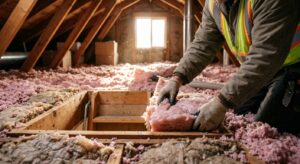
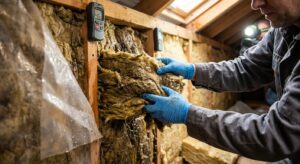
- Walk through every accessible insulated space and look for batts that are visibly compressed, falling out of cavities, torn, or have obvious gaps along the edges or at the top and bottom of each stud bay.
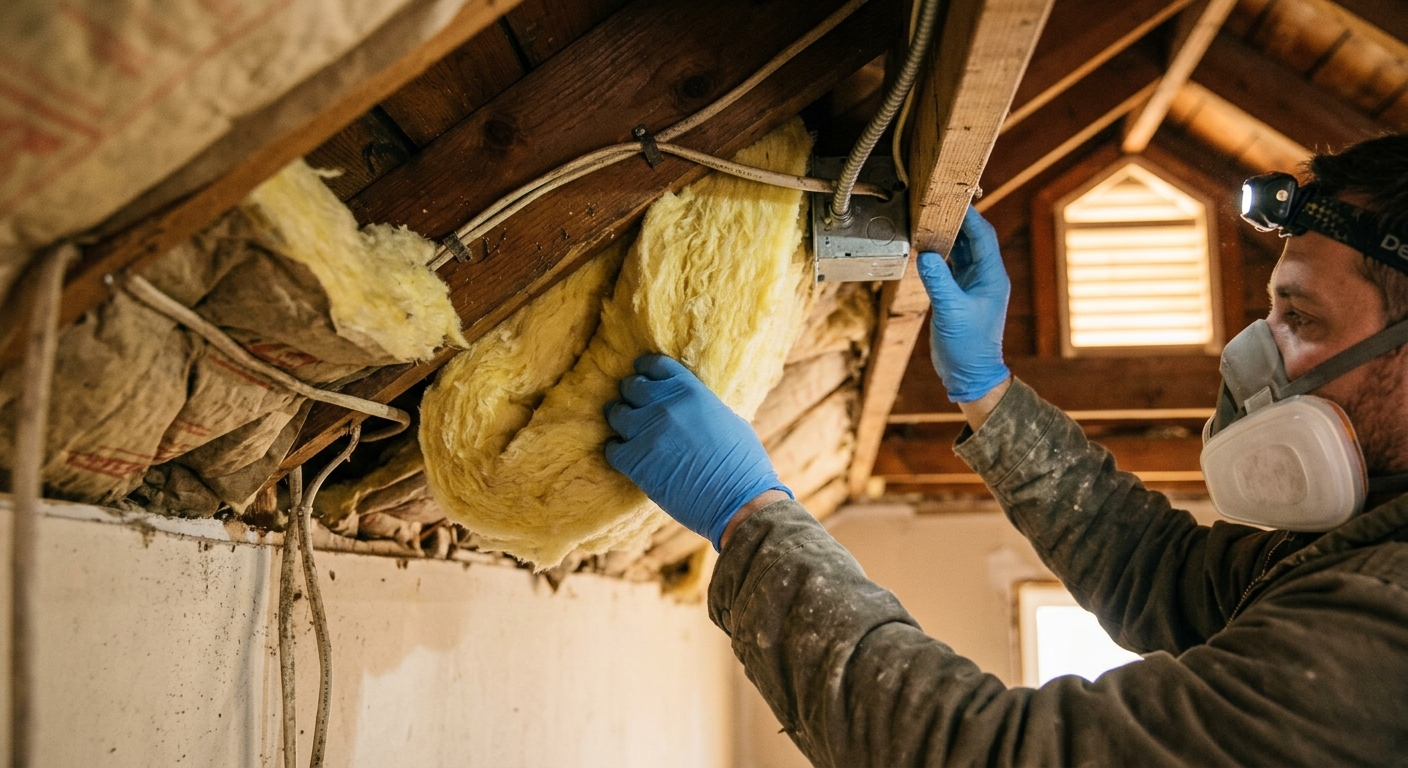
- For any batt that is compressed behind pipes or wires, carefully split the batt lengthwise so half goes behind the obstruction and half goes in front of it. This keeps total thickness intact and preserves R-value.
- Gently unfold or reposition any batt that has sagged or pulled away from framing edges. Press it snugly against all four sides of the cavity without compressing the face of the batt inward.
- Use leftover batt scraps or cut pieces to fill any visible gaps at the ends of cavities, around electrical boxes, or at irregular framing transitions. Even a small scrap stuffed into a 2-inch gap makes a measurable difference.
- In crawl spaces with batts between floor joists, confirm insulation is friction-fit tightly upward against the subfloor with no sagging. Add insulation support rods (available at hardware stores for about $15 per bag) every 18 inches if batts are drooping.
- Remove existing batts carefully and set them aside. Inspect each one: if the batt is less than 75% of its original stated thickness, is torn into pieces smaller than one stud bay, or shows signs of moisture or mold, replace it rather than reusing it.
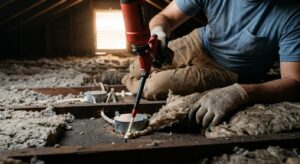
- Before reinstalling any insulation, seal all air leaks in the framing using canned spray foam for gaps smaller than 3 inches and backer rod plus caulk for narrow cracks. Pay special attention to top plates, electrical penetrations, plumbing penetrations, and rim joists.
- Let the foam or caulk cure fully (typically 1 to 2 hours) before placing insulation over any sealed areas. This is the step most DIYers skip, and it is responsible for the majority of real-world performance shortfalls.
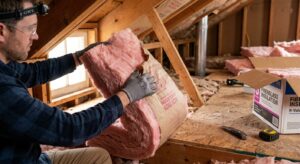
- Cut replacement batts 1 inch longer than the cavity height so they friction-fit under slight compression only at the ends, not across the face. The face of the batt should remain at full loft and flush with the face of the framing.
- Split batts lengthwise around any wiring or pipes rather than simply cramming the full batt behind the obstruction. Use a bread knife or serrated blade for clean cuts.
- If installing unfaced batts in a climate that requires a vapor retarder (most zones 4 through 7), staple a 4-mil poly sheet or kraft-faced batt facing to the warm-in-winter side of the framing after insulation is in place, lapping edges at least 2 inches over each stud.
- Verify coverage by pressing a flat board against the insulation surface: there should be no visible deflection beyond the face of the framing. Any depression indicates compression that is reducing your effective R-value.
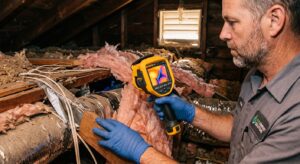
- Schedule a home energy audit with a BPI-certified auditor or RESNET HERS rater. They will use a blower door test combined with an infrared camera scan to identify exactly where insulation voids, compressions, and air bypasses are located behind finished surfaces.
- Review the infrared report with the auditor. Cold blue patches on a wall or ceiling in winter indicate missing or poorly installed insulation. Ask the auditor to mark specific stud bays for remediation so a contractor knows exactly where to open walls.
- Request quotes from insulation contractors for injection foam or dense-pack cellulose, both of which can be blown into existing wall cavities through small holes drilled from inside or outside without full drywall removal. These methods are often more cost-effective than opening walls.
- For attic floors with poorly installed batts over finished ceilings, ask about adding a layer of blown-in insulation over the existing batts. This adds R-value and eliminates gaps without requiring removal of the existing material, typically costing $0.70 to $1.50 per square foot installed.
- After remediation, request a follow-up blower door test to confirm the improvements. A properly insulated and air-sealed home should test at 3 to 5 air changes per hour at 50 pascals (ACH50) or lower for homes built before 1990.
Why It Works: The Benefits
Correcting installation mistakes can recover 25 to 50% of lost insulation performance without adding any new material, giving you the R-value you already paid for.
Properly installed insulation in walls and attics reduces heating and cooling loads by 15 to 40%, translating to $200 to $600 per year in savings for a typical 1,500 to 2,500 square foot home depending on climate.
Eliminating cold spots caused by compressed or gapped batts removes the localized drafts and temperature swings that make certain rooms uncomfortable regardless of what the thermostat is set to.
Correcting vapor retarder placement and filling gaps reduces condensation points inside wall cavities, lowering the risk of mold growth and long-term structural damage to framing.
A tighter, better-insulated envelope means your furnace or air conditioner runs shorter cycles to maintain setpoint, reducing mechanical wear and extending equipment lifespan by 2 to 5 years on average.
💰 Savings Impact by Action
Filling perimeter gaps around batts reduces heat transfer through wall cavities by up to 30% because gaps allow convective heat movement that bypasses conductive resistance entirely.
Sealing penetrations before installing batts eliminates wind washing and convective looping, recovering up to 20% of heating and cooling energy that air movement would otherwise waste.
Restoring compressed batts to full loft or replacing them recovers 25 to 40% of rated R-value that compression had eliminated in the affected cavities.
Properly securing floor-cavity batts against the subfloor reduces heat loss through the floor assembly by 15 to 20% compared to sagging or partially-fallen insulation.
Correctly placed vapor retarders prevent moisture accumulation in batts, preserving long-term R-value and avoiding the 10 to 30% performance degradation that wet fiberglass experiences.
🏠 Key Concepts Explained
The Science Behind It
Fiberglass insulation works on a straightforward principle: still air is an excellent insulator, with an R-value of roughly R-5 per inch on its own. Fiberglass fibers create millions of tiny compartments that trap air and prevent it from moving. When air cannot move, convection is eliminated, and heat must travel through the material by conduction only, which is a much slower process. This is why a full-loft fiberglass batt can achieve R-3.0 to R-4.0 per inch despite being mostly air by volume.
The problem begins the moment that still-air assumption is violated. Compression forces fibers together, reducing the number and size of air pockets. A batt compressed to 75% of its rated thickness loses about 20% of its R-value. At 50% thickness, the loss can reach 40% or more. Air movement is even more damaging. If unconditioned air from an attic or crawl space can enter and circulate through the batt (a phenomenon called convective looping or wind washing), the batt functions more like a filter than an insulator. Studies by Lawrence Berkeley National Laboratory have shown that wind washing through fiberglass batts in vented attics can reduce effective R-value by 40 to 50% in cold climates.
Gaps around the perimeter of a batt are particularly problematic because of how heat flows. Heat moves through the path of least resistance, so a 5% void by area in a wall cavity can account for 30 to 50% of total heat transfer through that assembly. This disproportionate effect happens because air in a gap can carry heat by both convection and radiation, while heat moving through a properly installed batt is limited to slow conduction. Filling every gap, even with scrap pieces, is not perfectionism. It is basic physics that directly translates to dollars on your energy bill.
Frequently Asked Questions
▼ My heating bill is still high even though I added insulation. What went wrong?
High bills after insulation upgrades almost always point to air leakage that was never addressed. Insulation slows conductive heat transfer but does nothing to stop air moving freely through gaps. Rent or borrow a thermal camera on a cold day and scan your walls and ceiling from inside. You will see blue patches wherever air is bypassing your insulation. Seal those locations with spray foam before concluding the insulation itself is the problem.
▼ How do I know if the batts already in my walls are installed correctly without tearing out drywall?
A blower door test combined with infrared thermography is the most reliable non-invasive method. Many utility companies offer free or subsidized energy audits that include this service. Alternatively, on a cold clear night with outdoor temperatures at least 20 degrees below indoor temperature, scan interior walls with an infrared thermometer or thermal camera. Stud bays with missing or poorly installed insulation will show measurably cooler surface temperatures than properly insulated bays.
▼ Can I just add more batts on top of existing insulation if I suspect the original install is bad?
Adding insulation on top of existing batts works well in attics where you can layer horizontally, but it does not fix air leaks or gaps in the original layer. If the existing batts are compressed, wet, or moldy, adding more material on top traps the problem and can make moisture issues worse. For attic floors, remove and inspect a few representative batts first. If they look structurally sound and dry, air seal the layer beneath them, then add the new insulation on top.
▼ Is it worth fixing insulation in a house I plan to sell in a few years?
Insulation improvements typically return 60 to 80 cents on the dollar at resale according to Remodeling Magazine’s Cost vs. Value data, but the real payoff comes from two directions: lower utility bills while you own the home, and better performance on a home energy score or EPC if your buyer’s agent requests one. Many buyers in energy-conscious markets now ask for utility bill history. A demonstrably lower-cost home can command a higher offer.
▼ My crawl space batts keep falling down. What is the right fix?
Friction-fit alone is rarely sufficient in crawl spaces because gravity and humidity fluctuations cause batts to sag over time. Install insulation support rods (also called tiger claws or wire insulation supports) every 16 to 18 inches across the joist bay. These spring-steel rods press against the joists and hold the batt flush against the subfloor. They cost about $15 per bag of 25 and take about 2 hours to install in a typical crawl space. If your crawl space has persistent high humidity, consider switching to rigid foam or closed-cell spray foam instead of batts, which are vulnerable to moisture-related performance loss.
Quick Tips
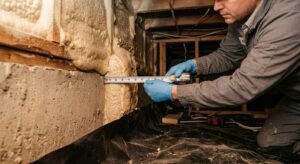
- Always measure cavity depth before buying batts. Use R-15 for 2×4 walls and R-21 for 2×6 walls. Never force a thicker batt into a shallower cavity.
- Store unused batts flat and uncompressed. Batts left rolled or stacked under pressure for months before installation can lose some loft and may not fully recover.
- Use a headlamp rather than a handheld flashlight when working in tight spaces. Having both hands free makes it far easier to position batts correctly without creating gaps.
- Take photos of every stud bay before covering with drywall. If you ever need to troubleshoot comfort issues years later, you will know exactly what is behind the wall and where penetrations were sealed.
Variations for Your Situation
- Apartment/Rental: Renters cannot modify wall or ceiling insulation, but can address accessible areas like an in-unit washer/dryer closet, under sinks with exterior walls, or around window air conditioner units using removable foam tape and removable weatherstripping. A draft snake at the base of poorly-sealed exterior doors and window insulation film kits (around $20 to $40) can reduce perimeter heat loss noticeably without requiring landlord approval.
- Tight Budget (under $50): Focus entirely on the quick-fix audit approach using only a can of spray foam ($8) and a box of insulation support rods ($15). Correcting compressed crawl space batts and sealing penetrations in an unfinished basement ceiling can deliver 10 to 20% reductions in heating costs with under $30 in materials. Skip buying new batts until you have confirmed the existing ones are actually defective rather than simply poorly positioned.
- Older Home (pre-1980): Homes built before 1980 often have non-standard stud spacing (24 inches on center rather than 16), shallow 2×4 framing with only 3.5 inches of cavity depth, and no vapor retarder at all. Buy batts labeled for 24-inch on-center spacing if applicable, and do not assume standard-width batts will fit. In these homes, air leakage rates are typically 3 to 5 times higher than in modern construction, so prioritizing air sealing at the attic floor and rim joists before adding any new insulation will deliver the highest return per dollar spent.