Imagine paying to heat or cool a room with a window left open all year long. That is essentially what happens when your home has unsealed air leaks. The U.S. Department of Energy estimates that drafts, gaps, and cracks in the average American home waste 25 to 40 cents of every dollar spent on heating and cooling. These leaks are not just a comfort problem, they are a serious drain on your budget every single month.
The good news is that air sealing is one of the highest-return home improvement projects you can do. Materials cost as little as $30 to $100 for a full DIY treatment, and the payback period is often less than one heating season. Unlike replacing windows or upgrading your HVAC system, finding and sealing leaks requires no special licenses, no heavy equipment, and no contractor markup.
In this guide, you will learn exactly where air leaks hide, how to find them with or without professional tools, and how to seal them properly using the right materials for each location. Whether you have 30 minutes or a full Saturday afternoon, there is a level of effort here that will put real money back in your pocket.
What You’ll Need
Click on an item below to shop for the recommended items for this recipe on Amazon.
As an Amazon Associate, we earn from qualifying purchases.
How to Do It
- On a cold or windy day, hold a lit incense stick or a damp hand near the top and bottom edges of all exterior doors and windows. Watch for smoke disturbance or feel for airflow to pinpoint leaks.
- Check the threshold gap under each exterior door. You should not see daylight under a closed door. If you do, press a towel against it temporarily and note it for a door sweep (under $10 at any hardware store).
- Feel along the bottom of all exterior walls where they meet the floor, especially behind furniture and inside closets. These areas often have significant gaps between the wall framing and subfloor.
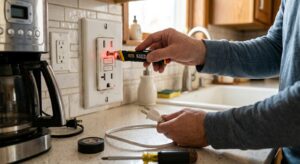
- Press your hand against every electrical outlet and light switch on exterior walls. Cold air flowing through the cover plate is one of the most common and easily fixed leaks in any home.
- Check where any pipes, cables, or wires enter the home through exterior walls, such as under the kitchen or bathroom sink. Even small gaps here allow significant airflow. Note the locations for sealing in the next step.
- Pick up a pack of foam outlet gaskets ($3 to $5 for 10 at any hardware store) and install them behind every exterior wall outlet and switch plate today. This one step alone can reduce air infiltration noticeably and takes less than 20 minutes.
- Buy your materials before you start: one tube of paintable latex caulk for finished interior surfaces, one tube of silicone caulk for around pipes and exterior penetrations, a can of low-expansion spray foam for larger gaps over 1/4 inch, foam outlet gaskets, and adhesive-backed foam weatherstripping for door frames.
- Start in the attic if accessible. Seal around every wire, pipe, and duct that penetrates the ceiling below using spray foam or caulk. The attic floor is where stack effect losses are highest and where a few minutes of sealing delivers the most savings. Also seal around the attic hatch frame with weatherstripping.
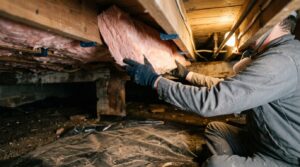
- Move to the basement or crawl space and seal where the wood sill plate sits on top of the concrete foundation wall using caulk or foam backer rod plus caulk. This joint is one of the leakiest spots in most homes and is often completely unsealed.
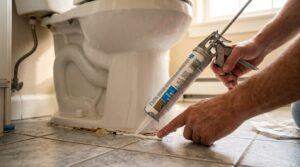
- Seal all plumbing and electrical penetrations through exterior walls and floors using the appropriate product: spray foam for gaps larger than 1/4 inch, caulk for hairline cracks and small gaps. Do this under every sink, behind the dryer, and anywhere a wire or pipe exits to the outside.
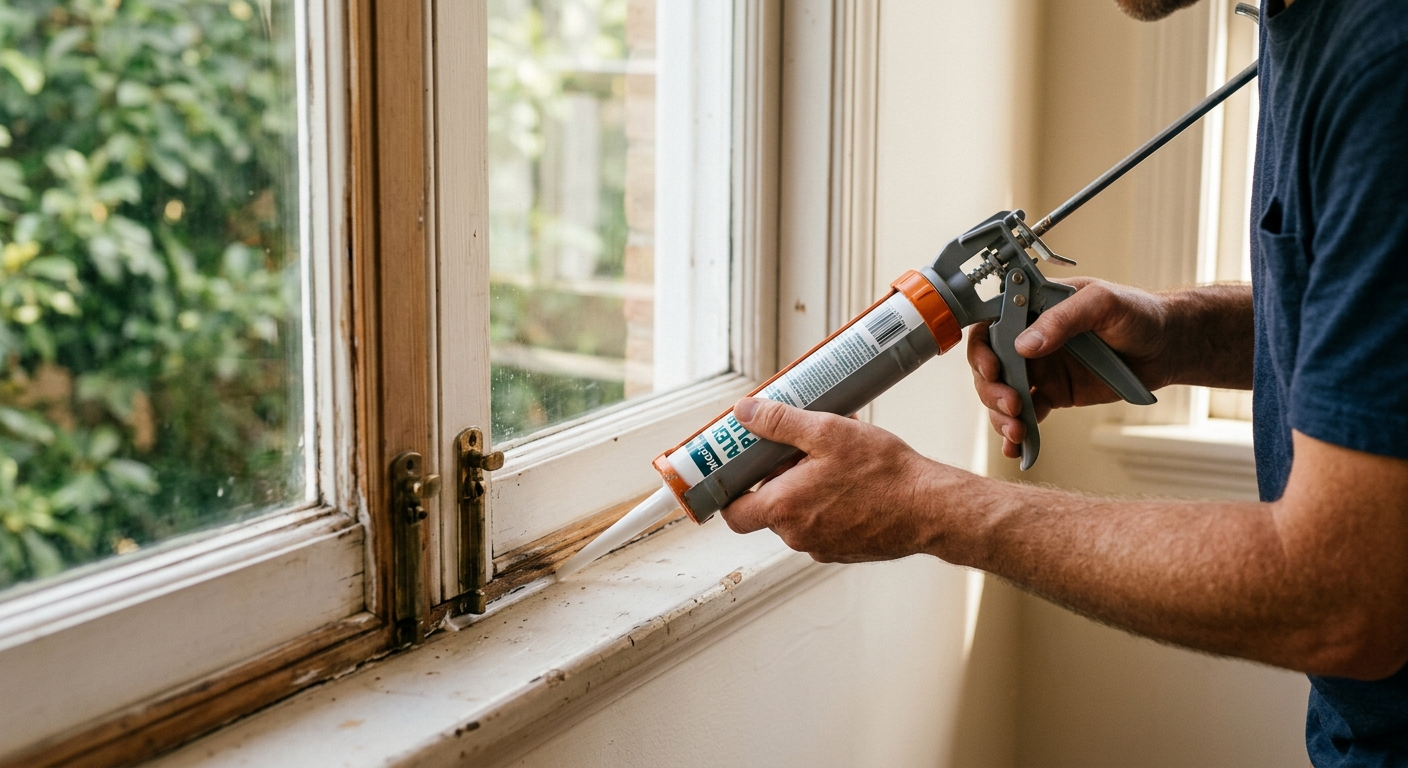
- Caulk around the interior perimeter of every window frame where the trim meets the wall, and around every exterior door frame. Use paintable latex caulk and smooth it with a wet finger for a clean finish.
- Install foam weatherstripping around the door stop on all exterior doors, then check the door sweep or threshold seal and replace it if it shows daylight or wear. A good door sweep costs $10 to $25 and takes 10 minutes to install.
- Finish by replacing outlet gaskets on all exterior walls, then walk through the home again with an incense stick or your hand to verify that the locations you sealed are now draft-free.
- Contact your local utility company and ask about free or subsidized home energy audits. Many utilities offer blower door testing and thermal imaging at no charge or for under $100 as part of demand reduction programs.
- A certified auditor mounts a calibrated fan in an exterior doorway to depressurize the home to a standard 50 Pascals. This amplifies all leaks so they can be felt and located using thermal cameras and smoke pencils with precision impossible in a DIY assessment.
- The auditor generates a report with your home’s ACH50 number (air changes per hour at 50 Pascals), a map of every major leak location, and a prioritized list of recommended sealing work with projected savings for each.
- Use the audit report to either hire a certified air sealing contractor or to do targeted DIY work yourself on the highest-priority locations. Many homeowners do a hybrid approach: pay for the audit, then DIY the sealing using the report as a roadmap.
- After sealing work is complete, request a retest to get a verified post-sealing ACH50 number. This confirms your results and documents the improvement for resale value or utility rebate applications.
Why It Works: The Benefits
DOE data shows that thorough air sealing combined with insulation improvements can reduce heating and cooling costs by 15 to 30% annually. For a household spending $2,000 per year on energy, that is $300 to $600 back in your pocket every year.
Eliminating cold drafts in winter and hot spots in summer makes your living spaces feel more even and comfortable, even before your thermostat reads differently. Rooms that always felt cold or stuffy often transform noticeably after sealing nearby penetrations.
Uncontrolled air leaks pull in outdoor pollutants, allergens, dust, and humidity without passing through your air filter. Sealing leaks means the air coming into your home goes through your HVAC system’s filter instead of through your baseboards.
When conditioned air stops escaping, your furnace or AC reaches the target temperature faster and cycles less frequently. Less runtime means less wear on the compressor, heat exchanger, and blower motor, extending equipment life by years.
A full DIY air sealing kit costs $30 to $100 in materials. With annual savings of $300 or more for a typical home, the payback period is often 1 to 4 months, making this one of the best returns of any home improvement project available.
💰 Savings Impact by Action
Sealing attic floor penetrations before adding insulation reduces stack-effect losses by up to 25% of total heating and cooling energy use.
Sealing and insulating the basement rim joist can cut basement heat loss by up to 15% because this joint is often completely open to outside air.
Installing foam gaskets behind exterior wall outlets and switches reduces infiltration at these locations by up to 5% of whole-home air leakage.
Replacing worn weatherstripping and caulking trim joints around all exterior doors and windows reduces infiltration at these boundaries by 10 to 15%.
A comprehensive DIY or professional air sealing project addressing all major penetrations can reduce total annual energy costs by 15 to 30% according to DOE data.
🏠 Key Concepts Explained
The Science Behind It
Air leakage is driven by pressure differences across your home’s envelope. Two forces create these pressure differences constantly: the stack effect and wind. The stack effect works like a chimney: warm air inside your home is less dense than cold air outside, so it rises and pushes outward through any gap it can find near the top of the structure. As it escapes, it creates a slight negative pressure at the bottom of the home, drawing cold outside air inward through low leaks. This convective loop runs continuously throughout the heating season and reverses (though less dramatically) in summer.
Wind adds a second, variable pressure force. When wind hits the windward side of your house, it creates positive pressure that drives air inward through any gap on that side. The leeward side simultaneously experiences negative pressure, pulling air out. Together, these forces mean that even a gap of one square inch in the right location can allow dozens of cubic feet of outside air into your home per hour on a windy day. Research from Lawrence Berkeley National Laboratory found that the cumulative effect of all small gaps in a typical home is equivalent to leaving a window open 3 to 4 inches year-round.
The reason caulk and spray foam are so effective is that they are air barriers, not just insulation. Fiberglass insulation slows heat conduction through a wall, but it does almost nothing to stop air movement through gaps in the framing. Sealing those gaps physically interrupts the pressure-driven airflow pathway, forcing air to move through your home only by conduction and convection through solid materials, which is far slower. This is why air sealing and insulation are complementary strategies: insulation without sealing is like putting a wool sweater on over a screen door.
Frequently Asked Questions
▼ I sealed my doors and windows but my home still feels drafty. What am I missing?
Windows and doors are actually responsible for a minority of air leakage in most homes. The biggest culprits are hidden penetrations: gaps around recessed lights, the joint where the wood framing meets the concrete foundation (the rim joist), attic bypasses above interior walls, and plumbing and electrical chases. Go to your basement or attic and look for gaps with a flashlight before assuming the windows need replacing.
▼ Can renters do air sealing without landlord permission?
Renters can safely do several things without modification: install outlet gaskets (they remove cleanly), use removable rope caulk in window tracks for the winter (it peels out in spring), place door draft stoppers at thresholds, and use tension-mounted window insulator film kits. These products are all temporary and leave no damage, so they require no landlord approval and cost under $40 total.
▼ How long before I see the savings on my energy bill?
You will typically see a measurable reduction within the first full billing cycle after sealing, especially if you do the work at the start of a heating or cooling season. For a home spending $200 per month on energy, a 20% reduction appears as roughly $40 less on your next bill. The improvement compounds over the full year since leaks waste energy in every season, not just winter.
▼ My house is very old and I am worried about sealing it too tight. Is this a real concern?
It is a legitimate concern but rarely a practical problem for DIY air sealing alone. Most pre-1980 homes have such high natural infiltration that even a thorough DIY sealing project brings them only to moderately tight, not dangerously tight. The concern becomes real when professional spray foam insulation is applied throughout the entire envelope. If you have a gas furnace, water heater, or fireplace, test for backdrafting by holding a match near the draft hood after sealing and verify the flame is drawn inward, indicating proper draft.
▼ What is the best caulk to use and does it matter?
Yes, material choice matters significantly. Use paintable latex acrylic caulk for interior trim joints around windows and doors where you will paint over it. Use silicone or siliconized latex for exterior applications and around pipes, because it stays flexible through freeze-thaw cycles and resists moisture. Use low-expansion polyurethane spray foam for gaps larger than 1/4 inch around pipes and framing. Never use standard foam around door frames unless it is specifically labeled low-expansion, as high-expansion foam can bow and warp the frame.
Quick Tips
- Check for leaks on cold windy days when pressure differences are highest and drafts are easiest to feel with your bare hand.
- Pay special attention to the boundary between conditioned and unconditioned spaces: the attic floor, the rim joist in the basement, and the floor above an unheated garage. These are responsible for the majority of leakage in most homes.
- Use a foam backer rod to fill gaps larger than 3/8 inch before applying caulk. Caulk alone will crack and shrink in wide gaps within one season.
- Recessed can lights in the ceiling are notorious air leakers if they are the older non-airtight type. Cover them from the attic side with an airtight cap sealed with caulk or use airtight LED retrofit kits from the room side.
- Take photos of every location you seal so you have a record, and note the date. This documentation is useful for home resale disclosures and utility rebate applications.
Variations for Your Situation
- Apartment/Rental: Renters cannot modify central HVAC or structural components, but can still capture meaningful savings. Focus on removable rope caulk (pressed into window tracks for winter, peels out cleanly in spring, around $5 per roll), foam outlet gaskets behind switch plates ($3 to $5 for a pack), adhesive-backed foam tape around window sashes, and a door draft stopper at the entry door ($10 to $20). These four steps combined can cut drafts by 30 to 50% in a leaky apartment unit with zero permanent modifications.
- Tight Budget (under $50): Prioritize the three highest-return zero and low-cost steps: install foam outlet gaskets on all exterior wall outlets (under $10 and takes 15 minutes), apply a door sweep to the worst drafty exterior door ($10 to $15), and use rope caulk on the leakiest window sash ($5 per roll). These three steps alone address the most common household air leak sources and cost under $35 total, with savings that typically pay back the investment within 30 to 60 days in the heating season.
- Older Home (pre-1980): Homes built before modern building codes often have balloon framing with open stud cavities running from basement to attic, no house wrap, and knob-and-tube wiring that limits where foam can be safely applied. Focus first on the basement rim joist (the single highest-impact location), then on attic floor bypasses. Avoid spraying foam near any knob-and-tube wiring, which requires open-air cooling and can overheat if encapsulated. Consider a professional audit since older homes often have ACH50 values above 15 and can benefit dramatically from professional-grade sealing that brings in $500 to $1,500 in annual savings.