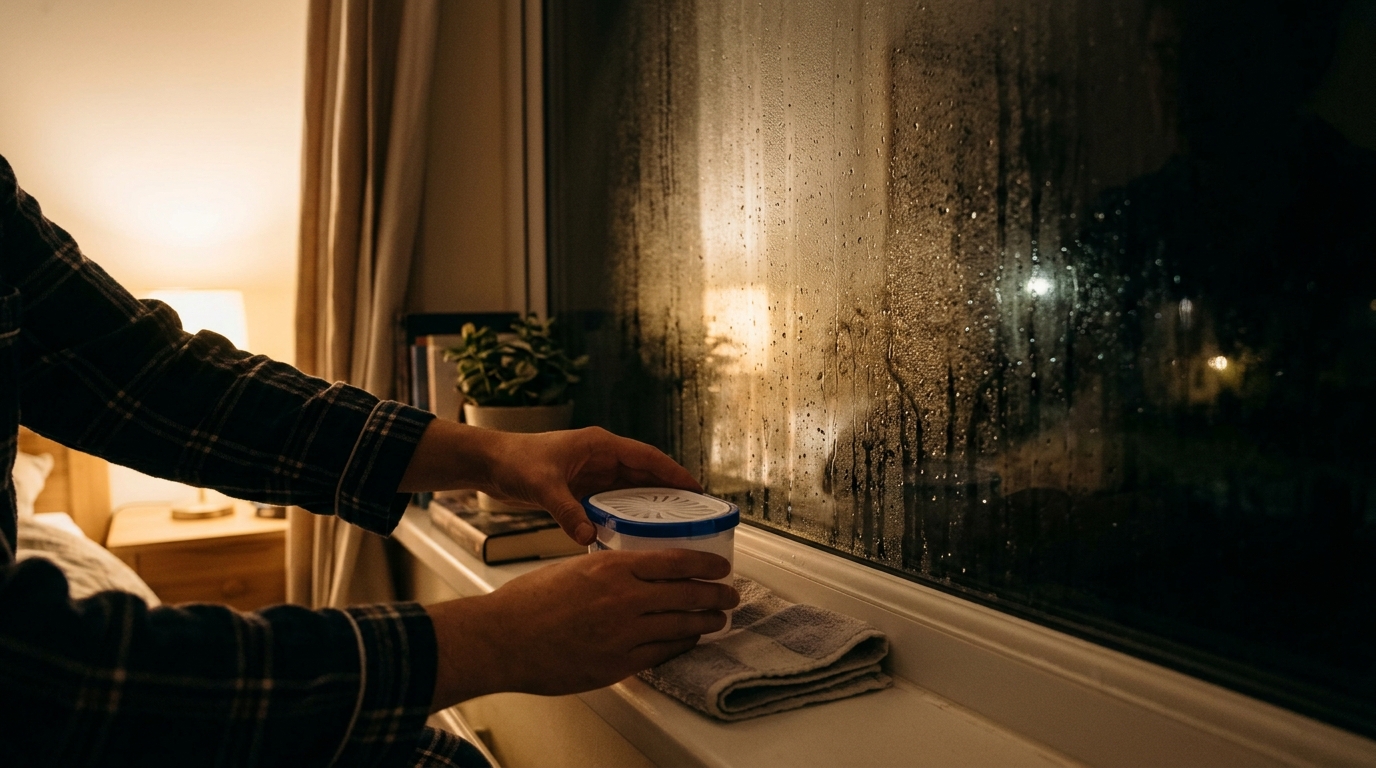
You pull back the curtains in the morning and the glass is streaming with water. The sill is damp, the frame has a dark line of moisture, and you can already picture the mold that will follow if this keeps up. Overnight window condensation is one of the most common winter complaints, and it is more than a cosmetic nuisance. Persistent moisture can rot wood sashes, peel paint, stain drywall, and feed mold growth within 24 to 48 hours on damp surfaces.
The good news is that condensation is a symptom with a simple cause. Warm indoor air carries water vapor, and when that air touches a surface colder than its dew point, the vapor turns to liquid. A typical family of four adds roughly 2 to 3 gallons of water vapor to the air every day through breathing, cooking, showering, and laundry. When windows are the coldest surface in the room, that is where the moisture lands.
This post walks through two proven approaches. The quick fix uses habits and equipment you already own and can work tonight. The DIY upgrade tackles the root causes with inexpensive hardware so the problem stays solved all winter. We will also cover when condensation signals something bigger, like a failed window seal.
What You’ll Need
Click on an item below to shop for the recommended items for this recipe on Amazon.
As an Amazon Associate, we earn from qualifying purchases.
How to Do It
- Check your humidity with a hygrometer (about $10 at a hardware store). If it reads above 50%, you have found the main culprit. Aim for 35 to 45% when it is below 20 degrees F outside.
- Run the bathroom fan during every shower and for 20 minutes afterward, and use the kitchen range hood while cooking. Make sure both vent outdoors, not into the attic.
- Open blinds and curtains before bed, or at least pull them a few inches away from the glass so room air can reach the window surface.
- Run a ceiling fan on low in the reverse (clockwise) direction or point a small fan toward the window to keep air moving across the glass.
- Move wet laundry, houseplants, and open water containers away from rooms where condensation is worst, and wipe existing moisture off glass and frames with a dry towel to stop mold from starting.
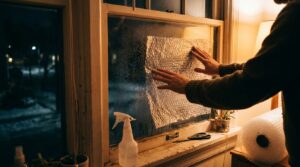
- Install a window insulation film kit ($10 to $25 per kit, covers 2 to 4 windows). Apply double-sided tape to the frame, stick the film on, and shrink it tight with a hair dryer. This creates a sealed air gap that raises the inner surface temperature of the glass by roughly 5 to 10 degrees F.
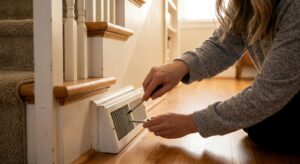
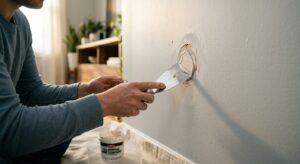
- Seal air leaks around sashes and trim with removable rope caulk or weatherstripping ($5 to $15). Leaky windows pull cold air against the glass and make it colder.
- Run a 20 to 35 pint dehumidifier ($130 to $200) in the main living area or bedroom on a humidistat setting of 40 to 45%. It will typically pull 10 to 20 pints of water a day out of a humid home.
- Replace worn bath fan switches with a timer or humidity-sensing control ($20 to $50) so the fan runs long enough to clear moisture without you remembering.
- Add cellular (honeycomb) shades or thermal curtains hung close to the window, but leave a small gap at the top and bottom or open them during the day so air can still circulate.
Why It Works: The Benefits
Keeping window glass and frames dry removes the moisture mold needs, which can begin growing in 24 to 48 hours on a consistently wet surface.
Wood sashes and sills exposed to daily condensation can swell, peel, and rot within a few seasons, and replacing a single window often costs $400 to $1,000 installed.
Holding humidity near 40 to 45% limits dust mites and mold spores, both of which thrive above 50% relative humidity and can aggravate allergies and asthma.
Properly balanced humidity lets you feel comfortable at a slightly lower thermostat setting, and each degree of setback saves roughly 1% on heating costs. Better air movement also reduces cold spots near glass.
No more wiping down sills and glass every morning, and no more water-stained curtains or warped blinds.
💰 Savings Impact by Action
Keeping indoor humidity near 40% can reduce moisture-related repair and cleaning costs by about 10% or more per year and improves comfort at lower temperatures.
Interior insulation film can reduce heat loss through single-pane windows by 10 to 20% by adding an insulating air layer.
Weatherstripping and caulking around sashes can cut drafts and trim heating use by about 5 to 10%.
Cellular shades can reduce winter heat loss through windows by roughly 10 to 15% when closed at night.
🏠 Key Concepts Explained
The Science Behind It
Condensation is governed by psychrometrics, the relationship between temperature, humidity, and dew point. Air holds more water vapor as it warms, roughly doubling its capacity for every 20 degrees F. When warm, humid indoor air contacts a cold window, the air layer next to the glass cools below its dew point and releases liquid water. That is why bathroom mirrors fog after a hot shower and why your windows bead up on the coldest nights.
Window glass is the weak link thermally. A single-pane window has an R-value near 1, while a modern double-pane low-E window reaches R-3 to R-4 and some triple-pane units exceed R-5. Lower R-value means the interior glass surface tracks outdoor temperature more closely, and the colder it gets, the more likely it dips below your indoor dew point. Raising the glass temperature with film, shades, or better windows, or lowering the dew point by cutting humidity, both solve the same equation from opposite directions.
Air movement matters because condensation forms in the boundary layer, the thin film of still air clinging to the glass. Closed drapes thicken and cool that layer, while a gentle breeze mixes it with warmer room air. Combined with exhaust ventilation that physically removes vapor, you can shift the balance enough to keep glass above the dew point even on cold nights.
Frequently Asked Questions
▼ Why does condensation still form even after I lowered my humidity?
The glass itself may be extremely cold, which is common with single-pane or aging double-pane windows. Add window insulation film or heavy thermal shades to raise the glass temperature, and confirm with a hygrometer that you are actually below 45%. If the problem is only on one or two windows, check for drafts around those sashes.
▼ Can renters do this without landlord permission?
Yes. A hygrometer, portable dehumidifier, window insulation film, and rope caulk are all removable and non-damaging. Use a hair dryer to shrink film and remove it in spring with no residue on most painted or vinyl frames, but test a small corner first.
▼ How long before I actually notice a difference?
Lowering humidity usually clears morning condensation within one to three nights, since air takes time to dry out and building materials release stored moisture. Window film and weatherstripping work immediately, but a very humid home can take a week or two to fully rebalance.
▼ What if there is moisture between the two panes of glass?
That means the insulated glass unit’s seal has failed, and humidity control will not fix it. Call a window repair company to replace the glass unit or the whole window, which typically costs $150 to $500 for a glass-only replacement versus $400 to $1,000 for a full window.
▼ Is it normal to have some condensation in the morning?
A small amount of light fog on the coldest mornings can be normal, especially on older windows. It is a problem if water runs down the glass, pools on sills, or shows up daily, which signals humidity is too high or the windows are too cold.
Quick Tips
- Keep winter indoor humidity at roughly 35 to 45%, and drop to 30 to 35% when outdoor temperatures fall below 10 degrees F.
- Turn on exhaust fans before you start the shower or cooking, not after, so vapor is captured at the source.
- Wipe moisture off glass and frames every morning until your fix takes hold to prevent mold and finish damage.
- Avoid air-drying laundry indoors on cold days unless you are running a dehumidifier in the same room.
- Leave interior doors open and let heated air reach cold exterior walls and windows.
Variations for Your Situation
- Apartment/Rental: Rely on a portable dehumidifier ($130 to $200), window insulation film ($10 to $25), and removable rope caulk ($5 to $10), since none of these modify the building. Run a small box fan near the worst window, and always use the bath fan.
- Tight Budget (under $50): Buy a $10 hygrometer, run exhaust fans longer, open curtains at night, and install a $15 window film kit on the worst two windows. Skip humidifiers entirely until condensation stops.
- Older Home (pre-1980): Expect higher baseline leakage and single-pane or old double-pane glass, so prioritize storm windows or interior film ($15 to $200 per window), and seal gaps around sashes and trim. Consider replacing the worst failed windows over time, since they cost more to heat around than they do to fix.
- Humid Climate or Basement: Run a dehumidifier year-round and ensure dryer and bath fans vent outdoors. Check for ground moisture, plumbing leaks, or gutters dumping water near the foundation, because condensation can be a sign of moisture entering the home.