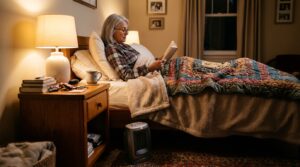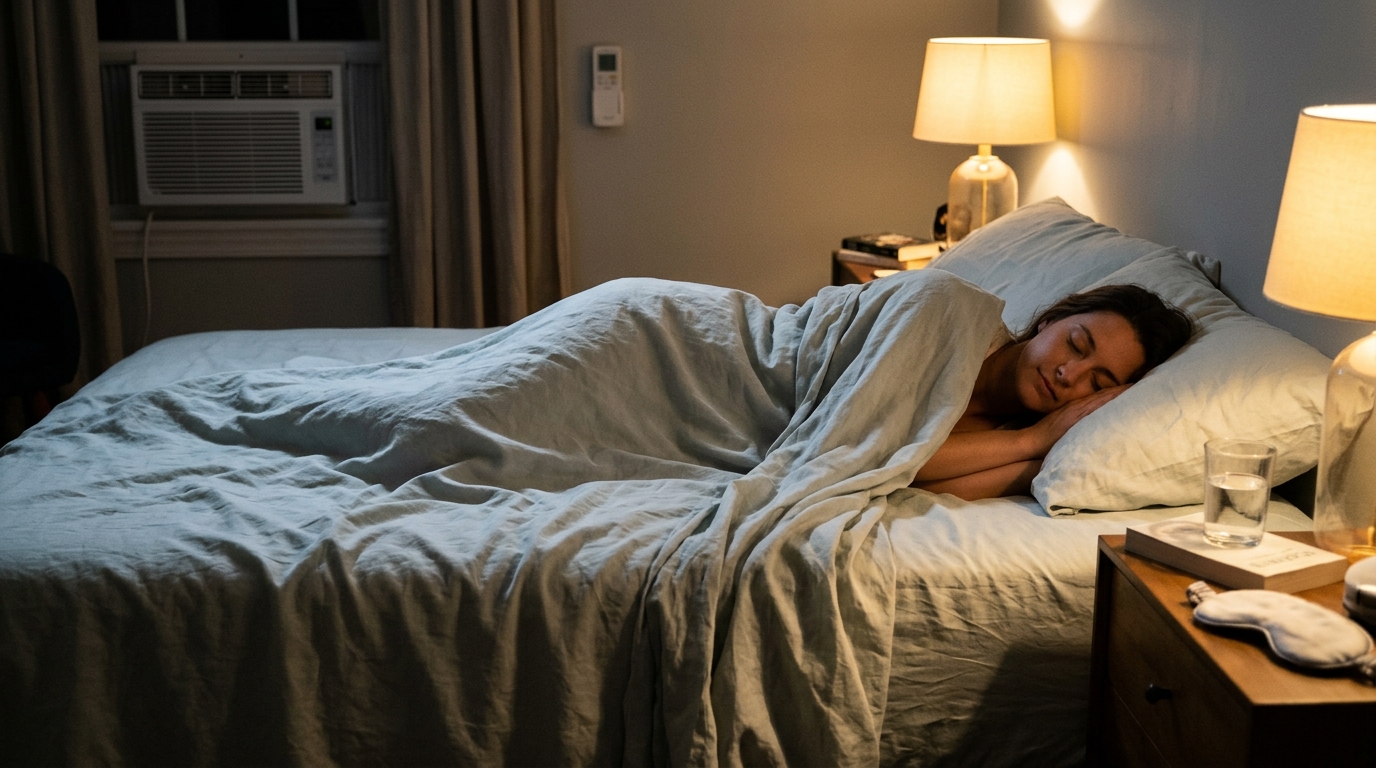
If you wake up damp, kick off the covers, then get chilly an hour later, your sheets may be part of the problem. Cotton is soft and familiar, but it is hygroscopic: it soaks up moisture and holds it. A cotton sheet can absorb roughly 25 times its dry weight in water before it feels wet to the touch, which means sweat sits against your skin and slows evaporative cooling. That clammy feeling is your body struggling to shed heat.
For many households the fix is to drop the thermostat, and that is where it gets expensive. The DOE estimates you save about 1% on cooling for every degree you raise the setpoint over an 8-hour stretch. If better bedding lets you sleep comfortably at 78 degrees instead of 74, that overnight difference can trim your cooling costs by a few percent over the season, and it also eases wear on your AC.
This post compares the fabrics that actually move moisture away from your body, shows you how to test and shop for them, and walks through two approaches: a low-cost quick fix using what you may already own, and a full bedding upgrade. You will also see how fabric weave, sheet weight, and washing habits change the results, because even the best material underperforms if you treat it wrong.
What You’ll Need
Click on an item below to shop for the recommended items for this recipe on Amazon.
As an Amazon Associate, we earn from qualifying purchases.
How to Do It
- Strip the bed of any flannel, jersey knit, brushed microfiber, or heavy sateen sheets. These insulate and hold moisture, so replace them with the lightest percale or linen sheets you already own.
- Remove the top layer you do not need. A thick comforter over a wicking sheet defeats the purpose, so switch to a light cotton blanket or a single duvet cover without the insert.
- Buy one wicking pillowcase set for $15 to $40 in Tencel, bamboo viscose, or a performance blend. Your head and neck release a large share of overnight body heat, so this is the highest-value single swap.
- Raise your overnight thermostat 2 degrees (for example, from 74 to 76) for three nights and note how you sleep. If it feels fine, raise it another 1 to 2 degrees.
- Wash the new sheets and pillowcases without fabric softener. Softener coats fibers and blocks wicking.
- Pick your fabric. Tencel lyocell is the best all-around wicker, bamboo viscose is the softest, and linen is the most breathable but wrinkles. Performance polyester blends dry fastest but can feel less natural. Choose based on whether you value softness, airflow, or drying speed.
- Check the weave and weight. Look for percale or a light twill, and skip anything labeled sateen if you sleep hot. Aim for a fabric weight around 120 to 180 grams per square meter. Ignore thread count above 400, since it often signals tightly packed, less breathable fibers.
- Buy a fitted sheet, flat sheet, and two pillowcases, and consider a wicking mattress protector for $40 to $90 if you sweat heavily. Protectors made with a thin moisture-wicking top layer keep sweat from soaking into the mattress.
- Wash everything once before use in warm water with a mild detergent and no softener, then tumble dry on medium. This removes finishing chemicals that can reduce absorbency and wicking.
- Once you are comfortable, lower the heat load in the room further. Close blinds on west-facing windows, run a ceiling fan on the counterclockwise (summer) setting, and keep the thermostat at 77 to 78 degrees.
- Track your bill for one full billing cycle. Compare kWh use to the same month last year, adjusting for weather, to see the real difference.
Why It Works: The Benefits
Sleeping comfortably at 78 instead of 74 degrees cuts roughly 4% off the cooling runtime for those hours, based on the DOE rule of about 1% per degree.
Wicking fabrics move moisture off your skin so you avoid the damp-then-chilled cycle that wakes many sleepers between 2 and 4 a.m.
Tencel and performance blends dry in roughly half the time of heavy cotton in the dryer, which saves energy on laundry and reduces the damp conditions where odor-causing bacteria grow.
A warmer overnight setpoint means shorter compressor cycles, which reduces wear and can modestly extend equipment life.
A $60 to $150 sheet set does what some people spend $200 or more on a fan or cooling pad to achieve, with nothing to plug in.
💰 Savings Impact by Action
Sleeping comfortably 4 degrees warmer overnight cuts cooling energy for those hours by roughly 4%, based on the DOE 1% per degree guideline.
Swapping a heavy comforter for a light blanket lets you hold a higher setpoint without overheating, adding a few percent in savings.
Tencel and performance blends dry in roughly half the time of heavy cotton, trimming dryer energy per load by up to 30%.
Combined with blackout curtains and a ceiling fan, a warmer setpoint can shorten overnight compressor cycles by around 6%.
🏠 Key Concepts Explained
The Science Behind It
Your body cools itself mainly by evaporating sweat. Each gram of water that evaporates removes about 0.68 watt-hours of heat, which is why a damp surface feels cool when air moves across it. The catch is that sweat has to reach open air to evaporate. Cotton fibers absorb liquid into the fiber core, and the swollen fibers hold that water against you, so evaporation slows and the sheet stays damp and warm.
Wicking fabrics solve this with capillary action. Engineered fibers, and smooth cellulose fibers like Tencel lyocell, spread moisture across a large surface area instead of absorbing it. A thin film of sweat spread over more fabric evaporates faster than a pooled one, which keeps your skin drier and helps the cooling process work as intended.
Weave matters as much as fiber. Percale leaves microscopic air gaps between threads so air can pass through, while tightly packed sateen restricts that flow. Add in the fact that sleeping surfaces trap a layer of warm air next to you, and a breathable fabric helps that boundary layer escape. The combination of faster moisture transport and better airflow is what lets many people sleep comfortably a few degrees warmer, and every degree you raise the thermostat trims roughly 1% off cooling energy over those hours.
Frequently Asked Questions
▼ Why do my new cooling sheets still feel hot at night?
The most common cause is a heavy comforter or insulated mattress topper trapping heat above and below the sheets. Strip back to a light blanket for a few nights and check whether the sheet is actually a brushed microfiber, which insulates. Also confirm you washed them without fabric softener, which blocks wicking.
▼ Are bamboo sheets really better than cotton?
Bamboo viscose wicks moisture and dries faster than standard cotton, and it feels smoother against the skin. However, quality varies a lot, and some cheap bamboo blends are mostly polyester. Check the label for the actual fiber percentage and look for a viscose or lyocell content above 60%.
▼ Can renters get the benefit without changing anything permanent?
Yes. Sheets and pillowcases are fully portable and need no landlord permission, so this is one of the easiest comfort upgrades for renters. A mattress protector adds protection to a landlord-owned mattress, and you can take everything with you when you move.
▼ How long before I notice a difference on my energy bill?
You will feel the comfort difference the first night, but bill savings show up once you raise your thermostat. Expect a small change, roughly 3 to 8% on cooling costs over a full season, so compare a full billing cycle to the same month last year, adjusting for weather.
▼ How many washes before wicking sheets stop working?
Properly cared for, Tencel and quality performance blends hold their wicking ability for 100 or more washes. The usual culprits for early failure are fabric softener, high heat in the dryer, and detergent buildup. Wash in warm water with mild detergent and tumble dry on medium to extend their life.
Quick Tips
- Choose percale or a light twill weave over sateen if you sleep hot, since tighter weaves trap heat and slow evaporation.
- Skip fabric softener and dryer sheets entirely on wicking fabrics, because they coat fibers and block moisture transport.
- Wash sheets weekly in warm water, since body oils and residue clog fibers and reduce wicking over time.
- Keep a spare set so you can rotate sheets, which lets each set dry fully and last longer.
Variations for Your Situation
- Apartment/Rental: Skip anything permanent and focus on portable bedding. Buy one wicking pillowcase set ($15 to $40) and a lightweight percale or Tencel sheet set ($60 to $120), and add a removable mattress protector ($40 to $90) to protect the landlord’s mattress. Everything goes with you when you move, and a small fan on a nightstand boosts evaporation without touching the HVAC.
- Tight Budget (under $50): Start with a single wicking pillowcase set ($15 to $40) since your head releases a lot of body heat. Then strip off heavy layers, use the lightest cotton percale you already own, and raise the thermostat 1 to 2 degrees. Even without new sheets, removing the extra comforter alone can make a noticeable difference at zero cost.
- Older Home (pre-1980): Older homes often have uneven cooling, with upstairs bedrooms staying warm because of attic heat and leaky ductwork. Wicking sheets help you tolerate those hot rooms, but pair them with a ceiling fan, blackout curtains on sun-facing windows, and attic insulation upgrades for lasting results. Linen and light percale tend to perform best where the room itself runs warm.