If you live in the high desert, the Intermountain West, or the interior Southwest, you know the pattern: scorching afternoons followed by nights that stay stubbornly warm inside your house. Central air will fix that, but running it from dusk to dawn can add $80 to $200 a month to your bill. Meanwhile, that old swamp cooler on your neighbor’s roof is quietly doing the same job for a fraction of the cost.
Evaporative coolers (swamp coolers) work by pulling hot, dry air across water-soaked pads. As the water evaporates, it absorbs heat and drops the air temperature by 15 to 40 degrees Fahrenheit. They use roughly 75 to 90 percent less electricity than a typical central AC system. The catch is that they only work well when outdoor humidity is low, and they behave very differently from air conditioners in how they cool and ventilate your home.
This post breaks down when a swamp cooler beats AC, when it absolutely does not, and how to get through hot dry nights comfortably whether you already own one, want to add one, or are weighing a full switch. You will find a quick-fix approach you can try tonight and a more involved DIY upgrade, plus real numbers on savings and payback.
What You’ll Need
Click on an item below to shop for the recommended items for this recipe on Amazon.
As an Amazon Associate, we earn from qualifying purchases.
How to Do It
- Check the weather before you commit: if outdoor humidity is under 40% at dusk, run the swamp cooler instead of AC. If it is over 60%, stick with AC.
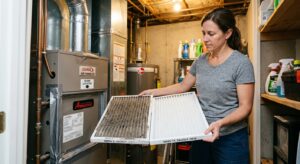
- If you own a swamp cooler, inspect the pads. Replace them if they are crusty, discolored, or crumbling. New aspen or cellulose pads cost about $15 to $40 and can improve cooling output noticeably.
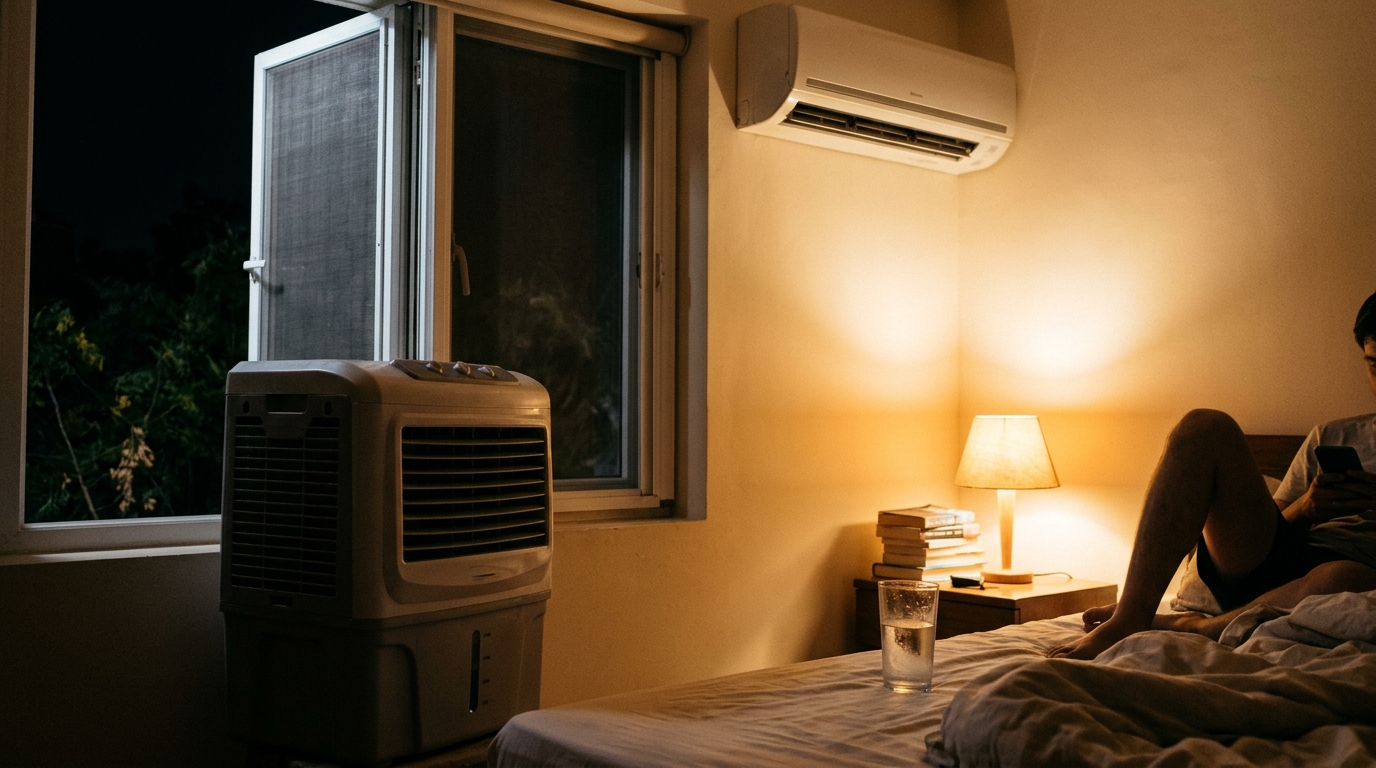
- Open windows to create an exit path: crack one window per room about 1 to 2 inches, or open a few windows on the far side of the house. Without an exhaust path the cooler cannot push air through and humidity will build up.
- Pre-cool the house by running the cooler as soon as outdoor temps start dropping in the evening, rather than waiting until bedtime. This pulls heat out of walls and furniture before you sleep.
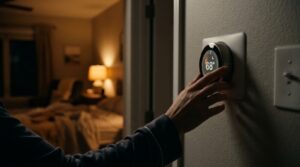
- If you have central AC only, raise the thermostat to 78 degrees at night and run a ceiling fan on low. This alone can cut AC runtime by 10 to 15% on mild dry nights.
- Size the unit correctly. Multiply your home’s square footage by 8 to 10 to estimate the CFM you need (about 1,500 sq ft means 12,000 to 15,000 CFM). A window unit handles roughly 500 to 1,000 sq ft.
- Choose the right type. Direct evaporative coolers cost the least and work best in very dry climates. Indirect or two-stage units add less humidity and cost $1,500 to $3,500 installed.
- Position the cooler on the side of the house that gets the least afternoon sun, and make sure the intake is shaded and at least 2 feet from walls so it can draw air freely.
- Install a dedicated exit path: add adjustable exhaust vents or leave windows cracked on the opposite side. Aim for about 2 square feet of open area per 1,000 CFM.
- Add a simple thermostat or humidistat control if your unit lacks one, so it shuts off when indoor humidity exceeds about 55 to 60%.
- Winterize at season end by draining the water line and sump, cleaning the pads, and covering the unit to extend its life 10 to 15 years.
Why It Works: The Benefits
A typical evaporative cooler costs about $0.05 to $0.15 per hour to run versus $0.40 to $0.70 per hour for central AC at average U.S. electric rates.
Swamp coolers bring in 100% outdoor air, flushing out cooking odors, VOCs, and stale air. Many homeowners notice the house feels fresher than with closed-loop AC.
Installed evaporative coolers typically run $1,000 to $3,000 versus $5,000 to $12,000 for a new central AC system. Window and portable units start under $300.
In dry climates, adding moisture to indoor air can reduce dry skin, static shock, and nosebleeds, and it makes 80 degree air feel noticeably more comfortable.
Pads, a pump, and a float valve are the main wear items. Annual upkeep is usually $30 to $100 in parts, compared with $150 to $300 for an AC service call.
💰 Savings Impact by Action
Evaporative coolers draw 75 to 90% less electricity than central AC, since they use a fan and small pump instead of a compressor.
After accounting for water costs, total nightly operating costs are typically about 60% lower than running central AC.
Starting the cooler at dusk to pre-cool the house reduces overnight runtime by roughly 15%.
Replacing scaled or worn pads restores up to 20% of lost cooling output.
Raising AC setpoint to 78 degrees and using ceiling fans can trim AC runtime by about 10% on mild nights.
🏠 Key Concepts Explained
The Science Behind It
Evaporative cooling is one of the oldest cooling technologies on earth, and it relies on a simple physical fact: turning liquid water into vapor requires energy. That energy, called the latent heat of vaporization, comes from the surrounding air. As dry air flows across wet pads, some of its sensible heat is converted into latent heat stored in water vapor. The air temperature drops, but its moisture content rises.
The theoretical limit of this process is the wet-bulb temperature, the lowest temperature air can reach through evaporation alone. Real-world direct evaporative coolers typically achieve 70 to 90% of the gap between the dry-bulb and wet-bulb temperatures, called saturation efficiency. In Phoenix at 100 degrees and 10% humidity, that can mean supply air in the mid-60s to low-70s. In Atlanta at 95 degrees and 65% humidity, the same cooler might only drop the air a few degrees.
Air conditioning works on a different principle. A compressor and refrigerant move heat out of your home, removing both temperature and humidity from recirculated indoor air. That is why AC works in any climate but costs far more to operate. Evaporative cooling trades humidity and a steady water supply for dramatically lower electricity use, which is why it dominates in arid regions and is almost useless in humid ones.
Frequently Asked Questions
▼ Why does my swamp cooler feel clammy instead of cool?
Your indoor humidity is probably too high, either because outdoor humidity is above 55 to 60% or because there is not enough exhaust airflow. Open more windows on the far side of the house, and switch to AC or fans on especially humid nights.
▼ Can renters use a swamp cooler without landlord approval?
Portable and window-mounted evaporative coolers generally do not require approval since they plug into standard outlets and do not alter the structure. Avoid roof or wall installations without written permission, and check your lease for appliance restrictions.
▼ How long before I actually notice savings on my bill?
You will see savings on your very next billing cycle if you replace AC runtime with the cooler. Many homeowners report $40 to $120 per month in electricity savings during peak summer, though water bills can claw back some of that.
▼ What if my home is older than 30 years?
Older homes often have leaky ducts, drafty windows, and limited insulation, which hurts any cooling system. Seal obvious air leaks first, then size your swamp cooler up by 10 to 15% to account for the heat load, and make sure you have adequate exhaust vents.
▼ Can I run a swamp cooler and AC together?
Generally no. Running both fights itself: the AC removes humidity while the cooler adds it, and open windows for the cooler let conditioned air escape. Pick one based on the night’s humidity and switch between them as conditions change.
Quick Tips
- Run the swamp cooler for 30 to 60 minutes before sunset to pre-cool the house, then keep it running through the night.
- Replace cooling pads every 1 to 2 seasons; scaled-up pads can lose 20 to 30% of their cooling efficiency.
- Keep a bedroom window open 1 to 2 inches and the door ajar so air can flow through and exit.
- On nights above 60% humidity or during monsoon season, switch to AC or a fan-only strategy instead.
Variations for Your Situation
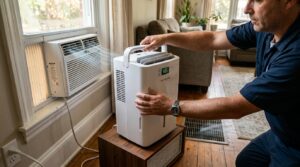
- Apartment/Rental: Choose a portable evaporative cooler ($100 to $350) or a window-mounted unit that plugs into a standard outlet. Pair it with a $20 hygrometer and a box fan in a window to create airflow without modifying the unit or violating your lease.
- Tight Budget (under $50): Replace worn cooling pads ($15 to $40), crack windows for cross-ventilation, run ceiling fans, and set the AC thermostat to 78 degrees at night. For a DIY micro-cooler, place a bowl of ice in front of a box fan for a small bedroom boost.
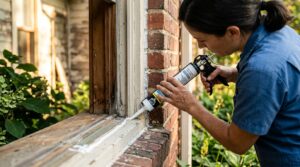
- Older Home (pre-1980): Seal attic bypasses and window gaps first, since older homes can leak 30 to 50% more air than new ones. Choose a larger unit (add 10 to 15% CFM) and install adjustable exhaust vents in the ceiling to give humid air a path out.
- Humid Climate Warning: If your area regularly exceeds 50% humidity at night, skip the swamp cooler entirely and put your money into a high-SEER AC, attic insulation, and window shades instead.