Most homeowners were taught a simple rule: run big appliances at night and you will save money. That advice is half right. On a flat-rate plan, the time of day makes no difference to your bill. But on a time-of-use (TOU) plan, which a growing number of utilities now offer or require, the price per kilowatt-hour can swing from about 10 cents off-peak to 40 cents or more during peak hours.
Here is the catch: peak demand season changes the clock. In summer, the grid strains from late afternoon through the evening as air conditioners run hard, so utilities often stretch peak pricing to 9 p.m. or even later. In winter, the peak often splits into a morning bump and an early evening bump. Running your dryer at 8 p.m. in July might cost three times what it would at 11 p.m., and the cheapest window might start later than you assume.
This post walks through how to find your real rate windows, which appliances are worth shifting, and two ways to do it: a zero-cost quick fix using the delay buttons you already own, and a DIY upgrade using smart plugs and automation. We will also cover how to check your numbers so you know the savings are real.
What You’ll Need
Click on an item below to shop for the recommended items for this recipe on Amazon.
As an Amazon Associate, we earn from qualifying purchases.
How to Do It
- Log into your utility account or check your latest bill to find your rate plan name, then search it for the exact peak and off-peak hours for the current season.
- Write down the cheapest window, for example 11 p.m. to 6 a.m., and note whether weekends and holidays are priced differently.
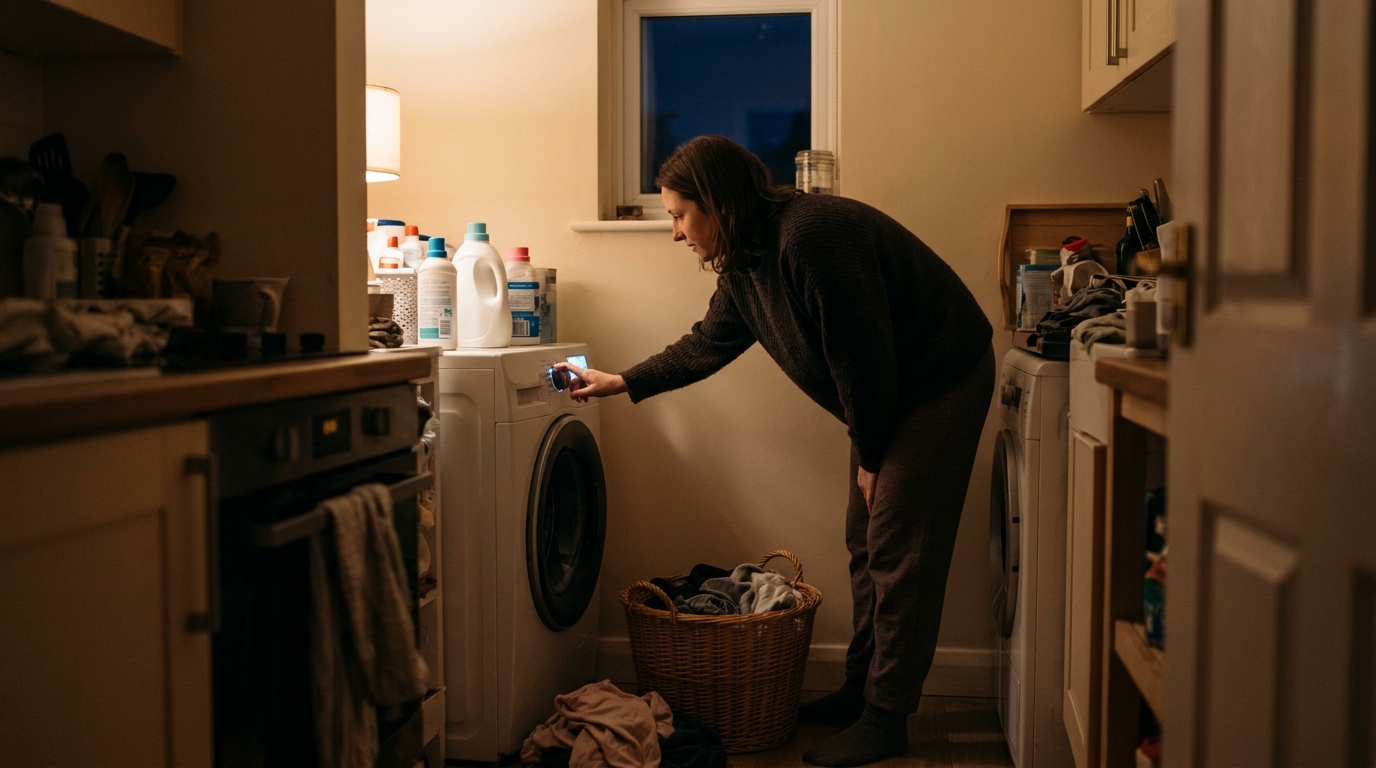
- Load your dishwasher after dinner and use the delay start to begin the cycle 30 to 60 minutes after off-peak begins.
- Do the same with your washer and dryer, staggering them by an hour so they do not overlap and create a high demand spike.
- Set a recurring phone reminder to recheck your rate windows when the season changes, since many utilities shift peak hours in May and October.
- Install your utility’s app or a home energy monitor to view hourly usage, then identify your three biggest evening loads.
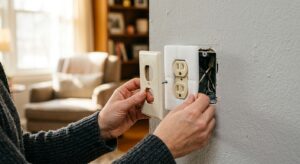
- For 120 volt appliances without a delay feature, such as a portable dehumidifier or space heater, add a 15 amp smart plug and schedule it to run only during off-peak hours.
- For EV charging, use the charging scheduler built into your car or Level 2 charger and set the start time to match your off-peak window.
- Create an automation routine, for example through your smart home app, that runs a short evening reminder to load the dishwasher and starts the cycle at off-peak.
- Review the hourly usage graph after one week to confirm loads moved out of the peak window, then adjust start times to avoid stacking appliances.
Why It Works: The Benefits
Shifting a 3 kWh dryer cycle from a 40 cent peak rate to a 12 cent off-peak rate saves about 84 cents per load, which adds up to roughly $150 a year at 3 loads per week.
Charging a typical EV (about 30 to 40 kWh per full charge) off-peak instead of on-peak can save $5 to $10 per charge on a steep TOU plan.
Staggering high-wattage appliances so they do not overlap can reduce your monthly peak draw, which matters on plans that bill for demand.
Moving load out of the evening peak reduces the need for the dirtiest, most expensive peaker plants, which can lower the carbon footprint of the electricity you use.
Unlike turning up the thermostat, shifting laundry and dishwashing costs you nothing in comfort. The chores simply finish while you sleep.
💰 Savings Impact by Action
Moving a 3 kWh dryer load from a 35 cent peak rate to a 12 cent off-peak rate cuts that load’s cost by about 65%.
Running a 1.2 kWh cycle off-peak instead of on-peak reduces its cost by roughly 60% on a steep TOU plan.
Charging overnight at an off-peak or super off-peak rate typically cuts charging costs by 40 to 60% versus peak.
Staggering high-wattage appliances lowers your monthly peak draw, trimming demand-based charges by about 10 to 20% on applicable plans.
🏠 Key Concepts Explained
The Science Behind It
Electricity is hard to store at scale, so the grid has to generate power the instant you use it. On a hot summer evening, millions of air conditioners run at the same time as people cook, do laundry, and turn on lights. To meet that spike, utilities fire up peaker plants, which are expensive and inefficient to operate. Time-of-use pricing passes that extra cost to you through a higher rate during those hours.
The shape of this demand curve changes with the seasons. Summer demand climbs through the afternoon as outdoor heat builds, then stays high into the evening while homes are still warm, which is why summer peak windows often end at 8 or 9 p.m. In winter, heating and lighting create a morning peak as people wake up and an evening peak as they return home. Utilities adjust their rate schedules to follow these patterns, which is why the best time to run an appliance in July can differ from the best time in January.
The savings come down to simple arithmetic: energy used (kWh) multiplied by price per kWh. A 1.2 kWh dishwasher cycle at a 35 cent peak rate costs about 42 cents, while the same cycle at a 12 cent off-peak rate costs about 14 cents. The appliance uses the same energy either way, but timing changes the price, and appliances with large wattage and flexible timing, like dryers and EV chargers, offer the biggest return.
Frequently Asked Questions
▼ Why did my bill not drop even after I moved my appliances to night?
First confirm you are actually on a time-of-use plan, since flat-rate customers see no savings from shifting. If you are on TOU, check your hourly usage data to see whether loads truly moved, and look for other peak-hour culprits like air conditioning or an electric water heater that outweigh the small appliances you shifted.
▼ Can renters do this without landlord permission?
Yes. Delay start buttons and plug-in smart plugs require no modifications to the home. If your unit is on a shared meter or your landlord pays the electric bill, you will not see direct savings, but if you have your own meter and a TOU plan, you can shift loads freely.
▼ How long before I notice savings on my bill?
You should see the change on your next full billing cycle, and most utility apps show hourly usage within a day or two so you can confirm your loads moved. A typical household shifting a dryer, dishwasher, and EV charger can save $15 to $40 a month on a steep TOU plan.
▼ Is it safe to run my dishwasher or dryer overnight while I sleep?
Modern appliances are designed for unattended operation, but dryers carry a lint fire risk, so keep the vent clean and consider running them in the early morning while you are awake. Dishwashers and washers are generally lower risk, though check for leaks periodically and make sure smoke detectors are working.
Quick Tips
- Prioritize your biggest loads first: EV charger, electric dryer, dishwasher, and water heater boost cycles save far more than small electronics.
- Stagger start times by 30 to 60 minutes so appliances do not all draw power at once, which helps on plans with demand charges.
- Run laundry first thing on weekend mornings if your plan treats weekends as fully off-peak, which often gives you extra flexibility.
- Recheck your rate schedule every spring and fall, since many utilities change peak hours when the season changes.
Variations for Your Situation
- Apartment/Rental: Use appliance delay start buttons and a 15 amp smart plug for portable items like a dehumidifier or window AC, which together cost $15 to $30 and require no permission. If your building has shared laundry, shop the off-peak hours when machines are open.
- Tight Budget (under $50): Skip the smart plugs entirely and use the delay start already on your dishwasher and washer, plus a phone reminder to start the dryer at off-peak. A free utility account login to learn your exact rate windows is the single most valuable step.
- Older Home (pre-1980): Older appliances may lack delay start, so a $10 to $20 mechanical timer on 120 volt devices works as a low-tech option. Check that your electrical panel and outlets are in good condition before adding timers, and avoid running multiple high-draw appliances on the same older circuit.