Stand next to an exterior door on a cold, windy day and hold your hand near the floor. That chill is outdoor air pouring in through the gap under the door. The Department of Energy estimates that air leaks in a typical home can waste 5 to 30% of heating and cooling energy, and doors are one of the biggest offenders. A standard gap of just 1/4 inch under a 36-inch door adds up to roughly 9 square inches of open hole, comparable to leaving a small window open all winter.
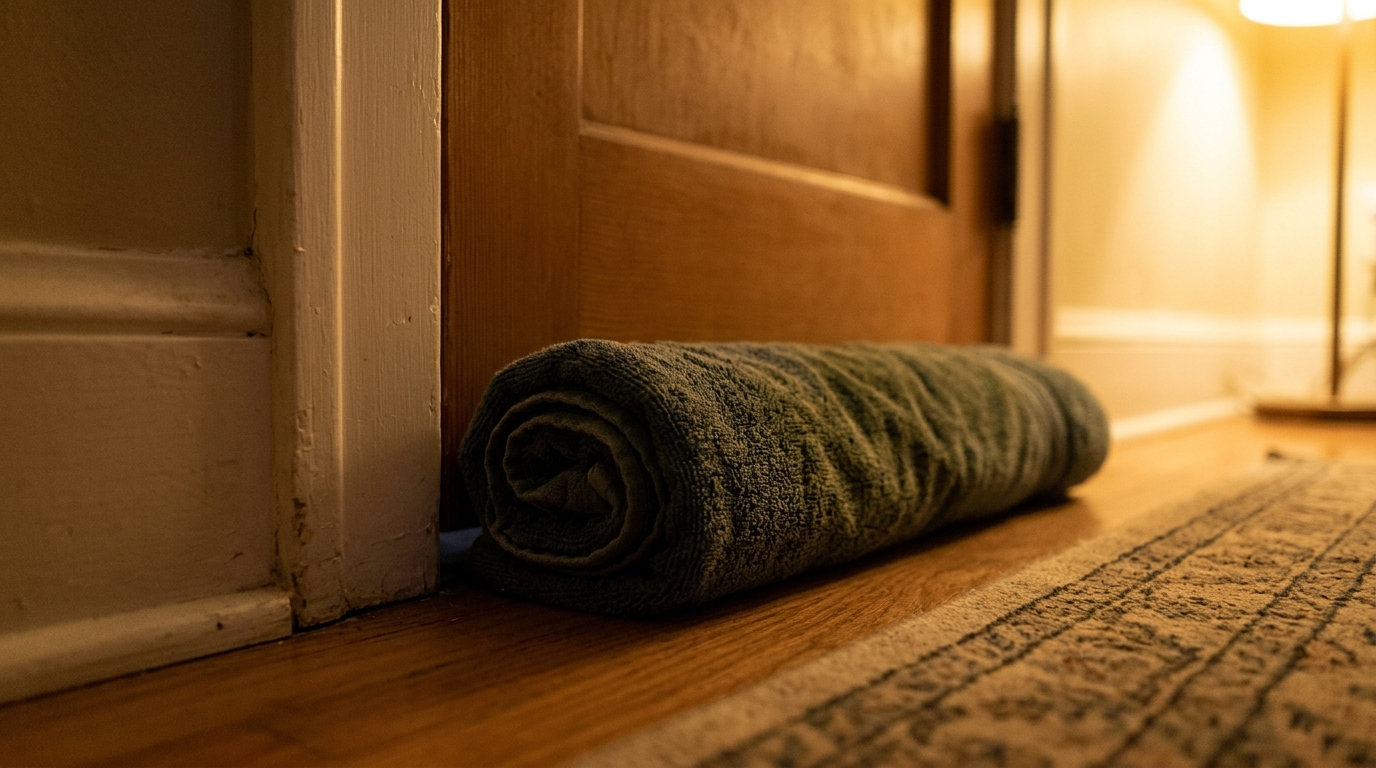
The market is full of decorative draft stoppers, from fabric snakes with cute patterns to foam tubes with adhesive backs. Many cost $15 to $30 and still leave gaps because they are too thin, too light, or too stiff to conform to the floor. A tightly rolled bath towel is dense, heavy, flexible, and free. It presses into the gap and the threshold, which is exactly what a draft stopper needs to do.
This post explains why the humble towel snake works so well, how to make a better one in 10 minutes, and when to step up to a proper door sweep that seals the gap permanently. You will learn which approach fits your door, your budget, and whether you are a renter or an owner.
What You’ll Need
Click on an item below to shop for the recommended items for this recipe on Amazon.
As an Amazon Associate, we earn from qualifying purchases.
How to Do It
- Pick a thick bath towel, preferably one that is not your best, because it will pick up dust and floor grit.
- Fold the towel in half lengthwise so it is long and narrow, then roll it tightly from one short end to the other like a sleeping bag.
- Wrap a rubber band or two strips of masking tape around both ends and the middle so it holds its shape.
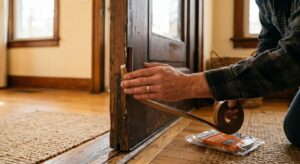
- Push the roll against the bottom of the door on the inside. Check that it touches both the door and the threshold, and that it extends 1 to 2 inches past each side of the door.
- Do a quick smoke test: hold a lit incense stick or a strip of tissue paper near the bottom edge. If the smoke or tissue still flutters, add a second towel or slide the roll to close the remaining gap.
- Cut the leg off an old pair of jeans or use a long sleeve from a worn-out sweatshirt. You want a tube about 36 to 40 inches long and 4 to 5 inches wide.
- Sew or hot-glue one end shut. If you do not sew, tie a tight knot at one end and tuck it inside.
- Fill the tube about three-quarters full with uncooked rice, dried beans, or dry kitty litter. Rice conforms well and costs about $1 to $2 for a 2-pound bag.
- Leave a little slack so the snake flexes and settles into the gap, then close the open end with a knot, stitches, or a zip tie.
- Slide the snake along the floor against the door. If your door opens inward, make the snake long enough to stay in place when the door swings, or tie a small loop on one end to hook around the doorknob.
- Measure the width of your door and the gap between the bottom of the door and the threshold. Choose a sweep with a flexible vinyl, rubber, or silicone fin rated for the gap you measured.
- Cut the sweep to the door width with a hacksaw or utility knife. Most aluminum-backed sweeps cut cleanly.
- Hold the sweep against the inside bottom of the door so the fin just touches the threshold without dragging hard, then mark the screw holes with a pencil.
- Drill pilot holes, then screw the sweep in place. Check that the door still closes and latches easily.
- Test the seal in daylight by turning off the lights inside and looking for light under the door. If you see any, adjust the sweep down by loosening the screws and sliding it.
Why It Works: The Benefits
Sealing a 1/4 to 1/2 inch gap can trim 2 to 5% off your annual energy bill, which is about $30 to $90 on a typical $1,500 utility spend.
Blocking the draft at floor level raises the surface temperature near the door by several degrees, so the entryway feels noticeably more comfortable.
Most homes already have an old towel, a pair of tube socks, and some rice, beans, or dry kitty litter. You can test the fix tonight before spending a dollar.
A tight seal cuts street noise, dust, and pollen drifting in under the door, and it can help block insects and small pests.
A removable towel snake needs no screws, adhesive, or landlord approval, so you can take it with you when you move.
💰 Savings Impact by Action
A well-fitted dense stopper can block up to 80% of the airflow through a typical 1/4 inch gap under an exterior door.
Sealing door gaps can cut annual heating costs by roughly 2 to 5% in a drafty home.
Blocking hot, humid air at the threshold reduces the load on your AC by about 2 to 4% in summer.
Most homeowners report a 60% or greater improvement in entryway comfort after sealing the floor-level draft.
🏠 Key Concepts Explained
The Science Behind It
Air moves through a gap when there is a pressure difference between inside and outside. Wind pushes air against the side of your house that faces it, creating positive pressure, while the leeward side pulls air out. At the same time, warm indoor air rises and escapes near the ceiling, which lowers pressure at floor level and pulls outdoor air in through low openings like the gap under your door. This is called the stack effect, and it gets stronger as the temperature difference grows. On a 20 degree day with a 70 degree house, the pressure pulling air under your door can be several times stronger than on a mild day.
A draft stopper works by adding resistance to that airflow. The most important factors are surface contact and compressibility. A dense, flexible roll presses into the small irregularities of the threshold and door bottom, closing the channels air would otherwise squeeze through. A thin foam tube or a lightweight fabric snake often sits on top of the gap without compressing, so air flows around or through it. Weight matters too, because a heavy roll holds its seal even when the door shifts or someone brushes past it.
The energy math is straightforward. The Department of Energy notes that sealing air leaks is one of the most cost-effective efficiency improvements available. A single poorly sealed exterior door can account for 1 to 3% of a home’s total air loss, and when you add up several doors, the savings are real. Because there is no moving air to heat or cool, your system runs less often, which also reduces wear on the equipment and keeps indoor temperatures steadier.
Frequently Asked Questions
▼ Why does my towel snake still let cold air through?
The most likely cause is that the roll is too loose or too short and leaves tiny gaps at the ends or along the floor. Roll the towel tighter, use a thicker towel, or add a second one on top, and make sure it extends past both sides of the door by at least an inch.
▼ Can renters use a towel or weighted snake without trouble from the landlord?
Yes, a towel or fabric snake is completely removable and does not touch the door or frame, so it is generally fine in a rental. If you want a sweep, ask first, or choose an adhesive-backed vinyl strip that peels off cleanly.
▼ How long before I notice savings on my bill?
You will feel the difference at the floor within minutes, but the dollars show up over a full billing cycle. Expect a drop of roughly $2 to $8 per month in cold or hot weather for one door, depending on your climate and how big the gap was.
▼ What if my home is older than 30 years?
Older homes often have wider gaps, worn thresholds, and doors that have settled, so a stopper alone may not be enough. Start with a snake to test the draft, then plan to replace the weatherstripping or install a sweep with an adjustable threshold.
▼ Why does the draft come back after a few weeks?
Stoppers get pushed around, flatten, or collect dust and lose their grip on the floor. Fluff and re-roll the towel, replace the filling in a fabric snake, or step up to a door sweep that stays attached and keeps constant contact.
Quick Tips
- Make your towel snake longer than the door is wide so it covers the full gap even if it shifts a little.
- Use a dark-colored towel or fabric in entryways so it hides dirt, and wash it every month during heating season.
- Replace rice filling every year if it gets damp, since moisture can cause mold and attract pests.
- Check your sweep or weatherstripping each fall by closing the door on a dollar bill, and replace anything that slides out easily.
- For a quick seasonal swap, keep a stopper at the door in winter and remove it in spring when you want cross-ventilation.
Variations for Your Situation
- Apartment/Rental: Use a rolled bath towel or a weighted fabric snake that you can toss in the wash and take with you when you move. If you want something nicer, pick up a $12 to $20 foam-and-fabric stopper with an adjustable sleeve, which needs no screws or adhesive.
- Tight Budget (under $50): Skip any commercial stopper and use a towel or an old sock filled with rice for $0 to $2. Spend the remaining money on a $10 to $15 door sweep for the one door that leaks the most, and check the seal with a dollar bill.
- Older Home (pre-1980): Expect a larger gap and an uneven threshold. Use a thick, dense roll as a stopgap, then budget $20 to $40 for an adjustable aluminum threshold and a heavy-duty sweep, since gaps over 1/2 inch can waste far more energy than a modern door.
- Pet Owners: Cats and dogs love to tear at loose fabric, so choose a snake made of tight-weave canvas or denim and fill it with rice instead of beans. Keep it away from food bowls so the filling does not draw pests.