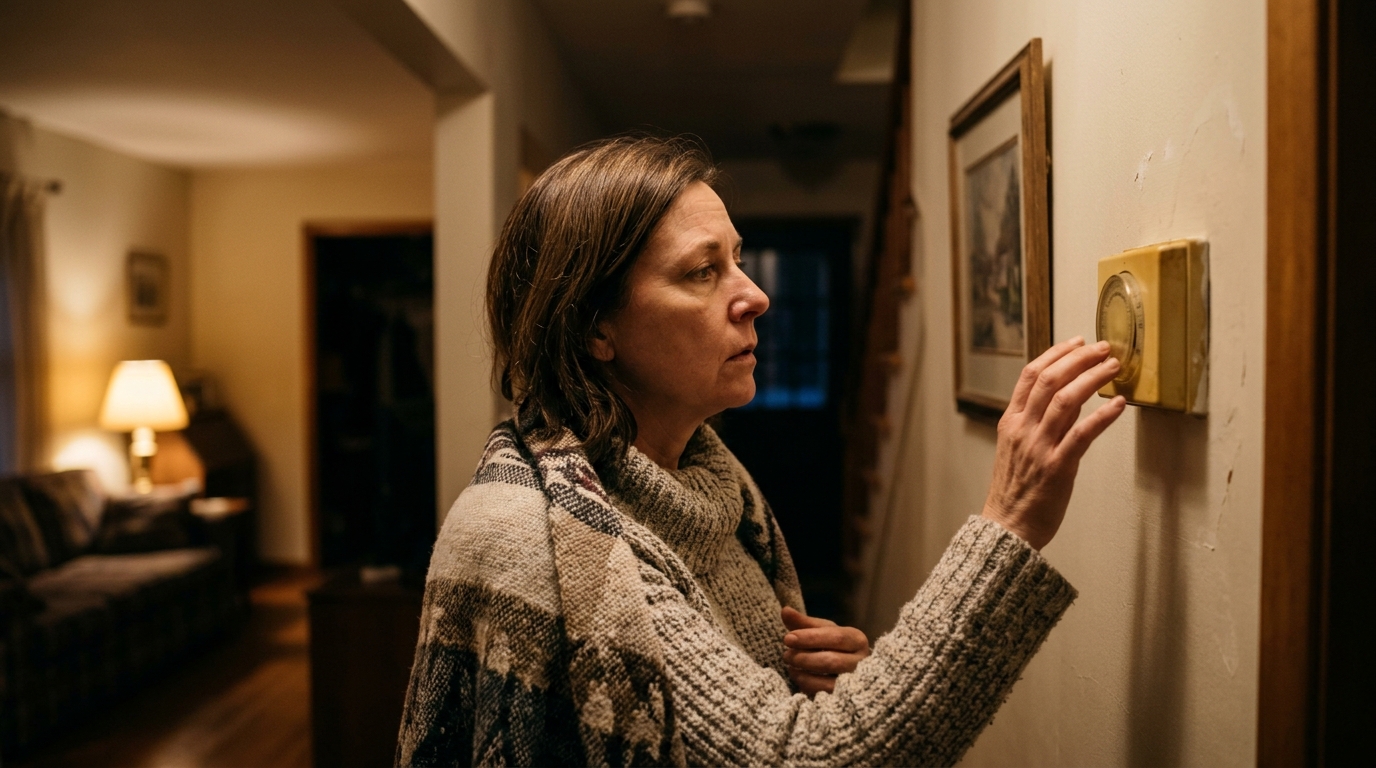
Most furnace breakdowns happen at the worst possible time. During extreme cold, a furnace may run 16 to 20 hours a day instead of the usual 8 to 10, and every component is pushed toward its limit. A system that handled a mild November without complaint can quit on the coldest night of January, when repair shops are booked solid and parts take days to arrive.
Age is the single biggest predictor of that kind of failure. Most gas furnaces are designed to last 15 to 20 years, but reliability starts to slip well before the end of that window. Igniters crack, blower motors wear out, heat exchangers corrode, and efficiency drops so the system has to run longer to deliver the same heat. In extreme cold, that extra runtime is exactly when weak parts give out.
This post explains how furnace age affects overnight reliability, which warning signs matter most, and what you can do before the next deep freeze. You will find a quick pre-winter checklist anyone can do, a more thorough DIY maintenance routine, and clear guidance on when it is time to call a licensed HVAC technician or start planning a replacement.
What You’ll Need
Click on an item below to shop for the recommended items for this recipe on Amazon.
As an Amazon Associate, we earn from qualifying purchases.
How to Do It
- Find your furnace’s age by reading the data plate inside the cabinet door. The serial number often encodes the manufacture year, and a quick search of the brand plus serial format will confirm it. Write the age and model number on a piece of tape on the unit.
- Replace the air filter if it looks gray or clogged. Use the size printed on the old filter, and choose a MERV 8 to 11 filter, since very high MERV ratings can restrict airflow on older systems.
- Make sure every supply register and return grille is open and unblocked by furniture, rugs, or curtains. Closing too many vents raises pressure and can cause overheating.
- Check the area around the furnace and outdoor vents. Clear snow, ice, and debris from intake and exhaust pipes on high-efficiency models, since a blocked vent is a common cause of lockouts in storms.
- Test your thermostat by raising the setpoint 3 to 5 degrees and confirming the furnace starts within a couple of minutes. Replace thermostat batteries if it is battery powered.
- Confirm your carbon monoxide detector works by pressing the test button, and write down the number of a 24-hour HVAC company in case of failure.
- Shut off power at the furnace switch and the breaker, and turn the gas valve to the off position if you will be working near burners. Remove the front panel and photograph the wiring and layout so you can reassemble correctly.
- Clean the flame sensor, a thin metal rod near the burner flame. Gently rub it with fine steel wool or a non-abrasive pad to remove oxidation, then wipe it clean. A dirty sensor is one of the top causes of a furnace that lights and then shuts off.
- Inspect the hot surface igniter for visible hairline cracks. Do not touch it with bare fingers, since skin oils shorten its life. If it is cracked or the furnace has had trouble lighting, plan to replace it (usually $20 to $50 for the part).
- Vacuum dust from the blower compartment, around the burners, and from the cabinet floor. Wipe visible dust from the blower wheel blades if you can reach them, since buildup reduces airflow.
- Check the condensate drain on high-efficiency furnaces. Flush the trap and line with a cup of warm water and make sure it flows freely, since a clogged or frozen drain will trigger a shutdown.
- Restore power, run a full heating cycle, and watch it from start to finish. You should see a steady blue flame, a smooth start, and warm air within 1 to 2 minutes. Note any rattling, banging, yellow flames, or repeated start attempts.
- Schedule an annual tune-up in early fall. A technician will test gas pressure, check the heat exchanger, measure temperature rise, test safety switches, and inspect the flue, which are things homeowners cannot safely check.
- Ask the technician to rate the furnace’s condition and estimate remaining life. Request any findings in writing, especially signs of a cracked heat exchanger, rust, or failing control boards.
- If the furnace is over 15 years old and repair estimates exceed about 30 to 50% of replacement cost, get at least two replacement quotes with a proper load calculation (Manual J) rather than a simple like-for-like swap.
- Check for rebates before buying. Federal tax credits, utility incentives, and state programs can lower the cost of a qualifying high-efficiency furnace by several hundred to over a thousand dollars.
- Schedule installation in spring or early fall when contractors have openings, instead of waiting for a failure in January when you have little negotiating power.
Why It Works: The Benefits
Annual tune-ups catch most worn igniters, dirty sensors, and weak capacitors before they fail. Technicians commonly report that a large share of no-heat calls trace back to issues a routine inspection would have found.
A clean, properly tuned furnace can recover 5 to 10% of lost efficiency. A clean filter alone can reduce the energy a blower uses by several percent, which adds up over a heating season.
After-hours and cold-snap service calls often carry surcharges, and a typical emergency repair can run $300 to $800. Planning ahead lets you schedule work at standard rates.
Catching a cracked heat exchanger, blocked flue, or failing flame rollout switch early reduces carbon monoxide risk, which matters most in sealed-up winter homes.
Knowing your furnace’s age and condition lets you replace it on your schedule, in spring or fall when contractors are less busy and often offer better pricing and rebates.
💰 Savings Impact by Action
Replacing a clogged filter restores airflow and can reduce blower energy use and runtime by roughly 5%.
Cleaning burners and sensors and adjusting combustion can recover up to 10% of lost efficiency in an aging furnace.
Sealing leaks and adding insulation can cut heating load by 10 to 20%, reducing furnace runtime and wear.
Replacing an 80% AFUE furnace from the 1990s with a 95 to 98% unit can reduce fuel use by about 20 to 40%.
🏠 Key Concepts Explained
The Science Behind It
A furnace’s heating capacity is fixed, but a home’s heat loss is not. As outdoor temperature falls, the temperature difference between inside and outside grows, and heat loss rises almost in direct proportion. A house that needs 40,000 BTU per hour at 30 degrees Fahrenheit may need 70,000 BTU per hour or more at 0 degrees. If your furnace is undersized, aging, or running below its rated output, it may no longer be able to keep up, and it will simply run continuously without ever reaching the thermostat setpoint.
Age affects reliability through cumulative mechanical and thermal stress. Each heating cycle heats the combustion chamber and heat exchanger and then cools it, causing expansion and contraction. Over thousands of cycles, metal fatigues and seams can open. Electrical components such as capacitors, relays, and control boards degrade with heat and time, and their failure rate rises sharply as they pass their rated life. Blower motors accumulate bearing wear and dust, which raises electrical draw and heat.
Extreme cold concentrates all of this into one scenario. Long runtimes keep components hot for hours, vent pipes can frost or ice over, condensate lines can freeze, and gas pressure and combustion air conditions shift. Safety controls on older units are more likely to trip because they are closer to their limits. This is why a furnace can work fine for weeks and then fail on the single coldest night of the year.
Frequently Asked Questions
▼ My furnace lights, runs for a few seconds, and then shuts off. What is wrong?
The most common cause is a dirty flame sensor that cannot confirm the flame, so the control board shuts the gas off. Turn off power, gently clean the sensor with fine steel wool, and test again. If the problem returns or the burner flame looks yellow, call a technician.
▼ How old is too old for a furnace to trust on the coldest nights?
Most gas furnaces are designed to last 15 to 20 years, and reliability and efficiency both decline noticeably after about 15. If yours is older and has had repairs in the last two years, treat it as a risk during extreme cold and have it inspected and start budgeting for replacement.
▼ My furnace runs constantly but the house will not warm up. Is it broken?
Not necessarily. Constant running during extreme cold can simply mean your heat loss exceeds the furnace’s output, which is common with undersized or aging units and leaky homes. Check the filter, make sure vents are open, and confirm the air coming out is warm (typically 120 to 140 degrees at the register). If the air is lukewarm or the house falls behind even in moderate cold, schedule an inspection.
▼ Is it worth repairing an old furnace or should I just replace it?
A common rule is to consider replacement if the unit is over 15 years old and the repair costs more than about 30 to 50% of a new system. Also weigh repeated repairs, falling efficiency, and any safety concerns like a cracked heat exchanger, which almost always justifies replacement.
▼ Can I run my furnace’s emergency or auxiliary heat to get through a cold night?
If you have a heat pump with electric backup, emergency heat is a valid short-term option, though it uses much more electricity. For a gas furnace there is no safe workaround. If it fails, use safe electric space heaters, close off rooms, and call for service rather than using a stove, oven, or grill for heat.
Quick Tips
- Write your furnace’s age, model number, and your HVAC company’s 24-hour phone number on a card taped near the unit so you can act fast at night.
- Change the filter every 1 to 3 months during heavy use, and check it monthly during extreme cold when the furnace runs the most.
- Keep thermostat settings steady during cold snaps. Large overnight setbacks can force a stressed furnace into long, hard recovery runs, and many older units struggle to catch up below 10 degrees outside.
- Keep a few portable backup supplies on hand: extra blankets, a safe plug-in electric space heater with tip-over protection, and a plan to close off unused rooms to concentrate heat.
Variations for Your Situation
- Apartment/Rental: You usually cannot modify or replace the furnace, but you can still protect yourself. Report any odd noises, short cycling, or weak heat to your landlord in writing before winter so repairs are documented. Keep a CO detector ($20 to $35) and a safe backup plug-in heater with tip-over shutoff, and use draft stoppers and window film to reduce heat loss.
- Tight Budget (under $50): Focus on a fresh filter ($5 to $20), cleaning the flame sensor yourself, clearing vents and intake pipes, and sealing obvious drafts with weatherstripping or door sweeps. Keep thermostat settings steady and put your 24-hour repair contact in your phone. These steps cost little and address the most common cold-weather failures.
- Older Home (pre-1980): Expect more air leakage and weaker insulation, which means your furnace works harder in extreme cold than the same unit would in a newer home. Prioritize attic air sealing and insulation to R-38 or higher, since reducing heat loss lowers runtime and may let you replace the furnace with a smaller, more efficient unit. Also have the flue and chimney inspected, since older venting can be undersized or deteriorated.