For millions of homeowners, the bedroom becomes a heat trap by bedtime. The sun beats on the roof and windows all day, heat radiates from walls and ceilings into the night, and a running air conditioner cycling on and off all night can add $30 to $80 to your monthly electric bill in summer. The frustrating part is that most of that expense is avoidable with the right approach to managing heat before it ever enters your sleeping space.
The secret is not a more powerful AC, it is reducing the heat load in your bedroom so the air you already have stays cool longer. A combination of blocking daytime heat gain, flushing out accumulated heat in the evening, and using targeted cooling at the point of sleep can slash your overnight AC runtime by 40 to 60 percent, without sacrificing comfort.
This post walks you through the building science behind why bedrooms overheat, then gives you practical, layered approaches from zero-cost habit changes to affordable DIY upgrades. Whether you want to spend nothing or invest $150 in a smarter setup, there is a real solution here with numbers to back it up.
What You’ll Need
Click on an item below to shop for the recommended items for this recipe on Amazon.
As an Amazon Associate, we earn from qualifying purchases.
How to Do It
- Close all south and west-facing bedroom blinds or curtains by noon to block afternoon solar heat gain before it enters the glass. Even standard blinds reduce solar heat gain by 15 to 20 percent.
- Open bedroom windows after 9 PM when outdoor temperatures drop below indoor temperature, creating cross-ventilation by also opening a window on the opposite side of the house. Use an outdoor thermometer or weather app to confirm it is cooler outside before opening.
- Set your ceiling fan to counterclockwise (summer mode) at medium or high speed before bed. This makes the room feel 4 to 6 degrees cooler without changing the actual thermostat setting, so you can raise the AC setpoint by 3 to 4 degrees.
- Pre-cool the bedroom to 68 to 70 degrees between 6 and 9 PM when outdoor heat is declining, then raise the thermostat setpoint to 74 degrees overnight. Your body temperature naturally drops during sleep and requires less cooling.
- Switch from a synthetic or thick down comforter to a lightweight cotton or bamboo blanket in summer. Bedding with high heat retention forces your body to work harder to stay cool and counters all other efforts.
- Install blackout curtains or cellular shades on all east and west-facing bedroom windows. Cellular shades with a honeycomb structure reduce solar heat gain by up to 60 percent and are available for $25 to $60 per window. This is the single highest-impact daytime fix.
- Seal window and door gaps in the bedroom with foam weather stripping or rope caulk on the interior. A typical bedroom window leaks enough conditioned air to add 10 to 15 percent to your cooling load. Rope caulk costs under $5 per roll and is removable at the end of the season.
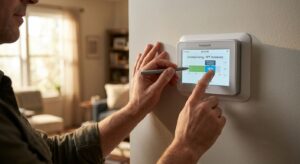
- Add a smart plug or smart thermostat schedule to pre-cool your bedroom automatically from 6 to 9 PM daily during summer months, then set it to allow the temperature to rise to 74 to 75 degrees for the remainder of the night. Smart plugs with scheduling cost $15 to $25 each.
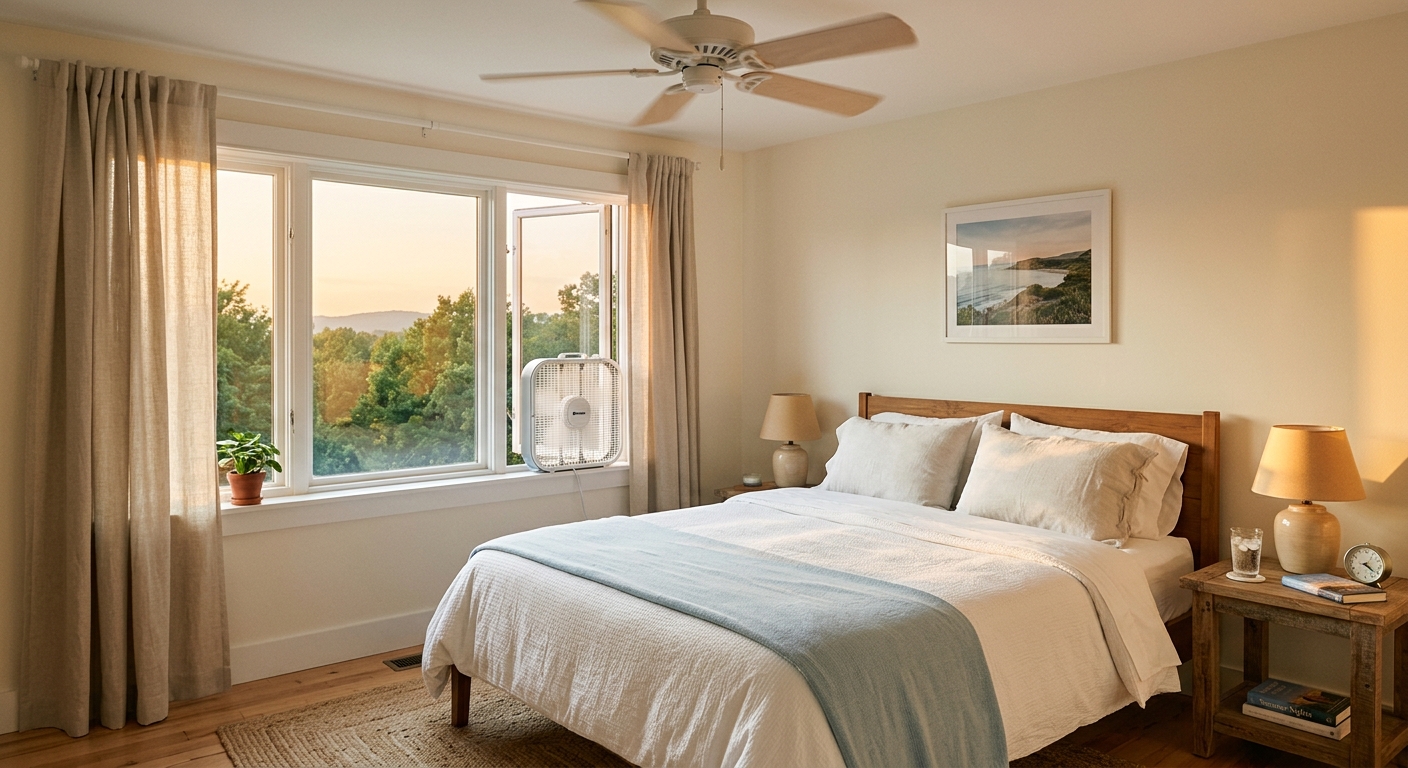
- Place a USB or box fan in the bedroom window in exhaust mode (blowing out) after 9 PM to pull cooler night air through from another open window. A 20-inch box fan costs $25 to $40 and moves roughly 2,000 CFM, which is enough to flush a typical bedroom of trapped heat in 10 to 20 minutes.
- Add a window reflector film to any window that receives direct western afternoon sun. Low-e window film costs $0.50 to $1.50 per square foot, can be applied in under an hour, and blocks 55 to 70 percent of solar heat gain while maintaining daylight visibility.
- Place a flat, low-pile rug over any bare concrete or tile floor in or adjacent to the bedroom. Hard thermal mass surfaces release stored heat at night, and a rug acts as an insulating barrier that slows that transfer into the air you sleep in.
- Check your attic insulation depth above the bedroom ceiling. If you have less than 10 inches of fiberglass batts or less than R-38 in total, adding insulation to R-49 can reduce ceiling heat transfer by 25 to 40 percent. Many utilities offer rebates of $0.10 to $0.25 per square foot for this upgrade.
- Add or repair attic ventilation (ridge vent plus soffit vents) to ensure the attic flushes heat naturally. A properly ventilated attic stays 20 to 40 degrees cooler than an unventilated one on a hot day, reducing the heat load on your bedroom ceiling throughout the night.
- Install a solar-powered attic fan above the bedroom to actively exhaust hot attic air during peak afternoon hours. Solar attic fans cost $150 to $400 installed and can reduce attic temperature by 25 to 50 degrees, with no operating cost since they run on sunlight.
- Consider a radiant barrier stapled to the underside of attic roof rafters above the bedroom. A reflective radiant barrier rejects up to 97 percent of radiant heat from the roof deck and can reduce attic temperatures by 10 to 25 degrees, which translates to a measurable reduction in bedroom ceiling temperature by nightfall.
Why It Works: The Benefits
Reducing overnight AC runtime by 40 to 60 percent through passive and low-energy strategies can save $20 to $60 per month in peak summer months, depending on your climate and electricity rate.
The National Sleep Foundation identifies 65 to 68 degrees Fahrenheit as the optimal bedroom temperature for deep sleep. Achieving that target without mechanical cooling noise and temperature swings from AC cycling leads to measurably more restful sleep.
Every hour you shave off overnight AC operation extends the life of your compressor and reduces the chance of a costly breakdown. Central AC units that run fewer hours per season need fewer refrigerant recharges and compressor replacements, saving hundreds in maintenance costs over time.
Targeted bedroom cooling eliminates the hot and cold swings caused by a central system cycling on and off all night, maintaining a steadier 65 to 70 degree sleeping environment.
Cutting overnight cooling energy use by 40 percent in a typical home reduces summer CO2 emissions by an estimated 200 to 400 pounds per season, the equivalent of skipping several tanks of gasoline.
💰 Savings Impact by Action
Closing blackout or cellular shades on west-facing windows during afternoon hours reduces solar heat gain through glass by up to 60 percent, lowering the bedroom cooling load by 20 to 30 percent.
Flushing bedroom heat with a box fan in exhaust mode after outdoor temperatures drop can eliminate 30 to 40 percent of overnight AC runtime on nights where lows fall below 70 degrees.
Running a ceiling fan in summer mode allows you to raise the thermostat setpoint by 4 degrees Fahrenheit, reducing overnight cooling energy use by approximately 12 to 15 percent with no comfort loss.
Upgrading attic insulation above the bedroom to R-49 reduces heat transfer through the ceiling by 25 to 40 percent, cutting the single largest overnight heat source for top-floor bedrooms.
Allowing a 4-degree overnight thermostat setback from 70 to 74 degrees after midnight saves approximately 8 to 10 percent on total overnight AC energy consumption.
🏠 Key Concepts Explained
The Science Behind It
Your bedroom does not get hot just from outdoor air seeping in. It gets hot because your home acts as a thermal battery. Walls, ceilings, roofing materials, and furniture absorb solar and ambient heat all day and then slowly discharge that energy as infrared radiation into the room air after the sun sets. This is called thermal mass lag, and it means the hottest period inside your bedroom often occurs between 8 PM and midnight, hours after peak outdoor temperatures have already passed.
Windows compound this effect dramatically. A standard double-pane window admits solar radiation with a Solar Heat Gain Coefficient (SHGC) of around 0.25 to 0.40, meaning 25 to 40 percent of the solar energy hitting the glass enters your room as heat. A west-facing window receiving three to four hours of direct afternoon sun can add 1,000 to 2,000 BTUs of heat to your bedroom on a sunny summer day. Blocking that gain with exterior shades, blackout curtains, or low-e film before it enters the glass is dramatically more effective than trying to remove that heat with air conditioning after the fact.
The physics of personal cooling also work in your favor. Human thermal comfort is not just about air temperature but about the rate of heat loss from your skin. Moving air accelerates both convective and evaporative heat loss, which is why a 74-degree room with a ceiling fan running feels as comfortable as a 68 to 70 degree room with still air. According to ASHRAE research, air movement of just 0.5 to 1.0 meters per second across the skin raises the effective comfort threshold by 4 to 5 degrees Fahrenheit, which means you can raise your thermostat setpoint by that margin and still sleep comfortably while consuming significantly less energy.
Frequently Asked Questions
▼ Why is my bedroom still hot at midnight even with the AC running?
This is almost always thermal mass release from your ceiling, walls, or poorly insulated attic. Check your attic insulation depth above the bedroom and feel your ceiling with your hand an hour after sunset. If it is warm to the touch, heat is radiating downward throughout the night. Start with blackout curtains during the day and a 20-minute window-fan purge in the evening before addressing insulation.
▼ Can renters do this without landlord permission?
Yes, almost everything in the Quick Fix and DIY approaches requires no permanent modifications. Rope caulk, blackout curtains on tension rods, portable fans, and smart plugs are all renter-safe and fully removable. Avoid adhesive window film unless you use a static-cling version, which leaves no residue and costs slightly more at around $1.50 to $2.00 per square foot.
▼ How long before I see savings on my electric bill?
Zero-cost habit changes show up in your very next billing cycle as reduced AC runtime hours. DIY upgrades like blackout curtains and window sealing typically pay back their cost in one to two months of summer savings. Attic insulation upgrades have a longer payback of one to three years but provide year-round benefits including reduced heating costs in winter.
▼ What if my home is older than 30 years?
Older homes typically have single-pane windows, minimal attic insulation, and significantly more air leakage, meaning the heat gain problem is more severe but the percentage savings from fixes are also larger. Prioritize window film or interior window insulation panels first (30 to 60 percent heat gain reduction), then focus on attic insulation before spending money on HVAC upgrades.
▼ Is it better to leave the AC at one temperature all night or let it cycle up?
Allowing a 3 to 4 degree overnight setback, for example from 70 to 74 degrees after midnight, saves 8 to 10 percent on overnight cooling costs without sacrificing comfort since your body temperature naturally drops during deep sleep. A programmable or smart thermostat that handles this automatically costs $25 to $150 and pays back that cost in one to two summers.
Quick Tips
- Set blackout curtains or cellular shades to close automatically at noon using a simple timer-based smart plug on motorized shades, eliminating the need to remember during the hottest part of the day.
- Use a free weather app to check whether outdoor nighttime lows will drop below 68 degrees Fahrenheit. If yes, you can skip the AC entirely and rely on cross-ventilation plus a fan for the entire night.
- Sleep on cotton or bamboo percale sheets with a thread count of 200 to 400, which breathe and wick moisture far better than polyester blends or sateen weaves above 600 thread count.
- Place a frozen water bottle wrapped in a cloth in front of a small desk fan pointed at your bed for an inexpensive evaporative cooling boost on the hottest nights.
Variations for Your Situation
- Apartment or Rental: Renters cannot modify central HVAC or install attic fans, but can achieve significant cooling with renter-safe tools. Invest in static-cling window film ($1.50 to $2.00 per square foot, no adhesive), blackout curtains on tension rods ($30 to $60 per window), a 20-inch box fan for window exhaust ($25 to $40), and a personal evaporative cooling pad or Peltier-based bedside cooler ($40 to $80). These combined measures can reduce perceived bedroom temperature by 5 to 8 degrees without touching any building systems.
- Tight Budget (under $50): Focus on three zero-cost or near-zero-cost actions that deliver the biggest impact. First, hang any dark or thick fabric over west-facing windows during afternoon hours using removable hooks. Second, seal window gaps with rope caulk at under $5 per roll. Third, run a box fan borrowed or already owned in exhaust mode for 20 minutes after 9 PM. These three steps alone can reduce overnight AC runtime by 20 to 30 percent at minimal cost.
- Older Home (pre-1980): Homes built before 1980 often have little to no attic insulation above R-11, single-pane aluminum-frame windows, and significant envelope leakage. In these homes, addressing the attic is the single highest-leverage fix. Even adding R-19 unfaced batts over existing insulation yourself (roughly $0.30 to $0.50 per square foot in materials) can reduce bedroom ceiling heat transfer by 30 to 40 percent and improve overall home cooling efficiency enough to reduce AC runtime meaningfully throughout the day and night.