Few household annoyances compare to a cold shower surprise when someone else beats you to the bathroom, or watching the dishwasher and a load of laundry drain your tank dry before noon. The instinct is to assume your water heater is too small or too old, but the truth is that most tanks have untapped capacity sitting right there, waiting to be unlocked. Before you spend $800 to $2,000 on a replacement unit, it is worth spending an afternoon on the simpler fixes first.
Hot water shortages are almost always caused by one of a handful of fixable problems: a thermostat set too low, a failing heating element, sediment buildup reducing effective tank volume, or poor pipe insulation that bleeds heat before the water even reaches your faucet. Each of these can cut your usable supply by 10 to 30 percent on its own. Stack two or three together and a 50-gallon tank can start behaving like a 30-gallon one.
This guide walks you through exactly how to diagnose which problem you are dealing with, and then how to fix it yourself or know when to call a pro. You will find quick adjustments you can make today, DIY repairs that take a weekend afternoon, and guidance on cost-effective upgrades that extend your existing heater’s performance for years. Real costs, real timeframes, and real savings are included throughout.
What You’ll Need
Click on an item below to shop for the recommended items for this recipe on Amazon.
As an Amazon Associate, we earn from qualifying purchases.
How to Do It
- Locate your water heater thermostat dial (usually behind an access panel on electric heaters, or a dial on the gas valve for gas heaters). If it is set below 120°F, turn it up to 120°F. If your household has no young children or elderly residents and you want maximum capacity, you can raise it to 130°F, but install a mixing valve at the tap to prevent scalding.
- Check the circuit breaker or fuse for your water heater if it is electric. A tripped breaker is one of the most common reasons for sudden hot water loss and takes 30 seconds to fix. Reset it once, and if it trips again, call an electrician.
- Run your dishwasher or do laundry during off-peak household hours, such as late evening or early morning, rather than back to back with showers. Spacing high-demand tasks 45 to 60 minutes apart allows the heater to recover between uses.
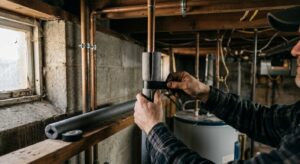
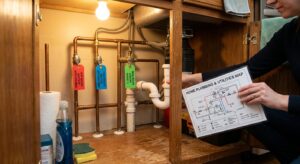
- Identify any hot water pipes in unheated spaces such as basements, crawl spaces, or garages. Wrap them with inexpensive foam pipe insulation sleeves, available for $0.30 to $0.60 per linear foot at any hardware store. Start with the first 6 feet of pipe leaving the heater for the biggest impact.
- Turn on the hot water at the faucet farthest from your heater and time how long it takes for the water to run hot. If it takes longer than 60 seconds, you are losing gallons of water to the drain while waiting, and pipe insulation or a demand-controlled recirculation pump will fix this.
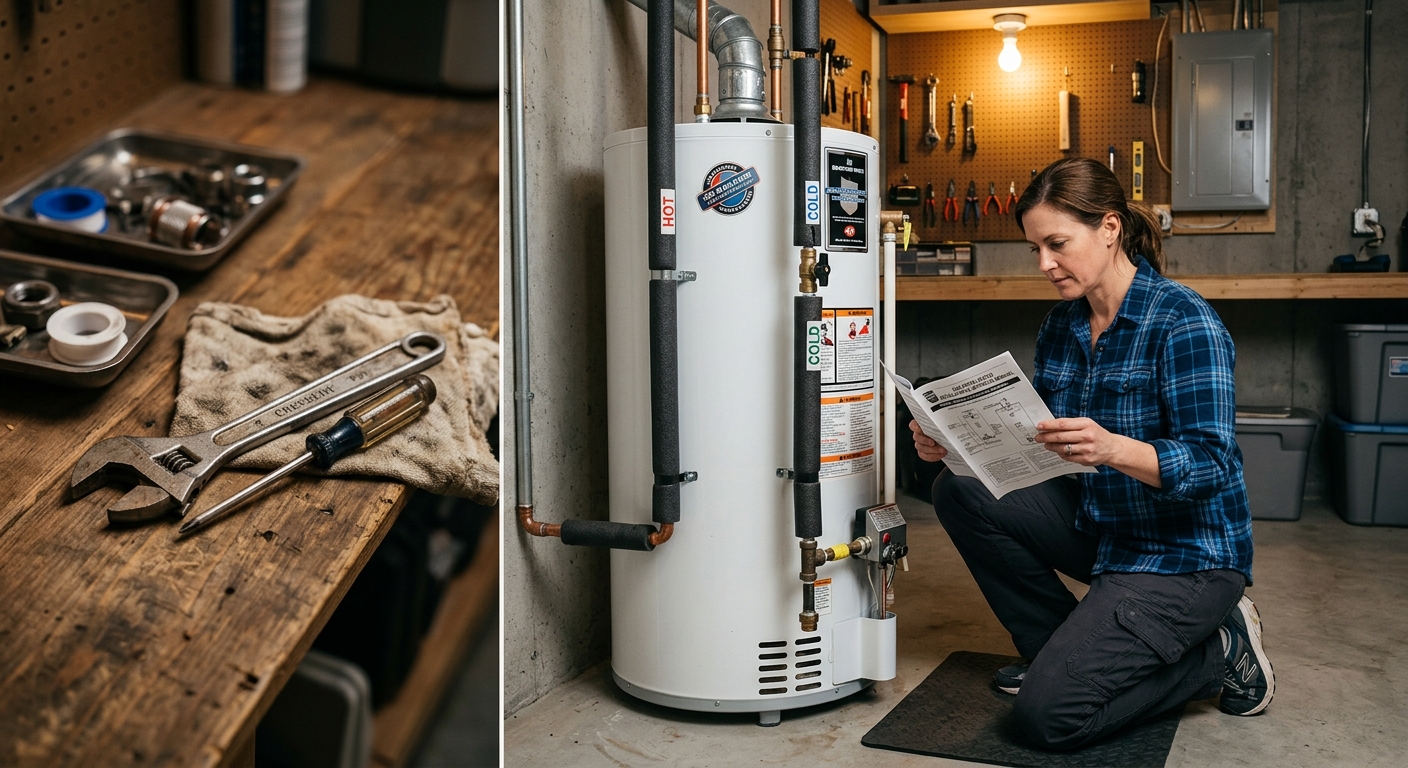
- Flush the sediment from your tank once a year. Turn off the cold water supply and power (or set the gas valve to Pilot). Connect a garden hose to the drain valve at the bottom of the heater and run it to a floor drain or outside. Open the pressure relief valve slightly to allow airflow, then open the drain valve and let the tank drain fully. Stir up remaining sediment by briefly reopening the cold supply valve while draining. Refill, restore power, and allow 1 to 2 hours to reheat.
- Inspect and replace the anode rod if your water heater is more than 3 years old. The anode rod is a magnesium or aluminum rod typically located under the top of the tank or behind the plastic cap on top. Use a 1-1/16 inch socket and a breaker bar to remove it. If it is less than half an inch thick or heavily corroded, replace it with a new magnesium anode rod ($20 to $30). This single step is the biggest predictor of whether your tank lasts 8 years or 15.
- Install a water heater insulation blanket if your tank is more than 5 years old or feels warm to the touch on its exterior. Blankets cost $20 to $40 and cut standby heat loss by 25 to 45%. Follow the package instructions carefully, leave the thermostat, pressure relief valve, and the top of gas heaters uninsulated. Do not use insulation blankets on newer tanks marked as already insulated, as it can trap heat and void the warranty.
- Replace a failing lower heating element on an electric water heater if you have hot water but it runs out very quickly. Turn off the breaker and verify power is off with a non-contact voltage tester. Drain the tank below the element access panel, remove the panel and insulation, disconnect the wiring, and use an element wrench to unscrew the old element. Install a direct replacement ($10 to $20), refill the tank before restoring power, and test within 2 hours.
- Install a demand-controlled hot water recirculation pump if you consistently wait more than 60 seconds for hot water at distant fixtures. These pumps ($150 to $250 with installation hardware) attach to your existing water heater and use a crossover valve under your farthest sink. They activate on a timer or push button, circulating water through the pipes so hot water arrives within seconds and you stop wasting 1 to 3 gallons per use while waiting.
- Schedule a water heater inspection with a licensed plumber. Ask them to check the thermostat calibration (thermostats can drift 10 to 20°F off and show incorrect settings), both heating elements on electric units, the gas valve and burner assembly on gas units, and the integrity of the pressure relief valve.
- Request a full sediment flush if you have never had one done or if the plumber finds heavy mineral buildup. In very hard water areas, a chemical descaling treatment may be recommended alongside the flush.
- Ask about an expansion tank if your home has a closed plumbing system (common after backflow preventers were required by code in most areas after 2002). Without an expansion tank, pressure spikes can stress your water heater and shorten its life significantly.
- Get a written assessment of whether repair or replacement makes more financial sense. A professional can calculate your heater’s remaining useful life, current efficiency relative to a new unit, and the true cost-per-year comparison. In general, if the repair cost exceeds 50% of a new unit’s price and the heater is over 8 years old, replacement is usually the smarter investment.
Why It Works: The Benefits
Flushing sediment and adjusting the thermostat can restore 15 to 25% of lost tank capacity, giving a family of four noticeably longer showers and the ability to run multiple hot water appliances simultaneously.
Wrapping the tank in an insulation blanket and insulating the first 6 feet of hot water pipe can reduce standby heat loss by 25 to 45%, translating to $15 to $45 per year on a typical household energy bill.
Insulating pipes and fixing a failing recirculation pump can cut the wait time for hot water at distant fixtures from 30 to 90 seconds down to under 10 seconds, reducing both water waste and frustration.
Flushing sediment annually and replacing a sacrificial anode rod every 3 to 5 years are the two most effective ways to extend a tank’s life, often adding 5 to 7 years beyond the standard 8 to 12 year lifespan and delaying a $1,200 to $2,000 replacement expense.
Setting the thermostat correctly, at 120°F for typical households or 130°F for maximizing volume with mixing valves installed, eliminates the unsafe practice of cranking temperature excessively high, which can cause burns especially for children and elderly residents.
💰 Savings Impact by Action
Flushing sediment annually restores heating efficiency and can reduce water heating energy use by up to 20% in areas with hard water.
Adding an insulation blanket to an older tank reduces standby heat loss by 25 to 45%, saving 7 to 16% on annual water heating costs.
Insulating hot water distribution pipes reduces heat loss in transit, saving 3 to 4% on water heating energy and cutting wait time at fixtures.
Correcting a thermostat set below 120°F or miscalibrated by 10 to 20°F eliminates unnecessary reheating cycles and can cut related energy waste by up to 10%.
Replacing 2.5 GPM showerheads with 1.5 GPM low-flow models reduces hot water consumption per shower by up to 40%, extending the effective supply by 25% or more.
🏠 Key Concepts Explained
The Science Behind It
A storage water heater is essentially a well-insulated thermos that constantly fights heat loss. The tank holds water at a set temperature, and whenever that temperature drops, the heating element or gas burner cycles on to bring it back up. Two things determine how much usable hot water you get: how much the tank holds at the right temperature, and how fast it can replace what you use. Sediment undermines both. A half-inch layer of mineral scale at the bottom of a gas heater’s tank acts as a thermal barrier between the burner flame and the water, the same way a cast iron skillet heats unevenly when coated with grime. The burner has to work longer to achieve the same result, raising energy use and reducing how much of the tank volume reaches full temperature.
Temperature and mixing physics explain why a thermostat adjustment can feel like gaining gallons of capacity without adding a single gallon. When your tank is set to 120°F and you take a shower at a comfortable 105°F, you are using nearly all hot water with minimal cold water blended in. But if the tank is set to 130°F, you blend roughly 30% cold water at the valve to achieve the same 105°F shower temperature, which means each gallon in the tank stretches further. A 40-gallon tank at 130°F effectively delivers the equivalent of about 50 to 52 gallons of 105°F shower water, a meaningful difference for a family of four without any change to the physical tank.
Standby heat loss is the silent energy thief most homeowners never think about. Heat naturally flows from warm objects to cooler surrounding air, and a water heater tank is no exception. An older tank with degraded foam insulation can lose enough heat overnight to require 30 to 60 minutes of element operation just to return to setpoint by morning, before anyone has used a drop of hot water. Wrapping the tank and insulating distribution pipes addresses both the tank-level loss and the secondary loss that occurs as hot water travels through cool pipe runs inside walls and crawl spaces, ensuring that the energy you pay to put into the water actually stays there until you use it.
Frequently Asked Questions
▼ Why do I run out of hot water faster than I used to, even though nothing seems broken?
Sediment buildup is the most likely culprit if the change has been gradual over months or years. Minerals from tap water accumulate at the bottom of the tank, reducing effective heating volume and making the burner or element work harder for less output. Flush the tank following the steps in the DIY approach section, and check whether the anode rod needs replacement. If the change was sudden, suspect a failed lower heating element on an electric heater or a partially closed cold supply valve.
▼ Can I just turn my thermostat way up to get more hot water?
Raising the thermostat to 130°F does increase usable volume through blending physics, but going above 130°F carries real scalding risk and can accelerate mineral buildup. The EPA recommends 120°F as the standard safe setting. If you raise to 130°F to gain capacity, install a thermostatic mixing valve at the tank or at individual fixtures to blend the water back down to a safe delivery temperature of 120°F, especially if children or elderly people use the hot water.
▼ My water heater is only 4 years old. Why am I still running out of hot water?
A newer heater running short usually points to a thermostat setting below 120°F, a failed lower heating element on an electric unit (lower elements fail more commonly and cut effective capacity nearly in half), or household demand that has genuinely grown beyond the original tank size. Check the thermostat first, then test whether the bottom element is drawing power with a multimeter or non-contact tester while the heater is in a heating cycle. If neither fixes it, calculate your household’s First Hour Rating needs against what the unit is rated for.
▼ I hear rumbling or popping sounds from my water heater. Is that related to hot water shortages?
Yes, almost always. Rumbling and popping noises during heating cycles are the sound of water boiling and escaping through a thick layer of sediment at the tank bottom. It confirms heavy buildup that is both reducing your hot water supply and dramatically increasing energy use. Flush the tank as described in the DIY approach. If the noise persists after a thorough flush, the sediment may be baked hard and a professional descaling treatment or early tank replacement may be warranted.
▼ Will a point-of-use tankless heater work for just one bathroom that always runs cold?
Yes, and it is often the most cost-effective solution for a single distant fixture rather than upgrading the whole-house tank. Electric point-of-use tankless heaters cost $150 to $300 and install under a sink or in a closet near the fixture. They require a dedicated 120V or 240V circuit depending on the model, so verify your electrical panel has capacity and hire an electrician if needed. They provide unlimited hot water at that fixture without affecting the rest of the home.
Quick Tips
- Set a calendar reminder to flush your water heater tank every 12 months. In hard water areas, consider every 6 months. This single habit can add years to the heater’s life and maintain full heating efficiency.
- If you have a two-story home, the hot water wait at upper-floor bathrooms is almost always a pipe length and heat loss problem, not a tank capacity problem. Insulating those supply runs or adding a small point-of-use tankless heater for one bathroom is far cheaper than upsizing the main tank.
- Low-flow showerheads rated at 1.5 to 2.0 gallons per minute instead of a standard 2.5 GPM head do not just save water, they extend your hot water supply per shower by 25 to 40%, often resolving competition for hot water in busy households with no heater changes at all.
- Check your water heater’s energy guide label for the First Hour Rating, printed in large type. If your household’s peak morning demand (number of showers, dishwasher, and laundry combined) exceeds the First Hour Rating, you have a genuine capacity mismatch. If it does not, the problem is fixable without a new unit.
Variations for Your Situation
- Apartment/Rental: Renters typically cannot modify the central water heater, but there are still effective options. First, ask your landlord to verify the thermostat is set to at least 120°F, framing it as a habitability concern. Second, install a small electric point-of-use tankless heater ($150 to $250) under a kitchen or bathroom sink for your highest-demand fixture, which in most leases qualifies as a removable appliance. Third, use low-flow showerheads (1.5 GPM, under $20) to stretch the available hot water further per shower.
- Tight Budget (under $50): Focus on zero-cost and low-cost steps that deliver real results. Adjust the thermostat to 120°F and reschedule high-demand tasks to avoid overlap, both free. Insulate exposed hot water pipes with foam sleeves at $0.30 to $0.60 per foot, starting with pipes in unheated spaces. A partial sediment flush, draining just 2 to 3 gallons from the drain valve into a bucket monthly, costs nothing and slows buildup between full flushes. These steps combined can recover 10 to 20% of lost capacity for under $20.
- Older Home (pre-1980): Homes built before 1980 often have original or near-original water heaters with degraded insulation, galvanized steel pipes that restrict flow as they corrode, and no mixing valves at fixtures. Start by wrapping the tank in an insulation blanket ($30 to $40), which is especially effective on older units with thin original insulation. Check that the pressure relief valve, usually untouched for decades, is functional and not stuck. If pipes are original galvanized steel, reduced flow from corrosion buildup may mimic hot water shortage symptoms, and a plumber can test flow rate and recommend targeted repipes rather than a full system replacement.