When the power goes out on a freezing night, your furnace is the first thing you will miss. A gas or oil furnace uses surprisingly little electricity, but the blower motor, igniter, control board, and circulator pump all stop working the moment the grid goes down. Without them, even a brand new furnace will not deliver a single BTU to your living space. Homes with electric baseboard, heat pumps, or electric furnaces face a much bigger challenge, because the heating equipment itself draws thousands of watts.
Most homeowners buy a generator by guessing, or by picking whatever the big box store has on the pallet. That leads to two common failures: a unit too small to start the furnace blower (starting surge can be 2 to 3 times running watts), or an oversized unit that burns more fuel than needed and costs $1,000 to $3,000 more than necessary. The right size comes from a simple load calculation you can do with a pencil in about 20 minutes.
This post walks through how to calculate overnight heating loads for gas furnaces, heat pumps, and electric systems, how much fuel you need for 8 to 12 hours of runtime, and how to choose between a portable generator with a transfer switch and a permanently installed standby unit. We also cover the carbon monoxide risks that send hundreds of people to the hospital every winter.
What You’ll Need
Click on an item below to shop for the recommended items for this recipe on Amazon.
As an Amazon Associate, we earn from qualifying purchases.
How to Do It
- Find your furnace nameplate (inside the cabinet door) and note the amps. Multiply by 120 volts to get running watts. A typical gas furnace with a 7 to 9 amp blower is 840 to 1,080 watts. Multiply by 3 for starting watts.
- Add any other critical loads: refrigerator (150 to 200 watts running, 600 to 800 starting), a few LED lights (50 watts total), a phone charger, and a sump pump if you have one (800 to 1,000 watts running).
- Add up running watts and use the highest single starting load. A typical total is 1,500 to 2,500 running watts and 3,000 to 3,500 starting watts. Add a 20% safety margin.
- Choose a generator rated for at least that continuous wattage. For most gas furnace homes, a 3,500 to 5,000 watt inverter or conventional generator is the right fit.
- Calculate fuel: multiply your estimated hourly burn (0.4 to 0.7 gallons per hour for gasoline at half load) by 10 hours. Store at least that much, plus a 50% reserve.
- Have a licensed electrician install a manual transfer switch or interlock kit and a power inlet box on the exterior. Never plug a generator into a wall outlet using a male to male cord.
- Check whether your furnace is hardwired or plugged into a standard outlet. Some furnaces and boilers have a plug. If it is plugged in, you may be able to power it directly.
- Buy a 2,000 to 3,500 watt inverter generator and a heavy duty 12 gauge outdoor extension cord rated for the generator’s output.
- Place the generator outdoors at least 20 feet from the house, with the exhaust pointed away from windows, doors, and vents. Never run it in a garage, even with the door open.
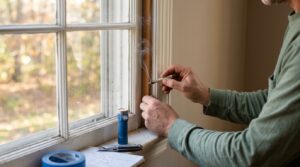
- Run the cord through a partially opened window or a door, then seal the gap around the cord with towels or foam to reduce drafts.
- Plug in the furnace, a refrigerator, and a few lights. Keep the total under 80% of the generator’s continuous rating.
- Request a load calculation from two or three licensed installers. A proper calculation accounts for starting loads, not just running loads.
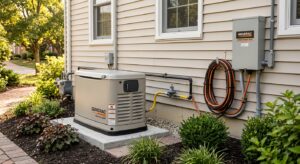
- Confirm your natural gas meter and service line can support the generator’s fuel demand (a 14 kW unit can draw 200 or more cubic feet per hour). Propane requires a tank sized for 48 to 72 hours of runtime.
- Check local permit, setback, and noise ordinances. Most units must sit 5 feet or more from windows and openings.
- Choose between whole home (typically 18 to 26 kW) and partial home (10 to 14 kW) based on whether you need to heat only or run everything.
- Schedule annual maintenance. Standby generators need oil changes and testing, typically $150 to $300 per year.
Why It Works: The Benefits
Pipes can begin freezing when indoor temperatures fall below 45 degrees F in poorly insulated spaces. Burst pipe claims average $10,000 to $15,000, far more than a properly sized generator costs.
Sizing for heating only (instead of whole home) can cut generator cost from $3,000 to $5,000 for a 12 to 20 kW standby unit down to $500 to $1,200 for a 3,500 to 5,000 watt portable.
A generator running at 50 to 75% load uses about 30 to 40% less fuel per kWh produced than one barely loaded or maxed out, stretching a tank of fuel through a full night.
Inverter generators produce clean sine wave power (under 3% total harmonic distortion) that protects furnace control boards, which can cost $300 to $700 to replace.
Keeping indoor temperatures above 60 degrees F protects infants, older adults, and anyone with health conditions that make cold exposure dangerous.
💰 Savings Impact by Action
Choosing a 3,500 to 5,000 watt unit instead of an 8,000 to 12,000 watt whole home generator can cut purchase price by up to 40%.
Running a generator at 50 to 75% load instead of idling at 10 to 20% load improves fuel efficiency by about 30%.
Holding 60 degrees instead of 70 degrees overnight cuts furnace runtime and generator fuel use by roughly 20%.
Keeping indoor temperatures above freezing prevents the large majority of winter outage related pipe bursts and water damage.
🏠 Key Concepts Explained
The Science Behind It
Generator sizing comes down to two numbers: running watts (the steady power a device uses) and starting watts (the brief surge needed to get a motor spinning). Electric motors draw several times their rated current at startup because there is no back electromotive force yet to oppose the incoming current. For a furnace blower, that surge lasts a fraction of a second, but if your generator cannot supply it, the voltage sags and the blower either stalls or trips the generator’s breaker. This is why a generator rated at exactly your running load often fails to start your furnace.
Heating loads also differ fundamentally by system type. A gas furnace uses electricity only to move air and run controls, so it consumes about 500 to 1,000 watts while delivering 60,000 to 100,000 BTU per hour from combustion. A heat pump moves heat using a compressor and typically draws 3,000 to 5,000 watts to deliver 24,000 to 60,000 BTU per hour. Electric resistance heating converts electricity to heat at a 1 to 1 ratio, so delivering 3,412 BTU requires 1,000 watts. A 10 kW electric furnace needs a 12 to 15 kW generator, which is why electric heat homes often rely on a wood stove, fireplace, or kerosene heater as a backup during outages.
Overnight runtime depends on how fast your house loses heat. A well sealed and insulated 2,000 square foot home might lose only 1 to 2 degrees F per hour at 20 degrees outside, while a leaky older house can lose 3 to 5 degrees per hour. You do not need to maintain 70 degrees. Cycling your furnace to hold 55 to 62 degrees reduces fuel use and keeps pipes safe, which also lowers the generator load and fuel burn through the night.
Frequently Asked Questions
▼ My furnace is only 800 watts. Why did my 2,000 watt generator not start it?
Furnace blowers have a starting surge of 2 to 3 times running watts, so an 800 watt furnace may need 1,600 to 2,400 watts for a split second. Look for a generator with at least 3,500 starting watts, or use a soft start capacitor kit (about $150 to $300) to cut the surge by up to 60%.
▼ Can I just plug my generator into a dryer or wall outlet?
No. This is called back feeding and it is illegal and extremely dangerous. It can energize utility lines and electrocute line workers, and it can start fires in your home wiring. Use a transfer switch, an interlock kit installed by an electrician, or run extension cords directly to appliances.
▼ How much fuel should I store for one winter night?
Plan for 6 to 8 gallons of gasoline for a 5,000 watt generator running at about half load for 10 to 12 hours. Store fuel in approved containers away from living space, and rotate it every 6 to 12 months with stabilizer added.
▼ Will a generator run my heat pump or electric furnace?
Only if it is much larger. Most heat pumps need 5,000 to 7,500 watts running and 10,000 or more starting watts, while electric furnaces can need 15 to 25 kW. For these systems, consider a dedicated space heater strategy for one or two rooms instead of trying to power the whole system.
▼ How loud will a portable generator be at 2 a.m.?
Conventional models run around 65 to 75 dB at 23 feet, similar to a vacuum cleaner. Inverter models run 50 to 60 dB, closer to normal conversation, and throttle down at low loads. Check local noise ordinances and be considerate of neighbors.
Quick Tips
- Label your furnace amps, blower starting watts, and generator model on a card taped to the breaker panel so anyone in the household can set up in an emergency.
- Set your thermostat to 62 degrees during an outage. Each degree lower reduces furnace runtime by roughly 3%, which stretches your fuel supply.
- Close doors and hang blankets over windows in unused rooms to concentrate heat in one or two rooms, cutting heat loss from the whole house.
- Turn off water at the main and open taps on exterior walls if you cannot keep the house above 45 degrees, to reduce burst pipe risk.
Variations for Your Situation
- Apartment/Rental: Most apartments prohibit fuel burning generators indoors or on balconies. Instead, use a portable power station (1,000 to 2,000 watt hour battery, $600 to $1,500) to run a furnace blower or small space heater for several hours, or ask your landlord about building level backup power.
- Tight Budget (under $400): Skip the generator and focus on passive survival. Buy a CO safe indoor radiant heater (Mr. Heater Buddy style, around $90 to $120) rated for indoor use, stock extra blankets and a 0 degree sleeping bag ($60 to $100), and learn how to drain pipes before a prolonged outage.
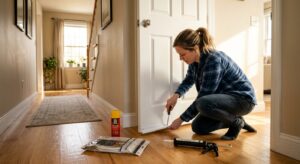
- Older Home (pre-1980): Older homes lose heat faster and often have knob and tube wiring or undersized panels that may not tolerate a transfer switch. Have an electrician evaluate your panel first, and consider adding a 10 to 15 minute air sealing session on doors and windows before winter to extend how long the house holds heat.