A furnace failure always seems to happen at the worst time: late at night, during a cold snap, with the repair shop closed until morning. The good news is that a surprising share of no-heat calls come down to simple causes like a tripped breaker, a thermostat set wrong, a clogged filter, or a blocked condensate line. Spending ten minutes on safe checks can save you a service call fee, which often runs $100 to $200 for an after-hours visit.
Even if the fix turns out to need a professional, you are not helpless. A typical home loses about 1 to 3 degrees Fahrenheit per hour when it is 20 degrees colder outside than inside, and much faster in a leaky house. That means you usually have several hours before indoor temperatures become uncomfortable and many more before pipes are at real risk of freezing, which generally requires sustained indoor temperatures below 32 degrees in unheated cavities like exterior walls, crawl spaces, and under sinks.
This post walks you through two approaches: a 15-minute quick fix to see if you can restore heat yourself, and a longer overnight plan to conserve warmth, protect your plumbing, and stay safe until the technician arrives. We will also cover the safety rules you should never skip, especially around gas smells and carbon monoxide.
What You’ll Need
Click on an item below to shop for the recommended items for this recipe on Amazon.
As an Amazon Associate, we earn from qualifying purchases.
How to Do It
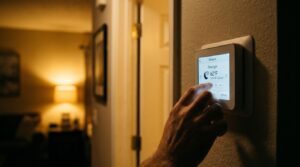
- Check the thermostat first. Set it to Heat, set the temperature at least 5 degrees above the current room temperature, and replace the batteries if the screen is blank or dim.
- Check the breaker panel and the furnace switch. Reset any tripped breaker once. Also look for a light-switch-style power switch near the furnace and make sure it is on. If a breaker trips again right away, stop and wait for the technician.
- Replace or inspect the air filter. A badly clogged filter can cause the furnace to overheat and shut down on its limit switch. Slide it out, hold it to the light, and swap it if you cannot see through it.
- Make sure the furnace door or panel is fully seated. Many furnaces have a safety switch that cuts power if the door is not closed tightly.
- Look at the furnace’s status light through the small window. Note the blink pattern or error code, then match it to the legend on the inside of the door. Write it down for the technician.
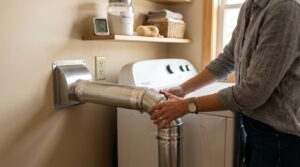
- For gas furnaces, confirm the gas valve near the furnace is parallel to the pipe (open). For high-efficiency models, check that the white PVC exhaust and intake pipes outside are not blocked by snow, ice, or debris, and that the condensate drain is not frozen.
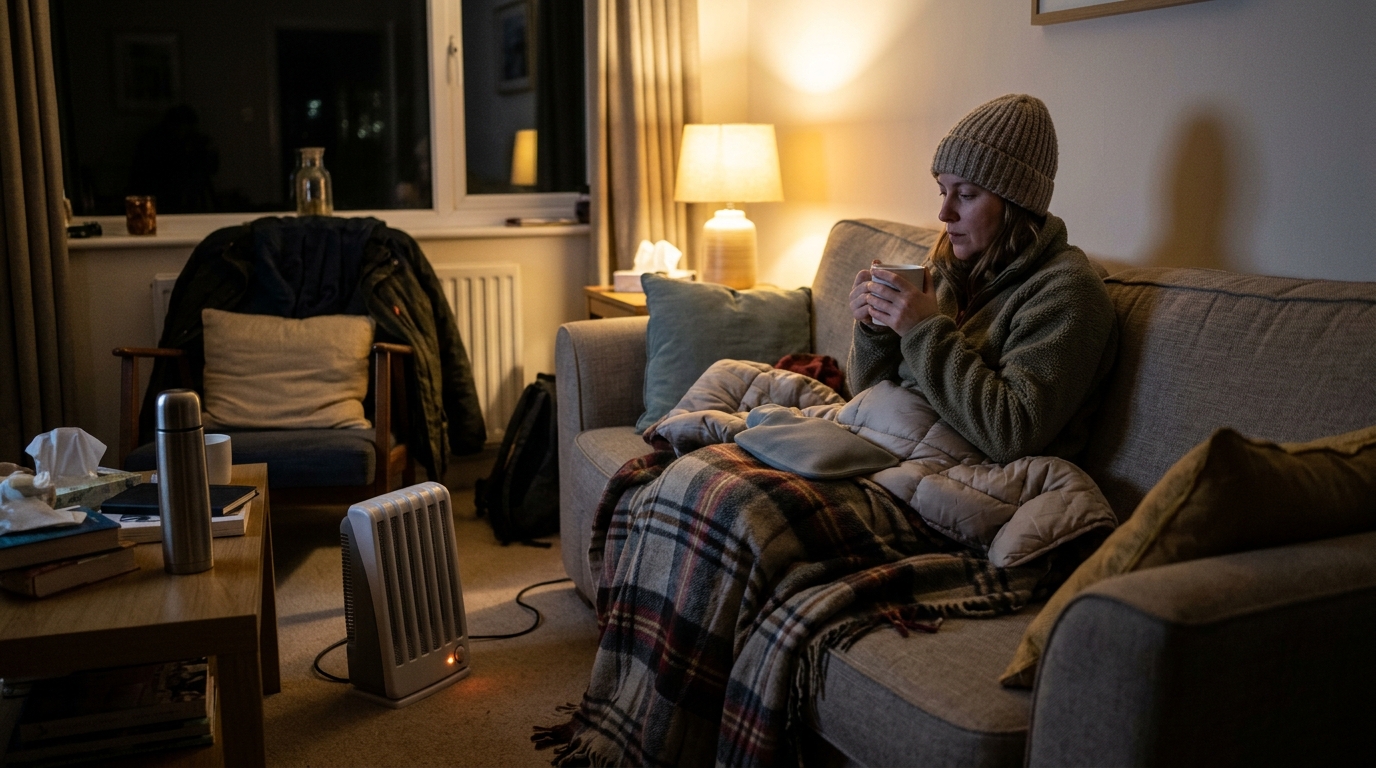
- Pick one small room, ideally an interior bedroom with few exterior walls, and close its door. Shrinking the space you are trying to heat makes body heat and a small heater far more effective.
- Seal drafts fast. Roll up towels and press them against door bottoms, close all curtains and blinds (thick curtains reduce window heat loss noticeably), and cover bare windows with a blanket or cardboard if you have it.
- Close the fireplace damper if you are not using it, and shut interior doors to rarely used rooms to keep warm air where you need it.
- Layer up. Wear a hat, thick socks, and several thin layers rather than one thick one. Use extra blankets and sleeping bags, and put a rug or foam mat under the bed to block cold from the floor.
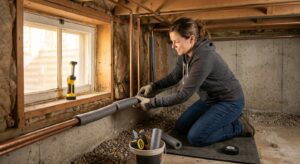
- Protect plumbing. Open cabinet doors under sinks on exterior walls so room air reaches the pipes, and let a faucet on an exterior wall drip slightly overnight, since moving water is much less likely to freeze.
- Check the indoor temperature before bed and again if you wake up. If it drops below 50 degrees in the main living area, consider moving to a warmer location or calling for emergency service, especially with infants, older adults, or anyone with health conditions.
- Call and describe the symptoms clearly: what the thermostat does, what the furnace does or does not do, the blink code, and what you already tried. Ask for the earliest slot and whether there is an emergency rate.
- Ask whether you can wait until morning. If your indoor temperature is above 55 degrees and the forecast is not extreme, waiting often avoids premium pricing.
- Have your furnace model number, age, and last service date ready. These details help the tech bring likely parts.
- Clear a path to the furnace and make sure the area is accessible, including any attic or basement stairs.
- Ask about a quick estimate for common repairs such as ignitor, flame sensor, or blower motor so you know what to expect before work starts.
Why It Works: The Benefits
Simple causes like a tripped breaker, wrong thermostat mode, dead thermostat batteries, or a clogged filter account for a meaningful share of no-heat calls and can be corrected in under 15 minutes.
After-hours service calls commonly cost $100 to $200 more than daytime visits. Solving it yourself, or confidently waiting until morning, can save that amount.
A burst pipe can release hundreds of gallons of water and cause $5,000 or more in damage. Keeping the house above 55 degrees and letting faucets drip on the coldest nights greatly lowers that risk.
Concentrating family members in one well-sealed room can keep that space 8 to 15 degrees warmer than the rest of the house using body heat and a safe electric heater.
Telling the tech the error code, thermostat behavior, and what you already checked can shorten diagnosis time and reduce labor charges.
💰 Savings Impact by Action
If a breaker, battery, or filter fix restores heat, you avoid the full $100 to $200 after-hours service premium.
Blocking door and window leaks can cut a room’s heat loss by up to 25%, keeping it livable for longer.
Heating one small closed room instead of the whole house can reduce the volume to warm by 70% or more, making a small heater far more effective.
Closing heavy curtains or covering windows can reduce window heat loss by roughly 10 to 25%.
🏠 Key Concepts Explained
The Science Behind It
Heat always moves from warmer areas to colder ones, and the rate depends on the temperature difference and the resistance of your walls, windows, and air gaps. When the furnace stops, your house does not cool instantly because the structure, furniture, and air all hold stored heat. This thermal mass is why a well-insulated home may lose only 1 to 2 degrees per hour, while a leaky older home can lose 3 degrees or more in the same time.
Air leakage plays an outsized role. Wind and the stack effect, where warm air rises and escapes through upper gaps while cold air is pulled in low, can drive a large share of heat loss. Blocking drafts at doors and windows and shrinking the heated space to one room reduces the volume you need to warm. A person gives off roughly 100 watts of heat, so two people and a 750-watt electric heater in a small closed bedroom can hold a noticeably higher temperature than the rest of the house.
Pipe freezing is also a matter of heat flow. Water in interior pipes is protected by room air, but pipes in exterior walls, attics, and crawl spaces lose heat to much colder surroundings. Opening cabinet doors lets room air reach them, and a slow drip keeps water moving, which both adds a little heat and relieves pressure if ice does begin to form.
Frequently Asked Questions
▼ My furnace turns on, runs for a few minutes, and shuts off. What is going on?
This short-cycling is often caused by a clogged filter, a dirty flame sensor, or an overheating limit switch. Replace the filter first and make sure vents and returns are not blocked. If it continues, leave it for the technician and tell them the pattern.
▼ The furnace is blowing cold air. Is that dangerous?
Usually not dangerous, but it often means the burner is not lighting or the unit is in lockout. Confirm the thermostat is set to Heat and Auto (not On), check the filter and gas valve, and note any error code. If you smell gas, leave the house and call your utility immediately.
▼ How cold can my house get before pipes freeze?
Interior pipes generally stay safe if the house stays above 55 degrees. Pipes in exterior walls, attics, and crawl spaces are at greater risk when outdoor temperatures stay in the teens or lower for many hours. Open sink cabinets and let a faucet drip to reduce the chance of freezing.
▼ Is it safe to use a space heater all night?
Only if it is a modern electric model with tip-over and overheat protection, plugged straight into a wall outlet, and placed at least 3 feet from bedding and curtains. Many fire departments advise against running one unattended or while you sleep, so layer blankets and use the heater to warm the room before bed.
▼ When should I call an emergency service instead of waiting?
Call right away if you smell gas, a CO alarm sounds, or the indoor temperature is heading toward 50 degrees with young children, older adults, or medically vulnerable people at home. If it is above 55 degrees and the forecast is mild, waiting for a standard morning appointment is usually reasonable.
Quick Tips
- Keep the technician’s number, your furnace model number, and your account details in your phone so you are not hunting for them in the cold.
- Change your furnace filter every 1 to 3 months. A clogged filter is one of the most common and most preventable causes of heating failures.
- Schedule a fall furnace tune-up, typically $80 to $150, which can catch failing ignitors and sensors before a cold night does.
- Install battery-backed carbon monoxide detectors on every level and near sleeping areas, and test them monthly.
Variations for Your Situation
- Apartment/Rental: Check the breaker and thermostat, then contact your landlord or maintenance line right away, since central heat is their responsibility and many leases require prompt repair. Document the outage with photos and timestamps, and use a $25 to $40 plug-in oil-filled or ceramic heater in one room while you wait.
- Tight Budget (under $50): Skip the emergency fee if indoor temperatures stay above 55 degrees and book the first morning slot. Use towels, blankets, and closed curtains to hold heat, and spend a few dollars on thermostat batteries and a replacement filter, which solve a surprising share of no-heat problems.
- Older Home (pre-1980): Expect faster heat loss through leaky windows and thin insulation, so seal the room more aggressively and pay extra attention to pipe protection in uninsulated exterior walls and crawl spaces. If you have an older furnace with a standing pilot light, do not relight it unless you are experienced and the manual says to do so.