Here is the frustrating part of owning solar panels: they make the most power at noon, when most people are not home using it. By 6 PM, when the family is cooking, running the dishwasher, and cranking the AC, your panels are barely producing anything. Without a battery, you ship that cheap midday surplus to the grid for a low export credit, then buy power back at the highest rates of the day.
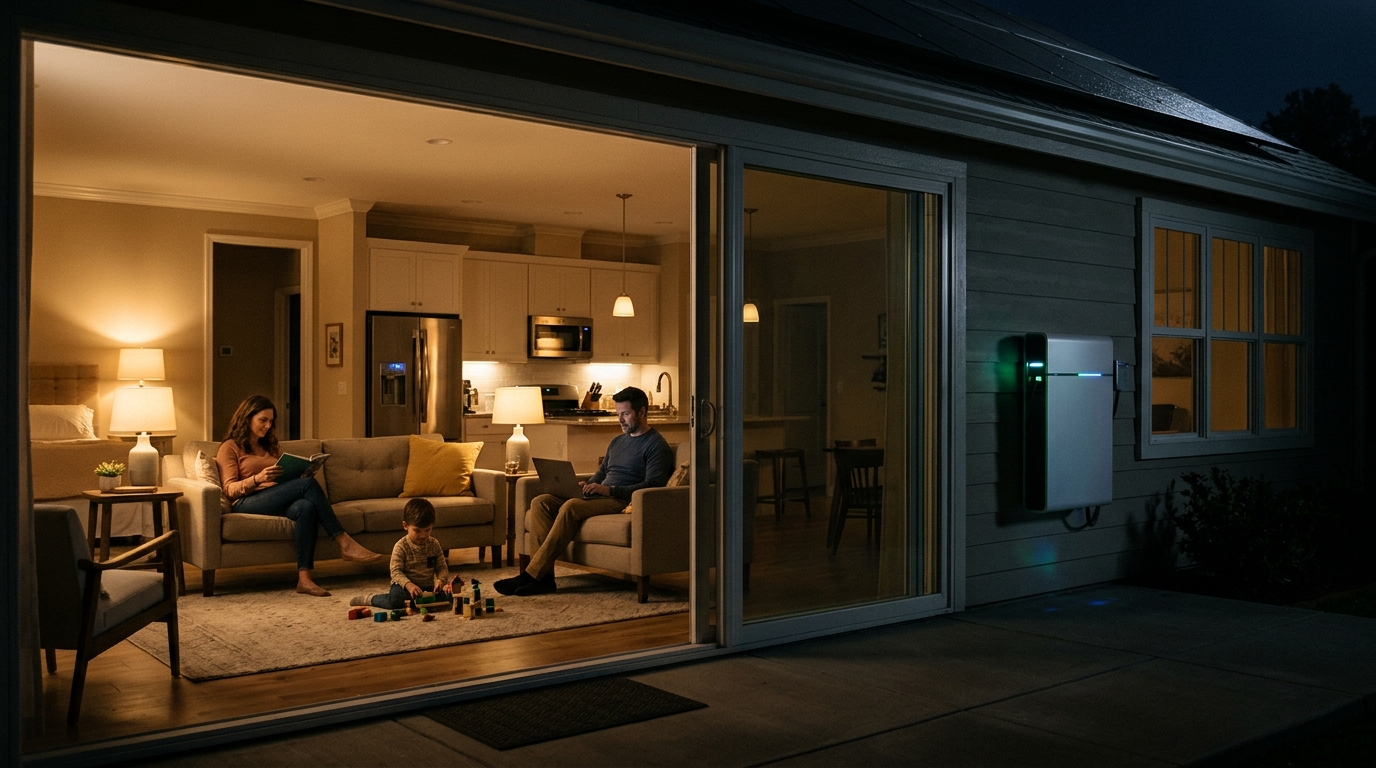
A solar-plus-battery system fixes this by acting like a savings account for electricity. Excess solar goes into the battery during the day, and the battery discharges after sunset to run your lights, appliances, and HVAC. A typical home battery stores 10 to 13.5 kWh, which is enough to cover most of an average household’s evening use (the average U.S. home uses roughly 29 kWh per day, with about a third of it between 5 PM and 10 PM).
In this post, we will walk through exactly how the day-to-night handoff works, which settings matter most, and two practical paths: a quick settings optimization if you already own a system, and a full installation if you are adding storage to an existing solar array. We will also cover real costs, payback periods, and the mistakes that quietly drain battery value.
What You’ll Need
Click on an item below to shop for the recommended items for this recipe on Amazon.
As an Amazon Associate, we earn from qualifying purchases.
How to Do It
- Open your battery app (Tesla, Enphase, Generac, etc.) and confirm the operating mode. Choose ‘Self-Consumption’ or ‘Time-Based Control’ rather than ‘Backup Only’, which holds the battery full and wastes its savings potential.
- Look up your utility’s time-of-use schedule and enter the peak hours (often 4 to 9 PM) so the battery discharges exactly when grid power is most expensive.
- Set your backup reserve to the lowest level you are comfortable with. Dropping from 50% to 20% frees up about 4 kWh of daily usable storage on a 13.5 kWh battery.
- Turn off ‘Grid Charging’ unless your utility has a very cheap overnight rate that beats your solar. Otherwise, let the battery fill only from your panels.
- Check the app after one week. You should see the battery reaching 90 to 100% by late afternoon and draining through the evening. If it empties before 9 PM, shift flexible loads like the dishwasher to midday.
- Run big appliances (dishwasher, washer, dryer, EV charger) between 10 AM and 3 PM when panels are producing the most, so they never touch the battery or the grid.
- Pre-cool your home in the afternoon by dropping the thermostat 2 to 3 degrees while solar is abundant, then let it drift up in the evening instead of running the AC hard on battery power.
- Set your water heater, if electric, to heat during peak solar hours. A well-insulated tank stores that heat for evening showers, acting as a second battery.
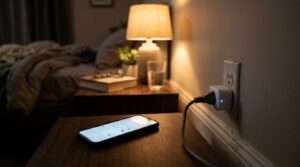
- Use smart plugs or a smart thermostat (about $25 to $130) to automate these schedules so you do not have to remember them.
- Track daily battery state of charge for two weeks and adjust. Your goal is to land at 10 to 20% remaining by bedtime, not 0% at 8 PM and not 60% left unused.
- Pull 12 months of utility bills or your smart meter data and find your average evening usage in kWh. Size the battery to cover most of it, typically 10 to 15 kWh for an average home.
- Get at least three quotes from licensed solar installers. Ask whether your existing inverter is compatible or whether you need an AC-coupled battery or inverter upgrade.
- Confirm your utility’s interconnection and rate rules, including whether you can enroll in a time-of-use plan or a battery incentive program that pays you to discharge during grid events.
- Have a licensed electrician install the battery, ideally in a garage or outdoor wall location that stays between roughly 32 and 100 degrees F, and wire it to a backup loads panel if you want outage protection.
- After approval, work with the installer to set your operating mode, reserve level, and TOU schedule on day one, then review the first month of data to fine-tune.
Why It Works: The Benefits
Shifting 10 to 13 kWh of evening use from the grid to your battery can save $1.50 to $5 per day on time-of-use plans, which adds up to roughly $550 to $1,800 per year.
Residential electricity prices have risen about 3 to 5% per year on average. Power you generate and store yourself is immune to those increases.
The same battery that shifts your solar to nighttime can keep your fridge, lights, internet, and medical devices running through an outage, typically 8 to 24 hours for essential loads.
Instead of exporting midday power for 5 to 8 cents per kWh and buying it back at 30 to 50 cents, you keep it. That makes each solar kWh worth far more to you.
Reducing your draw during peak hours helps utilities avoid firing up expensive peaker plants, which supports lower system costs and cleaner evening power overall.
💰 Savings Impact by Action
Discharging stored solar during 4 to 9 PM peak hours can eliminate roughly 60% or more of your most expensive grid purchases.
Adding a battery raises the share of solar you use yourself from about 35% to as high as 75 to 90%, a gain of roughly 40 points.
Moving dishwasher, laundry, and water heating to midday solar hours trims evening battery draw by about 15%.
The federal tax credit alone covers 30% of qualifying battery installation costs, shortening payback considerably.
🏠 Key Concepts Explained
The Science Behind It
A solar-plus-battery system is really an energy time machine. Solar panels convert sunlight into direct current (DC) electricity, which an inverter turns into the alternating current (AC) your home uses. When your panels produce more than the house needs, a battery management system routes the surplus into the battery’s chemical cells. In lithium iron phosphate batteries, lithium ions move from one electrode to another during charging, storing energy in a stable chemical form that can be pulled back out on demand.
At night, the process reverses. When your home draws power and the panels are silent, the inverter pulls from the battery first, and only reaches for the grid if the battery is depleted or your demand exceeds its output rating. Because this happens in milliseconds, appliances see no interruption. Each conversion costs a little energy as heat, which is why round-trip efficiency of 90 to 95% is the number to watch. For most households, that small loss is easily outweighed by the price gap between your stored midday solar and peak-hour grid power.
Temperature matters too. Lithium batteries perform best between about 50 and 85 degrees F, and extreme cold or heat can reduce usable capacity and long-term lifespan. That is why most manufacturers recommend garage or shaded exterior installation and include built-in thermal management. Understanding this helps explain why your battery may deliver a bit less in a freezing January night than on a mild September evening.
Frequently Asked Questions
▼ Why does my battery run out before bedtime even though I have solar panels?
Your evening use is probably higher than the battery’s usable capacity, often because of AC, an electric oven, or an EV. Check your app’s usage graph to find the biggest evening loads, then shift them to midday or lower your thermostat setting after 6 PM. If you still run out regularly, a second battery or a larger unit may be worth pricing.
▼ Can renters or people without roof access use solar-plus-battery?
Not directly, but renters can use a portable power station (about $500 to $2,000) charged from a balcony solar kit or the grid at off-peak rates to cover essentials in the evening. Community solar subscriptions can also lower your bill without any equipment on your unit. Always check your lease before installing anything outdoors.
▼ How long before I notice savings on my bill?
You will usually see the effect on your very next billing cycle, especially if you are on a time-of-use rate plan. Most homeowners see evening grid imports drop by 50 to 90% within the first month once settings are tuned. Full payback on the hardware itself takes longer, typically 7 to 12 years.
▼ What if my home is older or my electrical panel is outdated?
Older homes with 100-amp panels may need a panel upgrade ($1,500 to $4,000) before a battery and solar can be safely connected. Your installer will assess this during the site visit, and some batteries can be installed in a way that avoids a full upgrade. Also confirm your roof, wiring, and any aluminum branch circuits are in good shape before investing.
▼ Does a battery still make sense if my utility has flat rates and good net metering?
Often not purely for savings, since the battery would just replace power you could sell back at nearly full value. In that case, the main benefit is backup power during outages. Run the numbers with your installer, and revisit the decision if your utility changes its rate structure, which many are doing.
Quick Tips
- Check your battery’s state of charge around 4 PM. If it is below 80% on a sunny day, your reserve setting is probably too high or your daytime loads are too heavy.
- Run laundry and dishwashing at midday, not after dinner, to keep evening battery energy for lights, cooking, and cooling.
- If you have an EV, charge it during peak solar hours or on a cheap overnight plan, never on stored battery power unless the battery is sized for it.
- Review your app’s monthly energy report. A battery that cycles once per day is working properly, while one that rarely discharges is likely misconfigured.
Variations for Your Situation
- Apartment/Rental: Skip rooftop solar and look at a portable power station (like an EcoFlow or Jackery unit, $500 to $2,000) paired with a plug-in balcony solar kit where your lease and local rules allow. Charge it during the day or at off-peak rates and run your fridge, lights, and electronics from it in the evening.
- Tight Budget (under $50): Skip the new hardware and focus on load shifting. Use free timers on your dishwasher and washer, set a smart plug ($10 to $15) on a water heater or space heater, and lower your thermostat reserve settings if you already own a battery. These steps can reduce evening grid use by 10 to 20% at almost no cost.
- Older Home (pre-1980): Plan for upgrades before adding storage. Have an electrician inspect your panel capacity (100-amp panels often need an upgrade to 200 amps), check for outdated wiring, and consider adding attic insulation first, since cutting your evening cooling and heating load by 15 to 25% means you need a smaller, cheaper battery.