For the 21 million American households on septic systems, the underground tank and drain field doing quiet, unglamorous work in the backyard represents one of the most expensive and overlooked systems in the home. Unlike a furnace that announces its failure with a rattling noise or a water heater that starts leaking visibly, a septic system can fail slowly and silently until the repair bill arrives in the form of a soggy yard, sewage backup, or a contractor quoting you $15,000 to $40,000 for a new drain field. The good news: the vast majority of premature septic failures are caused by a short list of completely preventable mistakes.
Septic maintenance is not complicated, but it does require consistency. The core of any healthy septic system is a living ecosystem of anaerobic bacteria that break down waste inside your tank. When homeowners disrupt that ecosystem with harsh chemicals, overload the system with excess water, or simply neglect pumping on schedule, the consequences can cascade quickly from nuisance to emergency. Understanding how your system actually works is the single biggest step toward protecting it.
This guide covers everything a homeowner needs to know: how often to pump, what to never flush, how to spot early warning signs, and when a professional inspection is worth every penny. Whether your system is brand new or pushing 30 years old, the strategies here can extend its life by decades and save you from the kind of repair bill that derails a family budget.
What You’ll Need
Click on an item below to shop for the recommended items for this recipe on Amazon.
As an Amazon Associate, we earn from qualifying purchases.
How to Do It
- Establish your pump schedule: tank size divided by daily household water use determines interval. A 1,000-gallon tank for a family of four typically needs pumping every 3 to 4 years. Write the date of your last pump on a sticky note inside your water heater closet so it is never forgotten.
- Check all toilets for silent leaks every 6 months. Put 10 drops of food coloring in the tank and wait 15 minutes without flushing. Color appearing in the bowl means your flapper is leaking, potentially adding 100 or more gallons per day to your septic load. Replace a leaky flapper for under $10.
- Spread laundry across the week. Running more than two full loads in a single day can overwhelm your tank and push unsettled solids toward the drain field. Use cold water cycles and high-efficiency detergent labeled safe for septic systems.
- Post a flush-only list near every toilet: human waste and toilet paper only. No wipes labeled flushable, no feminine products, no cotton balls, no medications, no paper towels. These items do not break down and accumulate as sludge rapidly.
- Keep a 10-foot clear zone around your drain field: no vehicles, no heavy equipment, no garden beds with irrigation, and no trees or large shrubs. Walk the drain field area after heavy rains to check for soggy spots or odors that signal a developing problem.
- Switch to septic-safe cleaning products. Avoid pouring drain cleaners, paint, solvents, or large amounts of bleach down any drain. One cup of diluted bleach for laundry is generally fine; repeated heavy chemical use is not.
- Locate your tank and distribution box using the as-built septic diagram filed with your county health department if you do not already have it. Most counties provide these records free of charge. Sketch or photograph the layout and store it with your home maintenance files.
- Install concrete or plastic access risers if your tank lid is buried below grade. Risers bring the inspection port to ground level, eliminating the $75 to $150 excavation fee every time the tank needs to be opened. Risers cost $40 to $100 and most homeowners can install them in an afternoon with a shovel and basic hand tools.
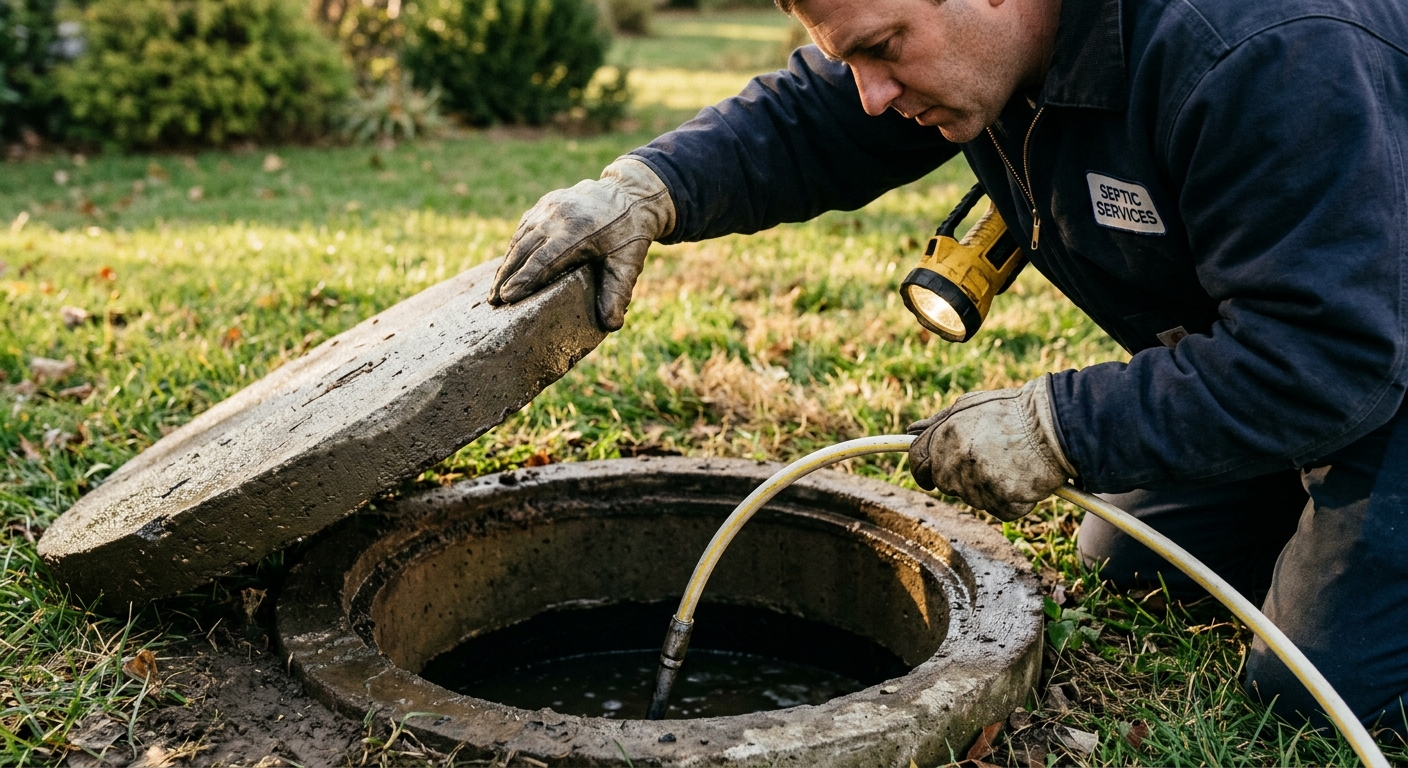
- Open the inspection port and use a wooden dowel or a flashlight to visually assess the scum and sludge layers. The scum layer floats at the top and the sludge settles at the bottom. If combined they occupy more than one-third of the tank depth, call your pumping service. Do not enter or lean over the tank opening, as septic gases can cause rapid unconsciousness.
- Inspect all visible inlet and outlet baffles through the access port. Baffles are T-shaped pipes that direct flow properly through the tank. A missing or collapsed baffle allows solids to pass directly into the drain field. Replacement baffles cost $10 to $30 at plumbing suppliers and some homeowners replace them confidently, though others prefer to have this done during a pump visit.
- Walk your drain field slowly and look for: saturated or spongy soil between trenches, bright green grass growing in lines above the trenches when the rest of the yard is dry, surface effluent pooling, or sewage odors. Any of these signs warrants a professional inspection before the next scheduled pump date.
- Check and test your effluent filter if your tank has one. Effluent filters are installed in the outlet baffle and trap solids before they reach the drain field. Pull the filter cartridge per manufacturer instructions, rinse it with a hose back into the tank opening, and reinstall. This takes 10 minutes and can add years to drain field life.
- Hire a licensed, insured septic pumping company. Ask for proof of licensing and verify they are registered with your state environmental agency. Request an itemized quote before work begins and ask whether the price includes a basic condition report or just pumping.
- Request a full pump-out where all liquid and solids are removed, not just the liquid layer. Some cut-rate services skim only the liquid, leaving sludge behind and shortening the interval until the next required service.
- Ask the technician to inspect the inlet and outlet baffles, the tank walls for cracks, and the distribution box if accessible. A good technician will share these findings verbally. Request a written condition report you can keep for your records and present to future buyers.
- If your system is 20 or more years old or you have had any slow drains, odors, or soggy spots, add a drain field inspection to the visit. Some companies offer a camera inspection of the outlet line and distribution box for $150 to $300, which identifies root intrusion, crushed pipe, or failing distribution before you have a full emergency.
- Obtain and file the pump service receipt showing the date, tank size, gallons removed, and technician findings. This paper trail has real dollar value at resale and is sometimes required by lenders during home sales in states with mandatory septic inspection laws.
Why It Works: The Benefits
A new conventional drain field costs $5,000 to $20,000 installed. Advanced systems on difficult lots can run $30,000 to $40,000. Routine pumping every 3 to 5 years at $300 to $600 per visit is a fraction of that cost and is the single most effective failure-prevention measure available.
A failed or at-risk septic system can block a home sale, require mandatory escrow holdbacks, or force price reductions of $20,000 or more. A documented, well-maintained system with recent pump records is a genuine selling asset and speeds up closing.
A failing drain field can bring raw or partially treated sewage to the surface or allow it to migrate toward wells and waterways. Exposure to untreated wastewater creates real health risks, and in many states a documented system failure triggers mandatory repair timelines and fines.
A properly maintained conventional septic system can last 25 to 40 years. Neglected systems often fail within 15 to 20 years, sometimes less. Consistent pumping, careful water use habits, and annual inspections of accessible components routinely add a decade or more to system life.
Sewage backups into the home caused by a full or failing septic system require emergency plumber visits starting at $200 to $500 per call, plus any interior cleanup or damage remediation. Proactive maintenance virtually eliminates this category of emergency expense.
💰 Savings Impact by Action
Pumping on a 3 to 5 year schedule prevents up to 85% of premature drain field failures, which are the primary driver of full system replacement costs.
Fixing a leaky toilet flapper reduces daily household water discharge by up to 100 gallons per day, cutting hydraulic load on the tank by 15 to 20% for a family of four.
Installing and maintaining an effluent filter reduces suspended solids reaching the drain field by up to 40%, directly extending drain field service life.
Spreading laundry loads across multiple days rather than doing them all at once reduces peak hydraulic load events by 20 to 30%, giving solids more time to settle before effluent exits the tank.
🏠 Key Concepts Explained
The Science Behind It
A conventional septic system works in two distinct stages. The tank is an underground settling and digestion chamber where gravity separates waste into three layers: floating scum, a middle liquid zone called effluent, and a bottom sludge layer. Anaerobic bacteria, which thrive without oxygen, colonize the sludge layer and chemically break down solids through fermentation and hydrolysis. The goal is for solids to spend enough time in the tank that only clarified, biologically active liquid exits toward the drain field. This is why hydraulic overloading is so damaging: it shortens the residence time in the tank and allows partially digested solids to escape into the soil.
The drain field, also called a leach field, is where final treatment and disposal happen. Perforated pipes distribute effluent into gravel-filled trenches where it percolates into the surrounding soil. A thin biological layer called a biomat forms at the soil interface and performs the final filtration of pathogens and nutrients. A healthy biomat is beneficial. An overloaded or anaerobic biomat becomes increasingly dense and impermeable, eventually sealing the soil surface so completely that water cannot move through it at all. This is a true drain field failure, and unlike a clogged pipe, a biologically sealed soil interface cannot be unplugged. The only remedy is resting the field for months while it oxidizes, or replacing it entirely.
The chemistry of bacterial disruption explains why product choices matter so much. Quaternary ammonium compounds found in antibacterial hand soaps, chlorine bleach in large doses, and many commercial drain cleaners are specifically designed to kill microorganisms. They do not distinguish between the bacteria on a kitchen counter and the bacteria in your tank. Regular use of these products measurably reduces bacterial populations, slows digestion rates, and increases the rate of sludge accumulation. The math is straightforward: a tank with healthy bacterial activity might need pumping every 4 to 5 years, while the same tank with a compromised bacterial colony might reach the critical one-third-full threshold in 2 to 3 years, doubling your pumping costs and accelerating drain field stress.
Frequently Asked Questions
▼ Why does my drain field smell like sewage after heavy rain?
Heavy rain saturates soil, temporarily reducing its ability to absorb effluent, which can push odors to the surface. If the smell clears within 24 to 48 hours after rain stops, your system is likely handling it. If the odor persists or you see surface pooling after dry weather, that is a warning sign of biomat failure or a distribution box problem that warrants a professional inspection.
▼ My toilets drain slowly and there is a gurgling sound. Is this a septic problem?
Slow drains affecting multiple fixtures simultaneously often point to a septic issue rather than a localized clog. Check whether your tank is due for pumping, and walk the drain field for soggy spots. A single slow drain in one fixture is more likely a pipe clog between the house and tank. If pumping does not resolve the slowness, a camera inspection of the outlet line is the next step.
▼ Can I use septic treatment additives to avoid pumping less often?
No additive has been shown in peer-reviewed research to reliably extend pump intervals or restore a failing drain field. The EPA, most state health departments, and the National Onsite Wastewater Recycling Association all advise against relying on additives as a substitute for scheduled pumping. Save the $20 to $40 per month and put it toward your pump fund instead.
▼ How do I know if my drain field has already failed versus just being temporarily stressed?
Temporary stress typically resolves within a few days of reducing water use. A failed drain field shows persistent surface pooling or sewage odors even during dry weather and low household water use. If pumping the tank provides temporary relief but problems return within days or weeks, the drain field itself is likely failing and you need a licensed septic engineer to assess repair or replacement options.
▼ We just moved into a home and have no idea when the septic was last pumped. What should we do?
Schedule a pump and inspection immediately. The $300 to $600 cost gives you a clean starting point and a written condition report. Check with your county health department for any inspection records, and ask your real estate agent for any disclosure documents from the sale. Going forward, document everything and set a calendar reminder for your next service in 3 to 4 years.
Quick Tips
- Take a photo of your septic tank lid location using your phone and drop a pin in Google Maps so you never have to guess where it is when a pump truck arrives.
- Add a calendar reminder for a septic self-check every October before winter, when slow drainage is hardest to distinguish from a developing septic problem.
- If you are buying a home on septic, pay for an independent septic inspection by a licensed inspector, not just the one ordered by the lender. A full inspection including pump-out typically costs $400 to $700 and has caught $20,000 problems that a basic visual inspection missed.
- When you host large gatherings, stagger water use after guests leave: run the dishwasher the next morning, not at midnight, to avoid hydraulic overload during an already heavy-use day.
Variations for Your Situation
- Older System (pre-1990): Systems built before modern standards may have steel tanks that corrode, older concrete that cracks, or undersized tanks by today’s standards. If you have an older home, schedule a professional inspection with tank probing for structural integrity rather than relying only on the standard pump visit. Ask specifically about the condition of the distribution box and whether your tank has been inspected for cracks. Budget $1,000 to $2,000 for targeted repairs like baffle replacement or riser installation that can buy another decade of reliable service.
- High Water Table or Coastal Areas: Homes in areas with shallow water tables or near coastal waterways face stricter regulations and faster system degradation. In these locations, many jurisdictions require advanced treatment systems with pumps, aerators, or UV disinfection. These systems have electrical components and mechanical parts that need annual professional servicing at $150 to $300 per visit. Never skip this service in high-water-table areas, as a system malfunction can create a reportable environmental discharge with significant fines.
- Large Households or Home-Based Businesses: If your home has more occupants than the system was designed for, or if you run a business that generates laundry, food waste, or chemical use, your system is likely under chronic hydraulic stress. Shorten your pump interval to every 2 years and consider having a licensed engineer evaluate whether a tank upgrade or a secondary treatment component is warranted. The cost of an engineering assessment at $300 to $500 is far less than an emergency drain field replacement driven by overloading.