If you have noticed damp patches, streaky moisture, or even droplets forming on your interior walls, your first instinct might be to blame humidity or the weather. But in most cases, condensation on interior walls is a symptom of an insulation problem, a vapor barrier failure, or a combination of both. Left unaddressed, that moisture feeds mold colonies, rots wood framing, and can quietly destroy your wall assembly over months or years.
The underlying cause is a physics problem: warm, moisture-laden air meets a cold surface and releases its water content as liquid. When insulation is missing, thin, or improperly installed, your wall surface or the cavity behind your drywall can drop below the dew point temperature – the threshold at which air can no longer hold its moisture in vapor form. The result is condensation exactly where you do not want it: inside your walls or on your finished surfaces.
This post walks you through the six key building science factors behind wall condensation, how to identify which insulation failure is causing your problem, and practical fixes ranging from zero-cost adjustments to professional remediation. Whether you are dealing with a cold exterior wall, a basement wall that weeps in summer, or mysterious damp spots on interior partition walls, there is a targeted solution here for your situation.
What You’ll Need
Click on an item below to shop for the recommended items for this recipe on Amazon.
As an Amazon Associate, we earn from qualifying purchases.
How to Do It
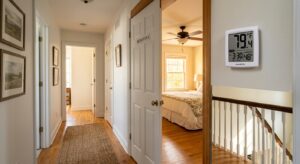
- Buy a digital hygrometer ($15 to $25) and place it in the affected room. If indoor RH is above 50% in winter, that is your most immediate problem. Run a bathroom exhaust fan during showers for 20 minutes after finishing and vent your range hood to the outside when cooking.
- Locate your circuit breaker panel and turn off power to any outlets or switch plates on the condensation-affected wall. Remove the cover plates and inspect for visible gaps around the electrical boxes. Seal any gaps with fire-rated acoustic sealant (about $8 per tube) before replacing covers.
- Check the wall at floor and ceiling level. Run your hand along the baseboard and crown molding on the affected wall. Drafts here indicate top-plate or bottom-plate air leaks that funnel cold air into the wall cavity. Seal visible gaps with paintable latex caulk.
- If you have a dehumidifier, set it to maintain indoor RH between 35 and 45% during winter months. This single adjustment can raise the dew point of your indoor air enough to prevent surface condensation on all but the coldest walls.
- Increase air circulation against the affected wall. Furniture pushed tight against exterior walls blocks warm air movement and allows a cold microclimate to develop on the wall surface. Pull sofas and bookshelves at least 2 inches away from exterior walls.
- Use a thermal leak detector or infrared thermometer ($30 to $50) to scan the affected wall in cold weather. Look for cold spots at stud locations, around electrical boxes, and at the top and bottom plates. Mark each cold spot with blue painter’s tape so you have a map before you start sealing.
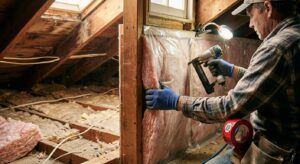
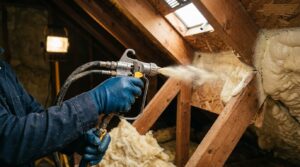
- In the attic, locate the top plates of the walls below and inspect the gap between drywall and framing. These top-plate bypasses are the single most common air leakage path into wall cavities. Seal them thoroughly with a can of low-expansion spray foam ($8 per can). This step alone can reduce wall cavity moisture infiltration by 30 to 50%.
- In the basement or crawlspace, seal the sill plate area on the walls above with foam backer rod and caulk, or spray foam for larger gaps. Cold air enters here, travels up inside wall cavities, and chills the interior drywall surface from within.
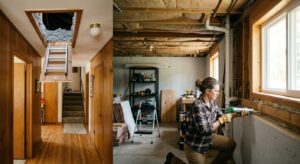
- Install foam gaskets behind every outlet and switch plate cover on the affected wall. These thin foam inserts ($5 for a 10-pack) cost almost nothing but eliminate one of the most direct air-to-wall-cavity connections in the entire assembly.
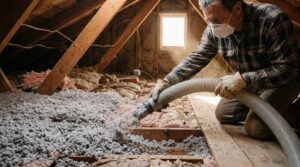
- If your attic insulation covers less than 14 inches of blown-in or about R-38, add insulation to the attic floor above the affected rooms. Inadequate attic insulation allows ceiling surfaces to get cold enough to trigger condensation on adjacent wall tops, especially in corner rooms.
- After completing air sealing, recheck with your infrared thermometer on the next cold day. Wall surface temperatures that were in the 45 to 50 degree F range should now read 58 degrees F or above, safely above the dew point for typical indoor conditions.
- Hire a certified Building Performance Institute (BPI) energy auditor to perform a blower door test combined with infrared thermography. This $300 to $500 diagnostic gives you a precise map of every insulation gap and air leak in your wall assembly so remediation targets the right areas.
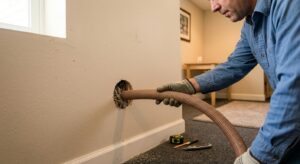
- If existing walls have no insulation or badly degraded batt insulation, a professional can drill 2-inch holes between each stud bay from the exterior (or interior if exterior cladding is masonry) and inject dense-pack cellulose at 3.5 lb per cubic foot. Dense-pack both insulates and dramatically reduces air movement within the cavity. Cost runs $1.50 to $3.00 per square foot of wall area.
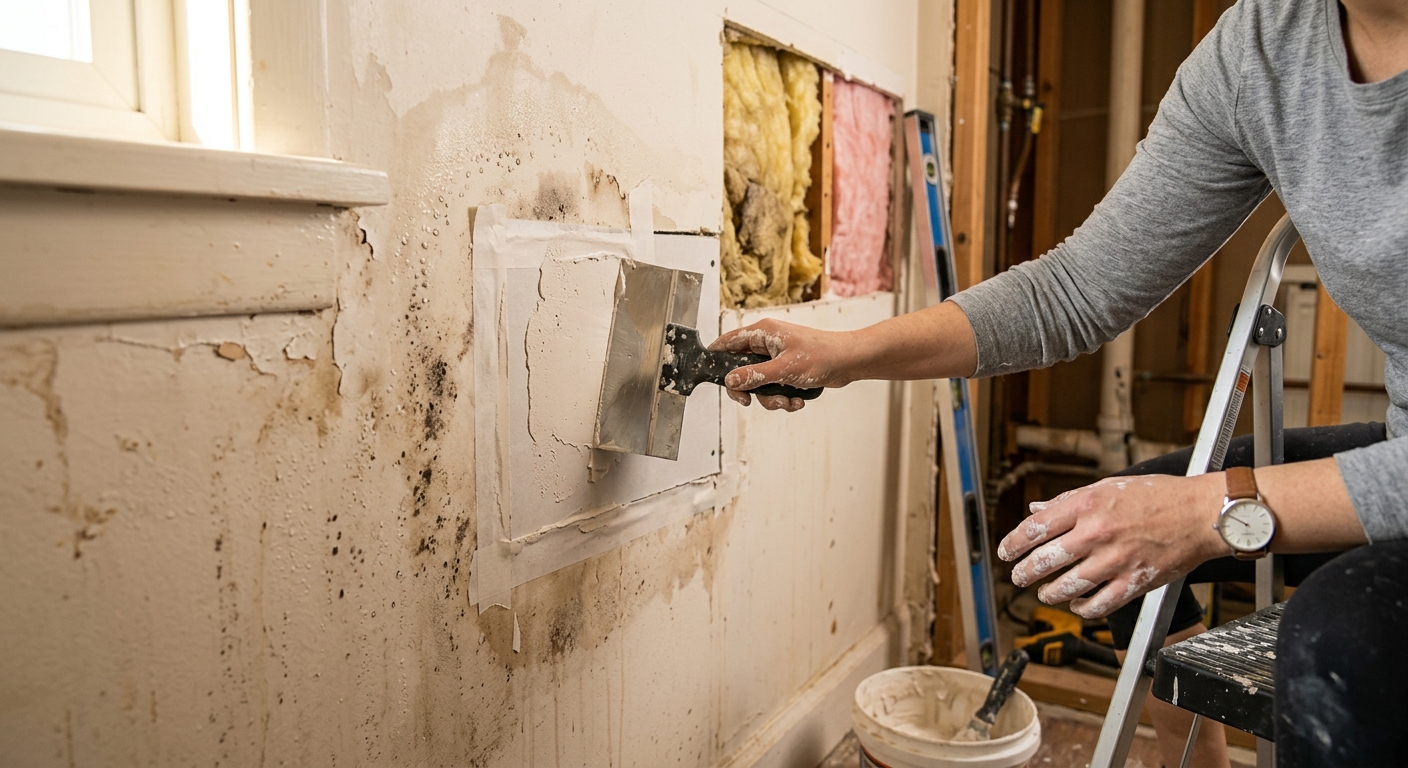
- If mold is found inside wall cavities (indicated by musty odor, staining on drywall, or positive mold test results), hire a licensed mold remediation contractor before insulating. Sealing mold inside a wall cavity without remediation will not stop the problem. Remediation typically costs $500 to $3,000 depending on extent.
- In Climate Zones 5 through 7 (upper Midwest, New England, mountain states), have your contractor verify that the vapor retarder is on the warm-in-winter side of the insulation. If an existing polyethylene vapor barrier is on the exterior side of cavity insulation (a common old-construction mistake), it must be addressed or removed during wall remediation.
- After insulation is installed, request a final blower door test to verify that air leakage has been reduced. A well-sealed house should achieve 3 ACH50 or less. Your contractor should document before and after readings. Ask for these numbers in writing as they support future home sale disclosures and may be required for rebate claims.
Why It Works: The Benefits
Mold begins growing on surfaces within 24 to 48 hours of sustained moisture above 70% relative humidity. Fixing the insulation and vapor control issue removes the cold surface that enables condensation, eliminating the root cause rather than treating visible mold repeatedly.
Properly insulated exterior walls with no thermal bridges can reduce wall heat loss by 20 to 30% compared to walls with gaps or missing insulation, translating to real reductions on monthly utility bills depending on your climate zone and wall area.
Cold wall surfaces cause radiant discomfort even when air temperature is fine. Raising the average wall surface temperature by 3 to 5 degrees F through better insulation makes rooms feel noticeably warmer without increasing thermostat settings.
Chronic interstitial condensation saturates wood framing and sheathing, leading to rot that can cost $5,000 to $20,000 or more to repair if studs or sheathing panels must be replaced. Addressing the insulation problem now avoids that outcome entirely.
Moisture-damaged walls off-gas mold spores and VOCs from degrading materials. Homeowners frequently report reduced allergy symptoms and musty odors within weeks of resolving chronic wall condensation problems.
💰 Savings Impact by Action
Sealing top-plate bypasses and wall penetrations reduces moisture-carrying air infiltration into wall cavities by up to 50% and cuts whole-house heating loads by 15 to 20% in leaky homes.
Injecting dense-pack cellulose into previously uninsulated stud bays adds R-13 to R-15 of cavity insulation, reducing wall heat loss by 15 to 20% of total home heating and cooling energy in older homes.
Reducing indoor RH from 55% to 40% in winter drops the dew point by roughly 9 degrees F, eliminating condensation on walls that are marginally cold and reducing latent cooling load by 8 to 12% in summer.
Upgrading attic insulation to R-38 or higher reduces heat loss through the ceiling by 25% and prevents ceiling-wall junctions from becoming cold enough to trigger corner condensation.
Adding a continuous layer of 1-inch rigid foam over exterior wall sheathing raises whole-wall R-value by 5 to 6 points and eliminates stud-face cold spots, reducing condensation risk and wall heat loss by 10 to 15%.
🏠 Key Concepts Explained
The Science Behind It
Wall condensation is governed by the relationship between temperature, pressure, and the maximum moisture content air can hold. Warm air can hold significantly more water vapor than cold air. When moist indoor air contacts a wall surface that has dropped below the dew point temperature – typically around 45 to 55 degrees F at normal winter indoor conditions of 68 degrees F and 45 to 50% relative humidity – the air immediately adjacent to that surface cannot maintain its moisture load and deposits liquid water. The colder the surface and the higher the indoor humidity, the more aggressively this process occurs.
Insulation’s role is to keep the wall surface temperature from dropping that far below indoor air temperature. An exterior wall with R-13 cavity insulation in Climate Zone 5 (Chicago, Minneapolis) will have an interior drywall surface temperature of roughly 58 to 62 degrees F when it is 0 degrees F outside and 70 degrees F inside. That is safely above the dew point. But if that same wall has missing insulation in even one stud bay, or if thermal bridging through uninsulated steel studs is present, surface temperatures in those areas can drop to 45 to 50 degrees F or below, triggering condensation every cold night. Steel-framed walls are particularly vulnerable: steel studs conduct heat up to 300 times better than wood, reducing the effective whole-wall R-value of a nominally R-13 wall to as low as R-4 through the stud faces.
The second mechanism is interstitial condensation, which happens inside the wall cavity rather than on the surface. This occurs when humid interior air infiltrates through gaps around electrical boxes, top plates, or poorly sealed penetrations, then travels through the wall cavity until it contacts cold sheathing or exterior framing. At that point it condenses onto wood surfaces where it cannot evaporate quickly, creating the sustained moisture conditions that promote rot and mold. Building science research from Oak Ridge National Laboratory has shown that air transported moisture can be 50 to 100 times greater than vapor-diffusion moisture through solid materials, which is why air sealing always delivers more benefit per dollar than vapor retarder upgrades alone in most climate zones.
Frequently Asked Questions
▼ My walls only get condensation in winter. Does that mean it is just a humidity problem?
Winter-only condensation confirms the wall surface is dropping below dew point when outdoor temperatures are low, which is a classic insulation or air sealing deficiency. High indoor humidity makes it worse, but the root cause is the cold surface. Measure the wall surface temperature with an infrared thermometer on a cold night. If it reads below 55 degrees F while your room is at 70 degrees F, you have an insulation gap, not just a humidity problem. Fix both: reduce indoor RH to 40% and address the insulation shortfall.
▼ I sealed all the gaps I could find but still have damp walls. What am I missing?
The most commonly missed air leakage paths are in the attic above the wall top plates and in the basement or crawlspace below the bottom plates. These bypasses allow air to circulate inside wall cavities entirely hidden from the living space. Go into your attic and look for dark-stained insulation near the tops of walls – that discoloration shows where air has been filtering through and depositing particles for years. Seal every top-plate gap you find with spray foam, even small ones. Then repeat the check from the basement side.
▼ Could my condensation be caused by a plumbing leak rather than an insulation problem?
Yes, and it is important to rule this out before spending money on insulation upgrades. Plumbing leaks tend to produce moisture at a fixed location year-round, while insulation-related condensation follows cold weather patterns and often appears as a broader damp area or streaking rather than a defined wet spot. Press on the damp drywall – a plumbing leak often leaves drywall soft and crumbling, while condensation leaves the surface damp but structurally intact. If you have any doubt, use a non-invasive moisture meter ($20 to $40) to check the drywall and a nearby baseboard. Readings above 17% moisture content that do not track with cold weather suggest a plumbing or roof source.
▼ I have condensation on the lower portion of my walls in summer. Is that the same problem?
Summer condensation on lower walls, especially in basements or on slab-adjacent walls, is usually caused by warm humid outdoor air contacting a surface that stays cool year-round from ground contact, which is essentially the same dew point physics in reverse. Dehumidify the space to keep RH below 55% in summer and avoid placing vapor barriers on the interior side of below-grade walls. Rigid foam insulation on the exterior of foundation walls, where accessible, is the most effective long-term fix and can reduce basement RH by 10 to 20 percentage points.
▼ My home was built in 1965 and I think there is no insulation in the walls at all. Is dense-pack injection worth the cost?
Dense-pack cellulose injection is typically one of the best investments available for pre-1970 homes with empty stud bays. Adding R-13 to R-15 of cavity insulation to uninsulated walls typically reduces whole-house heating and cooling loads by 10 to 20% and eliminates the cold wall surfaces that cause condensation. At $1.50 to $3.00 per square foot, a typical 1,500-square-foot home with 800 square feet of exterior wall surface costs $1,200 to $2,400 for the exterior walls, with payback periods of 3 to 6 years in cold climates and a significant reduction in moisture and mold risk from day one.
Quick Tips
- Run bathroom exhaust fans for at least 20 minutes after every shower. A single 10-minute shower adds up to 2 pints of water vapor to your indoor air, and that spike in humidity directly raises your dew point.
- In winter, keep indoor relative humidity at 35 to 45%. Every 5-point reduction in RH drops the dew point by about 3 degrees F, giving your walls more temperature margin before condensation begins.
- Check for condensation on the interior side of exterior wall outlets and switches during cold weather. Moisture around electrical boxes almost always signals a missing or damaged air barrier at that stud bay, not a plumbing or roof leak.
- If you are adding interior insulation to a basement wall, use rigid foam board directly against the concrete before any framing. Concrete walls in contact with soil are chronically cold and damp; an air gap or organic insulation between concrete and drywall creates a perfect condensation chamber.
Variations for Your Situation
- Apartment/Rental: Renters cannot open walls or add insulation, but they can address the humidity side of the equation effectively. Purchase a digital hygrometer and a portable dehumidifier or ventilating fan to keep indoor RH at 40 to 45% in winter. Seal the gap around your electrical outlets with foam gaskets (landlord permission is rarely needed for this reversible fix). Document the condensation and mold risk in writing to your landlord – in most jurisdictions, chronic moisture-related mold constitutes a habitability issue the landlord is legally obligated to address.
- Tight Budget (under $50): Focus entirely on humidity control and air sealing at accessible penetrations. A $20 hygrometer, a $5 pack of outlet gaskets, and two tubes of latex caulk ($8 total) address the two most impactful free variables in the condensation equation. Seal every outlet and switch plate on cold walls, caulk the baseboard joint on exterior walls, and keep indoor RH below 45%. This combination can meaningfully reduce or eliminate mild condensation on borderline-insulated walls at virtually no cost.
- Older Home (pre-1980): Homes built before 1980 typically have no vapor retarder, minimal or no wall insulation, and significant air leakage through plaster cracks and unblocked stud bays. Prioritize a professional blower door and infrared thermal scan ($300 to $500) before spending money on any specific fix – the scan will show you exactly where your worst thermal bridges and air leaks are, preventing you from insulating over active moisture problems. Dense-pack injection and attic top-plate sealing will deliver the largest combined benefit, often reducing wall condensation completely while cutting heating bills by 15 to 25%.