If you dread stepping out of bed on a winter morning because your floors feel like ice, your crawl space is almost certainly the culprit. Most crawl spaces are poorly insulated, wide open to outdoor air through foundation vents, and full of gaps where cold air infiltrates directly into your living space. Heat rises, but that principle works against you when the floor beneath your feet is sitting above a 35-degree void of uninsulated space.
The good news is that crawl space improvements deliver some of the best return on investment of any home efficiency project. The Department of Energy estimates that crawl space insulation and air sealing can reduce heating costs by 15 to 25%, and in many climates the payback period is just 2 to 4 years. Beyond the savings, you will notice the difference in comfort almost immediately, and you may also reduce moisture problems, pest entry points, and drafts throughout the house.
This guide covers everything from fast, low-cost fixes you can do in an afternoon to a more thorough DIY insulation project that will transform how your home feels all winter long. We will explain the building science behind why crawl spaces cause cold floors, walk you through each approach step by step, and flag the situations where you should bring in a professional.
What You’ll Need
Click on an item below to shop for the recommended items for this recipe on Amazon.
As an Amazon Associate, we earn from qualifying purchases.
How to Do It
- Put on a respirator, safety glasses, and gloves, then use a flashlight to inspect your crawl space rim joist area. The rim joist is the band of wood running along the top of your foundation wall where the floor framing begins. Look for visible daylight, gaps, and cracks.
- Cut rigid foam board insulation (1 to 2 inch thick polyiso or XPS) into pieces that fit snugly between each joist bay along the rim joist. Press each piece firmly against the rim joist so it makes full contact.
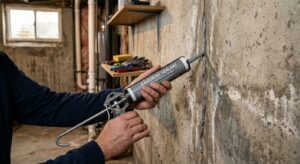
- Run a bead of canned spray foam (like Great Stuff) around the entire perimeter of each foam board piece to air seal all four edges. This combined foam-plus-spray approach adds both R-value and an airtight seal.
- Locate your foundation vents. In cold climates, closing or blocking these vents in winter reduces cold air infiltration dramatically. Install foam vent covers or cut rigid foam inserts to block each vent opening from the inside during heating season.
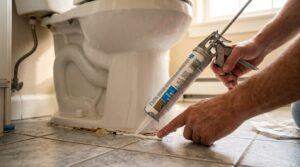
- Check the perimeter where any pipes, wires, or ducts penetrate the foundation wall or subfloor. Seal each penetration with spray foam or caulk to close off additional air leakage pathways.
- Start by rolling out a 6-mil polyethylene vapor barrier across the entire crawl space floor, overlapping seams by 12 inches and taping them with contractor tape. Run the barrier up the foundation walls 6 to 12 inches and secure it with tape or construction adhesive. This is the single most impactful moisture control step you can take.
- Complete the rim joist air sealing described in the Quick Fix approach if you have not already done so. Air sealing before insulating ensures you are not trapping moisture or losing heat through gaps that insulation alone cannot stop.
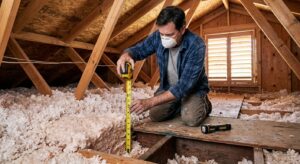
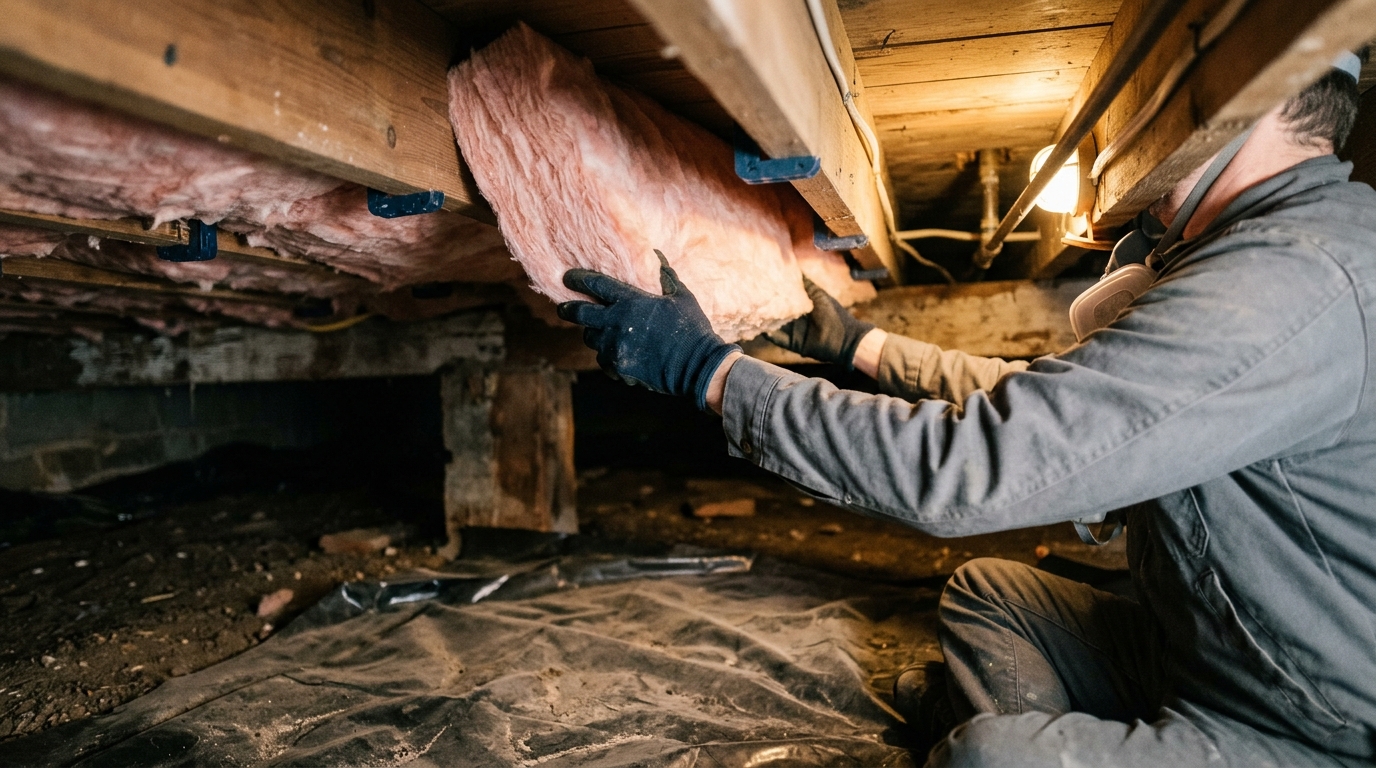
- Measure the depth of your floor joist bays (typically 2×8, 2×10, or 2×12 lumber). Purchase unfaced fiberglass batts rated to match or slightly underfill the joist depth. Unfaced batts are important here because faced batts can trap moisture against the subfloor.
- Cut each batt to length with a utility knife and press it up into the joist bay so it makes full contact with the subfloor above. The insulation should fit snugly with no gaps at the sides. It will tend to fall out without support.
- Secure the insulation in place by running wire rods (insulation hangers) between the joists every 18 to 24 inches, or use a simple technique of weaving wire or plastic mesh below the joists to support the batts.
- After completing the insulation, do a final walkthrough with a flashlight to check for missed joist bays, gaps at the edges, or areas where batts have sagged. Correct any issues before closing up the crawl space access.
- Hire a building performance contractor or crawl space specialist to assess your specific situation, measure the space, and identify moisture sources, pest damage, or structural issues that need to be addressed before encapsulation.
- The contractor installs a heavy-duty vapor barrier (often 12 to 20 mil reinforced polyethylene) across the floor and up the walls, fully sealing the ground from the crawl space air.
- Rigid foam insulation (typically spray foam or rigid board) is applied to the interior of the foundation walls rather than the subfloor, turning the crawl space into a semi-conditioned buffer zone that stays much closer to indoor temperatures.
- All foundation vents are permanently sealed and the space is either connected to the home’s HVAC system with a small supply register or equipped with a dehumidifier to manage humidity year-round.
- A final blower door test or energy audit can confirm the improvement in overall air sealing, and many utilities offer rebates for this type of work that can reduce your out-of-pocket cost by $300 to $1,500.
Why It Works: The Benefits
Properly insulating a crawl space to DOE-recommended levels (R-19 to R-30 in most climates) reduces heating energy use by 15 to 25% annually, which translates to $150 to $400 per year for a typical 1,500 square foot home.
Once the subfloor is insulated, floor surface temperatures typically rise by 5 to 10 degrees Fahrenheit, which is enough to eliminate that uncomfortable cold underfoot sensation on winter mornings.
Adding a ground vapor barrier and improving air sealing cuts crawl space humidity significantly, protecting floor joists and insulation from moisture damage and reducing the musty odors that can migrate into living spaces.
Cold floors force your heating system to run longer to compensate, leading to uneven temperatures throughout the house. Insulating the crawl space reduces this load and helps every room maintain a steadier setpoint.
Air sealing gaps in the rim joist and foundation penetrations closes the same pathways that insects and rodents use to enter your home, providing a secondary benefit beyond thermal performance.
💰 Savings Impact by Action
Air sealing the rim joist alone can eliminate up to 15% of total crawl space heat loss because this small area is responsible for a disproportionate share of infiltration.
Installing R-19 to R-30 batts between floor joists reduces conducted heat loss through the subfloor by up to 20% of total home heating energy.
A ground vapor barrier reduces crawl space humidity and helps insulation maintain its rated R-value, preserving 8 to 12% more thermal performance over time.
Closing foundation vents in winter reduces cold air circulation under the floor and can cut heating energy use by up to 10% in cold climates.
A professionally encapsulated crawl space combining wall insulation, sealed vents, and a heavy-duty barrier delivers savings at the high end of 15 to 25% on annual heating bills.
🏠 Key Concepts Explained
The Science Behind It
Your floor feels cold because heat is moving in exactly the direction physics demands it to: from warm to cold. The subfloor above your crawl space is sandwiched between your heated living space and a much colder uninsulated void. With no thermal resistance in between, heat conducts through the wood and radiates into the cold crawl space air continuously. The rate of that heat transfer is governed by the temperature difference and by the R-value of whatever materials sit in the path. Bare 3/4-inch plywood subfloor has an R-value of roughly 0.94, which is almost nothing.
What makes crawl spaces particularly aggressive heat thieves is the stack effect. As warm air rises through your home and escapes through the upper levels, it creates a slight negative pressure at the lower levels. That pressure difference draws in cold outside air through every gap, crack, and foundation vent available. Your crawl space is essentially acting as the cold air intake for the entire house. Foundation vents, which were historically believed to prevent moisture by ventilating the space, are now understood by building scientists to often worsen moisture problems in humid climates while dramatically increasing heat loss in cold climates.
A ground vapor barrier addresses the second major driver of crawl space heat loss: the cold, damp soil itself. Even though the ground stays around 50 to 55 degrees Fahrenheit below the frost line, the soil surface in an open crawl space can be significantly colder and constantly evaporates moisture into the air above it. That moist air has a higher thermal conductivity than dry air, meaning it transfers heat away from your subfloor more aggressively. Sealing the ground with a vapor barrier interrupts this moisture cycle, helps the crawl space air temperature stabilize, and protects insulation from the moisture degradation that can cut its effective R-value by 30 to 40% over time.
Frequently Asked Questions
▼ I insulated my crawl space but my floors are still cold. What did I miss?
The most common oversight is the rim joist. If the perimeter band where your floor framing meets the foundation wall is not air sealed and insulated, cold air bypasses the floor insulation entirely. Also check whether any insulation batts have fallen or sagged out of place, since unsupported batts in crawl spaces drop out regularly. Finally, check for gaps around pipes and ducts that penetrate the subfloor.
▼ Should I close my foundation vents in winter?
In most cold climates, yes. Research from Lawrence Berkeley National Laboratory and building science organizations consistently shows that closing vents in winter reduces heat loss significantly without causing moisture problems, especially if a ground vapor barrier is already installed. Check your local building code first, and if you are in a warm, humid climate, consult a building performance contractor before permanently sealing vents.
▼ How long before I notice savings on my heating bill?
You should see the difference on your first full heating month’s bill after completing the project, though the magnitude depends on your climate and how poorly insulated the crawl space was before. Homes with completely uninsulated crawl spaces in cold climates often see a 15 to 25% reduction in heating costs within the first billing cycle. Use your utility’s year-over-year comparison tool to account for weather variation.
▼ Can I do this project in a crawl space with only 12 to 14 inches of clearance?
It is technically possible but physically grueling and potentially unsafe, as you have very limited ability to maneuver tools or escape quickly in an emergency. At that clearance height, strongly consider hiring a professional crew who work in confined spaces regularly. If you do proceed yourself, never work alone, always have someone at the access hatch, and take frequent breaks to avoid overheating or claustrophobia.
▼ My crawl space has standing water or smells very musty. Should I insulate anyway?
No. Moisture problems must be resolved before any insulation work begins, or you will trap moisture against the subfloor and create conditions for rot and mold. Identify and fix the water source first, which might be grading issues, gutter drainage, or a plumbing leak. Allow the space to fully dry, then treat any existing mold before installing a vapor barrier and insulation.
Quick Tips
- Check your local utility’s website before starting. Many offer rebates of $0.10 to $0.25 per square foot for crawl space insulation, which can offset $100 to $300 of your project cost.
- Use a digital thermometer to check your floor surface temperature before and after the project. A 5 to 8 degree improvement is a realistic and measurable result you can document.
- In climates with hot, humid summers, consult your local building code before permanently sealing foundation vents. Some jurisdictions still require vented crawl spaces unless a full encapsulation system with dehumidification is installed.
- If your crawl space has any existing fiberglass insulation that has fallen down, sagged, or gotten wet, remove it entirely before installing new material. Wet fiberglass loses most of its R-value and can harbor mold.
Variations for Your Situation
- Apartment or Condo: Renters and condo owners typically cannot access or modify a shared crawl space. Focus instead on adding thick area rugs with insulated backing over cold floors, which can raise the perceived surface temperature by 4 to 6 degrees at zero installation cost. Draft stoppers at exterior doors and thermal curtains at ground-floor windows also help. If cold floors are severe, ask your landlord in writing to inspect and insulate the crawl space, since it affects habitability and their energy costs too.
- Tight Budget Under $100: Prioritize the rim joist air sealing only, which requires just spray foam cans and rigid foam scraps at $30 to $60 total and addresses the highest-impact single source of heat loss. Add a ground vapor barrier using standard 6-mil poly sheeting from a hardware store for $30 to $50 more. These two steps alone can deliver 60 to 70 percent of the benefit of a full insulation project at a fraction of the cost.
- Older Home Pre-1980: Homes built before 1980 are more likely to have knob-and-tube wiring in the floor joist bays, inadequate clearance, and original vapor barriers that have degraded or were never installed. Have an electrician inspect for wiring concerns before insulating, and assume the existing insulation (if any) is underperforming. These homes also tend to have more air leakage overall, so air sealing the rim joist and penetrations will deliver proportionally higher savings than in newer, tighter construction.