If your laundry comes out smelling less than fresh, or you catch a musty whiff every time you open the washer door, you are not alone. Millions of front-load and high-efficiency top-load washers develop mold and mildew colonies inside the drum, door gasket, and detergent dispenser. The culprit is a perfect storm of warm moisture, leftover detergent residue, and a sealed environment that rarely fully dries out between cycles.
Beyond the unpleasant smell, this buildup actually makes your machine less efficient. Residue-coated drum walls reduce cleaning effectiveness, meaning you run extra cycles or use extra detergent, both of which cost money. According to appliance repair data, odor-related problems are one of the top three reasons homeowners replace washers before the end of their useful life, which averages 10 to 14 years. A simple maintenance routine can prevent all of that.
In this post, you will learn exactly why washing machines develop that signature smell, how to eliminate it in about 20 minutes with supplies you likely already own, and how to prevent it from coming back with a 5-minute monthly habit. Whether you have a front-loader, a top-loader, or a compact apartment machine, there is a fix here for you.
What You’ll Need
Click on an item below to shop for the recommended items for this recipe on Amazon.
As an Amazon Associate, we earn from qualifying purchases.
How to Do It
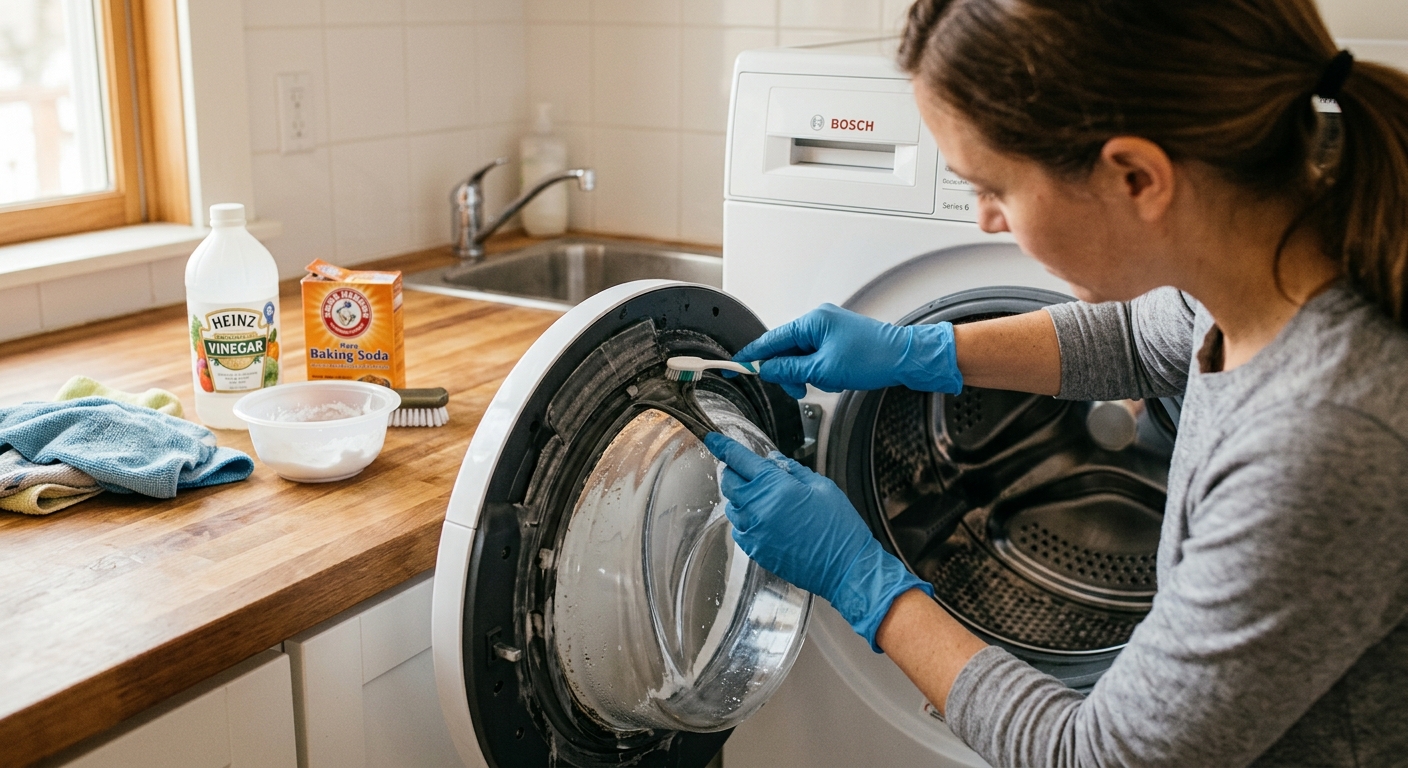
- Wipe the door gasket folds with a cloth soaked in undiluted white vinegar. Pull back each fold and scrub out any visible black mold or pink slime. Rinse with a damp cloth.
- Remove the detergent dispenser drawer if it pulls out, and soak it in hot water with a splash of white vinegar for 10 minutes. Scrub with an old toothbrush and rinse thoroughly.
- Pour 2 cups of white vinegar directly into the drum (front-loaders) or into the detergent dispenser (top-loaders). Run a hot water cycle on the largest load setting.
- After the vinegar cycle completes, sprinkle half a cup of baking soda directly into the drum. Run a second short hot cycle to neutralize any remaining vinegar and lift loosened residue.
- Wipe the inside of the drum with a dry microfiber cloth when the cycle finishes. Leave the door fully open for at least 2 hours to allow complete drying.
- From now on, leave the door cracked open between uses and wipe the gasket dry after every load. This single habit prevents 80% of future odor buildup.
- Remove and disassemble the detergent dispenser drawer completely. Soak all parts in a sink of hot water mixed with one scoop of OxiClean for 15 minutes, then scrub every surface with a toothbrush and rinse clean.
- Use a thin bottle brush or pipe cleaner to scrub inside the dispenser housing recess in the machine, where detergent drips collect and harden. Wipe dry with a cloth.
- Inspect and clean the drain pump filter if your machine has one, typically located behind a small access panel at the bottom front of front-loaders. Unscrew it slowly over a towel to catch trapped water, remove any debris, rinse the filter, and reinstall.
- Place one washer cleaning tablet directly into the empty drum. Select the cleaning cycle if your machine has one, or the hottest and longest cycle available. Do not add detergent.
- While the machine runs, mix one part white vinegar with one part water in a spray bottle and wipe down the exterior, control panel, and the top of the drum lid if it is a top-loader.
- When the cycle finishes, wipe the gasket and drum interior with a dry microfiber cloth. Run a brief rinse-only cycle if any tablet residue remains. Leave the door open to dry fully.
- Call a certified appliance technician and describe the odor as persistent despite self-cleaning attempts. Ask specifically about outer drum mold and hose inspection.
- Request that the technician inspect and clean the pump, drain hose, and outer drum shell, which are not reachable without removing the machine’s cabinet.
- Ask whether the door boot gasket needs replacement. Gaskets with visible black mold embedded deeply in the rubber material cannot be fully decontaminated and should be replaced, which costs $40 to $100 for the part plus labor.
- After the service visit, establish a monthly maintenance cleaning routine using washer tablets to prevent recurrence and protect your investment in the professional cleaning.
Why It Works: The Benefits
A clean drum with no biofilm residue transfers odors and bacteria to your laundry. Eliminating buildup means your clothes come out smelling fresh without needing a second rinse cycle or extra detergent.
Mold and mineral scale degrade rubber gaskets, plastic dispensers, and internal hoses over time. Regular cleaning can add 3 to 5 years to your washer’s functional life, deferring a $600 to $1,200 replacement cost.
A clean machine operates at designed efficiency, so your detergent works properly at the recommended dose. Many homeowners who clean their machine regularly find they can reduce detergent use by 20 to 30% and skip extra rinse cycles.
Odor and residue buildup are among the most common reasons for washer service calls, which average $150 to $300 per visit. A monthly 5-minute maintenance routine essentially eliminates this expense category.
Mold spores from a contaminated drum can transfer to clothing and towels, irritating allergies and sensitive skin. Cleaning the machine removes the spore source and reduces allergen exposure for your household.
💰 Savings Impact by Action
A residue-free drum allows detergent to work at its rated efficiency, enabling homeowners to reduce dose by 20 to 30% without sacrificing cleaning performance.
Eliminating re-washing loads due to persistent musty odor saves an estimated 1 to 2 cycles per week, reducing water and electricity use by roughly 15%.
Regular cleaning prevents the gasket degradation and pump strain that drive 40% of washer service calls, saving $150 to $300 per avoided visit.
Appliance repair data suggests proper maintenance extends average washer lifespan by 3 to 5 years, deferring replacement cost by 30% or more of the machine’s life.
🏠 Key Concepts Explained
The Science Behind It
The smell from a washing machine is almost always produced by mold and bacteria, specifically species like Aspergillus and Pseudomonas, that thrive in warm, wet, detergent-rich environments. These microbes produce volatile organic compounds (VOCs) as metabolic byproducts, and those VOCs are exactly what you smell as that sour, musty odor. The rubber door gasket on front-loaders is the primary habitat because its deep folds hold standing water and receive a constant supply of detergent residue and lint as food.
White vinegar works as a cleaner here because its acetic acid disrupts the cell membranes of mold and bacteria and helps dissolve the mineral scale (calcium and magnesium deposits from hard water) that forms a rough surface for biofilm to grip. Baking soda, used in a follow-up cycle, is a mild alkali that neutralizes odors chemically and provides gentle abrasion to lift softened residue. Neither is as powerful as a purpose-built oxygenated cleaner, but together they are effective for routine maintenance and mild cases.
Oxygenated washer tablets work differently: they release hydrogen peroxide when dissolved in water, which breaks chemical bonds in the biofilm matrix and kills a broader spectrum of microbes than acid alone. The hot water cycle is critical to this process because heat accelerates the chemical reactions, helps detach residue from surfaces, and reaches temperatures (above 130 degrees Fahrenheit) that denature microbial proteins and kill most mold spores. That is why running your cleaning cycle on the hottest available setting is not optional; it is what makes the chemistry work effectively.
Frequently Asked Questions
▼ I cleaned the machine twice but my laundry still smells musty. What am I missing?
The odor source is likely the outer drum (the plastic tub that surrounds the spinning drum), internal drain hose, or pump housing, none of which are reachable without disassembling the machine. At this stage, a professional appliance technician who can pull the cabinet and clean or replace those components is the most practical next step. Ask specifically about outer drum inspection and drain hose condition when you call.
▼ Can I use bleach instead of vinegar to clean my washing machine?
Yes, bleach is effective at killing mold and is recommended by several appliance manufacturers. Add 1 cup of liquid chlorine bleach to the bleach dispenser or directly into the drum, and run the hottest full cycle available. Follow immediately with a rinse-only cycle to clear all bleach residue before running laundry. Never use bleach and vinegar in the same session, as the combination produces toxic chlorine gas.
▼ My front-load washer has a self-clean cycle. Is that enough?
The self-clean cycle handles the drum interior, but it does not physically scrub the door gasket folds or clean the detergent dispenser drawer, which are the two most common odor sources. Run the self-clean cycle monthly, but always combine it with a manual wipe-down of the gasket and a soak-and-scrub of the dispenser drawer for a complete result.
▼ How do I prevent the smell from coming back after I clean it?
Three habits eliminate recurrence in nearly all cases: leave the door open a few inches between every use, wipe the door gasket dry with a cloth after each load, and run a hot maintenance cycle with a washer tablet once a month. Also switch to powdered HE detergent if you currently use liquid, since it rinses away far more completely and leaves minimal residue.
▼ Does this apply to top-load washers too, or just front-loaders?
Front-loaders are more prone to odor because of the sealed door design and horizontal drum, but traditional top-loaders and HE top-loaders can also develop biofilm under the drum lip, inside the agitator post, and in the dispensers. The same vinegar or tablet method works for top-loaders. Pour the vinegar or drop the tablet directly into the drum, run a hot full cycle, and leave the lid open between uses.
Quick Tips
- Use only HE-rated detergent in HE machines, and measure it precisely. The recommended dose is usually 1 to 2 tablespoons, not the full cap that manufacturers show in their marketing images.
- Run a monthly hot maintenance wash with a cleaning tablet or 2 cups of vinegar even if you do not notice any smell yet. Prevention takes 5 minutes and costs under $1 per month.
- Switch from liquid fabric softener to dryer sheets or wool dryer balls. Liquid softener is a major contributor to waxy drum residue and the mold that feeds on it.
- After cleaning, smell the door gasket specifically. If odor persists there after drying, the rubber may be permanently colonized and replacement is the most practical next step at $40 to $100 for the part.
Variations for Your Situation
- Apartment or Rental: If you have an in-unit washer you did not choose and cannot modify, focus entirely on the no-cost habits: leave the door open, wipe the gasket dry after each load, and use the minimum recommended dose of detergent. You can run the vinegar and baking soda cleaning method without any landlord permission since it uses only food-safe household items and causes no damage. Budget $5 to $10 for a 4-pack of Affresh tablets to use monthly.
- Tight Budget (under $10): The white vinegar and baking soda approach costs under $3 in materials and delivers 80% of the results of specialty products for mild to moderate odor. Buy a gallon of white vinegar at any grocery store for under $4 and a box of baking soda for $1. Combined with the free habit of leaving the door open, this covers everything most homeowners need.
- Older Machine (10 or more years): Older machines accumulate years of mineral scale and detergent residue layered on internal surfaces that may not fully respond to a single cleaning session. Plan for two to three consecutive monthly cleanings before expecting full results. Also inspect the door boot gasket closely for tears or black staining embedded deep in the rubber. Gaskets on machines this age are often due for replacement regardless of cleaning, and a new gasket costs $40 to $80 plus about an hour of DIY installation time.