Every inch of rain that falls on a 2,000 square foot roof generates roughly 1,250 gallons of runoff. When gutters overflow, that water cascades directly against your foundation, saturating the soil, cracking concrete, and seeping into basements and crawlspaces. Foundation repairs in the U.S. average between $5,000 and $15,000, and most homeowners are stunned to learn a clogged or undersized gutter system was the original cause.
The problem is more common than you might think. Most gutters are cleaned only once a year if at all, and standard 4-inch gutters installed on homes built before 2000 were often undersized for the actual roof area they serve. Add a few years of debris buildup, sagging from bracket failure, or a downspout that terminates just 6 inches from the house, and you have a recipe for chronic water intrusion.
This guide covers everything you need to diagnose why your gutters are overflowing and fix it, starting with fast no-cost steps you can do in an afternoon and scaling up to durable DIY upgrades that protect your home for years. You will find real cost estimates, payback timelines, and specific product guidance so you can make the right call for your situation.
What You’ll Need
Click on an item below to shop for the recommended items for this recipe on Amazon.
As an Amazon Associate, we earn from qualifying purchases.
How to Do It
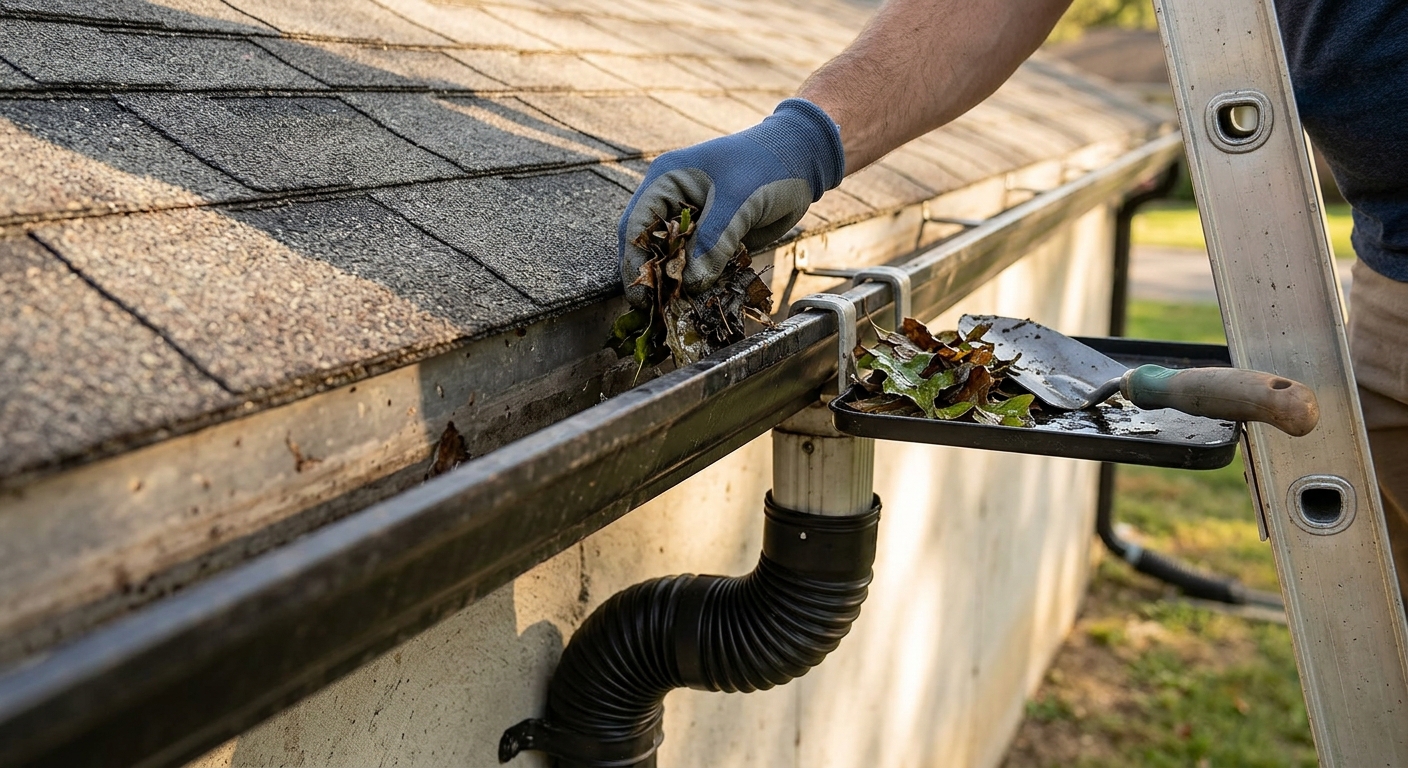
- Set up a stable ladder at the first downspout and work toward the high end of the gutter run. Scoop out all debris using a gutter scoop or gloved hand and drop it into a bucket. Never lean the ladder against the gutter itself.
- Flush the gutter with a garden hose from the high end toward the downspout. Watch for standing water that does not drain – this indicates a low spot or sag requiring pitch correction.
- Push the hose nozzle into the top of the downspout and flush forcefully. If water backs up, the downspout is clogged. Feed a plumber’s drain snake or a pressure nozzle attachment down from the top to clear the blockage.
- Walk the perimeter during the next rain or while a helper runs the hose. Identify any sections where water spills over the front lip. Mark those spots with tape so you can address slope and bracket issues in a follow-up visit.
- Extend any downspout that discharges less than 6 feet from the house using a plastic downspout extender ($5 to $12 at hardware stores). Angle the extension away from the foundation at roughly a 10 to 15 degree slope.
- Place a splash block under each downspout extension outlet to spread the discharge and slow erosion. Concrete splash blocks cost $8 to $15 each and require no installation beyond setting them on level ground with the low end pointed away from the house.
- Inspect every gutter hanger bracket along the run. Brackets should be spaced no more than 24 inches apart. Replace any missing or bent brackets with hidden hanger brackets ($1 to $2 each), which screw through the gutter into the fascia with a 2.5-inch exterior screw for a much stronger hold than spike-and-ferrule originals.
- Check gutter pitch by placing a level at the high end and measuring how much the gutter drops over 10 feet. You want a 1/4-inch drop per 10 feet. If a section is flat or back-pitched, loosen the brackets in that zone, adjust the gutter to the correct slope, and re-fasten the brackets.
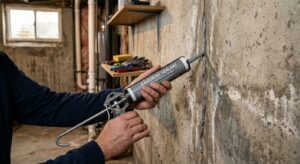
- Seal any leaking joints and end caps from the inside using gutter sealant ($6 to $10 per tube). Clean the area with a rag, let it dry, and apply a bead along the seam. Lap-style seams should be overlapped at least 2 inches in the direction of water flow.
- Evaluate downspout capacity. Standard round 3-inch downspouts handle about 600 square feet of roof area. If your downspout serves more than that, add a second downspout outlet at the midpoint of the gutter run or replace the existing outlet with a 4-inch rectangular downspout connector for roughly 40% more capacity.
- Install gutter guards on the most debris-prone sections. Micro-mesh guards ($1.50 to $3.00 per linear foot) outperform foam inserts and surface-tension covers in independent testing and reduce cleaning frequency from twice per year to every 2 to 3 years.
- After all repairs, do a final hose test and walk the entire roofline watching for drips, overflows, or pooling. Confirm all downspout extensions are still in position and pointed away from the foundation at a clear slope.
- Get at least three quotes from licensed gutter contractors. Ask specifically about upsizing to 6-inch K-style gutters and 4-inch round or 3×4 rectangular downspouts if your roof is larger than 1,500 square feet or has a steep pitch.
- Request seamless aluminum gutters, which are fabricated on-site to the exact length of each run with no mid-run joints. Seamless gutters eliminate the most common leak points and are the industry standard for new installations.
- Discuss downspout placement with the contractor. Ideal placement puts a downspout at every 30 to 40 feet of gutter run and always within 10 feet of corners. Ask for discharge to be routed to underground drainage pipes if your lot grading makes surface discharge difficult to control.
- Ask about a whole-house gutter guard system installed by the contractor at the time of replacement. Professional installation of micro-mesh guards adds $3 to $7 per linear foot but is far easier to do during replacement than as a retrofit.
- Once installed, confirm the contractor checks pitch and tests with water before leaving. Get documentation of the warranty: aluminum seamless gutters typically carry a 20-year manufacturer warranty and most reputable contractors offer a 1 to 5 year labor warranty.
Why It Works: The Benefits
Properly functioning gutters eliminate the primary source of chronic foundation soil saturation. Foundation crack repairs average $500 to $2,500 per crack, and full waterproofing systems run $8,000 to $15,000. Gutter fixes costing under $200 prevent these outcomes.
Up to 98% of wet basements are caused by water entering through the foundation wall or floor, and overflowing gutters are the most common upstream cause. Fixing the gutters is the first step recommended by waterproofing contractors before any interior system is installed.
Overflow from a single downspout location can erode 2 to 4 inches of topsoil per season from planting beds and lawn areas directly below. Extending downspouts and adding splash blocks protects landscaping you may have invested hundreds of dollars in.
Overflowing water runs behind the gutter and soaks the fascia board continuously. Fascia replacement costs $6 to $20 per linear foot installed, and rot can spread to roof decking sheathing if left unaddressed for more than one or two seasons.
Water damage is the second most common homeowners insurance claim, averaging $11,000 per incident. Proactive gutter maintenance documents that you addressed a known risk, which can support claims and in some cases qualify you for maintenance-related premium discounts.
💰 Savings Impact by Action
Correcting gutter overflow eliminates the primary surface water source responsible for up to 90% of residential foundation moisture problems.
Extending downspouts 6 to 10 feet from the foundation reduces soil saturation at the footing by an estimated 75% compared to unextended discharge.
Quality micro-mesh gutter guards reduce debris-caused clogging and overflow events by up to 80%, cutting cleaning frequency from twice yearly to every 2 to 3 years.
Properly sealed and pitched gutters eliminate continuous water contact with the fascia board, preventing the wood rot that accounts for 95% of fascia replacement costs.
🏠 Key Concepts Explained
The Science Behind It
The physics of roof drainage comes down to volume versus capacity. Rainfall intensity is measured in inches per hour, and during a 100-year storm event, many U.S. regions see 4 to 6 inches per hour. A 1,500 square foot roof at 4 inches per hour generates nearly 3,740 gallons of water every 60 minutes, or about 62 gallons per minute. A properly sized and clean 5-inch K-style gutter with a 3-inch round downspout can handle approximately 1.2 inches of rainfall per hour per 100 square feet of roof. An undersized or partially blocked gutter simply cannot move that volume, and water obeys gravity by going over the nearest edge.
The foundation damage mechanism is driven by hydrostatic pressure. Soil has a finite capacity to absorb and transmit water, called hydraulic conductivity. When gutter overflow saturates the narrow band of backfill soil alongside your foundation faster than it can drain laterally, pressure builds up against the wall. Poured concrete foundations resist this pressure well when dry but become vulnerable as water finds and widens micro-cracks. Block foundations are even more susceptible because mortar joints are natural weak points. Over multiple seasons of repeated saturation and drying cycles, the cumulative effect is measurable wall movement and cracking that a waterproofing contractor will confirm was caused by surface drainage failures.
Downspout extension distance matters because of how homes are constructed. When a foundation is dug, the excavation extends several feet beyond the footprint. That disturbed backfill zone is always more permeable than the surrounding undisturbed soil, and it sits right next to your foundation wall. Water deposited within 3 to 4 feet of the house drops almost directly into that permeable zone and migrates straight to the footing. Moving discharge 6 to 10 feet away means the water enters undisturbed soil with natural drainage characteristics and dissipates laterally before it can reach the foundation. This single change, often accomplished with a $10 downspout extender, is one of the highest-leverage foundation protection steps a homeowner can take.
Frequently Asked Questions
▼ My gutters overflow even though they are clean. What is causing it?
Clean gutters that still overflow are almost always undersized for the roof area, improperly pitched so water cannot reach the downspout fast enough, or have an undersized downspout that cannot discharge water as fast as the gutter fills. Check your gutter size (measure the opening width) and compare it to your roof area using the sizing guidelines from the American Society of Plumbing Engineers. Upgrading from 4-inch to 5-inch gutters typically adds 20 to 30% more capacity.
▼ How do I know if my foundation has already been damaged by gutter overflow?
Common signs include horizontal or stair-step cracks in foundation walls, doors or windows that have become difficult to open or close, efflorescence (white mineral deposits) on basement walls, and musty odors or visible moisture after rain events. If you see any of these, have a structural engineer or foundation specialist assess the damage before assuming it is cosmetic. Minor crack repair costs $500 to $2,500, but deferred problems can escalate into full underpinning jobs costing $20,000 or more.
▼ Can I install gutter guards myself, or do I need a professional?
Most micro-mesh and snap-in gutter guards are designed for DIY installation and require only basic tools. The key is to measure your gutter profile (K-style versus half-round) and gutter width before purchasing, as guards are not universal. Allow about 30 minutes per 10-foot section for your first installation. Avoid cheap foam insert guards, which hold moisture and can accelerate wood rot on the fascia over time.
▼ My downspout extension keeps getting knocked out of place. What is a permanent solution?
Rigid plastic extensions can be secured with sheet metal screws at the joint, but the most durable solution is to connect the downspout to a buried drainage pipe that carries water at least 10 feet from the foundation and daylights in the yard. Corrugated flexible drain pipe ($0.30 to $0.60 per foot) with a pop-up emitter ($10 to $20) handles this at low cost. This also prevents the extension from being damaged by lawn equipment or foot traffic.
▼ Is it worth fixing gutters on a house I am planning to sell in the next year or two?
Absolutely. Home inspectors flag overflowing gutters and improper drainage in almost every inspection report, and buyers will either negotiate repair credits or walk away from a home with visible foundation moisture concerns. A $150 gutter repair and cleaning prevents a $500 to $1,500 inspection credit negotiation and protects the sale price. Documenting that you have maintained the gutters also adds value in the seller disclosure process.
Quick Tips
- Clean gutters at minimum twice per year: once in late spring after seed and pollen season, and once in late fall after the last leaves drop. Homes under heavy tree cover may need quarterly cleaning.
- Install downspout strainers (also called leaf catchers) at the top of each downspout outlet. These $5 wire cages catch most debris before it enters the downspout and reduce full blockages by about 80%.
- Check gutter seams and end caps every spring with a hose. Sealant lasts 5 to 10 years and should be reapplied before visible leaks appear, not after fascia rot has already started.
- Grade the soil around your foundation so it slopes away from the house at least 6 inches over the first 10 feet. This simple grading rule is required by building code for new construction and works in partnership with proper gutter drainage to keep your foundation dry.
Variations for Your Situation
- Apartment or Condo: Renters and condo owners are rarely responsible for gutter maintenance, but you can protect your unit by reporting visible gutter overflow to your property manager in writing and documenting it with photos. If overflow is causing water intrusion near your unit, send a formal written request citing potential foundation or structural damage. In townhomes where you own the structure, the quick fix approach applies fully and typical gutter cleaning costs $100 to $200 if hired out.
- Tight Budget (under $50): Focus on the highest-leverage steps first: clear all gutter clogs yourself using a hose and a homemade scoop from a plastic bottle, add downspout strainers at $5 each, and install plastic downspout extenders at $8 to $12 each. These three steps address the most common causes of overflow for under $40 and take about two hours. Skip guards and bracket replacement until your next season’s budget allows.
- Older Home (pre-1980): Homes of this era frequently have 4-inch round or undersized galvanized steel gutters that are corroded, out of pitch, and secured with original spike-and-ferrule hangers that have pulled loose over decades. Before investing in repairs, assess whether the existing gutters are worth saving. If more than 30% of the run has visible rust-through or persistent separation, replacement is more cost-effective than repair. Budget $4 to $9 per linear foot for new seamless aluminum gutters installed professionally, and request a 5-inch or 6-inch size to handle the full roof load reliably.