Most homes run two separate systems to stay comfortable year-round: a furnace for winter and a central air conditioner for summer. That setup made sense decades ago, but today it means maintaining two aging machines, paying for two fuel sources, and accepting the efficiency losses that come with older technology. When either system needs replacement, homeowners face a costly decision without always knowing there is a smarter alternative.
A heat pump is a single electric appliance that moves heat rather than generating it, making it dramatically more efficient than burning fuel. In summer it works like a standard air conditioner, pulling heat out of your home. In winter it reverses the process, extracting heat from outdoor air and moving it inside. Modern cold-climate heat pumps work reliably down to minus 13 degrees Fahrenheit, making them practical across most of the continental United States.
This post covers the real costs, realistic savings, and step-by-step approaches for evaluating and installing a heat pump upgrade, whether you are replacing one failing system or planning a full HVAC overhaul. You will get actual payback timelines, utility bill comparisons, and tips for choosing the right equipment for your climate and home size.
What You’ll Need
Click on an item below to shop for the recommended items for this recipe on Amazon.
As an Amazon Associate, we earn from qualifying purchases.
How to Do It
- Pull your last 12 months of utility bills and calculate your total annual spend on heating fuel (gas, oil, or propane) and cooling electricity separately. This is your baseline to compare against heat pump projections.
- Check your electrical panel capacity. A standard central heat pump requires a 240-volt, 30 to 60 amp dedicated circuit. Locate your panel and count available breaker slots. If your panel is 100 amps or older, budget $1,500 to $3,000 for a panel upgrade.
- Identify your climate zone using the DOE climate zone map (available at energy.gov). Zones 1 through 4 are ideal for standard heat pumps. Zones 5 through 7 require a cold-climate model rated to NEEP’s cold-climate specification.
- Measure or look up your home’s square footage and insulation level. A rough rule of thumb is 20 to 25 BTU per square foot for heat pump sizing, but a proper Manual J load calculation by a contractor will give you the accurate number.
- Research available incentives before getting quotes. Visit dsireusa.org to find state and utility rebates specific to your zip code, then stack those with the federal 25C tax credit of up to $2,000 for qualifying heat pumps.
- Get at least three quotes from HVAC contractors who are NATE-certified and have documented heat pump installation experience. Ask each contractor to provide a Manual J load calculation, not just a square footage estimate, before sizing equipment.
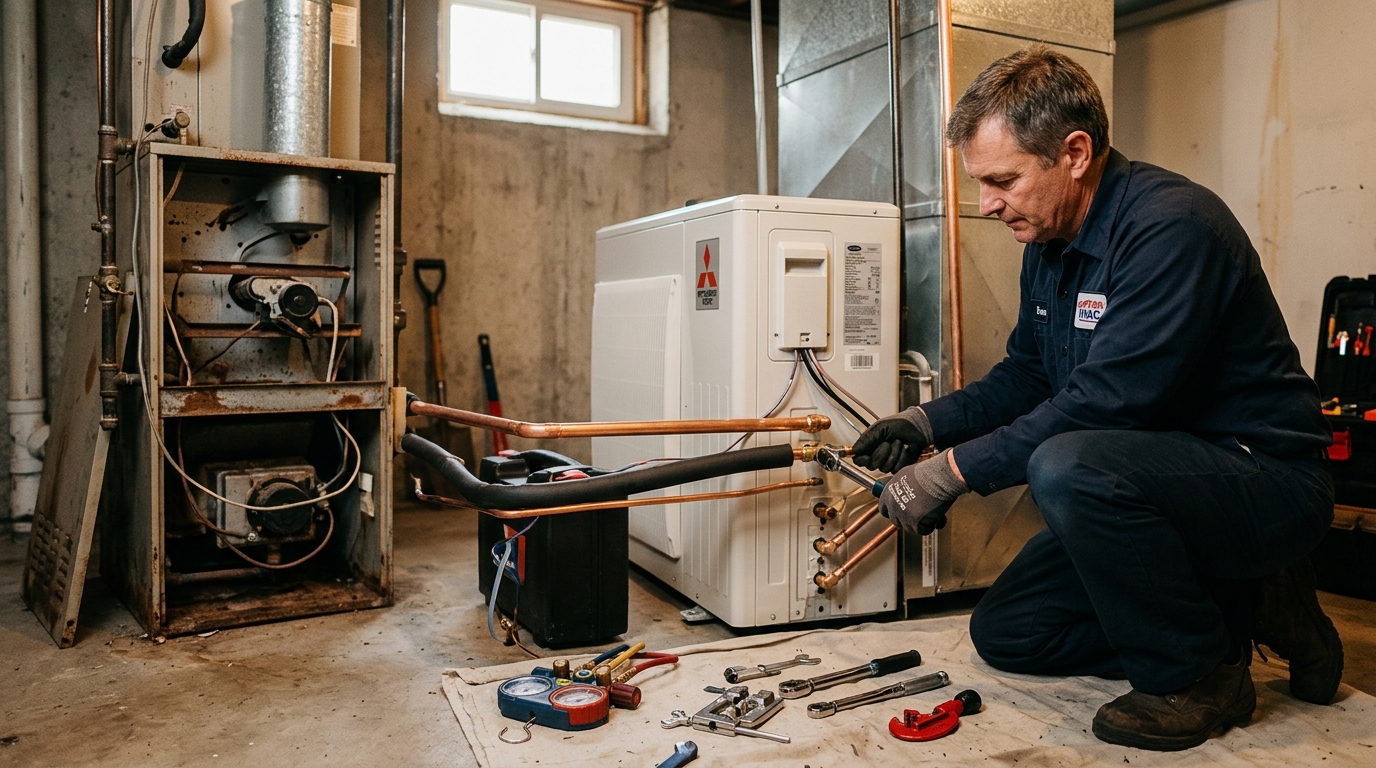
- Specify a minimum SEER2 rating of 16 and HSPF2 of 9.5 or higher for the unit. For climate zones 5 through 7, require a NEEP-listed cold-climate heat pump with a rated capacity at 5 degrees Fahrenheit. Brands with strong cold-climate track records include Mitsubishi, Bosch, Carrier, and Lennox.
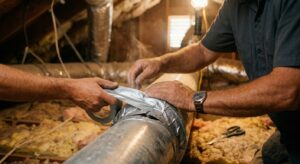
- Confirm whether your existing ductwork can handle the heat pump’s airflow requirements. Ask the contractor to perform a duct leakage test (blower door or duct blaster). Leaky ducts reduce system efficiency by 20 to 30% and should be sealed before or during installation.
- If replacing only the outdoor unit while keeping an older indoor air handler, verify that the two components are matched and rated together. Mismatched systems lose 5 to 15% efficiency and may void equipment warranties.
- On installation day, verify the contractor pulls the required permits, performs a refrigerant leak check after charging, and tests the system in both heating and cooling modes before signing off. Request a written commissioning report.
- After installation, submit your federal tax credit using IRS Form 5695 and file any utility rebate applications within the deadline, typically 90 days of installation. Keep all receipts and the manufacturer’s certification statement for tax purposes.
- Identify the one or two rooms that are hardest to heat or cool, or that represent the highest energy use (typically the living area and master bedroom). A single-zone 12,000 BTU mini-split covers roughly 500 to 600 square feet.
- Choose a DIY-friendly brand like Mr. Cool DIY or a similar pre-charged line-set unit if you are comfortable with basic drilling and electrical work. These units come with pre-charged refrigerant lines and connect to a 240-volt outlet, eliminating the need for an EPA 608 certified technician.
- Mount the indoor air handler on an interior wall at least 7 feet high, centered on the room, and away from direct sunlight or heat sources. Follow manufacturer spacing requirements for airflow clearance.
- Drill a 3-inch hole through the exterior wall for the line set, run the refrigerant lines, electrical cable, and condensate drain to the outdoor unit, and seal the penetration with foam and a wall cover plate.
- Mount the outdoor condenser on a level pad or wall bracket at least 6 inches above expected snow depth, connect the line set and electrical, and follow the manufacturer startup checklist before powering on.
- Track your utility bills for 2 to 3 months after installation to measure actual savings in the treated zone. Use that data to build the business case for expanding to a whole-home ducted or multi-zone system.
Why It Works: The Benefits
The U.S. Department of Energy estimates heat pumps reduce heating costs by 50% compared to electric resistance heating and 30 to 40% compared to gas furnaces in moderate climates. Combined heating and cooling savings typically run $500 to $1,500 per year depending on home size and climate.
Replacing a furnace and AC with a single heat pump eliminates one set of maintenance contracts, filters, and repair calls. Average HVAC maintenance and repair costs drop by roughly $200 to $400 per year when managing one system instead of two aging units.
The Inflation Reduction Act provides a federal tax credit of up to 30% of installation cost, capped at $2,000 per year for heat pumps. Many utility companies add rebates of $300 to $1,500 on top of that, cutting the effective payback period nearly in half in many states.
Heat pumps run longer, lower-intensity cycles compared to furnaces, which produces more even temperatures throughout the home with fewer hot and cold spots. Many modern units also include variable-speed compressors and enhanced filtration that reduce humidity and airborne allergens.
Even on today’s partially fossil-fuel grid, heat pumps produce 30 to 50% fewer carbon emissions than gas furnaces in most U.S. regions, according to NRDC analysis. As the electrical grid becomes cleaner, that advantage grows automatically without any equipment changes.
💰 Savings Impact by Action
Replacing a gas furnace with a high-efficiency heat pump reduces heating energy costs by 30 to 50% annually in climate zones 3 through 5, per DOE estimates.
A SEER2 16-plus heat pump uses 20 to 30% less electricity for cooling than a 10-year-old AC unit operating at degraded efficiency.
Sealing leaky ducts before or during heat pump installation recovers 20 to 30% of conditioned air that would otherwise be lost to unconditioned spaces.
Stacking the federal 25C tax credit with utility rebates reduces effective installed cost by 25 to 40%, cutting payback period from 8 years to 5 years in many markets.
Inverter-driven variable-speed compressors reduce electricity consumption by 25 to 35% compared to single-stage models by matching output to real-time load instead of cycling on and off.
🏠 Key Concepts Explained
The Science Behind It
The reason heat pumps are so much more efficient than furnaces comes down to a fundamental difference in physics. A furnace converts fuel or electricity directly into heat, a one-to-one conversion at best. A heat pump does not generate heat. It moves heat from one place to another using the refrigeration cycle, the same process your refrigerator uses to keep food cold. Because moving energy is far less work than creating it, a heat pump delivers 2 to 4 units of heat for every 1 unit of electricity consumed. That ratio is the Coefficient of Performance, or COP, and it is what makes the economics work.
In heating mode, the outdoor unit’s refrigerant absorbs heat from outside air (even at temperatures well below freezing, there is still significant heat energy in the air) and compresses it to raise the temperature. That concentrated heat is then transferred indoors through the air handler and distributed through ducts or directly into the room. The reversing valve switches the cycle for summer, making the indoor coil the evaporator that absorbs heat from your home and the outdoor unit the condenser that dumps it outside. This is identical to how a standard central air conditioner works, which is why a heat pump replaces both systems in one unit.
Variable-speed or inverter-driven compressors are what separate modern high-efficiency heat pumps from older single-stage models. Instead of running at 100% capacity or not at all, an inverter compressor modulates between roughly 30% and 120% of rated capacity to match the exact heating or cooling load in real time. This produces more consistent indoor temperatures, dramatically reduces electricity consumption during mild weather (which is most of the year), and extends equipment life by avoiding the wear of constant stop-start cycling. It is also why modern units can maintain rated heating capacity at much lower outdoor temperatures than the older equipment many homeowners associate with heat pump limitations.
Frequently Asked Questions
▼ My heat pump is running constantly in winter. Is something wrong?
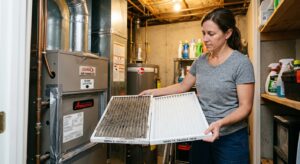
Constant operation in cold weather is often normal and actually more efficient than short cycling. Heat pumps are designed to run long, low-intensity cycles rather than short high-intensity bursts like a furnace. If the indoor temperature is holding steady at your set point, the system is working correctly. If the temperature is dropping despite continuous operation, check your air filter first, then call your technician to verify refrigerant charge and outdoor unit defrost operation.
▼ Will a heat pump keep my home warm when it is below zero outside?
A standard heat pump loses significant capacity below 20 to 25 degrees Fahrenheit and is not recommended as the sole heat source in climates with frequent sub-zero temperatures. A NEEP-listed cold-climate heat pump (such as the Mitsubishi Hyper Heat or Bosch IDS 2.0) maintains rated capacity down to minus 13 degrees Fahrenheit and is the correct choice for climate zones 5 through 7. If you live in an extreme cold climate, a dual-fuel system pairing a heat pump with a gas or propane backup furnace gives you efficiency in moderate weather and reliability in the coldest days.
▼ How long does a heat pump actually last compared to a furnace and AC?
A well-maintained heat pump typically lasts 15 to 20 years, similar to a central air conditioner. A gas furnace averages 20 to 30 years. Because a heat pump runs year-round rather than seasonally, annual maintenance including coil cleaning, filter replacement, and refrigerant checks is important to reaching that lifespan. Factor equipment longevity into your payback calculation when comparing the full lifecycle cost against replacing separate systems.
▼ I got quotes ranging from $6,000 to $14,000 for the same size home. Why is there such a big difference?
Heat pump quotes vary based on equipment tier (standard efficiency vs. cold-climate inverter-driven), whether ductwork modifications are included, electrical panel work, and contractor markup. The lowest quote often reflects a standard efficiency unit without proper load calculation, while the highest may include unnecessary upgrades. Ask each contractor to itemize equipment model number, electrical work, ductwork modifications, and labor separately so you can compare apples to apples. A mid-range quote from a NATE-certified contractor with documented heat pump experience is usually the best value.
▼ Can I claim the federal tax credit if I already got a utility rebate?
Yes. The federal 25C tax credit (up to $2,000 for qualifying heat pumps under the Inflation Reduction Act) and utility or state rebates are generally stackable and independent. The tax credit is calculated on your net cost after rebates in some interpretations, so consult a tax professional to confirm how your specific rebate affects the credit basis. Either way, combining both incentives significantly reduces effective out-of-pocket cost and payback period.
Quick Tips
- Schedule installation in spring or fall when HVAC contractors are less busy. You will get better pricing, faster scheduling, and more attention during commissioning than during peak summer or winter demand.
- Add a smart thermostat rated for heat pumps specifically. Standard thermostats can short-cycle a heat pump by calling for large temperature swings. A heat-pump-compatible thermostat like the Ecobee or Google Nest (with heat pump balance settings) keeps the system running in efficient long cycles.
- If keeping any gas appliances (water heater, range), make sure your contractor factors that into the electrical panel upgrade plan so you have capacity for future electrification without a second panel upgrade.
- In humid climates (DOE zones 1 through 3), look for a unit with a dedicated dehumidification mode. Running the heat pump in dehumidify mode on mild days reduces humidity without overcooling and can feel more comfortable than setting a lower thermostat target.
Variations for Your Situation
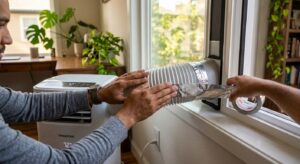
- Apartment/Rental: Renters cannot replace central HVAC, but a portable or window-mounted heat pump (such as the Midea U-shaped inverter heat pump window unit) delivers both cooling and heating for a single room at a cost of $400 to $800. These units achieve SEER ratings of 14 to 16 and can reduce bedroom heating and cooling costs by 30 to 40% compared to electric resistance space heaters and older window ACs, with no landlord modification required.
- Tight Budget (under $5,000 after incentives): Prioritize a single-zone ductless mini-split for the highest-use area of your home rather than a full system replacement. A 12,000 BTU DIY mini-split kit costs $700 to $1,200 installed by a licensed electrician for the electrical connection. Target the room where you spend the most time and where your existing system works hardest. Use the energy savings to fund a full system upgrade in 3 to 5 years.
- Older Home (pre-1980): Homes built before 1980 often have undersized electrical panels (60 to 100 amps), minimal wall insulation, and leaky duct systems that will undermine heat pump performance and efficiency. Before investing in a heat pump, budget $500 to $1,500 for a professional energy audit and duct leakage test. Address attic air sealing and duct sealing first, since a 20% reduction in duct leakage improves heat pump efficiency by a similar margin. Plan for a panel upgrade as part of the total project cost.