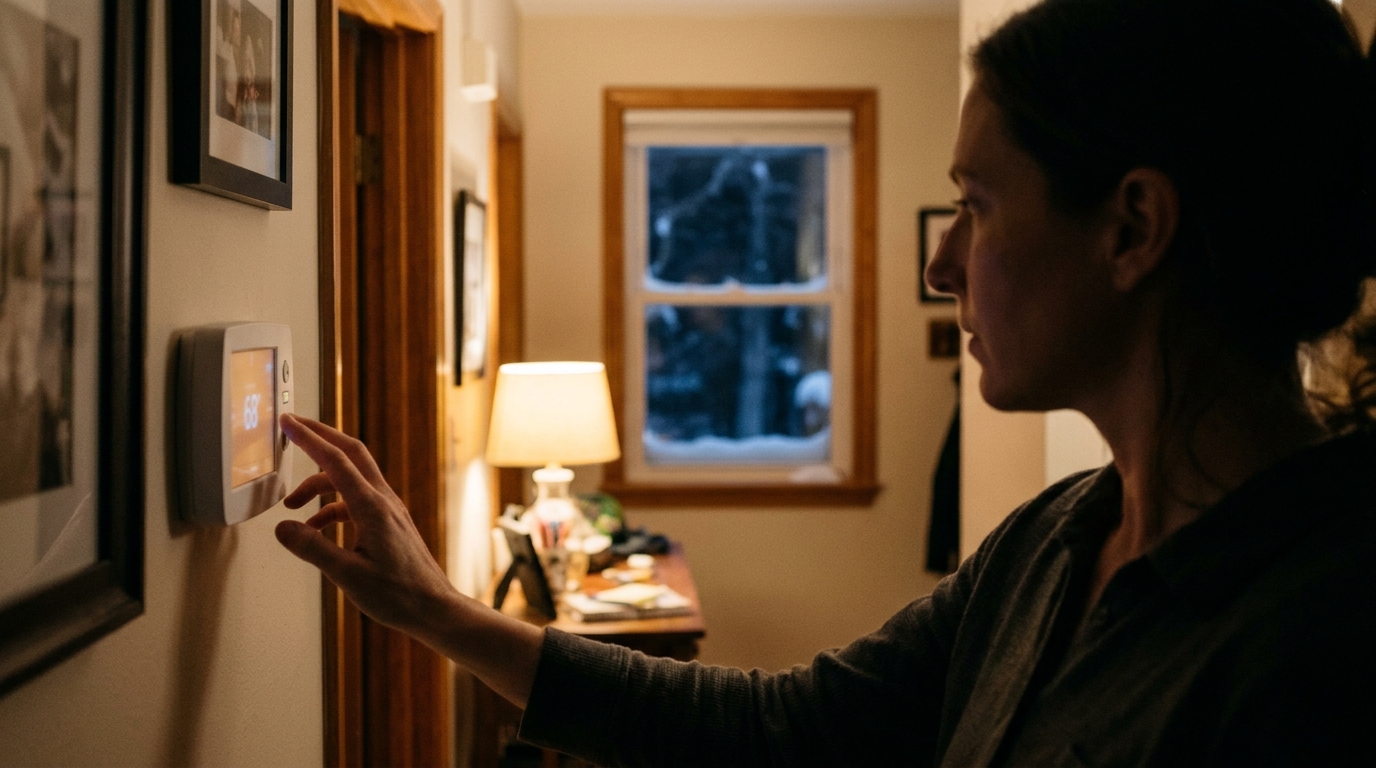
You wake up on a freezing January morning, the house feels fine, and then the electric bill arrives at double the usual amount. Chances are your heat pump spent a good part of the cold snap leaning on its backup heat strips, which are electric resistance coils that act like a giant toaster inside your air handler. They keep you warm, but they use roughly two to three times more electricity than the heat pump itself to produce the same amount of heat.
Heat strips are not a design flaw. A heat pump works by moving heat from outdoor air into your home, and as the outdoor temperature drops, there is less heat available to move and the system’s output falls. Meanwhile your home loses heat faster the colder it gets. At some point, usually somewhere between 25 and 35 degrees Fahrenheit for a standard system, the heat pump alone cannot keep up, and the strips supplement it. They also run during defrost cycles so you are not blown cold air.
This post explains how backup heat actually works, how to tell whether your strips are running more than they should, and what you can do about it. Some fixes cost nothing and take 15 minutes. Others involve a professional and a modest investment, but can slash your winter electric usage for years.
What You’ll Need
Click on an item below to shop for the recommended items for this recipe on Amazon.
As an Amazon Associate, we earn from qualifying purchases.
How to Do It
- Check your thermostat for a stage or status indicator. Look for the words AUX, AUX HEAT, or EM HEAT on the display. If you see AUX on mild days above 40 degrees, the strips are running more than they should.
- Make sure the system is set to HEAT, not EM HEAT. Emergency heat bypasses the heat pump entirely and is meant only for outdoor unit failure. Many homeowners switch it on during a cold snap and forget it.
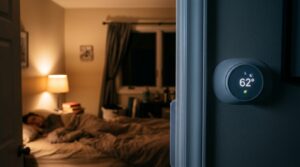
- Limit setbacks to 2 or 3 degrees. If you normally drop the temperature 8 degrees overnight, change it to 2 degrees, or hold a steady temperature on the coldest nights.
- Raise the temperature gradually in the morning, 1 degree per hour, or use a thermostat with a heat-pump-aware recovery feature that avoids calling for strips.
- Replace a dirty air filter and clear snow, ice, and leaves from around the outdoor unit. Keep at least 2 feet of clearance on all sides so the unit can pull in air and defrost properly.
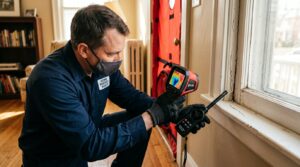
- Seal obvious air leaks with caulk and weatherstripping around windows, exterior doors, and the attic hatch. A gap-sealed home can lower its heating load by 10 to 20 percent, which means the heat pump alone can handle colder weather.
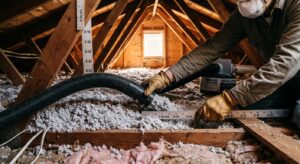
- Add insulation to the attic if you have less than R-38. In cold climates, aim for R-49. Blown-in cellulose or fiberglass costs roughly $1 to $2 per square foot for DIY installation.
- Install a heat-pump-compatible smart thermostat, such as an ecobee or Nest model, and enable its aux heat lockout or compressor-priority setting. Many models let you limit strip use to below a set outdoor temperature.
- Set the aux heat lockout to roughly 25 to 30 degrees for typical homes, or lower if your home is well insulated. Test for a week and adjust if you notice comfort issues.
- Check supply and return vents for blockages. Make sure at least 80 percent of supply registers are open so airflow stays high and the system does not trip into inefficient operation.
- Schedule a fall maintenance visit. Ask the technician to check refrigerant charge, coil cleanliness, airflow, and defrost board operation. Low charge alone can raise strip use by 20 percent or more.
- Request a review of the outdoor temperature lockout and staging for the strips. Many installers leave factory defaults, which are often conservative and strip-heavy.
- Ask for a Manual J load calculation if your home has had insulation or window upgrades. The old system may be oversized or mismatched.
- If your system is more than 12 to 15 years old and you live in a cold region, ask about a cold-climate or variable-speed heat pump. Models rated to operate down to minus 5 or minus 13 degrees often need little or no backup heat.
- Check for utility and federal incentives. The federal 25C tax credit and many local rebates can cover up to $2,000 or more of a qualifying heat pump install.
Why It Works: The Benefits
Cutting unnecessary strip runtime can reduce heating costs by 10 to 30 percent. A household spending $200 per month on winter electricity could keep $20 to $60 each month.
Strips guarantee comfort when it is 10 degrees outside. Understanding when they should run lets you keep that safety net without paying for it on days you do not need it.
Strips running constantly at 40 degrees often signals low refrigerant, a dirty coil, or a failing outdoor unit. Spotting this early can prevent a $3,000 to $8,000 compressor replacement.
Reducing heavy strip cycling eases stress on the air handler, contactors, and electrical components, and keeps the compressor, designed for steady operation, doing most of the work.
Heat strips can draw 5 to 20 kilowatts. Reducing their use lowers peak demand, which matters if your utility has time-of-use or demand charges.
💰 Savings Impact by Action
Switching from emergency heat back to normal heat mode can cut heating electricity by 40 percent or more, since the heat pump delivers 2 to 3 times more heat per kilowatt-hour.
Limiting overnight setbacks to 2 or 3 degrees prevents long strip-heat recovery periods and can trim 10 to 15 percent from winter heating bills.
Sealing leaks around windows, doors, and attic penetrations lowers heating load by 10 to 20 percent and reduces how often strips are needed.
Setting the backup heat lockout to 25 to 30 degrees prevents strips from running on mild days and can save 8 to 15 percent.
Replacing an older single-stage unit with a cold-climate variable-speed heat pump can cut winter heating electricity by 25 to 35 percent in very cold regions.
🏠 Key Concepts Explained
The Science Behind It
A heat pump does not create heat, it moves it. Refrigerant circulates between the outdoor and indoor coils, absorbing heat from outdoor air and releasing it inside. Even at 20 degrees Fahrenheit, outdoor air still contains usable heat energy. But as the temperature falls, the refrigerant has a smaller temperature difference to work with, and the compressor has to work harder for less output. A typical heat pump might deliver 100 percent of its rated capacity at 47 degrees but only 60 to 70 percent at 17 degrees.
Meanwhile, your home’s heat loss rises roughly linearly as it gets colder outside. The point where the falling heat pump capacity line crosses the rising heat loss line is the balance point. Below it, the heat pump cannot meet demand on its own, so the strips supply the shortfall. An electric resistance strip converts every kilowatt-hour into exactly 3,412 BTUs of heat, a COP of 1.0. A heat pump at 25 degrees might deliver a COP of 2.2 to 2.5, so it produces more than twice the heat for the same electricity.
This is why the goal is not to eliminate the strips but to minimize how often they run. Lowering your home’s heat loss through insulation and air sealing shifts the balance point lower. Setting smarter controls keeps the thermostat from demanding a fast recovery that only the strips can deliver. Modern cold-climate heat pumps use variable-speed compressors and enhanced vapor injection to maintain strong output at 5 degrees or lower, pushing the balance point so low that backup heat is rarely needed.
Frequently Asked Questions
▼ Why is my AUX heat running even when it is not that cold outside?
Common causes are a large thermostat setback, an incorrectly set outdoor lockout, a dirty filter or coil, or low refrigerant. Start by holding a steady temperature for a day and replacing the filter. If AUX still runs above 40 degrees, schedule a technician to check refrigerant charge and the lockout setting.
▼ Is it normal for cold air to blow from my vents when my heat pump runs?
Air from a heat pump is typically 90 to 100 degrees, which feels cool compared to a gas furnace’s 130 degrees, but it should not feel cold. If air feels truly cold, check that the thermostat is not in EM HEAT or cooling mode, and look for a stuck defrost cycle or a failed strip element. Call a technician if it persists beyond 10 minutes.
▼ How do I know if my heat strips are actually working?
On a cold night below 25 degrees, set the thermostat 3 to 4 degrees above the current temperature and watch for AUX HEAT to appear. Air at the vents should become noticeably warmer within a few minutes. If it never does, or if your breaker trips, have a professional test the strip elements and sequencer.
▼ Can renters do any of this without landlord permission?
Yes. Use the Quick Fix steps: avoid EM HEAT, limit setbacks, replace filters, and keep the outdoor unit clear. Window insulation film, removable weatherstripping, and draft stoppers also reduce heat loss at under $30 total. Ask the landlord about adjusting thermostat settings if the unit is centrally controlled.
▼ How long before I notice savings on my bill?
Behavior changes such as avoiding deep setbacks and EM HEAT can show up on your next bill, typically 10 to 20 percent lower in winter months. Air sealing and insulation upgrades show their full effect over a full winter season, with payback in 2 to 5 years depending on the home.
Quick Tips
- Keep a steady thermostat setting during cold snaps. Holding 68 degrees all night often costs less than a deep setback that triggers hours of strip heat in the morning.
- Check your electric bill in January against October. If heating costs more than 2.5 times your shoulder-season usage, strips may be running too often.
- Walk outside once a week in winter and make sure the outdoor unit is clear of snow, ice, and debris, and that the fan is spinning.
- Ask your utility if they offer a heat pump rate or demand program. Some reward homeowners for avoiding strip use during peak hours.
Variations for Your Situation
- Apartment/Rental: Focus on thermostat habits, since you usually cannot change equipment. Keep setbacks to 2 degrees, confirm the system is never left in EM HEAT, replace the filter every 1 to 3 months, and use removable window film ($15 to $25) and door draft stoppers ($10 to $20) to cut heat loss without modifying the unit.
- Tight Budget (under $50): Do the zero-cost steps first: switch off EM HEAT, reduce setbacks, clear the outdoor unit, and change the filter ($10 to $20). Add a tube of exterior caulk ($6) and a roll of weatherstripping ($10) for windows and doors. These steps alone can trim 10 percent from winter electric bills.
- Older Home (pre-1980): Expect a higher balance point, often 35 to 40 degrees, because of leaky ducts, thin insulation, and drafty windows. Prioritize attic insulation to R-49 and duct sealing with mastic, which can recover 10 to 20 percent of lost heat, before considering a larger or cold-climate heat pump.