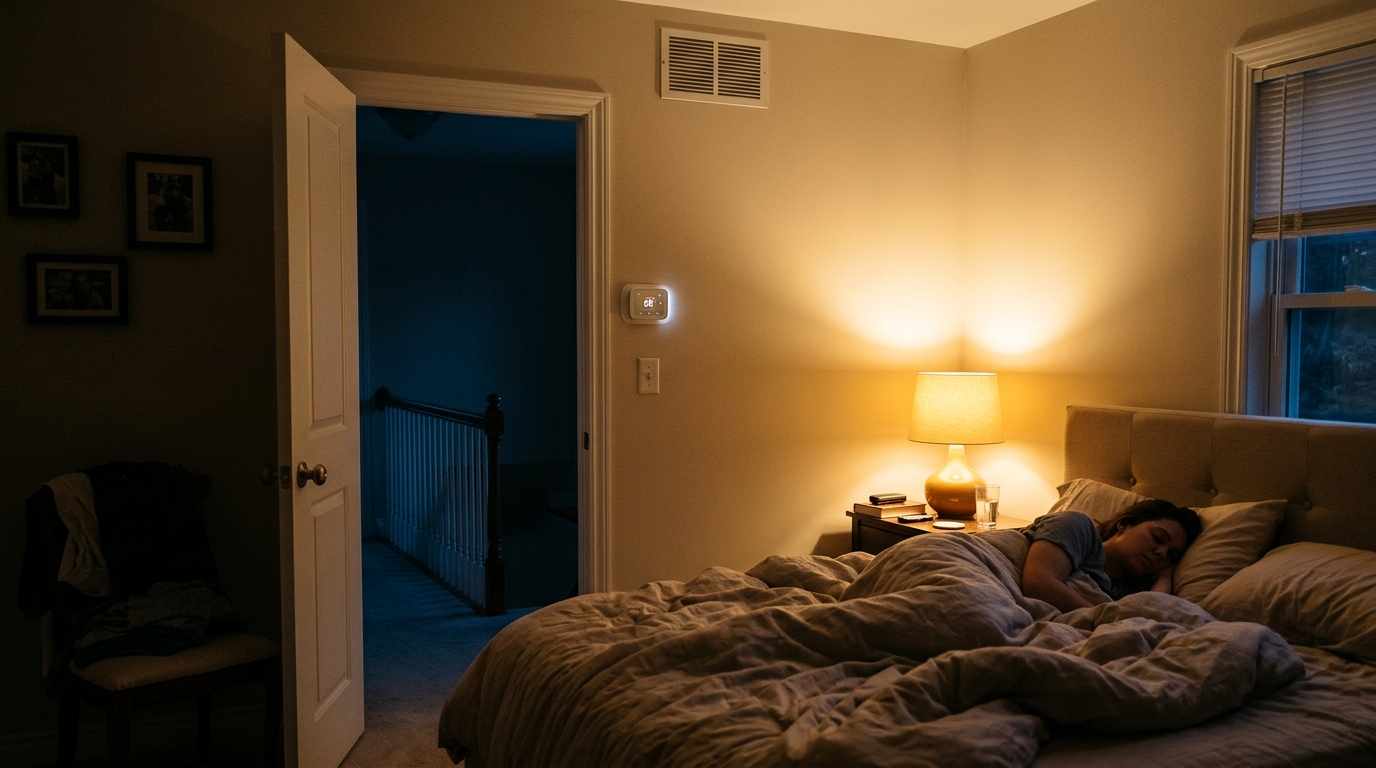
Think about how you actually use your home between 10 p.m. and 6 a.m. Everyone is in bedrooms, and the living room, kitchen, and home office sit empty. Yet a traditional single-thermostat system keeps heating all of it to the same temperature, paying to warm rooms nobody is using for eight hours or more.
Zoning fixes that mismatch. By dividing your home into separate areas with their own temperature control, you can let unused spaces drift cooler while keeping bedrooms comfortable. The U.S. Department of Energy estimates that every degree you lower the thermostat for eight hours saves roughly 1% on heating costs, and zoning lets you capture that savings in part of the house without sacrificing comfort in the rest.
In this post we will walk through how zoning works, three realistic ways to get it (from a no-cost behavioral fix to a full professional installation), what each costs, how long it takes to pay for itself, and the mistakes that cause zoned systems to underperform.
What You’ll Need
Click on an item below to shop for the recommended items for this recipe on Amazon.
As an Amazon Associate, we earn from qualifying purchases.
How to Do It
- Identify the rooms nobody uses between bedtime and morning, such as the living room, dining room, home office, and guest room.
- Partially close the supply registers in two or three of those rooms at bedtime, leaving them at roughly one-quarter to one-half open rather than fully shut.
- Keep every bedroom supply register fully open and make sure no furniture, rugs, or curtains block the vents.
- Close interior doors to the unused rooms to hold their temperature and reduce the amount of warm air that drifts away from sleeping areas.
- Drop the main thermostat 3 to 5 degrees at bedtime, and use a basic $25 to $40 programmable thermostat if you do not have one, to automate the setback and morning recovery.
- Re-open everything each morning, and check after a week whether the bedrooms feel comfortable and the furnace sounds normal.
- Pick the rooms you want to control, usually 4 to 8 bedrooms, offices, and living spaces, and buy motorized smart vents sized to match your existing register openings (about $50 to $100 each).
- Install a compatible smart thermostat (about $130 to $250) with remote room sensors if it does not already support them, and place a sensor in each bedroom.
- Unscrew each existing register, drop in the smart vent or replace the register cover, and connect the vent to the hub using the manufacturer app.
- Create a nighttime schedule in the app that keeps bedrooms at 64 to 67 degrees and lets unused rooms float down to 60 to 62 degrees.
- Set a minimum-open limit so the app never closes more than about 30% of total vents, and monitor the furnace for unusual noises or short cycling over the first week.
- Review the energy reports after two to four weeks and fine-tune the schedule, adding or removing rooms as needed.
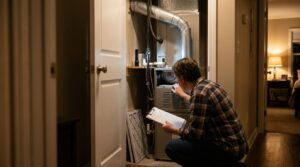
- Have an HVAC contractor perform a load calculation (Manual J) and a duct inspection to confirm the existing ductwork and equipment can support zoning.
- Divide the house into two to four zones, commonly upstairs and downstairs, or sleeping and living areas, based on how you use the space.
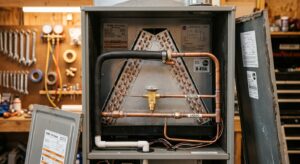
- Install motorized dampers in the main trunk lines feeding each zone, along with a zone control panel and a separate thermostat for each zone.
- Add a bypass damper or, better, upgrade to a variable-speed blower or two-stage furnace so airflow stays safe when only one zone is calling for heat.
- Program each zone thermostat with its own nighttime setback, such as 62 degrees for living areas and 66 degrees for bedrooms.
- Ask the installer to commission the system, verify static pressure and airflow, and show you how to adjust the schedule.
Why It Works: The Benefits
Setting unused zones back 6 to 8 degrees for 8 hours can cut heating energy for those zones by 15 to 25%, which usually adds up to 10 to 30% off the whole-house winter bill.
Each bedroom can be held at its own ideal sleep temperature, typically 62 to 67 degrees, instead of compromising with whatever the main thermostat is set to.
Upstairs-versus-downstairs temperature swings of 5 to 10 degrees can be balanced by giving each level its own control instead of fighting the same thermostat.
Properly zoned systems run longer, steadier cycles and avoid constant on/off short-cycling, which can extend furnace and blower life.
Guest rooms, home offices, and basements can stay at energy-saving temperatures until you actually use them, then warm up quickly on demand.
💰 Savings Impact by Action
Lowering unused zones 6 to 8 degrees for 8 hours cuts heating energy in those areas by roughly 15%.
Correcting upstairs and downstairs temperature imbalances reduces overheating and wasted heat by about 10%.
Automated schedules and room sensors trim another 10 to 12% by avoiding forgotten manual adjustments.
Sealing leaky ducts can recover up to 20% of lost heat, amplifying the savings from any zoning strategy.
A professionally installed damper-based system can deliver up to 30% heating savings in multi-story or oversized-duct homes.
🏠 Key Concepts Explained
The Science Behind It
Heat flows from warm areas to cool ones at a rate proportional to the temperature difference and the surface area involved. When you keep every room at 70 degrees on a 20-degree night, the whole house loses heat through its walls, windows, and roof at the maximum rate. Lowering the temperature of unoccupied rooms to 62 degrees shrinks the temperature gap across those surfaces, so they lose heat more slowly and demand less energy from your furnace to maintain.
Warm air is also less dense than cool air, so it naturally rises through stairwells and open floor plans, a process called stack effect. That is why upstairs bedrooms often run hot while the ground floor stays cool. A single thermostat cannot correct this imbalance, but separate zones can send less heat upstairs and more downstairs, or the reverse, to even things out.
Finally, a well-designed zoned system lets your furnace or heat pump match its output to actual demand. Instead of heating the whole house to satisfy one cold room, it delivers heat only where needed, running longer, steadier cycles. Longer cycles are generally more efficient than frequent short bursts because the equipment spends less time in the wasteful startup and shutdown phases.
Frequently Asked Questions
▼ Why is my furnace short-cycling or making noise after I closed some vents?
You have likely restricted airflow too much and raised duct static pressure. Re-open the closed registers to at least 75 to 80% of total vents and see if the noise stops. If it persists, replace the air filter and consider having an HVAC pro measure static pressure or add a bypass damper.
▼ Can renters do this without landlord permission?
Yes, the manual quick fix is fully renter-friendly because it only involves adjusting existing vents and doors. Plug-in space heaters in occupied rooms with a lower main thermostat setting can also work, but avoid permanent changes like installing dampers or replacing registers without approval.
▼ How long before I actually notice savings on my bill?
You will usually see a difference in your first full billing cycle, typically 4 to 6 weeks, with savings of 10 to 15% for manual zoning and up to 20 to 30% for a properly designed system. Compare to the same month last year, adjusting for weather using heating degree days if possible.
▼ What if my home is older than 30 years?
Older homes often have leakier ducts and weaker insulation, so seal and insulate ducts first and add attic insulation to R-38 before investing in zoning equipment. You may also need a professional to check whether the existing furnace blower can tolerate zoning, as many older single-speed units cannot.
▼ Do smart vents really save money or is it just marketing?
They can save 10 to 20% when used with a thermostat and a smart schedule, but only if your system can handle the restricted airflow. They save little in homes that already have even temperatures, so test with manual closing first before spending several hundred dollars.
Quick Tips
- Start with your coldest, least-used rooms. Pulling back 6 to 8 degrees in a spare bedroom or office saves more than trimming a degree or two everywhere.
- Keep bedroom doors slightly open at night if you use zoning with closed vents elsewhere, to avoid pressure imbalances that make rooms feel stuffy or drafty.
- Replace your furnace filter before the heating season. A clogged filter plus restricted vents makes airflow problems much worse.
- Seal and insulate any ducts that run through unheated attics or crawlspaces first, since leaky ducts can waste 20 to 30% of the heat you are trying to direct into zones.
Variations for Your Situation
- Apartment/Rental: Focus on the manual quick fix: partially close vents in unused rooms, shut interior doors, and use a $30 to $40 programmable or smart plug-in thermostat setup if your system allows. Since you cannot modify central HVAC or ductwork, pair this with draft stoppers ($10 to $20) and heavy curtains to hold heat in occupied rooms.
- Tight Budget (under $50): Lower your main thermostat 3 to 5 degrees at bedtime, close vents to about one-quarter open in two or three unused rooms, and shut their doors. Add a $15 to $25 digital programmable thermostat if yours is manual, and use a $10 door sweep to keep cold air out of the bedrooms you are heating.
- Older Home (pre-1980): Prioritize air sealing, attic insulation to R-38, and duct sealing with mastic before adding zoning, since older homes can lose 25 to 40% of heated air through leaks and poor insulation. A two-zone damper system (upstairs and downstairs) often delivers the best return in multi-story older homes with a single thermostat.
- Multi-Story Home: Start by zoning upstairs versus downstairs, since stack effect creates the biggest imbalance there. A two-zone system with separate thermostats typically costs $2,500 to $4,000 and fixes the common problem of overheated upstairs bedrooms at night.