You crank up the AC when the temperature climbs, but instead of cool relief, you get a blast of warm or room-temperature air from your vents. This is one of the most common HVAC complaints homeowners face, and the good news is that several causes are entirely fixable without calling a technician. The bad news is that ignoring the problem can push your system to work harder, spike your energy bills, and shorten the life of your compressor.
Warm air from an AC can stem from something as simple as a tripped circuit breaker or a filthy air filter, or something as serious as a refrigerant leak or a failing compressor. Knowing how to tell the difference is the key to acting quickly and spending wisely. A clogged filter alone can reduce airflow enough to cause the evaporator coil to freeze, which ironically results in warm air at the vents.
This post walks you through the four most common reasons your AC blows warm air, how to diagnose each one at home, and what steps you can take yourself versus when to call a licensed HVAC technician. We include real cost ranges, diagnostic steps, and tips to keep this from happening again.
What You’ll Need
Click on an item below to shop for the recommended items for this recipe on Amazon.
As an Amazon Associate, we earn from qualifying purchases.
How to Do It
- Check your thermostat settings first. Confirm it is set to COOL, not FAN ONLY. Confirm the set temperature is at least 3 to 5 degrees below the current room temperature. Replace the batteries if the display is dim or unresponsive.
- Go to your main electrical panel and locate the breaker labeled AC, Air Handler, or Compressor. If it is tripped to the middle position, switch it fully off and then back on. Also check the disconnect box mounted on the exterior wall near the outdoor unit.
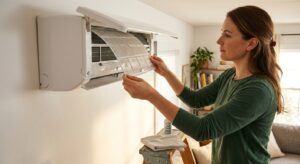
- Inspect the air filter. Pull it out and hold it up to light. If you cannot see light through it, it is clogged. Replace it with a MERV 8 to 11 filter. A severely clogged filter can cause the evaporator coil to freeze within 1 to 2 hours of operation.
- After replacing the filter, check your indoor air handler or evaporator coil cover for frost or ice. If you see ice, turn the system to FAN ONLY for 2 to 4 hours to thaw completely before switching back to COOL.
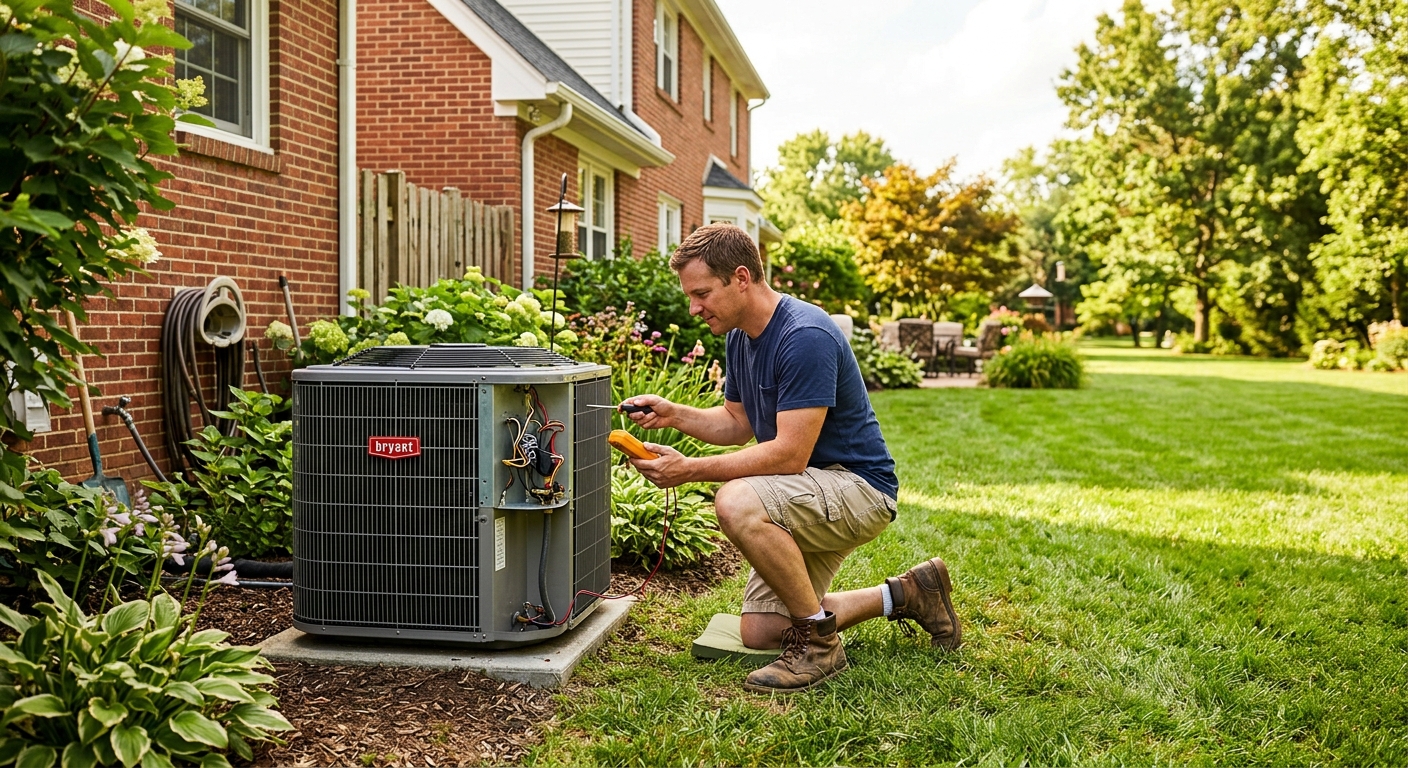
- Walk outside to the condenser unit and listen. The fan on top should be spinning and the unit should be running. If the fan is off but the indoor unit is on, the compressor circuit may be tripped or the capacitor may have failed, which requires a technician.
- Turn off power to the outdoor unit at the disconnect box on the exterior wall and at the breaker panel. Never skip this step. Wait 5 minutes before touching any components.
- Remove the top grille or fan cage using a screwdriver. Carefully set the fan aside without pulling or stressing the wiring. Inspect the fins on the sides of the unit for visible dirt, grass clippings, seed debris, or bent fins.
- Use a garden hose with moderate pressure to spray the coil fins from the inside out. This pushes debris out the direction it came in rather than compacting it further. Avoid pressure washers, which can bend the delicate aluminum fins.
- Apply a no-rinse coil cleaner foam to the exterior fins if the buildup is heavy. Let it foam and drain for 5 to 10 minutes, then rinse lightly. These sprays are available at home improvement stores for $10 to $20.
- Straighten any bent fins using a fin comb, available for $8 to $15. Bent fins reduce airflow across the coil and reduce the system’s heat rejection capacity measurably.
- Reassemble the unit, restore power, and wait 10 minutes before switching the thermostat back to COOL. The system needs time to stabilize pressure before the compressor starts under load.
- Call a licensed HVAC technician if your system still blows warm air after completing the quick fix and DIY steps above. Describe what you observed: whether the outdoor unit runs, whether you saw ice, and how long the problem has been occurring.
- Ask the technician to perform a full system pressure check using manifold gauges to determine whether refrigerant levels are correct. Low pressure confirms a leak in the system, not just a low charge.
- Request a leak detection test using electronic leak detectors or UV dye. Simply adding refrigerant to a leaking system is a short-term fix. Federal law prohibits knowingly venting refrigerant, and a reputable technician will find and repair the source.
- Evaluate the repair estimate carefully. A refrigerant leak repair plus recharge typically costs $250 to $600. If the system is over 15 years old and uses R-22 refrigerant, which is no longer manufactured, discuss replacement options since R-22 can cost $50 to $150 per pound when available.
- Ask the technician to check the capacitor and contactor on the outdoor unit while on site. These small components cost $15 to $45 in parts and are a common cause of the compressor not starting. Having them checked proactively during a visit saves a second service call fee.
Why It Works: The Benefits
Fixing the root cause returns your system to its rated efficiency. A properly charged and clean AC unit can cool your home to setpoint 40 to 60% faster than a struggling system.
A dirty condenser or low refrigerant charge forces your compressor to run longer cycles, increasing energy use by 10 to 30%. Resolving the issue typically brings bills back in line within one billing cycle.
Running an AC in a degraded state, especially with a frozen coil or low refrigerant, stresses the compressor. Compressor replacements cost $1,200 to $2,500 or more. Catching the problem early can add years to the system’s life.
A properly functioning AC removes both heat and moisture. When the system runs but does not cool correctly, it also fails to dehumidify, leaving the home feeling sticky and uncomfortable even at moderate temperatures.
Emergency HVAC calls during summer can cost $150 to $400 just for the service visit, on top of parts. Diagnosing and resolving simple causes like a tripped breaker or dirty filter yourself eliminates that expense entirely.
💰 Savings Impact by Action
Replacing a clogged filter restores full airflow and can reduce system energy use by up to 15% immediately.
A clean condenser coil improves heat rejection efficiency by 10 to 16%, directly reducing compressor run time and electricity use.
Restoring proper refrigerant charge on an undercharged system reduces energy consumption by up to 20% and returns the system to rated cooling capacity.
Sealing leaky supply ducts in unconditioned spaces recovers 20 to 30% of conditioned air that would otherwise be lost to the attic or crawlspace.
Correcting fan mode from ON to AUTO prevents the blower from circulating unconditioned air, saving 10% or more on cooling energy over a season.
🏠 Key Concepts Explained
The Science Behind It
Your central air conditioner works by moving a refrigerant through a closed loop between two coils. Inside the home, the evaporator coil holds refrigerant at low pressure, which causes it to absorb heat from the air blowing across it. The now-warm refrigerant travels outside to the condenser coil, where it releases that heat into the outdoor air and returns to a liquid state. This cycle repeats continuously as long as the system is running. When any part of that loop is disrupted, the system loses its ability to transfer heat, and warm air is the result.
Airflow is the most underappreciated variable in this system. The evaporator coil must have consistent airflow across its surface to function correctly. Without enough air movement, the coil surface temperature drops below the dew point of the air and then below freezing. Moisture in the air freezes on the coil, forming an insulating layer of ice that further blocks airflow. Within a few hours, the coil is fully encased in ice and no air passes at all. The blower still runs, but it is moving air around a frozen block rather than across a working heat exchanger. This is why a dirty filter, which costs $10 to replace, can mimic the symptoms of a $1,500 refrigerant repair.
Refrigerant charge affects performance in a different way. A system low on refrigerant does not have enough working fluid to absorb the heat load of the house. The suction pressure in the system drops, the refrigerant boils off too quickly in the evaporator coil, and the remaining refrigerant has less capacity to pick up heat. The result is air that leaves the coil only slightly cooler than room temperature. Because refrigerant operates in a sealed system, it does not get consumed over time. Low refrigerant always means a leak somewhere, and finding and sealing that leak is the only permanent solution.
Frequently Asked Questions
▼ My AC is running but blowing barely cool air, not warm. Is that still a refrigerant problem?
Marginally cool air is a classic sign of low refrigerant, a dirty condenser coil, or both. Check the condenser unit outside for visible dirt buildup and clean it first since that is a free fix. If the air is still underwhelming after cleaning, have a technician measure system pressures to confirm whether the refrigerant charge is correct.
▼ I reset the breaker and it tripped again immediately. What should I do?
Do not reset it a third time. A breaker that trips repeatedly is protecting you from a short circuit or an overloaded component, most likely a seized compressor or failed contactor. Call a licensed HVAC technician and describe the symptom. Running the system in this condition can cause permanent compressor damage that costs $1,500 to $2,500 to repair.
▼ How do I know if my evaporator coil is frozen without opening anything?
Feel the large insulated refrigerant line coming out of the air handler or going into the evaporator coil. Under normal operation it should feel cool and slightly damp from condensation. If it feels very cold to the touch or has frost or ice on it, the coil is likely freezing. Turn the system to FAN ONLY immediately and allow 2 to 4 hours for the ice to melt before restarting in COOL mode.
▼ My home has two zones and only one area is getting warm air. Does that change the diagnosis?
With two zones, the problem is more likely localized to the duct system, dampers, or the air handler serving that zone rather than a refrigerant issue, which would affect the whole system equally. Check whether the zone damper for the affected area is opening properly and whether the supply vents in that zone are unobstructed. A failed zone damper actuator is a relatively inexpensive fix at $75 to $200 installed.
▼ Can a dirty cabin air filter on a window AC unit cause the same warm air problem?
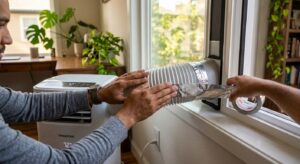
Yes, window and portable AC units have their own filters that restrict airflow when clogged, leading to the same coil-freezing scenario. Remove and wash the filter under running water, let it dry fully, and reinstall it. Most manufacturers recommend cleaning window AC filters every two weeks during heavy use.
Quick Tips
- Change your air filter every 60 to 90 days during heavy cooling season. Set a recurring phone reminder so it does not get forgotten.
- Keep at least 2 feet of clearance around the outdoor condenser unit. Trim shrubs and remove debris after storms to maintain airflow.
- Schedule a professional AC tune-up every spring before peak cooling season. A $80 to $150 tune-up often catches refrigerant issues, weak capacitors, and dirty coils before they become failures.
- Install a smart thermostat with alerts for unusually long run cycles. A system running more than 20 minutes per hour in mild weather is a warning sign worth investigating.
Variations for Your Situation
- Apartment or Rental: Renters typically cannot access the outdoor condenser or the main electrical panel, but you can check and replace the air filter, confirm thermostat settings, and inspect your vents for blockages. For window or PTAC units common in apartments, clean the filter weekly in summer and make sure no furniture is blocking the return air side. Report suspected refrigerant issues or units that run constantly without cooling to your landlord or property manager in writing, since refrigerant handling is the landlord’s legal responsibility.
- Tight Budget (under $50): Start with the zero-cost steps: thermostat settings, breaker check, and clearing space around the condenser. A replacement MERV 8 filter costs $8 to $15 and is almost always worth buying first. A can of no-rinse condenser coil cleaner runs $12 to $20. Together, these three steps address the majority of warm-air complaints without spending more than $35 and without any professional help.
- Older Home (pre-1990): Homes built before 1990 are more likely to have R-22 refrigerant systems, leaky duct systems running through unconditioned attic space, and aging capacitors and contactors. If your system uses R-22 (check the data plate on the outdoor unit), be prepared for high refrigerant costs or a system replacement discussion since R-22 production ended in 2020. Have a technician check duct integrity as well, since older flex duct connections fail over time and can send a significant portion of your cooled air directly into the attic.